

Jeanette Winterson
Author of Oranges Are Not the Only Fruit
About the Author
Jeanette Winterson was born in Manchester, England in 1959 and graduated from St. Catherine's College, Oxford. Her book, Oranges Are Not the Only Fruit, is a semi-autobiographical account of her life as a child preacher (she wrote and gave sermons by the time she was eight years old). The book was show more the winner of the Whitbread Prize for best first fiction and was made into an award-winning TV movie. The Passion won the John Llewelyn Rhys Memorial Prize for best writer under thirty-five, and Sexing the Cherry won the American Academy of Arts and Letters' E. M. Forster Award. (Bowker Author Biography) Jeanette Winterson lives in London & the Cotswolds. (Publisher Provided) show less
Image credit: Jeanette Winterson. (Source Lesbian of the Day)
Series
Works by Jeanette Winterson
Fit for the Future: The Guide for Women Who Want to Live Well (Pandora Press handbook) (1986) 11 copies
The Dreaming House 6 copies
Midsummer Nights 1 copy
The Semiotics of Sex 1 copy
The Psychometry of Books 1 copy
Ted Hughes 1 copy
Winterson, Jeanette Archive 1 copy
A Green Square [short story] 1 copy
Associated Works
The Art of the Story: An International Anthology of Contemporary Short Stories (1999) — Contributor — 394 copies, 5 reviews
The New Gothic: A Collection of Contemporary Gothic Fiction (1991) — Contributor — 273 copies, 2 reviews
Erotica: Women's Writing from Sappho to Margaret Atwood (1990) — Foreword, some editions; Contributor — 182 copies
Eight Ghosts: The English Heritage Book of New Ghost Stories (2017) — Contributor — 129 copies, 5 reviews
The Pleasure of Reading: 43 Writers on the Discovery of Reading and the Books That Inspired Them (2015) — Contributor — 104 copies, 2 reviews
Queer: A Collection of LGBTQ Writing from Ancient Times to Yesterday (2021) — Contributor, some editions — 65 copies
Venice Stories (Everyman's Library Pocket Classics Series) (2018) — Contributor — 41 copies, 1 review
1914: Goodbye to All That: Writers on the Conflict Between Life and Art (2014) — Contributor — 35 copies
Granta. 4 : [Seksi] / [päätoimittaja: Aleksi Pöyry]; [toimituskunta: Antti Arnkil ... et al.] : uuden kirjallisuuden areena (2015) 3 copies
Charleston Press No. 1 — Contributor — 2 copies
Hogarth Shakespeare 6 book set — Contributor — 1 copy
Tagged
Common Knowledge
- Canonical name
- Winterson, Jeanette
- Birthdate
- 1959-08-27
- Gender
- female
- Education
- Accrington and Rossendale College
St Catherine's College, Oxford - Occupations
- fiction writer
teacher - Organizations
- University of Manchester
- Awards and honors
- E. M. Forster Award (1990)
Granta's Best of Young British Novelists
Order of the British Empire (Officer)
Order of the British Empire (Commander) - Agent
- Caroline Michel
- Relationships
- Orbach, Susie (former spouse)
- Nationality
- UK
- Birthplace
- Manchester, England, UK
- Places of residence
- Manchester, England, UK
Accrington, Lancashire, England, UK
London, England, UK - Map Location
- England, UK
Members
Discussions
Oranges are not the only Fruit in Le Salon Littéraire du Peuple pour le Peuple (March 2012)
Reviews

Five stars!
Taking place in a financially struggling English community in the 1960s through the mid 1970s, baby Jeanette (the protagonist, yes, same name as the author) is adopted by an enthusiastic Holy Roller mother and by someone else, um, who was it, oh yes, and by a father, a man barely visible as are most of the other menfolk around.
The adoptive mother is quite the energetic bag of nuts, called "mad" by her friends. She now has her praying (preying?) hands on a female babe and can show more project onto the child her own dreams to become a missionary in some far away place full of heathen souls, all ripe for some Jesus love and uplifting Christian rules which, of course, will include prohibiting literal but not spiritual cannibalism.
Unfortunately for the maniacal mother, her vicarious dreamlife is spoiled by one latent flaw: at 14 the child exhibits "Unnatural Passions" for same-sex romance and must be cast out at 16. Whereupon, the said child grows up and writes this wonderful award-winning autobiography, oops I mean "novel" at 25.
Yikes, I'd call that a bit of just desserts, orange flavored, with a cherry on top.
Whatever it is, novel or autobiography, classified LGBTQ+ or feminist, I adored it. It easily could have been just another coming of age tear-jerker with a delectable mix of fruity female characters who help and hinder this precocious child. But it's not that. For one thing, the strong-willed precocious child grown up isn't having any of that feel sorry for me vibe in her work. And second thing, she has a bigger mission now: she is going to sort out things. The transgression itself doesn't seem to worry her much; she felt it easily fell under the scriptural rebuttal that "To the pure, all things are pure," (Titus 1:15). But what she does desperately need is to sort out the answer to how to move on with an undecimated soul: if the religion I loved can't love me back, what can?
And that's where I found those head-scratching bits of disembodied philosophy, myth, and fairy tale interjections fit in. As she writes, she is slowly building a new place based on new thoughts, bigger, wider than the old thoughts, constructing a place of acceptance, love, and wisdom. I grew to look forward to those juxtapositions, to their pagan-like spiritual embraces for the little girl who, incidentally, also probably would have more than welcomed a few hugs from her mom.
P.S. I haven't read Why Be Happy When You Could Be Normal? yet but have added it to my ridiculously long TBR. I do hope I get to it sometime because I especially want to know more about the change of the mantra from "Oranges are the only fruit" to "Oranges are not the only fruit." Was that autobiographical? Or a fiction writer's tidy prerogative?
P.P.S I just found a follow-up and more proof Winterson is heavenly, including something of an answer about the oranges which is as nutty as should be expected. "Jeanette Winterson: the last Christmas I spent with my mother" show less
Taking place in a financially struggling English community in the 1960s through the mid 1970s, baby Jeanette (the protagonist, yes, same name as the author) is adopted by an enthusiastic Holy Roller mother and by someone else, um, who was it, oh yes, and by a father, a man barely visible as are most of the other menfolk around.
The adoptive mother is quite the energetic bag of nuts, called "mad" by her friends. She now has her praying (preying?) hands on a female babe and can show more project onto the child her own dreams to become a missionary in some far away place full of heathen souls, all ripe for some Jesus love and uplifting Christian rules which, of course, will include prohibiting literal but not spiritual cannibalism.
Unfortunately for the maniacal mother, her vicarious dreamlife is spoiled by one latent flaw: at 14 the child exhibits "Unnatural Passions" for same-sex romance and must be cast out at 16. Whereupon, the said child grows up and writes this wonderful award-winning autobiography, oops I mean "novel" at 25.
Yikes, I'd call that a bit of just desserts, orange flavored, with a cherry on top.
Whatever it is, novel or autobiography, classified LGBTQ+ or feminist, I adored it. It easily could have been just another coming of age tear-jerker with a delectable mix of fruity female characters who help and hinder this precocious child. But it's not that. For one thing, the strong-willed precocious child grown up isn't having any of that feel sorry for me vibe in her work. And second thing, she has a bigger mission now: she is going to sort out things. The transgression itself doesn't seem to worry her much; she felt it easily fell under the scriptural rebuttal that "To the pure, all things are pure," (Titus 1:15). But what she does desperately need is to sort out the answer to how to move on with an undecimated soul: if the religion I loved can't love me back, what can?
And that's where I found those head-scratching bits of disembodied philosophy, myth, and fairy tale interjections fit in. As she writes, she is slowly building a new place based on new thoughts, bigger, wider than the old thoughts, constructing a place of acceptance, love, and wisdom. I grew to look forward to those juxtapositions, to their pagan-like spiritual embraces for the little girl who, incidentally, also probably would have more than welcomed a few hugs from her mom.
P.S. I haven't read Why Be Happy When You Could Be Normal? yet but have added it to my ridiculously long TBR. I do hope I get to it sometime because I especially want to know more about the change of the mantra from "Oranges are the only fruit" to "Oranges are not the only fruit." Was that autobiographical? Or a fiction writer's tidy prerogative?
P.P.S I just found a follow-up and more proof Winterson is heavenly, including something of an answer about the oranges which is as nutty as should be expected. "Jeanette Winterson: the last Christmas I spent with my mother" show less
‘’The past never dies.
Humans die. But then what?’’
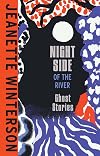
App-arition: A widow buries her husband. Her sister introduces her to an app that will supposedly call her and text her, just as he did when he was alive. And then, slowly, layer by layer, we uncover Bella’s marital life and the secrets she has been harbouring. An outstanding story. And I LOVED Bella.
‘’On that walk to West 10th Street I noticed nothing. An anonymous man in a crowded city. We pass through one another as though show more we are ghosts. The city itself a kingdom of the lost.’’
‘’How long is the night when it does not end?’’
The Old House at Home: Set in New York on Halloween’s night, the gathering of a group of paranormal investigators steps on the metaverse of avatars and hauntings.
Ghost in the Machine: A woman tries to create an improved avatar of her dead husband but things rarely go according to plan. A darkly humorous tale with faint traces of Shakespeare’s The Tempest.
‘’Spitalfields is ghost-friendly. The place is low-lit at night, there are always candles and I had the fireplace grates fitted with flame gas-fires. So, in the evening, in the winter, the wood panelling glows, and the floorboards shine, and there is no TV, only the quiet sound of me and a book.’’
JW1:Strange Meetings: Winterson narrates her personal experience of a domestic ghost. So atmospheric!
The Spare Room: A woman moves to a charming house after her divorce. Still clinging to the time with a husband who didn’t love her, she notices strange happenings in the spare room. A tender, haunting story of complicated love and letting go. Extremely atmospheric, like a quiet October night.
‘’But everyone grows older. Time’s arrow shoots shorter. Autumn comes.’’
A Fur Coat: A couple who works in a circus (among other things…) is giver a six-month free residency in a cottage, part of a rather significant estate The moment they step foot in the house, everything changes. Johny starts behaving like a drunk brute, Max is literally attacked by a fur coat. A frightening, dark tale told via Max’s perspective.
Boots: The point of view changes to focus on Johny and the power that starts overcoming him once a pair of boots is given to him by a man named Edwin. These are the origins of a dreadful tale.
Both stories communicate two voices full of darkness and despair in one of the most memorable pieces I’ve ever read, faintly reminiscent of The Turn of the Screw, a token of Winterson’s outstanding talent. You read it with a heavy heart.
The Door: A wedding is going to take place in a castle. The groom is separated from his bride-to-be, honouring tradition, unperturbed by the barman’s tale of haunting love and tragedy. But the darkness is thick, the moonlight weak, the wind sorrowful and there are footsteps in the corridor. And a door that leads nowhere…
JW2:Unexplained: Death omens, and your loved ones being always with you…
‘’Life is not a movie’, she says, ‘and God is not a special effect’’.
No Ghost Ghost Story: Winterson describes the sorrow of the one who has to stay behind when the person you love is gone in heart-shuttering writing. What happens when all you want is a ghost that refuses to come? Think of Heathcliff waiting for 20 years by the window…
This story contains some of THE MOST BEAUTIFUL sentences you will ever read.
The Undiscovered Country: The continuation of the previous story, told from the perspective of the deceased.
Canterville and Cock: I can think of far worse jobs than being a ghost tour guide. Right? Yes, but it’s not the same when the hauntings you invite people to are staged and fabricated. That’s what a self-named illusionist does in Berkshire, and now an ‘ingenious’ idea of a tragic ghost story from the 1960s is about to become real.
And I mean literal reality…A hilarious, modern-day Topper story.
JW3:All the Ghosts We Cannot See: Some things are invisible, yet standing right there in front of us.
‘’What we do or don’t believe makes no difference. In the end it is what it is.’’
Thin Air: A group of friends are honouring their annual, New Year’s tradition of withdrawing from the modern world, a ski resort as their shelter. But winter calls for ghost stories. And this is the story of a very tangible spirit. P.S. Loved the Sherlock Homes tidbits.
‘’Endless rain. Warming cold and cooling warm delivered the city over to a strange and spectral vision of itself. Buildings loomed out of the mist. On the streets, people materialised from nothing, too close, too sudden, their bulky bodies in winter wrappings like travelling mummies, then, just as suddenly, they disappeared, unravelling, so it seemed, in grey bandages of fog. Look behind and there’s no trace.’’
Fountain with Lions: A bittersweet, winter’s tale of Life and Death. Simply beautiful.
‘’Some people like to say that when we die we are going home. But it’s a strange home. We never visit it, until we do, and when we do, we never return.’’
Night Side of the River: A woman experiences a strange encounter while on a boat party in the middle of the Thames. The best way to end an exquisite collection.
Do yourselves a favour. Read a good book... Read Jeanette Winterson.
‘’Every night I want to be Heathcliff with Cathy tapping at the window. I want to be Hamlet on the windy battlements. I want the Flying Dutchman to dock. I want what everyone who has lost someone wants: a visitation.
Every second, someone dying is promising to come back from the dead. Every hour, waiting for it to happen, someone living notches up another hour lost.’’
My reviews can also be found on https://theopinionatedreaderblog.wordpress.com/ show less
Humans die. But then what?’’
App-arition: A widow buries her husband. Her sister introduces her to an app that will supposedly call her and text her, just as he did when he was alive. And then, slowly, layer by layer, we uncover Bella’s marital life and the secrets she has been harbouring. An outstanding story. And I LOVED Bella.
‘’On that walk to West 10th Street I noticed nothing. An anonymous man in a crowded city. We pass through one another as though show more we are ghosts. The city itself a kingdom of the lost.’’
‘’How long is the night when it does not end?’’
The Old House at Home: Set in New York on Halloween’s night, the gathering of a group of paranormal investigators steps on the metaverse of avatars and hauntings.
Ghost in the Machine: A woman tries to create an improved avatar of her dead husband but things rarely go according to plan. A darkly humorous tale with faint traces of Shakespeare’s The Tempest.
‘’Spitalfields is ghost-friendly. The place is low-lit at night, there are always candles and I had the fireplace grates fitted with flame gas-fires. So, in the evening, in the winter, the wood panelling glows, and the floorboards shine, and there is no TV, only the quiet sound of me and a book.’’
JW1:Strange Meetings: Winterson narrates her personal experience of a domestic ghost. So atmospheric!
The Spare Room: A woman moves to a charming house after her divorce. Still clinging to the time with a husband who didn’t love her, she notices strange happenings in the spare room. A tender, haunting story of complicated love and letting go. Extremely atmospheric, like a quiet October night.
‘’But everyone grows older. Time’s arrow shoots shorter. Autumn comes.’’
A Fur Coat: A couple who works in a circus (among other things…) is giver a six-month free residency in a cottage, part of a rather significant estate The moment they step foot in the house, everything changes. Johny starts behaving like a drunk brute, Max is literally attacked by a fur coat. A frightening, dark tale told via Max’s perspective.
Boots: The point of view changes to focus on Johny and the power that starts overcoming him once a pair of boots is given to him by a man named Edwin. These are the origins of a dreadful tale.
Both stories communicate two voices full of darkness and despair in one of the most memorable pieces I’ve ever read, faintly reminiscent of The Turn of the Screw, a token of Winterson’s outstanding talent. You read it with a heavy heart.
The Door: A wedding is going to take place in a castle. The groom is separated from his bride-to-be, honouring tradition, unperturbed by the barman’s tale of haunting love and tragedy. But the darkness is thick, the moonlight weak, the wind sorrowful and there are footsteps in the corridor. And a door that leads nowhere…
JW2:Unexplained: Death omens, and your loved ones being always with you…
‘’Life is not a movie’, she says, ‘and God is not a special effect’’.
No Ghost Ghost Story: Winterson describes the sorrow of the one who has to stay behind when the person you love is gone in heart-shuttering writing. What happens when all you want is a ghost that refuses to come? Think of Heathcliff waiting for 20 years by the window…
This story contains some of THE MOST BEAUTIFUL sentences you will ever read.
The Undiscovered Country: The continuation of the previous story, told from the perspective of the deceased.
Canterville and Cock: I can think of far worse jobs than being a ghost tour guide. Right? Yes, but it’s not the same when the hauntings you invite people to are staged and fabricated. That’s what a self-named illusionist does in Berkshire, and now an ‘ingenious’ idea of a tragic ghost story from the 1960s is about to become real.
And I mean literal reality…A hilarious, modern-day Topper story.
JW3:All the Ghosts We Cannot See: Some things are invisible, yet standing right there in front of us.
‘’What we do or don’t believe makes no difference. In the end it is what it is.’’
Thin Air: A group of friends are honouring their annual, New Year’s tradition of withdrawing from the modern world, a ski resort as their shelter. But winter calls for ghost stories. And this is the story of a very tangible spirit. P.S. Loved the Sherlock Homes tidbits.
‘’Endless rain. Warming cold and cooling warm delivered the city over to a strange and spectral vision of itself. Buildings loomed out of the mist. On the streets, people materialised from nothing, too close, too sudden, their bulky bodies in winter wrappings like travelling mummies, then, just as suddenly, they disappeared, unravelling, so it seemed, in grey bandages of fog. Look behind and there’s no trace.’’
Fountain with Lions: A bittersweet, winter’s tale of Life and Death. Simply beautiful.
‘’Some people like to say that when we die we are going home. But it’s a strange home. We never visit it, until we do, and when we do, we never return.’’
Night Side of the River: A woman experiences a strange encounter while on a boat party in the middle of the Thames. The best way to end an exquisite collection.
Do yourselves a favour. Read a good book... Read Jeanette Winterson.
‘’Every night I want to be Heathcliff with Cathy tapping at the window. I want to be Hamlet on the windy battlements. I want the Flying Dutchman to dock. I want what everyone who has lost someone wants: a visitation.
Every second, someone dying is promising to come back from the dead. Every hour, waiting for it to happen, someone living notches up another hour lost.’’
My reviews can also be found on https://theopinionatedreaderblog.wordpress.com/ show less

There’s a reverse snobbery thing you sometimes find in science fiction in which sf commentators sneer at non-sf authors, so-called “literary fiction” authors, who write sf and sort of get it wrong. I’m not one of them (well, not unless they sneer at science fiction first). Literary authors writing science fiction, whether they acknowledge it or not, has resulted in some excellent science fiction and fiction. Unfortunately, it has also resulted in books some writers would probably show more sooner didn’t appear on their bibliographies. I mean, Jeanette Winterson is a highly-regarded author in the UK and has written some excellent novels, but The Stone Gods reads like it was written by someone who thinks all literary sf should resemble David Mitchell’s highly successful Cloud Atlas. While the prose is actually really good, everything in the story feels secondhand and, well, used, and you have to wonder what point Winterson thought she was trying to prove. I mean, the novel opens with the sort of misogyny that might not have looked out of place in a 1940s sf novel but would certainly have raised eyebrows in a 2000 one. And then the narrative drops back to the 1700s and Easter Island, and takes as real the myth the islanders caused the islands’ ecological collapse. The idea of using science fiction as one of several narratives to illuminate a point is, in principle, almost impossible to abuse, although perhaps not entirely. Mitchell at least has a history in sf – he was a member of the BSFA for many years – but even so his novels still feel somewhat jejeune on a science-fictional level. Which is somewhat ironic, given that science fiction is itself a largely juvenile genre. But Winterson, an otherwise excellent writer, does not compare well with Mitchell with this book, and I don’t simply mean reading The Stone Gods as sf. In other respects, too. It’s clumsy. It fumbles its deployment of its sf tropes. It seems to imagine sf exists in opposition to an historical narrative. Which is not true. And never has been. Everything a literary author could do wrong when when writing sf-as-literary-fiction it sort of does wrong. And yes, I know “wrong” is not the right word, but you know what I mean. It fumbles everything. It’s almost the dictionary definition of a book by a lit author that sf snobs sneer at. Which unfortunately means it is neither good sf nor good literary fiction. Avoidable. show less

Sometimes I read a novel and can't help suspecting that it was born in some kind of drunken parlour game where friends write down random ideas on a piece of paper and the author is challenged to write a novel tying together all the plot elements she draws out of a hat. "Robert Louis Stevenson, Tristan & Isolde, Capri, adoption, Great Exhibition, Charles Darwin, Death in Venice, car-wash, ...," it must have gone on this occasion.
Whether or not that's what really happened, the result is an show more ingenious pastiche of the postmodern-Victorian-novel genre (think French lieutenant's woman or Possession), opening with the memorably Chaplinesque image of the narrator and her mother living in a house built on such a steep slope that they weren't allowed spaghetti or peas. It's great fun and runs at a lightning pace, we get bombarded with casual references to Treasure Island, Dr Jekyll, and much else, and there's a semi-serious underlying idea about the importance of stories in helping us to make sense of an impossibly dynamic universe. show less
Whether or not that's what really happened, the result is an show more ingenious pastiche of the postmodern-Victorian-novel genre (think French lieutenant's woman or Possession), opening with the memorably Chaplinesque image of the narrator and her mother living in a house built on such a steep slope that they weren't allowed spaghetti or peas. It's great fun and runs at a lightning pace, we get bombarded with casual references to Treasure Island, Dr Jekyll, and much else, and there's a semi-serious underlying idea about the importance of stories in helping us to make sense of an impossibly dynamic universe. show less
Lists
Winter Books (1)
Travel Reads (1)
Take Four Books (1)
1990s (1)
LGBTQIA Horror (1)
Best Dystopias (1)
First Novels (1)
Trans/Queer Lit (1)
Read This Next (1)
Female Author (4)
Booker Prize (1)
100 Hemskaste (1)
1980s (2)
A Novel Cure (3)
Magic Realism (3)
Five star books (4)
Favorite Memoirs (1)
Women in War (1)
Women's Stories (1)
Epistolary Books (1)
Short and Sweet (1)
Awards


You May Also Like


Associated Authors
Statistics
- Works
- 54
- Also by
- 40
- Members
- 37,078
- Popularity
- #492
- Rating
- 3.9
- Reviews
- 909
- ISBNs
- 732
- Languages
- 26
- Favorited
- 224


