
Angela Carter (1940–1992)
Author of The Bloody Chamber and Other Stories
About the Author
A powerful and disturbing writer, Angela Carter created haunting fiction about travelers surviving their passage through a disintegrating universe. Often based on myth or fairy tale-borrowed or invented for the occasion-her work evokes the most powerful aspects of sexuality and selfhood, of life show more and death, of apocalypse. Carter's most successful novels include The Magic Toyshop (1967), which received the John Llewellyn Rhys Prize and Several Perceptions (1968), winner of the Somerset Maugham Award. The Passion of New Eve (1977), a story of the end of the world and its possible new beginning with failed mankind replaced by a self-generating womankind. She translated many fairy tales and wrote several collections of short stories, including The Bloody Chamber (1979) which won the Cheltenham Festival of Literature Award and was the basis for the powerful movie A Company of Wolves. She worked as a journalist and as a professor at Brown and the University of Texas. She published two nonfiction books of interest: Nothing Sacred, selected writings, and The Sadeian Woman (1979). (Bowker Author Biography) show less
Image credit: Angela Carter, in 1983
Series
Works by Angela Carter
Wayward Girls and Wicked Women: An Anthology of Subversive Stories (1986) — Editor — 582 copies, 9 reviews
The Magic Toyshop, The Infernal Desire Machines of Doctor Hoffman, Wise Children (1996) 54 copies, 1 review
Vintage Fear: " The Complete Fairy Tales " , " The Bloody Chamber " (Vintage Classic Twins) (2007) 29 copies, 1 review
Sentence Diagramming Beginning: Breakdown and Learn the Underlying Structure of Sentences (Grades 3-12 ) (2016) 17 copies
Sentence Diagramming Level 1 - Breakdown and Learn the Underlying Structure of Sentences (Grades 5-12 ) (2016) 9 copies
Sentence Diagramming Level 2 - Breakdown and Learn the Underlying Structure of Sentences (Grades 7-12 ) (2017) 7 copies
The War Of Dreams 4 copies
The Snow Pavilion 2 copies
Vampirella [sound recording] 2 copies
The Kiss 1 copy
Collected Stories 1 copy
Carter Angela 1 copy
The Fall River Axe Murders 1 copy
A Souvenir of Japan 1 copy
Büyülü Oyuncak Dükkâni 1 copy
Snoezen van Poezen 1 copy
Carter, Angela Archive 1 copy
Cirkuskvällar 1 copy
Krvava odaja 1 copy
花火―九つの冒涜的な物語 1 copy
Associated Works
The Story and Its Writer: An Introduction to Short Fiction (1976) — Contributor — 1,220 copies, 3 reviews
Spells of Enchantment: The Wondrous Fairy Tales of Western Culture (1991) — Contributor — 607 copies, 5 reviews
Don't Bet on the Prince: Contemporary Feminist Fairy Tales in North America and England (1987) — Contributor — 513 copies, 4 reviews
You've Got to Read This: Contemporary American Writers Introduce Stories that Held Them in Awe (1994) — Contributor — 415 copies, 3 reviews
The Art of the Story: An International Anthology of Contemporary Short Stories (1999) — Contributor — 395 copies, 5 reviews
Sisters of the Revolution: A Feminist Speculative Fiction Anthology (2015) — Contributor — 345 copies, 8 reviews
The Year's Best Fantasy and Horror: Tenth Annual Collection (1997) — Contributor — 302 copies, 5 reviews
The New Gothic: A Collection of Contemporary Gothic Fiction (1991) — Contributor — 273 copies, 2 reviews
The Year's Best Fantasy and Horror: Sixth Annual Collection (1993) — Contributor — 219 copies, 1 review
Women of Wonder, the Contemporary Years: Science Fiction by Women from the 1970s to the 1990s (1995) — Contributor — 217 copies, 2 reviews
The Sophisticated Cat: A Gathering of Stories, Poems, and Miscellaneous Writings About Cats (1992) — Contributor — 112 copies, 1 review
ParaSpheres: Extending Beyond the Spheres of Literary and Genre Fiction: Fabulist and New Wave Fabulist Stories (2006) — Contributor — 65 copies
Vampires, Zombies, Werewolves and Ghosts: 25 Classic Stories of the Supernatural (Signet Classics) (2011) — Contributor — 54 copies, 1 review
The Second Gates of Paradise: The Anthology of Erotic Short Fiction (1997) — Contributor — 38 copies
Light Years and Dark: Science Fiction and Fantasy of and for Our Time (1984) — Contributor — 37 copies
Deadly Dolls: Midnight Tales of Uncanny Playthings: 50 (British Library Tales of the Weird) (2024) — Contributor — 33 copies, 1 review
Pulsar: An Original Anthology of Science Fiction and Science Futures: No. 1 (1978) — Contributor — 27 copies
The Reception of Grimms' Fairy Tales: Responses, Reactions, Revisions (1993) — Contributor — 16 copies
Sylvia Plath's Tomato Soup Cake: A Compendium of Classic Authors' Favourite Recipes (2024) — Contributor — 6 copies
Once Upon a Time There Was a Traveller: Asham award-winning stories (2013) — Contributor — 4 copies, 1 review
Im Zeichen der Venus. Frauen schreiben erotische Geschichten ( Anthologie). (2001) — Contributor — 1 copy
Tagged
Common Knowledge
- Other names
- Carter-Pearce, Angela Olive
Carter, Angela Olive
Stalker, Angela Olive (birth name) - Birthdate
- 1940-05-07
- Date of death
- 1992-02-16
- Gender
- female
- Education
- University of Bristol
- Occupations
- novelist
short story writer
essayist
children's writer
reporter - Organizations
- University of Sheffield (fellow ∙ creative writing)
- Awards and honors
- Guest of Honour, Eastercon, UK (1982)
James Tiptree, Jr. Award (Special, 1997) - Agent
- Stephen Durbridge (The Agency)
Rogers, Coleridge & White - Relationships
- Enright, Anne (student)
- Cause of death
- lung cancer
- Nationality
- UK
- Birthplace
- Eastbourne, Sussex, England, UK
- Places of residence
- Japan
USA
Australia
Yorkshire, England, UK
London, Middlesex, England, UK - Place of death
- London, Middlesex, England, UK
- Map Location
- England, UK
Members
Discussions
THE DEEP ONES: "The Snow Pavilion" by Angela Carter in The Weird Tradition (April 2021)
Nights at the Circus by Angela Carter--Bowie's Top 100 in 75 Books Challenge for 2016 (November 2016)
BRITISH AUTHOR CHALLENGE APRIL 2015 - CARTER & SOMERSET MAUGHAM in 75 Books Challenge for 2015 (September 2015)
Reviews
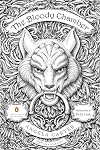
There are certain books that, when I finally get around to reading them, leave me wondering how the hell I managed to reach the age I have without having done so before. This collection was definitely one of those. Because I love fairy tale retellings and reworkings, and Angela Carter's are -- rightfully, it turns out -- regarded as standout examples
Only it turns out they're even more than that. I found this collection absolutely stunning. Carter's writing seems to weave a dark, complicated show more magic of its own. Which is all the more impressive because, in some of these stories, there were moments when I stopped, pulled back a little, thought about the kind of language she was using to tell her tale, and realized that, honestly, it all feels like it ought to be a little... overwrought. Purple, even, in places. And yet, holy crap, does it somehow work to just pull you along, somehow. The language, the imagery, the familiar fairy tale elements and the way they twist and transform into shapes that are completely unexpected and yet somehow don't feel as if they should be unexpected... It all seems to work to completely bypass the rational part of my brain and inject something wonderful and disturbing directly into my veins. And yet, I have the very strong feeling that I could probably revisit these stories any number of times, with or without my analytical brain fully engaged, and find something new to think about in them every time.
It's a rare and incredible thing when I finish a work of fiction and find myself just sitting there saying wow out loud for a little while afterward. This collection did it for me twice: once when I finished "The Lady of the House of Love" (a vampire tale with echoes of Sleeping Beauty), and then again when I finished the whole collection.
Wow. show less
Only it turns out they're even more than that. I found this collection absolutely stunning. Carter's writing seems to weave a dark, complicated show more magic of its own. Which is all the more impressive because, in some of these stories, there were moments when I stopped, pulled back a little, thought about the kind of language she was using to tell her tale, and realized that, honestly, it all feels like it ought to be a little... overwrought. Purple, even, in places. And yet, holy crap, does it somehow work to just pull you along, somehow. The language, the imagery, the familiar fairy tale elements and the way they twist and transform into shapes that are completely unexpected and yet somehow don't feel as if they should be unexpected... It all seems to work to completely bypass the rational part of my brain and inject something wonderful and disturbing directly into my veins. And yet, I have the very strong feeling that I could probably revisit these stories any number of times, with or without my analytical brain fully engaged, and find something new to think about in them every time.
It's a rare and incredible thing when I finish a work of fiction and find myself just sitting there saying wow out loud for a little while afterward. This collection did it for me twice: once when I finished "The Lady of the House of Love" (a vampire tale with echoes of Sleeping Beauty), and then again when I finished the whole collection.
Wow. show less
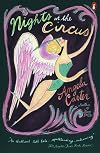
A remarkable work of the imagination and magical realism, "Nights at the Circus" is one of my favourite novels, and one I can always turn to to remind me that writing is an artform of limitless possibility.
The characters and setting are rich and vibrant and, while I don't particularly enjoy fantasy or sci-fi works, Carter's world here is like that of Gabriel Garcia Marquez: anything is possible, but what happens always seems hauntingly, and depressingly, real. The difference between this and show more a Marquez work is that our protagonist is a reporter from the equally real world of fin-de-siecle England who finds himself unable to ascertain the boundaries between reality and fantasy. I acknowledge that not everyone will "get it", although I think that is BECAUSE there is nothing to get. This isn't a book with one meaning to be found on the last page, nor a book in which the fantastic elements are hiding some kind of comment on the 'real world'. This is instead a work of boundless beauty and effervescent figures living in an historical era, as all historical eras are: filled - or so it seems from our viewpoint - with possibility and impossibility. What it means, if anything, is for us to open our eyes to the world, even if - at the end of the day - seeing won't necessarily mean believing. Anything is possible but nothing is as it seems. Accept the confusion, relish it, and live amongst it. Or that's what I think, anyway. show less
The characters and setting are rich and vibrant and, while I don't particularly enjoy fantasy or sci-fi works, Carter's world here is like that of Gabriel Garcia Marquez: anything is possible, but what happens always seems hauntingly, and depressingly, real. The difference between this and show more a Marquez work is that our protagonist is a reporter from the equally real world of fin-de-siecle England who finds himself unable to ascertain the boundaries between reality and fantasy. I acknowledge that not everyone will "get it", although I think that is BECAUSE there is nothing to get. This isn't a book with one meaning to be found on the last page, nor a book in which the fantastic elements are hiding some kind of comment on the 'real world'. This is instead a work of boundless beauty and effervescent figures living in an historical era, as all historical eras are: filled - or so it seems from our viewpoint - with possibility and impossibility. What it means, if anything, is for us to open our eyes to the world, even if - at the end of the day - seeing won't necessarily mean believing. Anything is possible but nothing is as it seems. Accept the confusion, relish it, and live amongst it. Or that's what I think, anyway. show less
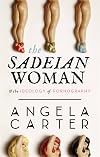
Como já havia ficado claro com a leitura dos contos de fadas com twist de empoderamento feminino que Angela Carter formulou, ela é uma mulher muito inteligente e sua perspicácia fica ainda mais evidente quando se trata de teoria literária. Pudera eu ser tão sagaz quanto ela.
Carter faz uma bela introdução explicando que apesar da misantropia sadeana, Sade realizava uma sátira sobre as relações entre homens e mulheres e o tipo de pornografia que executava dava poder às mulheres show more porque não era o tipo de submissão ao status quo presente em livros como Fanny Hill, tanto que Sade entendia mais do poder do clítoris do que Freud cem anos depois.
No segundo capítulo Carter analisa Justine e o quanto está em confluência com a mulher ideal erigida pelo patriarcado, em parte do capítulo a autora faz um paralelo entra a mulher masoquista Sadeana representada por Justine e o ideal de mulher que convencionou-se no cinema com ênfase específica no mito de Marilyn Monroe que representaria a Justine definitiva do século XX.
No terceiro capítulo a autora discorre sobre Juliette, a antítese de Justine, de como ela é a negação da mulher erigida pelo patriarcado, de como ela se perpetua como a supermulher nietzscheana no ápice do próprio poder.
O quarto capítulo se refere à Filosofia na Alcova em que a autora analisa veementemente a questão edipiana do estupro da mãe pela filha Eugenie, além de usar a teoria kleiniana da inveja e gratidão, seio bom/mau para explicar as relações entre mãe e filha.
Carter encerra o livro alinhavando que os libertinos sadeanos seriam tão perversos polimorfos quanto as crianças na teoria freudiana, além de um pequeno posfácio com um trecho da escrita de Emma Goldman. show less
Carter faz uma bela introdução explicando que apesar da misantropia sadeana, Sade realizava uma sátira sobre as relações entre homens e mulheres e o tipo de pornografia que executava dava poder às mulheres show more porque não era o tipo de submissão ao status quo presente em livros como Fanny Hill, tanto que Sade entendia mais do poder do clítoris do que Freud cem anos depois.
No segundo capítulo Carter analisa Justine e o quanto está em confluência com a mulher ideal erigida pelo patriarcado, em parte do capítulo a autora faz um paralelo entra a mulher masoquista Sadeana representada por Justine e o ideal de mulher que convencionou-se no cinema com ênfase específica no mito de Marilyn Monroe que representaria a Justine definitiva do século XX.
No terceiro capítulo a autora discorre sobre Juliette, a antítese de Justine, de como ela é a negação da mulher erigida pelo patriarcado, de como ela se perpetua como a supermulher nietzscheana no ápice do próprio poder.
O quarto capítulo se refere à Filosofia na Alcova em que a autora analisa veementemente a questão edipiana do estupro da mãe pela filha Eugenie, além de usar a teoria kleiniana da inveja e gratidão, seio bom/mau para explicar as relações entre mãe e filha.
Carter encerra o livro alinhavando que os libertinos sadeanos seriam tão perversos polimorfos quanto as crianças na teoria freudiana, além de um pequeno posfácio com um trecho da escrita de Emma Goldman. show less
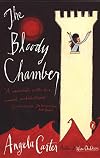
My first reading of Angela Carter. I can see why she is popular and well-regarded. This book is about as good as retellings of fairy tales could be. Through rabid exorcisms of imagery mesmerizing moments are born from her disturbing imagination. The dense sentences cluster like a nest of snakes, sniping you from the shadows. Her Baroque stylings are distinctly old-fashioned, but her standpoint and her quirkiness are bold and fresh.
I am easily taken in by the promise of exile in a magic show more kingdom. I was on guard at first, since I could sense sinister intent in her method. It was a little like the feeling you might have had sitting around a campfire as a child, when some storytelling prodigy joins the circle with the commitment to scar you for life.
Multiple stories deal with captivity, and probably stem from Carter's dissatisfaction with the outmoded portrayals of women in traditional fairy tales. This is understandable, since they were all conceived in the long age of patriarchal oppression. The Revisionist nature of her composition lends relevance to old stories. She essentially claims them for her own. Aside from her intentions, the craft on display is of the highest caliber. Many descriptions are as poetic as Bradbury's, but have more bite.
She does not shy away from statutory rape, from sheer carnage. She depicts the confines of poor marriage in a truly frightening manner. Characters seethe with their hideous pasts and dark secrets, concealing the eldritch monsters dwelling in their hearts. Movement and innovation are par for the course for Carter. These are certainly no longer stories for children. They are sophisticated but playful, and the prose is infused with magic. They are suggestive, and mingle the morbid and the beautiful extremely well. Long paragraphs of Gothic and colorful musings, luscious landscapes and boudoirs all contribute to an antiquated rhythm suggestive of Poe.
"The potentiality for corruption," struck me as a theme. While pessimistic, the stilted perspective is a means by which all things gain shades of sinister meaning. She sustains an effective chilling atmosphere throughout, as the heroes and heroines experience the slick slide into terror, with breathtaking intensity, derailing the Huysmanesque still-life compositions.
Carter lacks innocence, seems to have lost the childish wonder inherent in the original source material. In exchange she brings a wickedness which underlies her charming descriptions. The double meanings of her twisted tales are pretty graphic, and I wonder if we shouldn't pass them on to our children anyway. The world is a dark place. They will encounter a few monsters in due course. And the monsters were in the original tales in the first place. They just weren't so heartrendingly deranged. show less
I am easily taken in by the promise of exile in a magic show more kingdom. I was on guard at first, since I could sense sinister intent in her method. It was a little like the feeling you might have had sitting around a campfire as a child, when some storytelling prodigy joins the circle with the commitment to scar you for life.
Multiple stories deal with captivity, and probably stem from Carter's dissatisfaction with the outmoded portrayals of women in traditional fairy tales. This is understandable, since they were all conceived in the long age of patriarchal oppression. The Revisionist nature of her composition lends relevance to old stories. She essentially claims them for her own. Aside from her intentions, the craft on display is of the highest caliber. Many descriptions are as poetic as Bradbury's, but have more bite.
She does not shy away from statutory rape, from sheer carnage. She depicts the confines of poor marriage in a truly frightening manner. Characters seethe with their hideous pasts and dark secrets, concealing the eldritch monsters dwelling in their hearts. Movement and innovation are par for the course for Carter. These are certainly no longer stories for children. They are sophisticated but playful, and the prose is infused with magic. They are suggestive, and mingle the morbid and the beautiful extremely well. Long paragraphs of Gothic and colorful musings, luscious landscapes and boudoirs all contribute to an antiquated rhythm suggestive of Poe.
"The potentiality for corruption," struck me as a theme. While pessimistic, the stilted perspective is a means by which all things gain shades of sinister meaning. She sustains an effective chilling atmosphere throughout, as the heroes and heroines experience the slick slide into terror, with breathtaking intensity, derailing the Huysmanesque still-life compositions.
Carter lacks innocence, seems to have lost the childish wonder inherent in the original source material. In exchange she brings a wickedness which underlies her charming descriptions. The double meanings of her twisted tales are pretty graphic, and I wonder if we shouldn't pass them on to our children anyway. The world is a dark place. They will encounter a few monsters in due course. And the monsters were in the original tales in the first place. They just weren't so heartrendingly deranged. show less
Lists
Magic Realism (6)
Greatest Books (1)
Florida (1)
Backlisted (1)
Best Dystopias (1)
Books with Twins (1)
Folio Society (1)
Actors (1)
Take Four Books (1)
Read This Next (1)
Books for Birute (1)
Put a Bird On It (1)
1970s (1)
Stuff from Bard (1)
Literary Witches (4)
A Novel Cure (2)
My TBR (2)
Schwob Nederland (2)
Shaking a Leg (2)
Female Author (2)
To Read - Horror (1)
NTS Book Channel (1)
1970s Horror (1)
Awards


You May Also Like


Associated Authors
Statistics
- Works
- 101
- Also by
- 97
- Members
- 25,438
- Popularity
- #822
- Rating
- 3.9
- Reviews
- 481
- ISBNs
- 429
- Languages
- 22
- Favorited
- 228


