
Kate Pullinger
Author of The Mistress of Nothing
About the Author
Image credit: Courtesy of Serpent's Tail Press
Series
Works by Kate Pullinger
Border Lines 2 copies
Mistress of nothing, The 1 copy
Associated Works
Tagged
Common Knowledge
- Canonical name
- Pullinger, Kate
- Birthdate
- 1961
- Gender
- female
- Education
- McGill University, Montreal, Canada
- Occupations
- novelist
- Organizations
- De Montfort University
- Agent
- Sayle Literary Agency
- Nationality
- Canada
UK - Birthplace
- Cranbrook, British Columbia, Canada
- Places of residence
- Cranbrook, British Columbia, Canada (birth)
Vancouver, British Columbia, Canada
London, England, UK (1982-) - Associated Place (for map)
- British Columbia, Canada
Members
Reviews
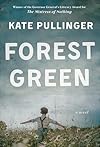
I first encountered Kate Pullinger about a decade ago when her Mistress of Nothing won the 2009 Governor General’s Award for Fiction. I would not be surprised if Forest Green wins some literary awards.
The book begins in 1995 with a homeless man on the streets of Vancouver. Via flashbacks, we are told the story of how he came to be in this situation. The first flashback is to 1934 when Arthur Lunn is seven years old and living with his family in the Okanagan Valley. His family is largely show more unaffected by the Great Depression, but there is an encampment of unemployed men nearby. Art and his sister Peg encounter a man at the camp and that meeting leads to a tragic event which leaves Art with feelings of guilt for the rest of his life.
The novel examines how childhood trauma can shape a person’s life. Because Art feels responsible for a tragedy, that “what had happened was his fault,” he feels others are always judging him so he makes a major decision about his life “to stop people thinking of him as the boy whose idiocy led to that terrible night.” When another tragedy occurs, Art feels even more guilt and even less able to escape “the pressure of the past” which he feels most strongly when with his family. He begins a nomadic existence in logging camps because “Being with his family made Art restless . . . always wanting to leave as soon as he’d arrived.” He is rescued by love but when yet another tragedy occurs, he is unable to recover.
Art spends much of his life as a logger so the book does provide glimpses into the logging industry in British Columbia and how attitudes to forestry have changed. Art thinks of trees “as a resource to be taken from the land, always there, infinite” even when the province looks like “a patchwork, as though it’s been scalped by a no-good barber who kept cutting off more hair in the hope of fixing his mistakes.” But then he encounters the forest green, the rainforest in the Queen Charlotte Islands (now Haida Gwaii), and he finds peace; he wants “to stay there, rooted, breathing the rainforest air.” And he realizes that “When you felled one of those trees, you were bringing hundreds of years of living to an end. . . . And it turned out that those trees, well, those trees were not infinite. That got to Art a little at the end.”
In the end, the forest serves as a metaphor for human life: “trees in a forest are all connected via their roots, that the forest floor is a kind of communication network made of moss and insects and fungi and all manner of life, and the forest itself a single organism, like a living soul regenerating through an endless cycle of rot and regrowth.” Art feels like a solitary tree until he re-connects to the forest. And the message is that we are all part of a single living soul.
Art emerges as a complex character. His life is not easy. Though readers will not agree with some of Art’s choices, they will understand and empathize. Though Art’s is only one story, it reminds us that there are many such stories among the homeless and addicted. A book that can inspire people to have compassion for the downtrodden is a good book.
The book is not especially lengthy, and the plot seems simple and straightforward, but it is thought-provoking and emotionally compelling.
Note: I received a digital galley from the publisher via NetGalley.
Please check out my reader's blog (https://schatjesshelves.blogspot.com/) and follow me on Twitter (@DCYakabuski). show less
The book begins in 1995 with a homeless man on the streets of Vancouver. Via flashbacks, we are told the story of how he came to be in this situation. The first flashback is to 1934 when Arthur Lunn is seven years old and living with his family in the Okanagan Valley. His family is largely show more unaffected by the Great Depression, but there is an encampment of unemployed men nearby. Art and his sister Peg encounter a man at the camp and that meeting leads to a tragic event which leaves Art with feelings of guilt for the rest of his life.
The novel examines how childhood trauma can shape a person’s life. Because Art feels responsible for a tragedy, that “what had happened was his fault,” he feels others are always judging him so he makes a major decision about his life “to stop people thinking of him as the boy whose idiocy led to that terrible night.” When another tragedy occurs, Art feels even more guilt and even less able to escape “the pressure of the past” which he feels most strongly when with his family. He begins a nomadic existence in logging camps because “Being with his family made Art restless . . . always wanting to leave as soon as he’d arrived.” He is rescued by love but when yet another tragedy occurs, he is unable to recover.
Art spends much of his life as a logger so the book does provide glimpses into the logging industry in British Columbia and how attitudes to forestry have changed. Art thinks of trees “as a resource to be taken from the land, always there, infinite” even when the province looks like “a patchwork, as though it’s been scalped by a no-good barber who kept cutting off more hair in the hope of fixing his mistakes.” But then he encounters the forest green, the rainforest in the Queen Charlotte Islands (now Haida Gwaii), and he finds peace; he wants “to stay there, rooted, breathing the rainforest air.” And he realizes that “When you felled one of those trees, you were bringing hundreds of years of living to an end. . . . And it turned out that those trees, well, those trees were not infinite. That got to Art a little at the end.”
In the end, the forest serves as a metaphor for human life: “trees in a forest are all connected via their roots, that the forest floor is a kind of communication network made of moss and insects and fungi and all manner of life, and the forest itself a single organism, like a living soul regenerating through an endless cycle of rot and regrowth.” Art feels like a solitary tree until he re-connects to the forest. And the message is that we are all part of a single living soul.
Art emerges as a complex character. His life is not easy. Though readers will not agree with some of Art’s choices, they will understand and empathize. Though Art’s is only one story, it reminds us that there are many such stories among the homeless and addicted. A book that can inspire people to have compassion for the downtrodden is a good book.
The book is not especially lengthy, and the plot seems simple and straightforward, but it is thought-provoking and emotionally compelling.
Note: I received a digital galley from the publisher via NetGalley.
Please check out my reader's blog (https://schatjesshelves.blogspot.com/) and follow me on Twitter (@DCYakabuski). show less
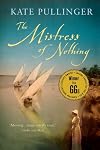
The best thing about this book was the wonderful setting in Egypt and the author's ability to paint pictures of the country and its people. Ms. Pullinger is a very good writer and I can see why this book won the G.G. Award.
The plot is based on the true story of Lucie Duff Gordon, who left her family in England to live in Egypt in an attempt to cure her TB. She travelled with only her maid, Sally. Based on letters Lady Duff Gordon published, the author has created this story from Sally's show more perspective.
Sally has been a servant all her life. In Egypt, she begins to enjoy freedom; first, from the oppression of Victorian clothing, and ultimately from spinsterhood and servitude to a life of love as a wife and mother. However, it seems Sally will have to pay dearly for these freedoms as she begins to lose what she most treasures, starting with Lady Duff Gordon's affection and approval.
The plot was a disappointment as the motivations of the characters, especially Lady Duff Gordon, were never clear. She went from being a kind person, willing to help friends and strangers alike, to being cold and cruel to Sally with no explanation. Sally's husband, Omar's, motivations were perhaps easier to understand but any conflicts he felt were not mentioned or dealt with.
All in all, I'd rate this as "ok" -- lovely writing and some very powerful images and moments. But, weak character development. show less
The plot is based on the true story of Lucie Duff Gordon, who left her family in England to live in Egypt in an attempt to cure her TB. She travelled with only her maid, Sally. Based on letters Lady Duff Gordon published, the author has created this story from Sally's show more perspective.
Sally has been a servant all her life. In Egypt, she begins to enjoy freedom; first, from the oppression of Victorian clothing, and ultimately from spinsterhood and servitude to a life of love as a wife and mother. However, it seems Sally will have to pay dearly for these freedoms as she begins to lose what she most treasures, starting with Lady Duff Gordon's affection and approval.
The plot was a disappointment as the motivations of the characters, especially Lady Duff Gordon, were never clear. She went from being a kind person, willing to help friends and strangers alike, to being cold and cruel to Sally with no explanation. Sally's husband, Omar's, motivations were perhaps easier to understand but any conflicts he felt were not mentioned or dealt with.
All in all, I'd rate this as "ok" -- lovely writing and some very powerful images and moments. But, weak character development. show less
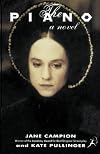
Concise, well written extended story that informed the famous film, though it was written after the movie got famous. Luckily I did not remember the script of the movie. It is a killer of a story, with, however, the obligatory Hollywood ending (breaking the thread of connectedness to the piano, by letting it sink and drifting to the surface oneself).
What was really well elaborated in the novel is the central role that the piano plays as a conveyor or proxy of the sensibilities of its player show more – how music can enchant the soul while allowing souls to meet or repel each other. Campbell and co also treat the classic dilemma of strangers in a foreign, wild society very well by developing two diametrically opposed archetypes in Stewart (settler – hungry for fenced land) and Baines (interpreter between two worlds – going local). The local Maoris also play a healthy role as antidote to Victorian fanciness. I like the Maori woman’s remark on Baines’ tool wasting away with his wife far off in Scotland – such a waste. Also on the way to Stewart’s house there is a hush and stoppage, when the Maori carriers pass the spot where the old man died.
Campbell is one of the best writers on female sensitivities in a positive sense of the word. show less
What was really well elaborated in the novel is the central role that the piano plays as a conveyor or proxy of the sensibilities of its player show more – how music can enchant the soul while allowing souls to meet or repel each other. Campbell and co also treat the classic dilemma of strangers in a foreign, wild society very well by developing two diametrically opposed archetypes in Stewart (settler – hungry for fenced land) and Baines (interpreter between two worlds – going local). The local Maoris also play a healthy role as antidote to Victorian fanciness. I like the Maori woman’s remark on Baines’ tool wasting away with his wife far off in Scotland – such a waste. Also on the way to Stewart’s house there is a hush and stoppage, when the Maori carriers pass the spot where the old man died.
Campbell is one of the best writers on female sensitivities in a positive sense of the word. show less

This is a brave book, tackling difficult subjects such as race relations, across two centuries and continents. The main drawback for me was not finding the modern characters likeable. When the protagonist says she wasn't a good daughter, I believe her. She learns little of herself between her own two timelines -- her youth in British Columbia and adulthood in London. Her historical imagining of the 19th century was more accessible to me, portraying the extraordinary couple of (Sir) James and show more Amelia Douglas. It was refreshing to read a story of their lives, though in comparison to the contemporary characters they sometimes feel idealized. From my own research, I felt an added historical irony that Douglas's "image of fidelity" which drew the protagonist to his story, may not be accurate. He was described by a woman in the fur trade as 'a great ladies' man' -- a quite different view from typical histories of him. Douglas was far from "perfect," as seen by the protagonist. I would have liked a bit more reality for the historical characters and a few redeeming characteristics for the modern ones, to make this a fuller comparison and story. show less
Lists
Awards


You May Also Like


Associated Authors
Statistics
- Works
- 29
- Also by
- 2
- Members
- 1,443
- Popularity
- #17,817
- Rating
- 3.5
- Reviews
- 68
- ISBNs
- 125
- Languages
- 12