
Dianne Warren (1) (1950–)
Author of Cool Water
For other authors named Dianne Warren, see the disambiguation page.
About the Author
Canadian Dianne Warren is an award winning playwright and fiction writer. Her plays include Club Chernobyl and Serpent in the Night Sky, which was nominated for a Governor General's Literary Award for Drama. Warren has also written The Wednesday Flower Man, a book of short stories and Bad Luck Dog, show more which won three Saskatchewan Book Awards, including Book of the Year. (Bowker Author Biography) show less
Works by Dianne Warren
Reckless moon and other stories 3 copies
Tagged
Common Knowledge
- Birthdate
- 1950-08-28
- Gender
- female
- Education
- University of Regina
- Awards and honors
- Marian Engel Award (2004)
- Nationality
- Canada
- Birthplace
- Ottawa, Ontario, Canada
- Places of residence
- Regina, Saskatchewan, Canada
Ottawa, Ontario, Canada - Map Location
- Canada
Members
Reviews
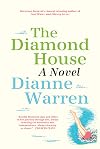
I was pleased to discover that Dianne Warren, whose novel Cool Water won the Governor-General’s Award for Fiction and was nominated for the Scotiabank Giller Prize, had a new novel out. Unfortunately, I didn’t find The Diamond House as engaging as her first novel.
The book focuses on Estella, the youngest daughter of Oliver and Beatrice Diamond. When she is five years old, Estella finds some letters and learns that her father, a successful brick-factory owner, was once briefly married to show more Salina, an independent and unconventional woman who aspired to be a ceramics artist. Raised by her mother Beatrice, a very traditional woman, Estella often wishes she had been raised by Salina. She too longs to be independent, but her plans are always derailed by the needs of her family and, though she does have a career as a teacher, she always reverts to the role of a dutiful daughter.
The novel begins in 1902 when Estella and Oliver first meet and ends in the present after “the Raptors had won the championship.” It begins in the Ottawa Valley but soon moves to Regina and northern Saskatchewan.
The contrast between Salina and Beatrice is striking. Salina has an “independent manner” and does not want a “predictable life.” She wonders how a young woman like herself can “become what she dreams of being.” She runs away from home and sets off for Europe. Beatrice, on the other hand, is anything but daring. When she and Oliver move to western Canada, she is “unsettled by this wilderness, and she felt a longing for quiet, conventional Bryne Corners, Ontario, and the house she had grown up in.” Whereas Salina was “a free spirit and a suffragist,” Beatrice “was determined to adapt as well as any woman to the role of wife and mother” and vows to offer Oliver “stability and a well-kept home.”
How could Oliver be attracted to two such very different women? Would Oliver and Salina have been happy together when Salina was “not likely a woman who would have adapted well to being a homemaker”? Certainly, Estella suspects that were Salina her mother, she would have encouraged her independent spirit.
Certainly, Estella is not encouraged to pursue a career other than marriage. Oliver proves to be a traditional man who expects his sons to work in the family business but makes no room for his daughter; “he’d not taken his daughter seriously, and that consequence was her career as a mathematics teacher – a perfectly good career, but not a dream career.” He never really considers her dreams, though he did once write to Salina that he has separated from his family because they have no dreams “and without dreams there is no joy.” Because she is female and because she is single, Estella is expected to put her family’s needs first, so at different times, she ends up a caregiver to a brother, her mother, and her father. Advancing into an administrative role at school is not possible “because her teaching record had too many interruptions when she’d taken leaves to care for her brother, and her mother and . . . ” Eventually, Estella takes steps to assert herself in the family business but there are unforeseen consequences and in the end she asks “Had it been worth it?”
This book reminded me of another I recently read: The Dutch House by Ann Patchett. Just as Cyril makes the decisions about the house he and Elna will have, Oliver does not ask Beatrice what she would like in a house: “He seemed to believe he knew what a married woman would want.” Estella and Maeve are in similar positions; they are educated but the possibility of advanced education is never considered by their fathers.
Though Estella does not live a stellar life that would befit her name, she is the star of the book. She emerges as a fully developed character. At times I found myself cheering for her when she did something daring and at other times, I could have cried in frustration as she coasted through life. Perhaps because I’m older, I really liked the older Estella. Her questioning the meaning of her life and her legacy is something with which I can identify.
The novel does not cover new ground. Many other books have showcased the limited opportunities for women because of societal expectations. The Diamond House begins well but the pace really slows down (like Estella’s life perhaps). Momentum picks up towards the end, but the middle is a slog. A bit of judicious revision/editing would have this book shining more like the diamond in its title.
Note: Please check out my reader's blog (https://schatjesshelves.blogspot.com/) and follow me on Twitter (@DCYakabuski). show less
The book focuses on Estella, the youngest daughter of Oliver and Beatrice Diamond. When she is five years old, Estella finds some letters and learns that her father, a successful brick-factory owner, was once briefly married to show more Salina, an independent and unconventional woman who aspired to be a ceramics artist. Raised by her mother Beatrice, a very traditional woman, Estella often wishes she had been raised by Salina. She too longs to be independent, but her plans are always derailed by the needs of her family and, though she does have a career as a teacher, she always reverts to the role of a dutiful daughter.
The novel begins in 1902 when Estella and Oliver first meet and ends in the present after “the Raptors had won the championship.” It begins in the Ottawa Valley but soon moves to Regina and northern Saskatchewan.
The contrast between Salina and Beatrice is striking. Salina has an “independent manner” and does not want a “predictable life.” She wonders how a young woman like herself can “become what she dreams of being.” She runs away from home and sets off for Europe. Beatrice, on the other hand, is anything but daring. When she and Oliver move to western Canada, she is “unsettled by this wilderness, and she felt a longing for quiet, conventional Bryne Corners, Ontario, and the house she had grown up in.” Whereas Salina was “a free spirit and a suffragist,” Beatrice “was determined to adapt as well as any woman to the role of wife and mother” and vows to offer Oliver “stability and a well-kept home.”
How could Oliver be attracted to two such very different women? Would Oliver and Salina have been happy together when Salina was “not likely a woman who would have adapted well to being a homemaker”? Certainly, Estella suspects that were Salina her mother, she would have encouraged her independent spirit.
Certainly, Estella is not encouraged to pursue a career other than marriage. Oliver proves to be a traditional man who expects his sons to work in the family business but makes no room for his daughter; “he’d not taken his daughter seriously, and that consequence was her career as a mathematics teacher – a perfectly good career, but not a dream career.” He never really considers her dreams, though he did once write to Salina that he has separated from his family because they have no dreams “and without dreams there is no joy.” Because she is female and because she is single, Estella is expected to put her family’s needs first, so at different times, she ends up a caregiver to a brother, her mother, and her father. Advancing into an administrative role at school is not possible “because her teaching record had too many interruptions when she’d taken leaves to care for her brother, and her mother and . . . ” Eventually, Estella takes steps to assert herself in the family business but there are unforeseen consequences and in the end she asks “Had it been worth it?”
This book reminded me of another I recently read: The Dutch House by Ann Patchett. Just as Cyril makes the decisions about the house he and Elna will have, Oliver does not ask Beatrice what she would like in a house: “He seemed to believe he knew what a married woman would want.” Estella and Maeve are in similar positions; they are educated but the possibility of advanced education is never considered by their fathers.
Though Estella does not live a stellar life that would befit her name, she is the star of the book. She emerges as a fully developed character. At times I found myself cheering for her when she did something daring and at other times, I could have cried in frustration as she coasted through life. Perhaps because I’m older, I really liked the older Estella. Her questioning the meaning of her life and her legacy is something with which I can identify.
The novel does not cover new ground. Many other books have showcased the limited opportunities for women because of societal expectations. The Diamond House begins well but the pace really slows down (like Estella’s life perhaps). Momentum picks up towards the end, but the middle is a slog. A bit of judicious revision/editing would have this book shining more like the diamond in its title.
Note: Please check out my reader's blog (https://schatjesshelves.blogspot.com/) and follow me on Twitter (@DCYakabuski). show less
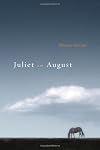
A sparse and beautifully written slice of life in the small town of Juliet, Saskatchewan.
Everyday overlapping and intertwining stories of people quietly living their lives.
We get to know the people of Juliet first through a bored horse who escapes his trailer and arrives at a farm where the new owner has been contemplating the farm left to him by his adoptive parents now deceased wondering what to do with his life. Seeing the beautiful Arab horse appear in the moonlight he hops on and takes show more a 100 mile one day ride visiting the people of Juliet along the way and coming to a decision in his own life.
We meet a bank manager, a shy older couple, a crazy mother of six, a woman looking to reconnect with her daughter and grandchildren and Antoinette the lost camel….and speaking of Antoinette, my one complaint about the book was not enough of her!
I loved this book, I love the slow pace the everyday ordinary people living their lives. A beautifully written book that will stay with me for some time show less
Everyday overlapping and intertwining stories of people quietly living their lives.
We get to know the people of Juliet first through a bored horse who escapes his trailer and arrives at a farm where the new owner has been contemplating the farm left to him by his adoptive parents now deceased wondering what to do with his life. Seeing the beautiful Arab horse appear in the moonlight he hops on and takes show more a 100 mile one day ride visiting the people of Juliet along the way and coming to a decision in his own life.
We meet a bank manager, a shy older couple, a crazy mother of six, a woman looking to reconnect with her daughter and grandchildren and Antoinette the lost camel….and speaking of Antoinette, my one complaint about the book was not enough of her!
I loved this book, I love the slow pace the everyday ordinary people living their lives. A beautifully written book that will stay with me for some time show less
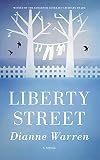
While on holiday in Ireland with Ian, her common-law partner of 20 years, 60-ish Frances Moon lets slip a profound and telling truth about herself: a secret so closely guarded and with origins so deep in the past that she’d believed she’d escaped it. Once it is out, however, the secret resonates painfully into the present. Back home in Saskatchewan, she and Ian fail to reconcile, and in order to deal with the ghosts that have never actually stopped plaguing her, Frances is compelled to show more pack up the life she’s spent forty years constructing and return to her home town of Elliot. In Elliot she takes up residence in the house that her uncle had built more than fifty years earlier, still the only house on Liberty Street, a failed development separated from the main part of town by the railway tracks, with the intention of finally sorting through the family belongings and mementos that fill the place. Warren devotes the bulk of her novel to flashbacks that depict in highly dramatic fashion the childhood and adolescence of Frances Mary Moon, an imaginative and curious child growing up on a dairy farm with her pragmatic father and idealistic mother. Central to the story is Frances’ relationship with her mother, Alice, who is determined that Frances better herself through education and escape from Elliot, where a dreary, demoralizing, back-breaking future as a farmer’s wife surely awaits. Frances is smart but wilful. She defies her mother at every turn and on many occasions does precisely the opposite of what her mother has asked her to do. Finally, on the cusp of adulthood, rebellious to the end, she makes a life-altering mistake that she spends the next forty years trying to put behind her. The story that Warren tells is vivid and wistful. Her characters are filled with regret over their rash actions, connections not made and words left unsaid. Often moving, it is also told with wry humour. Liberty Street is a more than worthy follow-up to Dianne Warren’s GG Award winning novel Cool Water and is sure to satisfy any reader looking for a full-blooded novel about human relationships and the past that haunts us all. show less

It's not often one picks up a book on a whim and comes out absolutely mesmerized. Yet, this is exactly what this book did for me: the incredible ability for Warren to pinpoint the details that make the characters come alive, the weaving of characters in and out of the book which gives it a movie-like quality it's so well staged, the poetry of the exotic and heroic in the most banal places - I was positively drawn by all the characters, their questions, their silences, their hopes. The pace show more is slow and can make the beginning a bit tough to master, but once the reader is drawn into the story, there is no pulling out. show less
Lists
Awards


You May Also Like


Associated Authors
Statistics
- Works
- 10
- Members
- 534
- Popularity
- #46,619
- Rating
- 4.0
- Reviews
- 59
- ISBNs
- 43
- Languages
- 2
