
Stevie Smith (1) (1902–1971)
Author of Novel on Yellow Paper
For other authors named Stevie Smith, see the disambiguation page.
About the Author
Florence Margaret Smith was born in Kingston upon Hull on September 20, 1902. After her parents' separation she moved with her mother, aunt, and sister to a house in the London suburb of Palmers Green, where she lived for the rest of her life. After graduating from North London Collegiate School show more for Girls, she worked as a private secretary with the London magazine publishing firm George Newnes. She adopted her nickname, Stevie, as a nom de plume after a friend's joking comparison of her petite stature to that of the jockey Steve Donoghue. Her first book, Novel on Yellow Paper, was published in 1936. She began writing poetry in her twenties and her first collection of verse, A Good Time Was Had by All, was published in 1937. She retired from George Newnes in 1953 due to ill health and to focus on her writing and BBC broadcasts. She came to wider public attention after the publication of her Selected Poems in Britain in 1962 and the United States in 1964. Her other works include The Holiday, Scorpion and Other Poems, and Me Again: Uncollected Writings of Stevie Smith. She was awarded the Chomondeley Award for Poetry in 1966 and the Queen's Gold Medal for Poetry in 1969. She died of a brain tumor on March 7, 1971. In 1981, a film based on her life entitled Stevie was released. (Bowker Author Biography) show less
Works by Stevie Smith
Associated Works
The Making of a Poem: A Norton Anthology of Poetic Forms (2000) — Contributor — 1,473 copies, 9 reviews
Literature: An Introduction to Fiction, Poetry, and Drama (1995) — Contributor, some editions — 1,017 copies, 7 reviews
World Poetry: An Anthology of Verse from Antiquity to Our Time (1998) — Contributor — 500 copies, 2 reviews
The Norton Anthology of English Literature, 4th Edition, Volume 2 (1979) — Contributor — 272 copies, 1 review
The Poets' Grimm: 20th Century Poems from Grimm Fairy Tales (2003) — Contributor — 70 copies, 1 review
Tagged
Common Knowledge
- Legal name
- Smith, Florence Margaret
- Birthdate
- 1902-09-20
- Date of death
- 1971-03-07
- Gender
- female
- Education
- Palmers Green High School, London
North London Collegiate School for Girls, London - Occupations
- poet
private secretary
novelist - Relationships
- Newnes, George (employer)
Orwell, George (rumoured lover) - Nationality
- UK
- Birthplace
- Kingston-upon-Hull, England, UK
- Places of residence
- Kingston-upon-Hull, England
Palmers Green, London, England
Hull, Yorkshire, England, UK
London, England, UK - Place of death
- London, England, UK
- Map Location
- England, UK
Members
Discussions
*Sep 20 2025 | Not Waving but Drowning by Stevie Smith in The Poetry Collective (September 2025)
Reviews
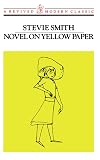
This book is definitely not for those who love straight-forward plots and prose. The book reads like a poem. It takes time to read, too, re-reading passages to figure out what she means, much like one of the more dense Joyce novels. I thoroughly enjoyed it, and thought the character of Pompey had amazing insights and was an especially forward thinker for the time (20th century in the years immediately leading up to WWII). She questions and struggles with the unity of marriage, the church, show more love, lust, suicide, people with more down-to-earth goals in life and those with more of a free spirit who don't want to be tied down by commonalities and mundane day-to-day things, etc.
Pompey also is suffering a sort of break down from a failed relationship, and it is lovely to see her reveal this throughout the book. It's more stream of consciousness but with a very defined purpose. Stevie Smith, in all her writing, is full of intent, full of deeper meanings. I so much adore the character of Pompey. Novel on Yellow Paper is for those who like JD Salinger's short stories, e.e. cummings poetry, and the insight of Graham Greene (very specifically, if you loved the diary part of The End of the Affair like I did, you'll enjoy this book). show less
Pompey also is suffering a sort of break down from a failed relationship, and it is lovely to see her reveal this throughout the book. It's more stream of consciousness but with a very defined purpose. Stevie Smith, in all her writing, is full of intent, full of deeper meanings. I so much adore the character of Pompey. Novel on Yellow Paper is for those who like JD Salinger's short stories, e.e. cummings poetry, and the insight of Graham Greene (very specifically, if you loved the diary part of The End of the Affair like I did, you'll enjoy this book). show less

Poems on relationships, animals, pets and nature, religion, war, and remembrance, but mainly on death. Smith isn't morbid or excessively melancholy, but here, in the last set of poems she wrote before her death (published posthumously), she meditates upon the approach of her lifetime's end, reflecting that, "I aspire to be broken up". Of death, she had elsewhere said it was the knowledge that there was an end that helped, through her periods of depression, to keep her in life. In the present show more collection, she says in the poem Oblivion,
"I cannot help but like Oblivion better
Than being a human heart and human creature,
But I can wait for her, her gentle mist
And those sweet seas that deepen are my destiny
And must come even if not soon."
Several of the poems are in a nursery rhyme style, though the underlying feelings are not childish, while several others are like fairy tales, suspended between reality and fancy. Of these, Angel Boley is the darkest poem in the collection, and startlingly relevant to the increasing awareness in society of the nature, extent and impact of childhood sexual abuse (the sexual element of the abuse is not explicitely mentioned, but seems to me implicit). Sixteen-year-old Angel Boley lives with her wicked mother, Malady Festing, and equally wicked husband, Hark Boley, in a lonely, moorland house.
"Hark, said Malady, it is time
To take another couple of children
Into our kitchen.
Hark laughed, for he too was wicked and he knew
For what purpose the little children
Were required."
Chilling! The suggestion of cannibalism being a metaphor for other, perhaps darker, passions. Angel's life lived in a dream of absentmindedness, In order not to be too much aware, has the feel of that psychological dissociation consequent upon severe and repeated trauma. The suspicion in which Angel is held by the neighbouring villagers on account of her relationship to her feared mother smacks of victim-blaming, whilst the failure to report their concerns to the police speaks of that collective turning away from the horror of abuse that has led to the silencing of so many survivor's voices. That Angel prevents any further abuses is a consolation for the tragedy of her ending, though the judgement of Heaven turns out to be less severe than the judgement of the law, doctors and ministers of religion.
Not all is dark in this collection, however, and Smith is whimsical and affectionate in her treatment of dogs, cats and donkeys, and nostalgically reflective about her childhood.
This is my first exposure to Smith's poetry (other than her much-anthologised Not Waving But Drowning), and I feel a most present sense of her as a person. I'm left with a affectionate regard for her and, if asked, "Which people from history would you invite to a dinner party?" I'd hope Stevie would be one of those attending. show less
"I cannot help but like Oblivion better
Than being a human heart and human creature,
But I can wait for her, her gentle mist
And those sweet seas that deepen are my destiny
And must come even if not soon."
Several of the poems are in a nursery rhyme style, though the underlying feelings are not childish, while several others are like fairy tales, suspended between reality and fancy. Of these, Angel Boley is the darkest poem in the collection, and startlingly relevant to the increasing awareness in society of the nature, extent and impact of childhood sexual abuse (the sexual element of the abuse is not explicitely mentioned, but seems to me implicit). Sixteen-year-old Angel Boley lives with her wicked mother, Malady Festing, and equally wicked husband, Hark Boley, in a lonely, moorland house.
"Hark, said Malady, it is time
To take another couple of children
Into our kitchen.
Hark laughed, for he too was wicked and he knew
For what purpose the little children
Were required."
Chilling! The suggestion of cannibalism being a metaphor for other, perhaps darker, passions. Angel's life lived in a dream of absentmindedness, In order not to be too much aware, has the feel of that psychological dissociation consequent upon severe and repeated trauma. The suspicion in which Angel is held by the neighbouring villagers on account of her relationship to her feared mother smacks of victim-blaming, whilst the failure to report their concerns to the police speaks of that collective turning away from the horror of abuse that has led to the silencing of so many survivor's voices. That Angel prevents any further abuses is a consolation for the tragedy of her ending, though the judgement of Heaven turns out to be less severe than the judgement of the law, doctors and ministers of religion.
Not all is dark in this collection, however, and Smith is whimsical and affectionate in her treatment of dogs, cats and donkeys, and nostalgically reflective about her childhood.
This is my first exposure to Smith's poetry (other than her much-anthologised Not Waving But Drowning), and I feel a most present sense of her as a person. I'm left with a affectionate regard for her and, if asked, "Which people from history would you invite to a dinner party?" I'd hope Stevie would be one of those attending. show less
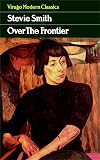
I don't know why I waited 11 years after reading the first of Stevie Smith's three novels, Novel on Yellow Paper, which I enjoyed almost as much as her poetry, to read her second. Anyway, Over the Frontier turns out to be fascinating and profoundly odd even by Smith's standards. The first half is a continuation of Novel on Yellow Paper, following Stevie's alter-ego Pompey Casmilus, secretary to a senior civil servant or possibly financier or both, as she succumbs to melancholy in the wake of show more her break-up with darling Freddie. Eventually her pal Josephine persuades her that what she needs is six months at a Kurhaus on the German Baltic, and it's shortly after they get there that things take a turn for the oneiric. Pompey is drawn into the orbit of a dashing military man — all this takes place (and the novel was published) just before WWII — and caught up in a spy/adventure yarn in the runup to war, with double agents aplenty among the hotel guests, secret cyphers and midnight rides "over the frontier" into Poland. But it all takes place behind the veil of Smith's nebulous prose, the boundaries between perception, imagination and reality almost totally effaced. The way I read it was that Pompey in the fantasy world of the Kurhaus, surrounded by the ugliness of Nazism and the drums of looming war, is seduced by her own power fantasy, perhaps as a way of finally putting darling Freddie behind her. It's almost impossible to describe, this mix of the personal and political, and I'm not sure if it works or not. But I won't be waiting another 11 years to read The Holiday, her own favourite of her novels, and I'm as convinced as ever of her uniqueness as a writer. show less
7.0/10
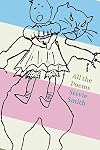
There is something delightful about a poet who writes ... prosaically. Smith writes little poems that begin with banalities that turn into nuanced truths; out of trivialities, she fashions precious little gems of originality and significance. She is not a poet to be dismissed lightly, despite all indications to the contrary: her little rhymes which sometimes seem to verge on the very edge of doggerel turn into luminous thoughts on religion and death, two of her favourite subjects of show more dissection.
While she wrote most frequently about these, there is quite a body of work made up of wry commentary on duty, marriage. One of my favourites of these is:
The Octopus
Darling little Tom and Harry,
When time comes for your to marry,
Lullaby,
Mother will be close at hand,
Close at hand
Little girlies, you who marry
Darling Tom and darling Harry
By and by
Understand
Mother will be close at hand
Close at hand
She is an easy poet to like, her intelligence and bright wit beckon the reader to read one more ... and just one more after that, trying to follow the path of her capricious and ingenious mind.
She thought of herself as quite an average kind of poet:
All poetry has to do is to make a strong communication. All the poet has to do is listen. The poet is not an important fellow. There will always be another poet.
... but I would have to differ and say, she was quite an uncommon and perceptive one. show less
There is something delightful about a poet who writes ... prosaically. Smith writes little poems that begin with banalities that turn into nuanced truths; out of trivialities, she fashions precious little gems of originality and significance. She is not a poet to be dismissed lightly, despite all indications to the contrary: her little rhymes which sometimes seem to verge on the very edge of doggerel turn into luminous thoughts on religion and death, two of her favourite subjects of show more dissection.
While she wrote most frequently about these, there is quite a body of work made up of wry commentary on duty, marriage. One of my favourites of these is:
The Octopus
Darling little Tom and Harry,
When time comes for your to marry,
Lullaby,
Mother will be close at hand,
Close at hand
Little girlies, you who marry
Darling Tom and darling Harry
By and by
Understand
Mother will be close at hand
Close at hand
She is an easy poet to like, her intelligence and bright wit beckon the reader to read one more ... and just one more after that, trying to follow the path of her capricious and ingenious mind.
She thought of herself as quite an average kind of poet:
All poetry has to do is to make a strong communication. All the poet has to do is listen. The poet is not an important fellow. There will always be another poet.
... but I would have to differ and say, she was quite an uncommon and perceptive one. show less
Lists
Awards


You May Also Like


Associated Authors
Statistics
- Works
- 37
- Also by
- 24
- Members
- 2,136
- Popularity
- #12,044
- Rating
- 3.9
- Reviews
- 27
- ISBNs
- 65
- Languages
- 1
- Favorited
- 21

