
Sylvia Townsend Warner (1893–1978)
Author of Lolly Willowes, or The Loving Huntsman
About the Author
Image credit: Cropped scan of back cover of Penguin No.642 (unattributed image).
Works by Sylvia Townsend Warner
The Element of Lavishness: Letters of William Maxwell and Sylvia Townsend Warner, 1938-1978 (2000) 162 copies, 1 review
I'll Stand By You: The Letters of Sylvia Townsend Warner and Valentine Ackland (1998) 40 copies, 1 review
The Espalier 4 copies
Rainbow 2 copies
A Widow's Quilt 2 copies
Sketches from nature 2 copies
Azrael & other poems 1 copy
A Moral Ending 1 copy
The blameless triangle 1 copy
Two conversation pieces 1 copy
Associated Works
Spells of Enchantment: The Wondrous Fairy Tales of Western Culture (1991) — Contributor — 605 copies, 5 reviews
75 Short Masterpieces: Stories from the World's Literature (1961) — Contributor — 319 copies, 2 reviews
The Sophisticated Cat: A Gathering of Stories, Poems, and Miscellaneous Writings About Cats (1992) — Contributor — 112 copies, 1 review
Poems Between Women: Four Centuries of Love, Romantic Friendship, and Desire (1997) — Contributor — 97 copies, 1 review
Queer: A Collection of LGBTQ Writing from Ancient Times to Yesterday (2021) — Contributor, some editions — 65 copies
Food Tales: A Literary Menu of Mouthwatering Masterpieces (1992) — Contributor — 41 copies, 1 review
Voices from Fairyland: The Fantastical Poems of Mary Coleridge, Charlotte Mew, and Sylvia Townsend Warner (2008) — Contributor — 12 copies
Gender in Modernism: New Geographies, Complex Intersections (2007) — Contributor — 12 copies, 1 review
Sylvia Plath's Tomato Soup Cake: A Compendium of Classic Authors' Favourite Recipes (2024) — Contributor — 6 copies
Vader is de beste — Author — 3 copies
American Aphrodite: A Quarterly for the Fancy-Free (Volume 4, Number 13) (1954) — Contributor — 2 copies
American Aphrodite: A Quarterly for the Fancy Free (Volume 1, Number 2) (1951) — Contributor — 2 copies
Tagged
Common Knowledge
- Canonical name
- Warner, Sylvia Townsend
- Legal name
- Warner, Sylvia Nora Townsend
- Birthdate
- 1893-12-06
- Date of death
- 1978-05-01
- Gender
- female
- Education
- privately educated
- Occupations
- novelist
short story writer
poet
musicologist
translator
diarist - Organizations
- American Academy of Arts and Letters (1972)
The New Yorker
British Communist Party - Relationships
- Ackland, Valentine (partner/lover)
Machen, Arthur (uncle)
Warner, George Townsend (father) - Short biography
- Sylvia Townsend Warner, born at Harrow on the Hill in Middlesex, England, was an only child who was educated at home, and she became an accomplished musician at a young age. At the outbreak of World War I, she went to work in a munitions factory in London, and began to write fiction. In 1930, she bought a cottage in the village of Chaldon Herring in Dorset, where she lived with poet Valentine Ackland for the rest of her life. During her career, Sylvia produced seven novels, including Lolly Willowes (1926), Summer Will Show (1936), The Corner that Held Them (1948), and The Flint Anchor (1954); four volumes of poetry; a volume of essays; and eight volumes of acclaimed short stories; as well as a biography of T.H. White. The Diaries of Sylvia Townsend Warner, published after her death, contain vivid thoughts and reactions to the events of the London Blitz and World War II in general. She also translated Proust's Contre Saint Beuve into English.
- Nationality
- UK
- Birthplace
- Harrow, Middlesex, England, UK
- Places of residence
- Harrow, Middlesex, England, UK
London, Middlesex, England, UK
Norfolk, England, UK
Frome Vauchurch, Dorset, England, UK
Maiden Newton, Dorset, England, UK - Place of death
- Maiden Newton, Dorset, England, UK
- Burial location
- East Chaldon Churchyard, Dorset, England, UK
- Map Location
- England, UK
Members
Discussions
February 2023: Sylvia Townsend Warner in Monthly Author Reads (June 2023)
A fiction story about a woman who decides to sell her soul to the devil so she does not have to live in Name that Book (October 2012)
Reviews
I have kind of a thing for British early-to-mid-20th-century women writers: Barbara Pym, Elizabeth Jane Howard, Pamela Hansford Johnson, Jane Gardam, et al. I don't know how Sylvia Townsend Warner escaped me. I did pick up (and enjoyed) The Corner That Held Them owing to my fascination with medieval monasticism, and then her competent and sympathetic biography of T.H. White. Then I kept seeing mentions of this novel, and thought, well, guess I should try it.
I loved it. Gentle, sly, quirky, show more odd, marvelously imagined and written - I kept stopping because I didn't want it to end. The tale is Laura's, a turn-of-the-century young "spinster," whose life is lived by the assumptions of others so smoothly and calmly and easily that she cannot even maintain her own name, let alone realize she has a life that should be hers to live, and not just assigned to the supervision of male relatives and children. Until one day, she has a vision of a ripely fruiting orchard, picks a village off the map, and just...goes. And - as such things should always do in a good story - everything changes. Her new neighbors keep odd hours, she comes and goes as she pleases, exploring her new realm. She meets a lovely fellow who teaches her how to handle chickens - for the first time, she feels "wise and potent" rather than "useful." Gradually she is drawn into the eccentric life of the village - and discovers it is rather more other-wordly than she had understood. And then, a cheery nephew decides he is going to come visit - and even live in - her village. She would once again be "Aunt Lolly," subject to Titus's whims and needs. She kneels in a meadow suddenly filled with cowslips - she had been waiting to see their great blossoming, but:
...she had watched the wrong fields.... The weight of all her unhappy years seemed for a moment to weigh her bosom down to the earth; she trembled, understanding for th first time how miserable she had been; and in another moment she was released. It was all gone, it could never be again, and never had been. Tears of thankfulness ran down her face. With every breath she drew, the scent of the cowslips flowed in and absolved her.
And now the fairy tale begins: a kitten arrives through the keyhole, strange little mishaps befall the importunate nephew, and Laura makes the acquaintance of a new friend who welcomes her, offers aid, and a place of belonging. Readers can decide for themselves who and what the devil may be, and what bargain is the right one to strike. You only get one life, after all, and it can be hard to see the good and evil thereof.
This is one I will reread. A gem.
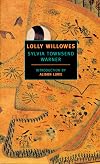
And one last treat: I instantly recognized the cover of the NYRB edition I got from the library: a painting by August Natterer. Natterer is featured in Charlie English's compelling and terrific book about the art of psychiatric inpatients during the Nazi era, The Gallery of Miracles and Madness. An imaginary head formed of woods and waterways, birds and animals, it is the perfect image for this odd and wonderful story. show less
I loved it. Gentle, sly, quirky, show more odd, marvelously imagined and written - I kept stopping because I didn't want it to end. The tale is Laura's, a turn-of-the-century young "spinster," whose life is lived by the assumptions of others so smoothly and calmly and easily that she cannot even maintain her own name, let alone realize she has a life that should be hers to live, and not just assigned to the supervision of male relatives and children. Until one day, she has a vision of a ripely fruiting orchard, picks a village off the map, and just...goes. And - as such things should always do in a good story - everything changes. Her new neighbors keep odd hours, she comes and goes as she pleases, exploring her new realm. She meets a lovely fellow who teaches her how to handle chickens - for the first time, she feels "wise and potent" rather than "useful." Gradually she is drawn into the eccentric life of the village - and discovers it is rather more other-wordly than she had understood. And then, a cheery nephew decides he is going to come visit - and even live in - her village. She would once again be "Aunt Lolly," subject to Titus's whims and needs. She kneels in a meadow suddenly filled with cowslips - she had been waiting to see their great blossoming, but:
...she had watched the wrong fields.... The weight of all her unhappy years seemed for a moment to weigh her bosom down to the earth; she trembled, understanding for th first time how miserable she had been; and in another moment she was released. It was all gone, it could never be again, and never had been. Tears of thankfulness ran down her face. With every breath she drew, the scent of the cowslips flowed in and absolved her.
And now the fairy tale begins: a kitten arrives through the keyhole, strange little mishaps befall the importunate nephew, and Laura makes the acquaintance of a new friend who welcomes her, offers aid, and a place of belonging. Readers can decide for themselves who and what the devil may be, and what bargain is the right one to strike. You only get one life, after all, and it can be hard to see the good and evil thereof.
This is one I will reread. A gem.
And one last treat: I instantly recognized the cover of the NYRB edition I got from the library: a painting by August Natterer. Natterer is featured in Charlie English's compelling and terrific book about the art of psychiatric inpatients during the Nazi era, The Gallery of Miracles and Madness. An imaginary head formed of woods and waterways, birds and animals, it is the perfect image for this odd and wonderful story. show less

Picked up by chance because I liked Sylvia Townsend Warners's The Corner That Held Them, and thought a serious novelist's take might be interesting. Helen MacDonald (H is for Hawk) also wrote about White's falconry experiences. I remembered enjoying at least the first book of The Once and Future King, The Sword in the Stone, years ago.
Sadly, White was a strange, lonely, eccentric, self-absorbed, conflicted mess. The only living being he ever truly loved was his red setter Brownie (and show more believe me, I do get that). But he was still capable of personally drowning in a bucket a litter of unwanted puppies born due his own negligence. He decided to be a falconer, and his goshawk first escaped and later died... again, due to his own carelessness and/or ignorance. He could be charming and overbearing; prone to riding roughshod over people in his own enthusiasms. He flitted from England to Ireland to the Channel Islands (mostly to evade taxes); occasionally proposed to women who he never ended up marrying (he was gay, attracted to young boys, and had sadistic inclinations); wrote some wonderful, imaginative stories and some pretty terrible maundering. He died alone in a stateroom aboard a ship en route to Greece, and was buried there.
Townsend is largely sympathetic, especially to his travails as a writer, but her portrait of White is not pretty. I took a shot at Once and Future King after finishing the biography, but while there is much to charm and admire in The Sword and the Stone, it rapidly declines thereafter into a lot of endless pantomime silliness, nasty women, and more creepy violence.
For fanatic Arthurians, and I suspect a lot of them won't like him or his take on Arthur either. Three stars because it is a competent, graceful biography of a man I ended up not liking at all. show less
Sadly, White was a strange, lonely, eccentric, self-absorbed, conflicted mess. The only living being he ever truly loved was his red setter Brownie (and show more believe me, I do get that). But he was still capable of personally drowning in a bucket a litter of unwanted puppies born due his own negligence. He decided to be a falconer, and his goshawk first escaped and later died... again, due to his own carelessness and/or ignorance. He could be charming and overbearing; prone to riding roughshod over people in his own enthusiasms. He flitted from England to Ireland to the Channel Islands (mostly to evade taxes); occasionally proposed to women who he never ended up marrying (he was gay, attracted to young boys, and had sadistic inclinations); wrote some wonderful, imaginative stories and some pretty terrible maundering. He died alone in a stateroom aboard a ship en route to Greece, and was buried there.
Townsend is largely sympathetic, especially to his travails as a writer, but her portrait of White is not pretty. I took a shot at Once and Future King after finishing the biography, but while there is much to charm and admire in The Sword and the Stone, it rapidly declines thereafter into a lot of endless pantomime silliness, nasty women, and more creepy violence.
For fanatic Arthurians, and I suspect a lot of them won't like him or his take on Arthur either. Three stars because it is a competent, graceful biography of a man I ended up not liking at all. show less
Here is a distinctive historical novel that greatly reminded me of a non-fiction book, [b:Montaillou: Cathars and Catholics in a French Village 1294-1324|45530|Montaillou Cathars and Catholics in a French Village 1294-1324|Emmanuel Le Roy Ladurie|https://images.gr-assets.com/books/1348618556s/45530.jpg|44742]. Eschewing traditional plot structure, Sylvia Townsend Warner recounts life in a small Benedictine convent during the 14th century. The narrative begins with the convent’s somewhat show more inauspicious founding and covers the subsequent 33 years. Rather than centring on any particular incident or character, multiple perspectives are used to evoke the shape of daily life. Of course, it takes an extremely skillful writer to conjure up the prosaic details of existence 700 years ago with any conviction. Illnesses, petty disagreements, financial troubles, and lapses of sanity occur and are dealt with by the resilient community of nuns. ‘The Corner that Held Them’ subtly shows how women achieved greater freedom in the closed environment of a convent to the patriarchal world outside. Despite the setting of an obscure rural backwater, a sense of gradual historical change filters in through new forms of music and rumours of peasant uprisings. The democratic election of prioresses by popular vote was delightful.
While I found the lack of obvious plot took a little while to get used to, I was pleasantly surprised to also find much of the novel very funny. I should have expected this from Townsend Warner, whose wit I so loved in [b:Lolly Willowes|937105|Lolly Willowes|Sylvia Townsend Warner|https://images.gr-assets.com/books/1320554609s/937105.jpg|922084] and [b:Summer Will Show|958670|Summer Will Show|Sylvia Townsend Warner|https://images.gr-assets.com/books/1228918840s/958670.jpg|943580]. I didn’t adore ‘The Corner that Held Them’ with the same intensity as the former two, but it still made me smile on a long train journey with observations of this sort:
And this made me laugh:
A dear friend once told me, ‘The more I think about it, the more I realise that you’d have made a brilliant medieval nun.’ On the basis of this novel, I think she has a point. Although I would have hated getting up early for Matins, the self-governing community of women in this novel is very appealing. The presence of spirituality is secondary to practical organisation, guardianship of the novices, and creation of objects to enhance the convent, such as illuminated texts and embroidered altar pieces. Sylvia Townsend Warner brings this world of the past to life beautifully, with a mordant wit and eye for striking details. show less
While I found the lack of obvious plot took a little while to get used to, I was pleasantly surprised to also find much of the novel very funny. I should have expected this from Townsend Warner, whose wit I so loved in [b:Lolly Willowes|937105|Lolly Willowes|Sylvia Townsend Warner|https://images.gr-assets.com/books/1320554609s/937105.jpg|922084] and [b:Summer Will Show|958670|Summer Will Show|Sylvia Townsend Warner|https://images.gr-assets.com/books/1228918840s/958670.jpg|943580]. I didn’t adore ‘The Corner that Held Them’ with the same intensity as the former two, but it still made me smile on a long train journey with observations of this sort:
Entering, Dame Matilda received a meaning glance of comradeship from her prioress. It was as if with one mind and soul that the prioress and treasuress of Oby conversed with Steven Ludcott. For the cloistered life develops in women infinite resources both of resentment and intuition; or perhaps it merely develops their sensibility, from which arise both understanding and delight in being misunderstood. Dame Matilda and the prioress might have been rehearsing their strategy for months. Though Steven Ludcott left Oby with every jot of his errand completed, the interest agreed on and his spleen vented, he rode away with the sensation of having been horribly mauled between the pair of them.
He was no sooner out of the house than a spirited defensive action became a defeat. The prioress had hysterics, Dame Matilda cursed like a crusader, and Dame Margaret, who had sat reading her psalter during the interview, sped off to tell the convent that Oby was certainly ruined and would most likely be dissolved by the bishop.
It was to the aftermath of all that that Pernelle Barstable returned, explaining that the Waxelby merchants were asking such exorbitant prices that she had thought it best to go on to Lambsholme, where she had bought such raisins as had never before been eaten at Oby. The price of raisins was the only thing in her story that made an impression. Dame Matilda said it was much too high.
And this made me laugh:
But when that subject was exhausted, his own plight came to his lips and he broke out into a complaint of his isolation at Lintoft.
“What else can you expect?” cried Sir Ralph briskly. “A strong young man like you must do more than preach and say masses if he is to earn the esteem of his parishioners. You should work, young man, you should work! If you want to be a good priest you must have the best sow, the best beans, the sweetest honey, the cock that crows loudest. You will do nothing with book and prayers. Turn your mind to pigs.”
As though he had summoned them a number of pigs just then rushed screaming and grunting into the parsonage cabbage-yard. Screaming and grunting the priest’s house-keeper rushed out and drove them away by jabbing at their noses with an iron-shod staff.
“I hate pigs!”
“Very well, then!” - Sir Ralph’s voice was injuriously tolerant - “Why not take up basket-making?”
A dear friend once told me, ‘The more I think about it, the more I realise that you’d have made a brilliant medieval nun.’ On the basis of this novel, I think she has a point. Although I would have hated getting up early for Matins, the self-governing community of women in this novel is very appealing. The presence of spirituality is secondary to practical organisation, guardianship of the novices, and creation of objects to enhance the convent, such as illuminated texts and embroidered altar pieces. Sylvia Townsend Warner brings this world of the past to life beautifully, with a mordant wit and eye for striking details. show less

A very Happy Halloween
I can tell already that I am going to love this book all the rest of my life.
Warner's prose is crisp, insightful, playful, and lyrical. Her pacing is perfect. I've never read better descriptions of the English country side. While reading, I lived where Lolly lived, breathed the air she breathed, and perfectly understood her stupor, then beautiful awakening. I could have lived in Part II, on loop, happily ever after. But when her nephew moved to Great Mop, into Lolly's show more sanctuary, I was crestfallen, dreading all that he would drag with him.
I didn't have any idea just how apt reading this the last days of October would be.
The resolution in the last third is the part that makes this novel famous and the part that has given me the most to chew on. Not just me, every reader. Almost 100 years on since 1926. Wow.
SPOILER FOLLOWS
It is a perfectly presented dilemma, an ultimatum even. Lolly may remain under the careless stewardship of a deaf God who favors patriarchy. She would continue the fate of women of her class at the turn of the last century--the tedium, the constrictions, the servitude, the lack of agency, the lack of privacy, and the lack of everything else that had made her new life in Great Mop such a joy, including her peaceful communion with Nature.
Or--the only other option--she could accept to become a witch along with most of the other village ladies, born high and low, and continue to live all her solo, independent days in Great Mop, to have her joys and rights protected, and for a long while to be forgotten by Satan. Until, one presumes, her death when he would collect his due. But even if she had chosen the other more palatable (hmph) option, there is no guarantee her afterlife destiny would be any different--God is incredibly fickle and has St. Peter with his big book at Heaven's gate making sure only the most obedient or slavish may enter; double obedient, double slavish if you are a woman.
Warner's message wasn't meant literally, surely. But she must have thought about it a long time to have created such a convincing and unique Satan. She presented the dilemma with such realism that it drove home the point like no socially-correct, half-dead, namby-pamby story telling would have done.
Instead, Warner's witchery was exciting, alive, and the most devilishly delightful metaphor. Wickedly good, it was.
Audio book narrator Sarah Nichols sounded like she thoroughly enjoyed the story, too.
So, I have found a new annual Halloween tradition to replace the Trick or Treaters that no longer roam the neighborhood and ring doorbells. I'll read Lolly Willowes and eat all the candy corn myself! show less
I can tell already that I am going to love this book all the rest of my life.
Warner's prose is crisp, insightful, playful, and lyrical. Her pacing is perfect. I've never read better descriptions of the English country side. While reading, I lived where Lolly lived, breathed the air she breathed, and perfectly understood her stupor, then beautiful awakening. I could have lived in Part II, on loop, happily ever after. But when her nephew moved to Great Mop, into Lolly's show more sanctuary, I was crestfallen, dreading all that he would drag with him.
I didn't have any idea just how apt reading this the last days of October would be.
The resolution in the last third is the part that makes this novel famous and the part that has given me the most to chew on. Not just me, every reader. Almost 100 years on since 1926. Wow.
SPOILER FOLLOWS
It is a perfectly presented dilemma, an ultimatum even. Lolly may remain under the careless stewardship of a deaf God who favors patriarchy. She would continue the fate of women of her class at the turn of the last century--the tedium, the constrictions, the servitude, the lack of agency, the lack of privacy, and the lack of everything else that had made her new life in Great Mop such a joy, including her peaceful communion with Nature.
Or--the only other option--she could accept to become a witch along with most of the other village ladies, born high and low, and continue to live all her solo, independent days in Great Mop, to have her joys and rights protected, and for a long while to be forgotten by Satan. Until, one presumes, her death when he would collect his due. But even if she had chosen the other more palatable (hmph) option, there is no guarantee her afterlife destiny would be any different--God is incredibly fickle and has St. Peter with his big book at Heaven's gate making sure only the most obedient or slavish may enter; double obedient, double slavish if you are a woman.
Warner's message wasn't meant literally, surely. But she must have thought about it a long time to have created such a convincing and unique Satan. She presented the dilemma with such realism that it drove home the point like no socially-correct, half-dead, namby-pamby story telling would have done.
Instead, Warner's witchery was exciting, alive, and the most devilishly delightful metaphor. Wickedly good, it was.
Audio book narrator Sarah Nichols sounded like she thoroughly enjoyed the story, too.
So, I have found a new annual Halloween tradition to replace the Trick or Treaters that no longer roam the neighborhood and ring doorbells. I'll read Lolly Willowes and eat all the candy corn myself! show less
Lists
Reading LIst (7)
1920s (1)
Faerie Mythology (1)
To Read (1)
Witchy Fiction (1)
Lost Gay Novels (1)
Backlisted (1)
Favorite Memoirs (1)
Book wishlist (1)
Persephone (1)
Unmarried women (1)
Monastic life (1)
Awards


You May Also Like


Associated Authors
Statistics
- Works
- 69
- Also by
- 51
- Members
- 6,137
- Popularity
- #4,015
- Rating
- 3.8
- Reviews
- 189
- ISBNs
- 191
- Languages
- 7
- Favorited
- 35

