
Emma Donoghue
Author of Room
About the Author
Emma Donoghue was born on October 24, 1969 in Dublin, Ireland. She received her BA degree from the University College Dublin and PhD in English from University of Cambridge. Her first novel was Stir. Her next novel was Hood which won the 1997 American Library Association's Gay, Lesbian and Bisexual show more Book Award for Literature. Her novel Slammerkin was a finalist in the 2001 Irish Times Irish Literature Prize for Fiction. The Sealed Letter, published in 2008, is a work of historical fiction. This work was the joint winner of the 2009 Lambda Literary Award for Lesbian Fiction. She continued writing several award winning novels including Room which was shortlisted for the Man Booker Prize in September 2010. Some of her other works include Astray, Three and a Half Deaths, and Frog Music. (Bowker Author Biography) show less
Series
Works by Emma Donoghue
Poems Between Women: Four Centuries of Love, Romantic Friendship, and Desire (1997) — Editor — 97 copies, 1 review
Room (Oberon Modern Plays) 2 copies
The Widow's Curse 2 copies
One on One with Emma Donoghue 2 copies
Donoghue, Emma Archive 1 copy
Vanitas 1 copy
The Tale of the Skin 1 copy
Blaze 1 copy
Associated Works
This Is My Best: Great Writers Share Their Favorite Work (2004) — Contributor — 175 copies, 3 reviews
Light the Dark: Writers on Creativity, Inspiration, and the Artistic Process (2017) — Contributor — 165 copies, 5 reviews
Thicker Than Water: Coming-of-Age Stories by Irish & Irish American Writers (2001) — Contributor — 55 copies, 1 review
Inviting Interruptions: Wonder Tales in the Twenty-First Century (Fairy-Tale Studies) (2021) — Contributor — 8 copies
Tagged
Common Knowledge
- Birthdate
- 1969-10-24
- Gender
- female
- Education
- University College Dublin (BA)
University of Cambridge (PhD) - Occupations
- playwright
novelist
literary historian
teacher
scriptwriter - Relationships
- Donoghue, Denis (father)
Roulston, Christine (life partner) - Short biography
- Born in Dublin, Ireland, in October 1969, I am the youngest of eight children of Frances and Denis Donoghue (the literary critic). I attended Catholic convent schools in Dublin, apart from one eye-opening year in New York at the age of ten. In 1990 I earned a first-class honours BA in English and French from University College Dublin (unfortunately, without learning to actually speak French). I moved to England, and in 1997 received my PhD (on the concept of friendship between men and women in eighteenth-century English fiction) from the University of Cambridge. From the age of 23, I have earned my living as a writer, and have been lucky enough to never have an ‘honest job’ since I was sacked after a single summer month as a chambermaid. After years of commuting between England, Ireland, and Canada, in 1998 I settled in London, Ontario, where I live with Christine Roulston and our son Finn (12) and daughter Una (9).
- Nationality
- Ireland (Birth)
Canada - Birthplace
- Dublin, County Dublin, Ireland
- Places of residence
- Dublin, County Dublin, Ireland
London, Ontario, Canada
England, UK
New York, New York, USA
Members
Discussions
May 2019: Emma Donoghue in Monthly Author Reads (June 2019)
Room by Emma Henderson in Orange January/July (June 2012)
Reviews

France in the Belle Epoque, a time of an explosion in industrial advancements and in art and culture, of rising poverty and squalor. A train leaves the coast in the morning and will be in Paris by mid-afternoon. Engine 721 has made this run many times and her engineers are experienced and motivated to keep the rigorous timetable. The Paris Express fills with people eager to reach their destination for as many reasons as there are passengers on board. But the reader knows from the beginning show more that this journey will end in a disaster, although how or what the consequences are is yet unknown. As people climb on board, to either the wooden benches of third class, the simple decorations of second, the lush upolstery of first or even the luxury of a private car, they bring their preoccupations, their curiosity about their fellow passengers and their own histories with them. The novel is composed of multiple voices.
Emma Donoghue uses a large cast of characters and moves between them rapidly, echoing the movement of the express as it travels along the rails. As the world around them rapidly changes, some passengers wish for a return to simpler times, others are eager to prove themselves, and some are ready to push back against the forces that keep the poor in place. A young American artist is interested in a young woman, but will he find the courage to strike up a conversation? A young boy is on his first solo train trip, and while he is only traveling a few stations, he is anxious to not make a mistake. An old Russian woman notices that all is not as it should be with the young woman seated next to her, and an Irish writer contemplates the Parisienne seated across from him, in her fancy feathered hat and tiny monkey.
I enjoyed the constantly changing viewpoints of this novel and the tension of knowing things will go badly at the end, but not knowing what that will mean. There's no main character, although maybe the train herself fits that role well enough, and with tightly constrained time period, Donoghue paces this novel very like the express train she is writing about, there really isn't a slow point in the novel. show less
Emma Donoghue uses a large cast of characters and moves between them rapidly, echoing the movement of the express as it travels along the rails. As the world around them rapidly changes, some passengers wish for a return to simpler times, others are eager to prove themselves, and some are ready to push back against the forces that keep the poor in place. A young American artist is interested in a young woman, but will he find the courage to strike up a conversation? A young boy is on his first solo train trip, and while he is only traveling a few stations, he is anxious to not make a mistake. An old Russian woman notices that all is not as it should be with the young woman seated next to her, and an Irish writer contemplates the Parisienne seated across from him, in her fancy feathered hat and tiny monkey.
I enjoyed the constantly changing viewpoints of this novel and the tension of knowing things will go badly at the end, but not knowing what that will mean. There's no main character, although maybe the train herself fits that role well enough, and with tightly constrained time period, Donoghue paces this novel very like the express train she is writing about, there really isn't a slow point in the novel. show less
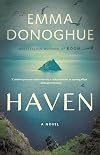
In seventh-century Ireland, three monks embark on a journey to an island their leader, Artt, has seen in a vision. They vow to leave worldly things behind. They row a small boat, arriving at a rugged and isolated location, where they encounter many trials. Artt fervently believes that “the Lord will provide.” Trian and Cormac trust their leader and follow their vows, but it becomes increasingly difficult to survive.
This is a story of asceticism, zealotry, and obsession. The show more personalities and psychological aspects are very well developed. Cormac is an older recently converted ex-warrior. He is practical and offers suggestions on how to survive in a harsh environment. Trian is a young idealist who wants to prove himself. He has a helpful nature but is perhaps too innocent and trusting. Artt leads with an iron fist. He is pious in an obsessive way and his decisions are questionable. He does not appear to care if they die on this island, as they would become saints or martyrs. He takes religious fanaticism to an extreme.
It is unusual and creatively told. At first, I was unsure if this would be a book for me, but it kept me invested in finding out what would happen to these three. They are obviously at odds over how best to handle the situation, with different objectives and priorities. I think it is ultimately about living in harmony with nature versus viewing nature as something to ravage in service of humans. It also has something to say about single-mindedness, whether on the side of blind obedience, religious fervor, or abuse of power. show less
This is a story of asceticism, zealotry, and obsession. The show more personalities and psychological aspects are very well developed. Cormac is an older recently converted ex-warrior. He is practical and offers suggestions on how to survive in a harsh environment. Trian is a young idealist who wants to prove himself. He has a helpful nature but is perhaps too innocent and trusting. Artt leads with an iron fist. He is pious in an obsessive way and his decisions are questionable. He does not appear to care if they die on this island, as they would become saints or martyrs. He takes religious fanaticism to an extreme.
It is unusual and creatively told. At first, I was unsure if this would be a book for me, but it kept me invested in finding out what would happen to these three. They are obviously at odds over how best to handle the situation, with different objectives and priorities. I think it is ultimately about living in harmony with nature versus viewing nature as something to ravage in service of humans. It also has something to say about single-mindedness, whether on the side of blind obedience, religious fervor, or abuse of power. show less
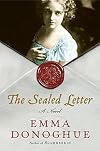
London, Autumn, 1864: Emily “Fido” Faithfull, an unmarried advocate for women’s rights, prides herself on her loyalty to her friends. When Helen, a companion from years ago, breezes back into her life, Fido hopes the two can pick up their friendship where they left off. It is a little hard to understand at first why sober-minded Fido cares about Helen so much. Shallow, unhappily married Helen has a long track record of poor choices. She is in the midst of an adulterous liaison with a show more feckless army officer, and he’s hardly the first to win her affections out of wedlock. When her beleaguered husband demands a divorce, Helen’s options are few. Fido wants to help her friend, but as the legal wrangling proceeds to a public trial, Fido finds herself in a scandalous situation she could not have imagined.
This slow moving but psychologically astute novel, which is based on a true story, effectively explores Victorian society's legal and moral constraints on women. Highly recommended. show less
This slow moving but psychologically astute novel, which is based on a true story, effectively explores Victorian society's legal and moral constraints on women. Highly recommended. show less
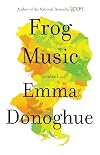
This novel has two starting places, about a month apart in time: the earlier starting place sees the relatively carefree Blanche - a French woman who earns a living for herself and her maquereau by dancing and prostitution - literally run into by Jenny, a pants-wearing frog-catcher with a happy-go-lucky attitude and a dark history.
The second starting place has Blanche and Jenny in a room at San Miguel Station, outside of San Francisco: Blanche bends down to loosen a tangled lace, and show more bullets fly through the window, fatally wounding Jenny.
Narration (third person, on Blanche) continues forward from both these points in alternating sections. Blanche begins to change the moment she meets Jenny: she hunts down her baby, P'tit Arthur, and discovers that he wasn't on a farm in the country at all; she also comes to realize that her mac Arthur and Arthur's friend Ernest are sharply different in reality from how she has perceived them for years.
Though it could be said that little happens, FROG MUSIC is absorbing, with characters you care about, and remarkable historical setting: San Francisco during a heat wave, a smallpox epidemic, and rising anti-Chinese sentiment. Donoghue did a tremendous amount of research (especially into period song), and it comes through naturally. The back matter contains detailed acknowledgements and bibliographical references.
Quotes
"Devil-may-care's not the same as dumb as an ox." (Jenny, 25)
"Nowhere's dangerous if you know what you're doing." (Arthur, 49)
"Talented on the trapeze once - I'll take your word for that - but what can he do on the ground?" (Madame Johanna to Blanche, 89)
She doesn't know much about infants other than a few ways they can die. (101)
The City's coming at Blanche like a bullet to the head. (112)
Is some of Jenny's cockiness rubbing off on her? Blanche wonders. Or is it just high time Blanche started standing up for herself? (149)
Her man and her child. How can Blanche weigh them against each other, and why should she have to? (157)
What kind of a friendship do you call it when one party omits to tell the other the simplest facts about her life? (215)
This is what mothers do for their babies: they bite their tongues and let the world ride them into the ground. (266)
Coincidences happen all the time. Fate touches one fingertip to the spinning top and knocks it over. (272)
Strange, how the petty needs continue to clamor in the middle of serious ones. (273)
For all her irksome qualities, Jenny had that gift - she could make you care about her without hardly trying. (292)
These thoughts make her dizzy. It's unbearable, the not knowing. (294)
To think of all the lives Jenny tossed aside so she could live this particular one. And who's to say she ever regretted it? (297)
How did Jenny mislay her rage? Blanche wonders. She had a talent for starting a row but none for holding a grudge, it seems. (299)
But this Blanche stumbles on, weighed down by self-pity, and self-contempt too, because it feels as if every bad thing that's happened to her in the last month has been her fault. (330)
Happiness is as un-pin-downable as a louse; you feel the tickle of its passage but your fingers close on nothing. (365) show less
The second starting place has Blanche and Jenny in a room at San Miguel Station, outside of San Francisco: Blanche bends down to loosen a tangled lace, and show more bullets fly through the window, fatally wounding Jenny.
Narration (third person, on Blanche) continues forward from both these points in alternating sections. Blanche begins to change the moment she meets Jenny: she hunts down her baby, P'tit Arthur, and discovers that he wasn't on a farm in the country at all; she also comes to realize that her mac Arthur and Arthur's friend Ernest are sharply different in reality from how she has perceived them for years.
Though it could be said that little happens, FROG MUSIC is absorbing, with characters you care about, and remarkable historical setting: San Francisco during a heat wave, a smallpox epidemic, and rising anti-Chinese sentiment. Donoghue did a tremendous amount of research (especially into period song), and it comes through naturally. The back matter contains detailed acknowledgements and bibliographical references.
Quotes
"Devil-may-care's not the same as dumb as an ox." (Jenny, 25)
"Nowhere's dangerous if you know what you're doing." (Arthur, 49)
"Talented on the trapeze once - I'll take your word for that - but what can he do on the ground?" (Madame Johanna to Blanche, 89)
She doesn't know much about infants other than a few ways they can die. (101)
The City's coming at Blanche like a bullet to the head. (112)
Is some of Jenny's cockiness rubbing off on her? Blanche wonders. Or is it just high time Blanche started standing up for herself? (149)
Her man and her child. How can Blanche weigh them against each other, and why should she have to? (157)
What kind of a friendship do you call it when one party omits to tell the other the simplest facts about her life? (215)
This is what mothers do for their babies: they bite their tongues and let the world ride them into the ground. (266)
Coincidences happen all the time. Fate touches one fingertip to the spinning top and knocks it over. (272)
Strange, how the petty needs continue to clamor in the middle of serious ones. (273)
For all her irksome qualities, Jenny had that gift - she could make you care about her without hardly trying. (292)
These thoughts make her dizzy. It's unbearable, the not knowing. (294)
To think of all the lives Jenny tossed aside so she could live this particular one. And who's to say she ever regretted it? (297)
How did Jenny mislay her rage? Blanche wonders. She had a talent for starting a row but none for holding a grudge, it seems. (299)
But this Blanche stumbles on, weighed down by self-pity, and self-contempt too, because it feels as if every bad thing that's happened to her in the last month has been her fault. (330)
Happiness is as un-pin-downable as a louse; you feel the tickle of its passage but your fingers close on nothing. (365) show less
Lists
Female Author (1)
Same Title (1)
Movies/Shows (1)
Favourite Books (1)
Best Audiobooks (1)
Connie53 (1)
Florida (1)
Five star books (1)
. (1)
Irish writers (1)
2000s decade (1)
Great Audiobooks (1)
Booker Prize (1)
Indie Next Picks (1)
Book Club 2017 (1)
World Books (1)
Sense of place (3)
Netgalley Reads (4)
Tour of Ireland (2)
First Novels (1)
A Novel Cure (1)
psychological (1)
To Read (1)
Picador Books (1)
Awards


You May Also Like


Associated Authors
Statistics
- Works
- 42
- Also by
- 32
- Members
- 34,612
- Popularity
- #546
- Rating
- 3.9
- Reviews
- 1,906
- ISBNs
- 612
- Languages
- 25
- Favorited
- 45


