
Lawrence Durrell (1912–1990)
Author of Justine
About the Author
Lawrence Durrell was born on February 27, 1912 in Jullundur, India to British parents. During World War II, he served as a British press officer. His first novel, Pied Piper of Lovers, was published in 1935, but was considered a failure. Some of his other works include The Black Book, The show more Alexandria Quartet, The Avignon Quintet, and Caesar's Vast Ghost: A Portrait of Provence. Bitter Lemons won the Duff Cooper Prize in 1959. He died on November 7, 1990 at the age of 78. (Bowker Author Biography) show less
Image credit: Lawrence Durrell en 1984 en France
Series
Works by Lawrence Durrell
Penguin Modern Poets 1: Lawrence Durrell, Elizabeth Jennings, R.S. Thomas (1970) 113 copies, 2 reviews
Lawrence Durrell's Notes on Travel Volume Two: Prospero's Cell, Reflections on a Marine Venus, and Spirit of Place (2018) 6 copies
Lawrence Durrell's Notes on Travel Volume One: Blue Thirst, Sicilian Carousel, and Bitter Lemons of Cyprus (2018) 4 copies
Brassaï. 2 copies
Lawrence Durrell 2 copies
Justine [and] Mountolive 2 copies
Vega 2 copies
In Arcadia 2 copies
Nothing Is Lost, Sweet Self — Poem — 2 copies
High Barbary [short fiction] 2 copies
İskenderiye Dörtlüsü 4 1 copy
Lady Chatterley's Lover 1 copy
THE ALEXANDRIA QUARTER (4 volumes set with slip case): Balthazar; Mountolive; Clea; Justine (1961) 1 copy
An Irish Faust 1 copy
LES ILES GRECQUES 1 copy
Alexandriai négyes 1 copy
İskenderiye Dörtlüsü 1 copy
Lo mejor de Henry Miller 1 copy
The grey penitents 1 copy
CEFALÚ 1 copy
lívia ou o enterrado vivo 1 copy
Poemas 1 copy
İskenderriye Dörtlüsü 1 1 copy
İskenderiye Dörtlüsü 2 1 copy
Call of the Sea 1 copy
The Ghost Train 1 copy
Noblesse Oblige 1 copy
Drage's Divine Discontent 1 copy
White Man’s Milk 1 copy
For Immediate Release 1 copy
Ikons and Other Poems 1 copy
Jots and Tittles 1 copy
Ten poems 1 copy
Letters to Jean Fanchette 1 copy
Case History 1 copy
Selected Poems 1943-1963 1 copy
Two Excursions Into Reality 1 copy
Carnival 1 copy
UNE CORRESPONDANCE PRIVEE 1 copy
Faustus [Poem] 1 copy
Poemas 1935-1963 1 copy
Premature epitaphs and all 1 copy
Associated Works
The Assassin's Cloak: An Anthology of the World's Greatest Diarists (2000) — Contributor, some editions — 623 copies, 9 reviews
A Clutch of Vampires: These Being Among the Best from History and Literature (1929) — Contributor — 106 copies, 2 reviews
The lucifer society;: Macabre tales by great modern writers (1972) — Contributor — 52 copies, 1 review
Antaeus No. 61, Autumn 1988 - Journals, Notebooks & Diaries (1988) — Contributor — 39 copies, 2 reviews
Christ and Freud: A Study of Religious Experience and Observance (1959) — Preface, some editions — 18 copies
Lear's Corfu. An anthology drawn from the painter's letters and prefaced by Lawrence Durrell. Including eight views of Corfu reproduced from the original lithographs — Editor — 3 copies
Reichel Par Brassai Miller Durrell Bissiere — Contributor — 1 copy
Harems — Preface — 1 copy
THE BOOK OF THE IT a Revealing Theory of Eros, the Compelling Force That Motivates the Lives of Men and Women (1961) — Introduction — 1 copy
海 1969年06月 発刊記念号 — Contributor — 1 copy
Tagged
Common Knowledge
- Canonical name
- Durrell, Lawrence
- Legal name
- Durrell, Lawrence George
- Other names
- DURRELL, Lawrence George
DURRELL, Lawrence - Birthdate
- 1912-02-27
- Date of death
- 1990-11-07
- Gender
- male
- Education
- St Edmund's School, Canterbury, England, UK
St Joseph's College, Darjeeling, India
St Olave's Grammar School, Southwark, England, UK - Occupations
- editor
translator
poet
novelist
press officer
attaché - Organizations
- British Foreign Service
- Awards and honors
- Royal Society of Literature (Fellow, 1954)
Order of the British Empire (Commander, 1962) - Relationships
- Durrell, Gerald (brother)
Durrell, Leslie (brother)
Durrell, Margaret (sister) - Cause of death
- stroke
- Nationality
- UK
- Birthplace
- Jallandhar, British India
- Places of residence
- Jallandhar, India
Bournemouth, Dorset, England, UK
Corfu, Greece
Alexandria, Egypt
Cordoba, Argentina
Belgrade, Serbia (show all 8)
Nicosia, Cyprus
Sommières, Provence, France - Place of death
- Sommières, Provence, France
- Burial location
- Churchyard of the Chapelle St-Julien de Montredon, Sommières, Provence, France
Members
Discussions
The Lawrence Durrell Centenary in Literary Snobs (January 2012)
Reviews

As we gradually realise the scope of Durrell's literary experiment, in this, the third of the Alexandria novels, it becomes clear how no one human can ever truly know any other human, and it's heartbreaking. Durrell's prose is often too rich, veering into a purple so rich Caesar wouldn't wear it, but for every shot that misses, three hit their mark. Mountolive's drive through the storm is rivaled for beauty only by the dust-storm sequence in "Justine", and the final chapter is a slow, show more pulsing, vivid depiction of the last moments before death. I'll probably give myself a few weeks to cleanse the palate before reading the final volume in the series, but I'm a Durrell convert for life, I can tell. show less

"There are only two ways out of Avignon, the way up and the way down, and they are both the same."
A very low 3 stars. Think basement level. For charitable purposes only.
Durrell's earlier Alexandria Quartet forms several peaks of the mountain range that towers through the country of my literary journey. Scaling them was an experience I shall never forget, and they will be destinations I return to often.
His Avignon Quintet, conversely, is a supreme example of the master craftsman in his show more dotage: heady with ideas, fascinated by both form and feature, deliciously iconoclastic 'til the end, but struggling with meaning and how to convey it, too. Freudians, if such still exist, will find much in it, and so will diehard acolytes of late modernism. Otherwise, unless you're - like me - helplessly in love with Durrell, stay away. And if you are, prepare to shift from passionate love to the kind of love reserved for ageing, slightly senile relatives. On a rough day, much must be forgiven. On a good day, what glories await us.
Or perhaps, to be less generous, I'll quote the books themselves: "The drunkard's word list is sometimes the sage's also".
My individual reviews of the books , as posted on Goodreads during my year of Avignon:
Monsieur, or the Prince of Darkness
Livia, or Buried Alive
Constance, or Solitary Practices
Sebastian, or Ruling Passions
Quinx, or the Ripper's Tale show less
A very low 3 stars. Think basement level. For charitable purposes only.
Durrell's earlier Alexandria Quartet forms several peaks of the mountain range that towers through the country of my literary journey. Scaling them was an experience I shall never forget, and they will be destinations I return to often.
His Avignon Quintet, conversely, is a supreme example of the master craftsman in his show more dotage: heady with ideas, fascinated by both form and feature, deliciously iconoclastic 'til the end, but struggling with meaning and how to convey it, too. Freudians, if such still exist, will find much in it, and so will diehard acolytes of late modernism. Otherwise, unless you're - like me - helplessly in love with Durrell, stay away. And if you are, prepare to shift from passionate love to the kind of love reserved for ageing, slightly senile relatives. On a rough day, much must be forgiven. On a good day, what glories await us.
Or perhaps, to be less generous, I'll quote the books themselves: "The drunkard's word list is sometimes the sage's also".
My individual reviews of the books , as posted on Goodreads during my year of Avignon:
Monsieur, or the Prince of Darkness
Livia, or Buried Alive
Constance, or Solitary Practices
Sebastian, or Ruling Passions
Quinx, or the Ripper's Tale show less
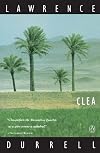
And, finally, The Alexandria Quartet draws to an end. This book is the first one to move forward chronologically in a substantive way-- while the other occur before World War II, in this one the war is underway (not, as the back cover claims, yet over). We get to revisit all the characters we came to meet in the first three books and see how they have grown and changed as a result of those events, plus those of the war. It's interesting: Durrell says the quartet was his study of love, and show more each book has had a different thing to say about it. Justine has a very romantic notion of it, full of grand affairs and mad passions and overblown ideas. In Balthazar, we seem to learn that love is mostly based upon lies, but it can still exist, just not in the way we thought we knew. And then in Mountolive, all love is a sham on every level: most of the relationships here are for political or social reasons, not romantic ones. But Clea takes us right back where we began, as the narrator (now allowed to use his name) is able to come to terms with the events of the series thanks to his love affair with Clea, the bisexual artist. This and many other plot threads of the series are tied up in fine form, as all of the characters ultimately come to a fitting end, and the truths (maybe) are finally revealed. Durrell's prose is as fantastic, his descriptions as evocative, and his insights as keen as ever. A strong end to a strong series, whose only fault was the honestly somewhat superfluous metafictional aspects. show less

I first read this novel, along with the rest of the Quartet, back in the 90's. I remember being enthralled by the narrative, but after more than thirty years, I didn't remember many of the details, just that it was about an adulterous affair and set in Alexandria, Egypt.
In this second reading, I was as entranced by the sense of time and place as I was the first time. The city of Alexandria wafts off the pages with desert heat and ancient, crumbling stones. The city is a character as much as show more the humans that people the narrative, shaping and being shaped by the events that occur within and without. In a way, the character of Justine is the living avatar of Alexandria, a labyrinth of twisting streets, blind alleys, and past tragedies; an extended metaphor, beautifully rendered. But where the younger me saw the exotic romance and passion, the older me sees a story of objectification and obsession, the 'othering' of the woman who is the focus of the narrative, which I find uncomfortable, even cringy in places. The book abounds with racial overtones, and most of the main characters are white, expatriates in Alexandria.
Justine's Jewishness is constantly mentioned, not in terms of religion, but in terms of ethnicity. None of the men who are her lovers see her as a person. To them she is a goddess, a sex object, something to be possessed and manipulated and explored, if not exploited. The unnamed narrator doesn't ever ask himself what he brings to the table, what it is that Justine sees in him. He never sees her as a person, only as a puzzle to be solved. He never counts the consequences of his actions, though he very likely destroyed several lives, including his own.
I don't know what Durrell's purpose was, but if it was to show these two levels of awareness, he succeeded. As a writer, Durrell is the opposite of Hemingway. He paints every thought, every emotion, sculpting and building the story like an Impressionist painter builds a painting. He focuses on emotional nuance and depth, often skipping over important events that are only alluded to in metaphor and memory.
The story pacing is languid and serpentine, as is the prose. The narrative is a jumbled mosaic of thoughts, memories, and introspection. This isn't a book to be sped through, but rather one to be savored and thought about.
Aspects of this novel include: first person POV, single narrator, fractured structure with flashbacks and flashforward, lots of internal monologue. Rich and textured sense of place. show less
In this second reading, I was as entranced by the sense of time and place as I was the first time. The city of Alexandria wafts off the pages with desert heat and ancient, crumbling stones. The city is a character as much as show more the humans that people the narrative, shaping and being shaped by the events that occur within and without. In a way, the character of Justine is the living avatar of Alexandria, a labyrinth of twisting streets, blind alleys, and past tragedies; an extended metaphor, beautifully rendered. But where the younger me saw the exotic romance and passion, the older me sees a story of objectification and obsession, the 'othering' of the woman who is the focus of the narrative, which I find uncomfortable, even cringy in places. The book abounds with racial overtones, and most of the main characters are white, expatriates in Alexandria.
Justine's Jewishness is constantly mentioned, not in terms of religion, but in terms of ethnicity. None of the men who are her lovers see her as a person. To them she is a goddess, a sex object, something to be possessed and manipulated and explored, if not exploited. The unnamed narrator doesn't ever ask himself what he brings to the table, what it is that Justine sees in him. He never sees her as a person, only as a puzzle to be solved. He never counts the consequences of his actions, though he very likely destroyed several lives, including his own.
I don't know what Durrell's purpose was, but if it was to show these two levels of awareness, he succeeded. As a writer, Durrell is the opposite of Hemingway. He paints every thought, every emotion, sculpting and building the story like an Impressionist painter builds a painting. He focuses on emotional nuance and depth, often skipping over important events that are only alluded to in metaphor and memory.
The story pacing is languid and serpentine, as is the prose. The narrative is a jumbled mosaic of thoughts, memories, and introspection. This isn't a book to be sped through, but rather one to be savored and thought about.
Aspects of this novel include: first person POV, single narrator, fractured structure with flashbacks and flashforward, lots of internal monologue. Rich and textured sense of place. show less
Lists
1970 Club (1)
Elegant Prose (1)
Allie's Wishlist (1)
egypt novels (1)
Folio Society (1)
A Novel Cure (1)
Awards


You May Also Like


Associated Authors
Statistics
- Works
- 152
- Also by
- 39
- Members
- 18,691
- Popularity
- #1,173
- Rating
- 3.7
- Reviews
- 326
- ISBNs
- 849
- Languages
- 29
- Favorited
- 87


