
Noël Riley Fitch
Author of Appetite for Life: The Biography of Julia Child
About the Author
Image credit: Noël Riley Fitch
Works by Noël Riley Fitch
Sylvia Beach and the Lost Generation: A History of Literary Paris in the Twenties and Thirties (1983) 582 copies, 6 reviews
Faith and imagination: Essays on evangelicals and literature honoring Marian B. Washburn (1985) 2 copies
The 1959 Oasis 1 copy
Associated Works
Tagged
Common Knowledge
- Canonical name
- Fitch, Noël Riley
- Birthdate
- 1937-12-24
- Gender
- female
- Education
- Washington State University (Ph.D.)
- Nationality
- USA
- Birthplace
- New Haven, Connecticut, USA
- Places of residence
- New Haven, Connecticut, USA (birth)
Boise, Idaho, USA
Quincy, Massachusetts, USA
Pasadena, California, USA
La Jolla, California, USA
Los Angeles, California, USA (show all 9)
Paris, France
New York, New York, USA
Los Angeles, California, USA - Map Location
- USA
Members
Reviews
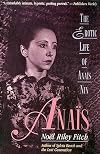
Fitch has written a number of good biographies, and she has done a fine job of offering a balanced view of an unbalanced life. This is rich material, and I am amazed that Hollywood hasn't taken it up. Nin had simultaneous affairs with novelist Henry Miller and his wife, seduced her father to get even with him for calling her ugly when she was a child, and ended her life as a bigamist with husbands on either American coast. Whether your interest is deep psychology, the lives of artists (she show more knew them all) or titillating gossip, Nin's life provides it all. show less
Sylvia Beach and the Lost Generation: A History of Literary Paris in the Twenties and Thirties by Noël Riley Fitch
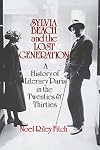
Just before reading this book I read a history of New York in the 1920's, roughly the same period as this book. That book suggested the changes that took place in the New York of the Roaring Twenties essentially defined modern America. Before me sits a book which in its own way refutes that hypothesis. Literary Paris of the 1920's encompassed characters as diverse as James Joyce, Andre Gide, Ernest Hemingway, composers like Igor Stravinsky (whose biggest works debuted in the decade before show more actually), and the Surrealists. Modernism graduated in the 1920's in Paris, not New York. The heroine of this book, Syvia Beach, bend over backward to bring Joyce's epic Ulysses, into the world. And being James Joyce's publisher was no picnic, either. Thank goodness for Beach's tireless efforts to promote her literary friends, and lend some of them a helping hand fleeing the Nazi's after the armistice France signed with Germany. Some owed her their lives. I've walked by the book store in Paris that bears the name of her original shop, Shakespeare & Company. I'm glad I know so much more about the amazing woman who created the original store. show less
Sylvia Beach and the Lost Generation: A History of Literary Paris in the Twenties and Thirties by Noël Riley Fitch

Exhaustive almost to the point of tedium, Fitch’s work covers much of the same ground as Shari Benstock’s Women of the Left Bank and the documentary “Paris was a Woman.” Fitch’s approach, however, is the more banal one. Of course Sylvia Beach was dedicated to literature, etc., etc., blah, blah, blah. That should go without saying (rather than saying it over 400 pages). What explains Beach’s work at that particular time and place is better covered by Benstock—women of the Left show more Bank were drawn to Paris by a freedom that allowed them to take the other women in their lives as their muse. In this case Beach’s muse, Adrienne Monnier, goes a long way toward explaining Shakespeare and Company. This is an aspect that is hastily glossed over by Fitch, who sums this up in one line by saying “Eros channeled into sorority yielded both personal and literary fruits.” “Fruits”…ha! Said with humor, that would be a pun almost worthy of Beach herself; unfortunately, Fitch uses it as a whitewash to cover the likes of Beach and Monnier, Stein and Toklas, Flanner and Solano, Barney and every woman on the face of the earth…take your pick.
If you’re interested in who borrowed what book from Shakespeare and Company on which particular day, and if you delight in hearing just how big of an ass James Joyce was, take a gander at this book. It is thoroughly researched on the day in and day out history of Shakespeare and Company. Direct all other inquiries to Benstock’s Women of the Left Bank and “Paris was a Woman.” (There is also Andrea Weiss’ Paris was a Woman: Portraits form the Left Bank, which I’m guessing, sight unseen, is probably dynamite.) show less
If you’re interested in who borrowed what book from Shakespeare and Company on which particular day, and if you delight in hearing just how big of an ass James Joyce was, take a gander at this book. It is thoroughly researched on the day in and day out history of Shakespeare and Company. Direct all other inquiries to Benstock’s Women of the Left Bank and “Paris was a Woman.” (There is also Andrea Weiss’ Paris was a Woman: Portraits form the Left Bank, which I’m guessing, sight unseen, is probably dynamite.) show less
Sylvia Beach and the Lost Generation: A History of Literary Paris in the Twenties and Thirties by Noël Riley Fitch
This book had the promise of something much better. It has all the ingredients of what from me would rate a 4 or a 5. The information was there, some of the engaging details were there, but there was far too much other stuff getting in the way to be able to concentrate on Sylvia Beach, an incredible woman who deserves a better biography.
I was familiar with the author, Fitch, having read her book on Julia Child a few years ago. I went back and took a look at what I wrote about that book. I show more quote myself below so that I don't have to write the exact same thing again because the exact same thing applies here.
"The problem with this book (Appetite for Life, the book about Julia Child) is not Julia's story. The problem is the poor writing (others say bad editing -- but it seems like poor writing to me). All the information is there, but nothing was left out and the information often just reads like a list. Paragraphs do not give you complete thoughts, in fact, sentences often don't follow one from the other so that you have to look back to figure out what the author was trying to say, and finally arrive at the conclusion that there is no way to know.
But finding out about Julia made it all worthwhile. Her passion, her marriage, her friendships, her life, I enjoyed learning about it all."
The same here in the book about Sylvia Beach -- the founder of the lending library and bookshop Shakespeare and Company in Paris; first publisher of James Joyce's Ulysses in English (the book was banned in the U.S. and in Britain); supporter of Joyce in every imaginable way for over a decade; hostess, supporter and good friend to innumerable writers, students, and intellectuals for over forty years; friend and lover of Adrienne Monnier for four decades; protector of German refugees from the French just before the war and Jews from the Germans during it; recipient of the French Legion of Honor -- she was almost lost in interminable lists of names, details that didn't add anything to the subject, sentences that made no sense, and paragraphs that went nowhere.
Although much of the book reads like a list, if you are determined, you are rewarded with anecdotes and great stories and a good sense of what kind of person Beach was. I've added her to my very short list of women heroes. You also learn, in excruciating detail, what a son-of-a-bitch James Joyce was (although Sylvia never said a bad word about him but it does come out in all those details). I think it was worth reading, but, because the subject and information was great but the writing was poor, it didn't rate more than a 3. show less
I was familiar with the author, Fitch, having read her book on Julia Child a few years ago. I went back and took a look at what I wrote about that book. I show more quote myself below so that I don't have to write the exact same thing again because the exact same thing applies here.
"The problem with this book (Appetite for Life, the book about Julia Child) is not Julia's story. The problem is the poor writing (others say bad editing -- but it seems like poor writing to me). All the information is there, but nothing was left out and the information often just reads like a list. Paragraphs do not give you complete thoughts, in fact, sentences often don't follow one from the other so that you have to look back to figure out what the author was trying to say, and finally arrive at the conclusion that there is no way to know.
But finding out about Julia made it all worthwhile. Her passion, her marriage, her friendships, her life, I enjoyed learning about it all."
The same here in the book about Sylvia Beach -- the founder of the lending library and bookshop Shakespeare and Company in Paris; first publisher of James Joyce's Ulysses in English (the book was banned in the U.S. and in Britain); supporter of Joyce in every imaginable way for over a decade; hostess, supporter and good friend to innumerable writers, students, and intellectuals for over forty years; friend and lover of Adrienne Monnier for four decades; protector of German refugees from the French just before the war and Jews from the Germans during it; recipient of the French Legion of Honor -- she was almost lost in interminable lists of names, details that didn't add anything to the subject, sentences that made no sense, and paragraphs that went nowhere.
Although much of the book reads like a list, if you are determined, you are rewarded with anecdotes and great stories and a good sense of what kind of person Beach was. I've added her to my very short list of women heroes. You also learn, in excruciating detail, what a son-of-a-bitch James Joyce was (although Sylvia never said a bad word about him but it does come out in all those details). I think it was worth reading, but, because the subject and information was great but the writing was poor, it didn't rate more than a 3. show less
Lists
Modernism (1)
You May Also Like


Associated Authors
Statistics
- Works
- 11
- Also by
- 2
- Members
- 1,733
- Popularity
- #14,830
- Rating
- 3.7
- Reviews
- 23
- ISBNs
- 40
- Languages
- 4
- Favorited
- 1