
Sylvia Beach (1887–1962)
Author of Shakespeare and Company
About the Author
Works by Sylvia Beach
Les années vingt; 5 copies
Shakespeare and company 1959 1 copy
Associated Works
Tagged
Common Knowledge
- Legal name
- Beach, Nancy Woodbridge
- Birthdate
- 1887-03-14
- Date of death
- 1962-10-05
- Gender
- female
- Occupations
- bookstore owner
publisher
editor - Organizations
- Shakespeare and Company (founder)
- Relationships
- Monnier, Adrienne (domestic partner)
- Short biography
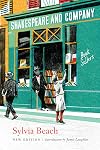
- Sylvia Beach was a highly influential literary figure in Paris in the years between the two world wars. In 1919, she founded Shakespeare and Company, the innovative English language bookstore and lending library on the Left Bank, which quickly became the center of writers, aspiring writers, and book lovers of the "Lost Generation." Her second most famous act was to publish James Joyce's novel Ulysses when no commercial publisher would touch it. Shakespeare and Company was forced to close during the German Occupation of World War II but Miss Beach continued to live in Paris until her death.
- Nationality
- USA
- Birthplace
- Baltimore, Maryland, USA
- Places of residence
- Baltimore, Maryland, USA
Bridgeton, New Jersey, USA
Paris, France - Place of death
- Paris, France
- Burial location
- Princeton Cemetery, Princeton, New Jersey, USA
- Associated Place (for map)
- USA
Members
Reviews
It was a lot of fun to read a first person account about the literary ferment that went in in Paris of the early and mid 20s. James Joyce, T S Eliot and Ernest Hemingway were determined to change the English language into something they found more agreeable. There contributions to literature and poetry certainly left a major mark. We think and speak differently now at least partly because of them. The real test is whether our understanding of human nature was enhanced by there communicating show more skills. We may each have an answer for that question but time will be the final judge. show less
The third book read in my project to learn more about literary expatriates in 1920s and 1930s Paris, Sylvia Beach's memoir was in many ways the most enjoyable reading experience to date. Beach was an American woman who operated an English language lending library and bookstore called Shakespeare & Company on Paris' Left Bank from 1919 to 1941*. During that period, her store was a hub for expatriate writers including Ezra Pound, Ernest Hemingway, F Scott Fizgerald and, most signficantly, show more James Joyce. While not at all literary - Beach had no pretensions to be a writer and in the memoir describes herself as a "plain reader" - the work comes across as honest and heartfelt. Unlike Ernest Hemingway in [b:A Moveable Feast|4631|A Moveable Feast|Ernest Hemingway|http://d.gr-assets.com/books/1356407015s/4631.jpg|2459084], Beach was not mean spirited, nor was she self-obsessed as Gertrude Stein demonstrated herself to be in [b:The Autobiography of Alice B. Toklas|527495|The Autobiography of Alice B. Toklas|Gertrude Stein|http://d.gr-assets.com/books/1348225160s/527495.jpg|2285834]. Instead, the image of Beach which emerges from the work is of a modest, warm, devoted, patient, principled, persistent and humourous woman, who was loyal to her friends and committed to promoting contemporary literature.
In addition to running her bookstore, Sylvia Beach published the first edition of James Joyce's [b:Ulysses|338798|Ulysses|James Joyce|http://d.gr-assets.com/books/1346161221s/338798.jpg|2368224] in book form. This was in 1922, at a time when Joyce could not secure a publisher because the book had been banned in the US and the UK following its publication in periodical form. Beach, who was devoted to Joyce and recognised his literary genius, not only published the book, but acted as Joyce's agent, secretary, banker and adviser. This was ultimately to her financial disadvantage. Joyce must have been extraordinarily frustrating to deal with, but nothing more than a hint of exasperation emerges from Beach's account of their friendship.
Beach has a clear and accessible conversational style. The middle section of the book is somewhat bogged down in an account of less well-known writers and somewhat obscure literary reviews with which Beach was associated. However, it picks up again when Beach recounts how the bookstore was saved from closure during the 1930s by the efforts of French and expatriate literary figures. The final section is particularly moving. In this section Beach describes her experiences in occupied Paris, when she closed down the bookstore after refusing to sell her last copy of [b:Finnegans Wake|11013|Finnegans Wake|James Joyce|http://d.gr-assets.com/books/1336408055s/11013.jpg|322098] to a German officer. The narrative ends with the "liberation" of the store by Ernest Hemingway, who arrives in the Rue d'Odéon accompanied by American soldiers, who then go on to "liberate" the cellars of the Ritz Hotel. It left me with a positive image of Hemingway, which was welcome after the negative impression I gained from reading [b:A Moveable Feast|4631|A Moveable Feast|Ernest Hemingway|http://d.gr-assets.com/books/1356407015s/4631.jpg|2459084].
Overall, this was a most enjoyable read, notwithstanding the less than compelling middle section. However, as interesting as the anecdotes Beach included in her memoir are the things she left out. For example, Beach was in a long-term relationship with bookseller Adrienne Monnier. Beach does not directly refer to the nature of her relationship with Monnier in her memoir. Nor does she expand on the difficulties she must have endured because of Joyce's thoughtless exploitation of her devotion to his interests. These are the sorts of things I hope to read about in [b:Sylvia Beach and the Lost Generation: A History of Literary Paris in the Twenties and Thirties|46153|Sylvia Beach and the Lost Generation A History of Literary Paris in the Twenties and Thirties|Noël Riley Fitch|http://d.gr-assets.com/books/1347709475s/46153.jpg|45304]. With luck, I will also discover whether my impression of Beach's character is accurate.
Clips of interviews with Sylvia Beach (the first in English with German subtitles and the second - which is specifically about James Joyce - in French) can be seen here and here.
*The Shakespeare & Company which currently exists in Paris is unconnected with Beach's bookstore otherwise than in name. It was named in Beach's honour by its founder, George Whitman. show less
I stumbled upon this book very recently and naturally thought of 'The Haunted Bookshop' by Christopher Marley in that Ms. Beach's memoir is splattered with the names of authors and titles of books that one wants to jot down and search for in the future. Where it differs is that Shakespeare and Company is the very real, very interesting memoir of Sylvia Beach owner of the aforementioned bookstore in Paris, France during the early decades of the 20th century. She befriended many writers of the show more day such as Hemingway, Gertrude Stein, Sherwood Anderson and Ezra Pound. But no one more intimately than James Joyce and this is when the memoir is at its best. Ms. Beach offers many insights into the life of Joyce including his poor vision, his family and his extravagant lifestyle. Ms. Beach was extremely instrumental in publishing 'Ulysses]' when other publishers found it too obscene to print. As it was, Ulysses was banned in the United States and England for many years to follow. Other snippets that were equally amusing were her recollection of George and Ira Gershwin playing tunes on the piano at a party she attended in France, while their sister, Frances sang. Ernest Hemingway actually ridding the last of the Germans from her street in Paris at the end of WWII is another interesting memory.
I found this memoir to be absorbing throughout. How fascinating to have lived and worked among some of the most influential writers of the day. show less
I found this memoir to be absorbing throughout. How fascinating to have lived and worked among some of the most influential writers of the day. show less
There are many books about this period in Paris, and I am doing my best to find and read then all. This isn't the best of them, but it's very good. Sylvia Beach must have been a very sweet woman. She was passionate about literature and poetry and about the writing of James Joyce -- seeing to it that he got published at considerable cost to herself. She manages to take his betrayal in stride. You don't get the feeling she's putting it on -- it seems genuine. But then you have to wonder how a show more woman so obviously intelligent could be so stupid when it comes to one person who was not family or lover. Beach talks about her friend Adrienne Monnier who helped her get started and was her greatest friend and supporter for most of her life. They lived together and must have been lovers, but Beach is discretion itself and such a thing is never mentioned. Maybe what would have made the book just that little bit better is if Beach hadn't been so discrete in writing it.
If you also enjoy reading about this period, you might want to get yourself the DVD of the documentary film "Paris was a Woman" by Greta Schiller. In it you will find footage of many of the famous characters of the time, and an interview with Sylvia Beach which must have been done in the late 50s or early 60s not long before her death. show less
If you also enjoy reading about this period, you might want to get yourself the DVD of the documentary film "Paris was a Woman" by Greta Schiller. In it you will find footage of many of the famous characters of the time, and an interview with Sylvia Beach which must have been done in the late 50s or early 60s not long before her death. show less
Lists
You May Also Like


Associated Authors
Statistics
- Works
- 9
- Also by
- 3
- Members
- 862
- Popularity
- #29,693
- Rating
- 3.8
- Reviews
- 14
- ISBNs
- 28
- Languages
- 6
- Favorited
- 4
