
Lewis Buzbee
Author of The Yellow-Lighted Bookshop
About the Author
Image credit: © Julie Bruck
Works by Lewis Buzbee
Associated Works
Teaching with Fire: Poetry That Sustains the Courage to Teach (2003) — Contributor — 226 copies, 1 review
Here Lies My Heart: Essays on Why We Marry, Why We Don't, and What We Find There (1999) — Contributor — 62 copies, 3 reviews
Tagged
Common Knowledge
- Canonical name
- Buzbee, Lewis
- Birthdate
- 1957
- Gender
- male
- Education
- Warren Wilson College (MFA)
- Occupations
- academic
book dealer
publishers representative
novelist
poet - Organizations
- University of San Francisco
Chronicle Books
Authors Guild
PEN America
Upstart Crow
Printers Inc. - Agent
- Allison Remcheck (Stimola Literary Studio)
- Relationships
- Bruck, Julie (wife)
- Short biography
- Lewis Buzbee is a third-generation Californian on his mother’s side, an Okie on his father’s. He is the author of Fliegelman’s Desire, After the Gold Rush, and The Yellow-Lighted Bookshop. He teaches in the MFA in Writing Program at the University of San Francisco.
- Nationality
- USA
- Birthplace
- California, USA
- Places of residence
- San Francisco, California, USA
- Associated Place (for map)
- California, USA
Members
Reviews
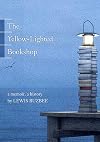
This delightful little book is part memoir, part history, and part gentle polemic. Buzbee started his career in the last great bookstore age, when the tech nerds busy creating the modern Internet depended on print books just as everybody else did. He seems (like me) always to have been in love with books: not just with particular books, or with the pleasures that reading books can bring, but with the very idea of books, not to mention with their feel, their look, their smell. He has much to show more share with other booklovers about how bookstores are run, and what it was to work in one (and is still, for a lucky few). Along the way he covers the history of books as we know them and of the vendors, stalls, and stores that sell them. Not surprisingly, he's worked not just as a bookstore employee but as a publisher's representative, and he has interesting stories about what that life is like, too.
I enjoyed every page of this book and read it very quickly. I'm sure that anybody who likes books at all would like it. show less
I enjoyed every page of this book and read it very quickly. I'm sure that anybody who likes books at all would like it. show less
With the title and cover, I anticipated that the author had somewhere along a coast opened an enticing "Yellow-Lighted Bookshop."
Even without fulfilling that expectation, he offers one of those rare books where a reader might pause midway through the first chapter
and read from the start again just to savor the words.
He makes a powerful statement against government, or any, censorship.
My sole objection to this was finding a book in the children's section of
a bookstore in Madison, Wisconsin show more that showed two identical pigs (I think).
One was pink and the other was brown.
The pink one was labeled "Clean" and the brown one "Dirty."
Hello!?! to the editor who allowed this to be published.
The other odd things are his many mentions of illustrations,
none of which are included, the boring slowdown of plot "On the Road,"
and his glossing over stealing, books, test answers, etc. show less
Even without fulfilling that expectation, he offers one of those rare books where a reader might pause midway through the first chapter
and read from the start again just to savor the words.
He makes a powerful statement against government, or any, censorship.
My sole objection to this was finding a book in the children's section of
a bookstore in Madison, Wisconsin show more that showed two identical pigs (I think).
One was pink and the other was brown.
The pink one was labeled "Clean" and the brown one "Dirty."
Hello!?! to the editor who allowed this to be published.
The other odd things are his many mentions of illustrations,
none of which are included, the boring slowdown of plot "On the Road,"
and his glossing over stealing, books, test answers, etc. show less
I waited to review "The Yellow-Lighted Bookshop" until the spring grades were in, so it didn't look like I was brown-nosing Lewis Buzbee, who taught my spring lit class. (Not that I am above brown-nosing... every week I rearranged the classroom tables and wiped down the whiteboard; I would have stayed after to clap erasers, were that possible. I just don't brown-nose electronically.)
Anyhoo... this is a yummy little cupcake of a book, so good to read, and so much a book for readers, writers, show more and librarians, it put me into an agony over whether or not to make notes as I read it. Chapter by chapter I agonized over interrupting the pleasure of experiencing words on the page so I could jot down words such as "Bibliopolis" and "book geek" and have a handy reminder of where the Buzz talks about the joy of opening fresh boxes of books. Most of the time I kept keep reading, reading, reading, while he walked me through the libraries of Alexandria, the history of papermaking, modern bookshop management, and his own unrepentant biblioholism, to name only a few of the journeys this book takes confidently in its stride.
The book doesn't try to be unbiased, and Buzbee's swift dismissal of libraries could raise some bibliohackles. "Lending libraries were quite popular in the United States until the end of the WWII, when postwar prosperity and a new consumer culture made us all into great buyers rather than borrowers." Actually-factually, the modern public library arose in the second half of the twentieth century, and the last twenty years have been its boom time. Then again, he's not the only person I know in San Francisco who prefers to buy, borrow, trade, and otherwise live a good book-filled life outside the world of "lending libraries," and his particular experience in time and space is instructive.
To Buzbee, bookstores are seductive temptresses. He begins his book with the encounter--"When I walk into a bookstore, any bookstore, I'm flooded with a sense of hushed excitement"--and peppers his narrative with these book-porn moments many of us can connect with. He also delightfully recreates this experience through time, placing us before "one bookseller with pen, ink, paper, and a handful of attractively priced books spread on a carpet." I want to be kneeling in front of that carpet, picking up a book, thinking about buying it.
"The Yellow-Lighted Bookshop" both celebrates and is fiercely protective of the Proustian book experience, of the way a book feels when you first touch it. After teasing us with a long, slow wander in a small bookstore, he finds The One. "The pages are thick and creamy, and thumb nicely. The end pages, unusual in a paperback, are colored, that riveting purple again. I tuck the book under my arm. Sold."
So how does the book encounter stack up in your library? I recently walked into a small, weary library, saw a librarian arguing with a patron while children and adults jostled to get to the handful of library catalogs (nothing like wandering around a library waiting to look up a book), and the only emotion I was flooded with was a small surge of "fight or flight" adrenaline that sent me home and back to Amazon.
Buzbee's tone in this book is confident, as if the future of bookstores was debatable --"This is where I eventually draw the line, not between chains and independents, but between bookstores and the absence of them"--but since I'm less convinced bookstores are here to stay, "The Yellow-Lighted Bookshop" feels elegaic. His evocation of books won't pull me from behind my computer and into Kepler's often enough to make a difference; like buying ready-to-wear clothes, I know I'm missing something important--the rustle of the paper pattern, the snick-snick of fabric under my scissors, the hum of the sewing machine--but I am too much a product of my time, and on to Amazon I go, buying my fifty-cent-plus-shipping used books. For Proust, I have a harried delivery man in brown shorts.
A bookseller, Buzbee reminds us, might remind me at point of sale that "The Crossing" comes before "Cities of the Plain," just as a good librarian will turn a one-book transaction into three or eight. (I will never forget the librarian at one local PL who leaned forward to confide, "I'm a pimp, you see.") Buzbee also reminds us that Amazon is just a huge information trash barge that makes browsing difficult and doesn't love us back. But most of us will trade the slow, sensual bookstore experience, the surprise of a book on a rainy afternoon, and the taste of book dust on our tongue, for a little convenience. Fortunately, Buzbee isn't most of us.
http://freerangelibrarian.com/2006/08/the_yellowlighted_bookshop_a_c.php show less
Anyhoo... this is a yummy little cupcake of a book, so good to read, and so much a book for readers, writers, show more and librarians, it put me into an agony over whether or not to make notes as I read it. Chapter by chapter I agonized over interrupting the pleasure of experiencing words on the page so I could jot down words such as "Bibliopolis" and "book geek" and have a handy reminder of where the Buzz talks about the joy of opening fresh boxes of books. Most of the time I kept keep reading, reading, reading, while he walked me through the libraries of Alexandria, the history of papermaking, modern bookshop management, and his own unrepentant biblioholism, to name only a few of the journeys this book takes confidently in its stride.
The book doesn't try to be unbiased, and Buzbee's swift dismissal of libraries could raise some bibliohackles. "Lending libraries were quite popular in the United States until the end of the WWII, when postwar prosperity and a new consumer culture made us all into great buyers rather than borrowers." Actually-factually, the modern public library arose in the second half of the twentieth century, and the last twenty years have been its boom time. Then again, he's not the only person I know in San Francisco who prefers to buy, borrow, trade, and otherwise live a good book-filled life outside the world of "lending libraries," and his particular experience in time and space is instructive.
To Buzbee, bookstores are seductive temptresses. He begins his book with the encounter--"When I walk into a bookstore, any bookstore, I'm flooded with a sense of hushed excitement"--and peppers his narrative with these book-porn moments many of us can connect with. He also delightfully recreates this experience through time, placing us before "one bookseller with pen, ink, paper, and a handful of attractively priced books spread on a carpet." I want to be kneeling in front of that carpet, picking up a book, thinking about buying it.
"The Yellow-Lighted Bookshop" both celebrates and is fiercely protective of the Proustian book experience, of the way a book feels when you first touch it. After teasing us with a long, slow wander in a small bookstore, he finds The One. "The pages are thick and creamy, and thumb nicely. The end pages, unusual in a paperback, are colored, that riveting purple again. I tuck the book under my arm. Sold."
So how does the book encounter stack up in your library? I recently walked into a small, weary library, saw a librarian arguing with a patron while children and adults jostled to get to the handful of library catalogs (nothing like wandering around a library waiting to look up a book), and the only emotion I was flooded with was a small surge of "fight or flight" adrenaline that sent me home and back to Amazon.
Buzbee's tone in this book is confident, as if the future of bookstores was debatable --"This is where I eventually draw the line, not between chains and independents, but between bookstores and the absence of them"--but since I'm less convinced bookstores are here to stay, "The Yellow-Lighted Bookshop" feels elegaic. His evocation of books won't pull me from behind my computer and into Kepler's often enough to make a difference; like buying ready-to-wear clothes, I know I'm missing something important--the rustle of the paper pattern, the snick-snick of fabric under my scissors, the hum of the sewing machine--but I am too much a product of my time, and on to Amazon I go, buying my fifty-cent-plus-shipping used books. For Proust, I have a harried delivery man in brown shorts.
A bookseller, Buzbee reminds us, might remind me at point of sale that "The Crossing" comes before "Cities of the Plain," just as a good librarian will turn a one-book transaction into three or eight. (I will never forget the librarian at one local PL who leaned forward to confide, "I'm a pimp, you see.") Buzbee also reminds us that Amazon is just a huge information trash barge that makes browsing difficult and doesn't love us back. But most of us will trade the slow, sensual bookstore experience, the surprise of a book on a rainy afternoon, and the taste of book dust on our tongue, for a little convenience. Fortunately, Buzbee isn't most of us.
http://freerangelibrarian.com/2006/08/the_yellowlighted_bookshop_a_c.php show less
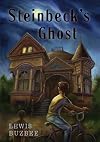
It’s been two months since Travis’s family moved to a development so new that it seems totally unreal. His parents are working harder now, to pay for it all, and Travis is left to fend for himself. There’s one place, though, where Travis can still connect with his old life: the Salinas library. Travis and his family used to go there together every Saturday, but now he bikes to it alone, re-reading his favorite books. It’s only natural that Travis likes the work of author John show more Steinbeck—after all, Salinas is Steinbeck’s hometown. But that can’t explain why Travis is suddenly seeing Steinbeck’s characters spring to life. There’s the homeless man in the alley behind the library, the line of figures at the top of a nearby ridge, the boy who writes by night in an attic bedroom. Travis has met them all before—as a reader. But why are they here now? And how? As Travis struggles to solve this mystery, budget cuts threaten his library. And so, he embarks on a journey through Steinbeck’s beautiful California landscape, looking for a way to save his safe haven. It’s only then that he begins to sort out fact from fiction, discovering the many ways a story can come alive—and stumbling into a story Steinbeck might have started, and Travis needs to complete. Here is a mystery that delves deeply into the ways that books take us, one at a time, out into the vast world. show less
Lists
Awards


You May Also Like


Associated Authors
Statistics
- Works
- 10
- Also by
- 3
- Members
- 1,707
- Popularity
- #15,030
- Rating
- 3.8
- Reviews
- 87
- ISBNs
- 45
- Languages
- 2