
Jeremy Mercer
Author of Time Was Soft There
About the Author
Image credit: Ode
Works by Jeremy Mercer
Associated Works
Tagged
Common Knowledge
- Birthdate
- 1971
- Gender
- male
- Occupations
- author
journalist
translator - Agent
- Kristin Lindstrom (lindstromlit@aol.com)
- Nationality
- Canada
- Birthplace
- Canada
- Places of residence
- Paris, France
Marseille, France (currently)
Ottawa, Ontario, Canada - Associated Place (for map)
- Canada
Members
Reviews

“A bookshop can be a magnet for mavericks and nomads. A community hub, a haven, a platform for cultural ideas. A centre of dissent and radicalism.” — Henry Hitchings, “Browse: The World in Bookshops”
Henry Hitchings was talking specifically about Lawrence Ferlinghetti's City Lights bookstore in San Francisco when he wrote those words, but he just as easily could have been thinking of Shakespeare and Company, the famous English-language bookstore in Paris within sight of Notre Dame show more Cathedral. Shakespeare and Company and its long-time owner George Whitman are the subjects of Jeremy Mercer's fascinating 2005 memoir “Time Was Soft There.”
Mercer was a crime reporter for a Canadian newspaper, and at times in trouble with police himself, when he made the mistake of revealing a source, who then threatened revenge. Mercer fled to Paris with little money and no prospects. Like so many young people in Paris under similar circumstances, Mercer found his way to Shakespeare and Company. For decades Whitman, a devoted socialist, had operated the bookstore as a free boardinghouse for "mavericks and nomads," with preference given to aspiring writers. Over the years some 40,000 people had spent nights in the bookstore, some for years at a time, sleeping wherever they could find room.
Whitman, an American, liked to tell people he was the son of Walt Whitman, which was true but it wasn't THAT Walt Whitman. He was in his mid-80s when Mercer was his guest, but still not nearly old enough to be the poet's son. Despite his socialist ideals, Whitman enforced a class system in his shop, allowing those he judged to be the best writers to use actual bedrooms on the upper floors, while others, like Mercer, had to look for space on the floor. Whitman also favored new guests over those he was starting to get tired of and attractive women over everybody else. Even at 86 he was still falling desperately in love with young women.
Whitman, Mercer tells us, was also a petty thief, stealing from his own guests. His favorite reading in his own bookstore were the diaries he stole from women who stayed with him. Mercer describes Whitman wrestling with a priest over a book being sold cheaply at a book sale. He wanted the book to resale in his shop. The priest presumably wanted to read it.
For all Whitman's faults, Mercer came to admire him and to want to help him protect the future of the store, which was being sought by developers because of its prime location. Mercer was able to track down Whitman's daughter, his only child and the product of his brief marriage to one of the women he fell in love with in his store. Today, following Whitman's death in 2011, Sylvia Whitman operates the store.
Mercer's title refers to prison slang. For prisoners there is hard time and then there is soft time. At Shakespeare and Company, he says, time was soft.
I visited Shakespeare and Company when I was last in Paris two summers ago. How I wish I had read Mercer's book first. show less
Henry Hitchings was talking specifically about Lawrence Ferlinghetti's City Lights bookstore in San Francisco when he wrote those words, but he just as easily could have been thinking of Shakespeare and Company, the famous English-language bookstore in Paris within sight of Notre Dame show more Cathedral. Shakespeare and Company and its long-time owner George Whitman are the subjects of Jeremy Mercer's fascinating 2005 memoir “Time Was Soft There.”
Mercer was a crime reporter for a Canadian newspaper, and at times in trouble with police himself, when he made the mistake of revealing a source, who then threatened revenge. Mercer fled to Paris with little money and no prospects. Like so many young people in Paris under similar circumstances, Mercer found his way to Shakespeare and Company. For decades Whitman, a devoted socialist, had operated the bookstore as a free boardinghouse for "mavericks and nomads," with preference given to aspiring writers. Over the years some 40,000 people had spent nights in the bookstore, some for years at a time, sleeping wherever they could find room.
Whitman, an American, liked to tell people he was the son of Walt Whitman, which was true but it wasn't THAT Walt Whitman. He was in his mid-80s when Mercer was his guest, but still not nearly old enough to be the poet's son. Despite his socialist ideals, Whitman enforced a class system in his shop, allowing those he judged to be the best writers to use actual bedrooms on the upper floors, while others, like Mercer, had to look for space on the floor. Whitman also favored new guests over those he was starting to get tired of and attractive women over everybody else. Even at 86 he was still falling desperately in love with young women.
Whitman, Mercer tells us, was also a petty thief, stealing from his own guests. His favorite reading in his own bookstore were the diaries he stole from women who stayed with him. Mercer describes Whitman wrestling with a priest over a book being sold cheaply at a book sale. He wanted the book to resale in his shop. The priest presumably wanted to read it.
For all Whitman's faults, Mercer came to admire him and to want to help him protect the future of the store, which was being sought by developers because of its prime location. Mercer was able to track down Whitman's daughter, his only child and the product of his brief marriage to one of the women he fell in love with in his store. Today, following Whitman's death in 2011, Sylvia Whitman operates the store.
Mercer's title refers to prison slang. For prisoners there is hard time and then there is soft time. At Shakespeare and Company, he says, time was soft.
I visited Shakespeare and Company when I was last in Paris two summers ago. How I wish I had read Mercer's book first. show less
I read this book during my summer vacation from seminary. It resonated deeply with me. I hitchhiked around the U.S. and Europe in my youth. I've always aspired to be a writer. I've made bad choices and good choices. Most of all, I didn't quite fit in at a lot of places. Mercer describes all of this masterfully.
Yet as I was reading this, I kept thinking about how it related to my seminary education. Finally, I got to this:
“You know, that’s what I’ve always wanted this place to be,” show more he said. “I look across at Notre Dame and I sometimes think the bookstore is an annex of the church. A place for the people who don’t quite fit in over there.”
I think those of us seeking to serve in the church need to think about how we serve those who don't quite fit into the typical established church Sunday morning service. show less
Yet as I was reading this, I kept thinking about how it related to my seminary education. Finally, I got to this:
“You know, that’s what I’ve always wanted this place to be,” show more he said. “I look across at Notre Dame and I sometimes think the bookstore is an annex of the church. A place for the people who don’t quite fit in over there.”
I think those of us seeking to serve in the church need to think about how we serve those who don't quite fit into the typical established church Sunday morning service. show less

Subtitle: A Paris Sojourn at Shakespeare & Co
Also published as: Books, Baguettes and Bedbugs: the Left Bank World of Shakespeare and Co.
Several bad decision derailed Mercer’s journalism career in Canada, so he ran to Paris to take a final French course and finish his degree requirements. On a rainy afternoon he took refuge in a shop near Notre Dame and discovered Shakespeare & Co. A casual invitation from a lovely young woman to join the others for “tea upstairs” eventually led to his show more being offered a bed in the place, something the owner, George Whitman, did for writers and other artists down on their luck. The result is this memoir of the time he spent there.
I found this very entertaining. I loved reading about his adventures scrounging for the cheapest food, picnics with friends along the Seine, the joys of free museums, and the eccentric residents of the shop, not least of which was the owner. It’s a very atmospheric read – you can smell the dusty books, hear the soft buzz of conversation, relish in the aroma of fresh baked croissants.
But, I was less enamored of the casual lawlessness, from drug use to petty theft; I just don’t find that kind of behavior “romantic.” Still, I think it’s an honest, and well-written, depiction of his time there. And I enjoyed vicariously living in Paris for those few days I was reading this. (Mercer still lives in France.) show less
Also published as: Books, Baguettes and Bedbugs: the Left Bank World of Shakespeare and Co.
Several bad decision derailed Mercer’s journalism career in Canada, so he ran to Paris to take a final French course and finish his degree requirements. On a rainy afternoon he took refuge in a shop near Notre Dame and discovered Shakespeare & Co. A casual invitation from a lovely young woman to join the others for “tea upstairs” eventually led to his show more being offered a bed in the place, something the owner, George Whitman, did for writers and other artists down on their luck. The result is this memoir of the time he spent there.
I found this very entertaining. I loved reading about his adventures scrounging for the cheapest food, picnics with friends along the Seine, the joys of free museums, and the eccentric residents of the shop, not least of which was the owner. It’s a very atmospheric read – you can smell the dusty books, hear the soft buzz of conversation, relish in the aroma of fresh baked croissants.
But, I was less enamored of the casual lawlessness, from drug use to petty theft; I just don’t find that kind of behavior “romantic.” Still, I think it’s an honest, and well-written, depiction of his time there. And I enjoyed vicariously living in Paris for those few days I was reading this. (Mercer still lives in France.) show less
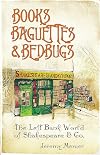
As every book lover knows, there is something special about a bookshop, but the famous, Shakespeare and Company, in Paris is another level again. Originally founded in 1919 by Sylvia Beach, she was the first to distribute Ulysses by joyce, and counted among her friends Scott Fitzgerald and Hemingway. After her death, George Whitman bought the stock and re-founded his own shop in homage to hers. Originally called Le Mistral, he renamed it Shakespeare and Company on the 400th anniversary of show more the bard’s birthday. Whitman had always been a wanderer, walking all over the States, Mexico and Central America. The charity and kindness that people showed him on his travels, inspired his philosophy “Be not inhospitable to strangers lest they be angels in disguise.” The bookshop was to become a haunt and dwelling for aspiring poets and writers, and a number of the staff lived in the shop too. He called them Tumbleweeds; they had few responsibilities, but they included, producing a short autobiography, helping out in the bookshop for a few hours a day and reading a book a day.
Mercer started out as a journalist, reporting court cases and other news items for a local paper. After a run in with a criminal contact he decided that he need to leave Canada for his own safety. Arriving in Paris he turns up at the bookshop as he has heard that it can be a refuge. Whitman says he can stay for a while, and says he can stay in the Antiquarian room, but he must say to the current resident, a poet called Simon, that after five years it is time for him to move on. Simon proves elusive, and when he does catch up with him to pass on the news he seems distraught. They agree on a time period for him to go, but when Mercer says that Simon wasn’t going to leave, he expects a scene, but Whitman shrugs it off.
As he settles into Paris life and the bookshop, he starts to befriend the other people that are living there. Whitman is a man who collects favourites, Mercer becomes one at one point, before the latest new member overtakes him. It is a bit chaotic, he is forever leaving money in books, there are a number of thefts from unguarded tills, and there are always new people and others moving on. They have to find places to shower and bathe and having very little money himself, he is taught by Kurt the cheapest and best places to eat from. For a time they are fed by a staff member of the New Zealand Embassy, and have to sneak in and stay quiet so they don’t get caught. And in this place of misfits, great things have emerged. It is thought that at least seven books have been written there, and many times that have been started or conceived.
It was a really lovely book to read. Mercer has brought the bookshop and its many characters to life and gives us a flavour of Parisian life at the time. There are some funny parts too as they sail a little too close to the law. Whitman is quite a man too, flawed but generous, this bookshop that he has given to the world is now in safe hands as his daughter is now running it.
Must pay it a visit one day. show less
Mercer started out as a journalist, reporting court cases and other news items for a local paper. After a run in with a criminal contact he decided that he need to leave Canada for his own safety. Arriving in Paris he turns up at the bookshop as he has heard that it can be a refuge. Whitman says he can stay for a while, and says he can stay in the Antiquarian room, but he must say to the current resident, a poet called Simon, that after five years it is time for him to move on. Simon proves elusive, and when he does catch up with him to pass on the news he seems distraught. They agree on a time period for him to go, but when Mercer says that Simon wasn’t going to leave, he expects a scene, but Whitman shrugs it off.
As he settles into Paris life and the bookshop, he starts to befriend the other people that are living there. Whitman is a man who collects favourites, Mercer becomes one at one point, before the latest new member overtakes him. It is a bit chaotic, he is forever leaving money in books, there are a number of thefts from unguarded tills, and there are always new people and others moving on. They have to find places to shower and bathe and having very little money himself, he is taught by Kurt the cheapest and best places to eat from. For a time they are fed by a staff member of the New Zealand Embassy, and have to sneak in and stay quiet so they don’t get caught. And in this place of misfits, great things have emerged. It is thought that at least seven books have been written there, and many times that have been started or conceived.
It was a really lovely book to read. Mercer has brought the bookshop and its many characters to life and gives us a flavour of Parisian life at the time. There are some funny parts too as they sail a little too close to the law. Whitman is quite a man too, flawed but generous, this bookshop that he has given to the world is now in safe hands as his daughter is now running it.
Must pay it a visit one day. show less
Lists
Awards

You May Also Like


Associated Authors
Statistics
- Works
- 5
- Also by
- 1
- Members
- 1,002
- Popularity
- #25,740
- Rating
- 3.7
- Reviews
- 32
- ISBNs
- 17
- Languages
- 4