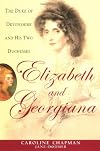
The awkward and somewhat inaccurate title does not detract from the quality of the book.
Although the title might suggest that there are three equal subjects of this book, Caroline Chapman has actually written a good biography of Elizabeth Hervey Foster Cavendish, the occasional mistress and second wife of William, the 5th Duke of Devonshire. There's no doubt that Elizabeth is the main character entirely; Georgiana and her husband are given good "coverage" in consideration of their relationships with the woman who entered their lives in the 1782 and became the closest of friends and the most intimate of companions.
"Mrs. Foster" had an interesting life before the Devonshires, first as daughter of the eccentric Earl-Bishop, Frederick, 4th Earl of Bristol and Bishop of Derry, and later as a woman trapped in an unhappy marriage, forced to surrender custody of her two sons. She also had an interesting life after the death of the 5th Duke, moving to Rome and become an active figure in the social and cultural life of that city - and establishing a close friendship with the influential Papal Secretary of State, Cardinal Consalvi. Actually, the Roman life and connections of Elizabeth were some of the most interesting aspects of her life. I was intrigued to learn of her connections and friendships with such major figures as Edward Gibbon [!} and Antonio Canova [!].
There's a lot to learn and untangle too in the complex and complicated personal affairs of the Whig Aristocracy in the show more late 18th and 19th centuries. It was certainly an era of heightened sensibility which was not always accompanied by a great deal of sense. show less
Although the title might suggest that there are three equal subjects of this book, Caroline Chapman has actually written a good biography of Elizabeth Hervey Foster Cavendish, the occasional mistress and second wife of William, the 5th Duke of Devonshire. There's no doubt that Elizabeth is the main character entirely; Georgiana and her husband are given good "coverage" in consideration of their relationships with the woman who entered their lives in the 1782 and became the closest of friends and the most intimate of companions.
"Mrs. Foster" had an interesting life before the Devonshires, first as daughter of the eccentric Earl-Bishop, Frederick, 4th Earl of Bristol and Bishop of Derry, and later as a woman trapped in an unhappy marriage, forced to surrender custody of her two sons. She also had an interesting life after the death of the 5th Duke, moving to Rome and become an active figure in the social and cultural life of that city - and establishing a close friendship with the influential Papal Secretary of State, Cardinal Consalvi. Actually, the Roman life and connections of Elizabeth were some of the most interesting aspects of her life. I was intrigued to learn of her connections and friendships with such major figures as Edward Gibbon [!} and Antonio Canova [!].
There's a lot to learn and untangle too in the complex and complicated personal affairs of the Whig Aristocracy in the show more late 18th and 19th centuries. It was certainly an era of heightened sensibility which was not always accompanied by a great deal of sense. show less
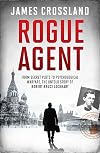
Fun biographical romp through the life of enigmatic "government agent" Robert Bruce Lockhart, Britain's "man in Moscow" during the Bolshevik Revolutions of 1917-18. Crossland disentangles conflicting accounts of Lockhart's involvement in counter-revolutionary plots which aimed to foment dissatisfaction with the Communists, spur a return to Russian involvement in World War I, and assassinate Soviet leaders - including Lenin! For his involvement, Lockhart was seized by the Soviets and thrown into prison, but managed to survive thanks to the British government's eventual decision to arrange the first of what would be many "prisoner swaps" of the Cold War.
There is also a very interesting extended account of Lockhart's contributions to Second World War efforts through his leadership of the propagandistic "Political Warfare Executive."
The book reads like a cross between John Buchan and John le Carré: at times so strange it seems like fiction. Crossland's account is superbly researched and neatly documented, making it as valuable for professional historians as it is entertaining for general readers.
There is also a very interesting extended account of Lockhart's contributions to Second World War efforts through his leadership of the propagandistic "Political Warfare Executive."
The book reads like a cross between John Buchan and John le Carré: at times so strange it seems like fiction. Crossland's account is superbly researched and neatly documented, making it as valuable for professional historians as it is entertaining for general readers.
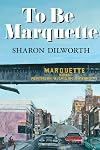
"'To be Marquette' was to be rid of the person I had been and to embrace someone completely different. Up there, everything seemed possible. In Marquette, it was possible to live that close to the natural world - to live that close to beauty."
I really wished I liked this more. I would be an ideal reader from many perspectives - the novel is set at Northern Michigan University in the 1970s/80s, and features many Marquette locales familiar to me - some of which (like Vango's and Togo's restaurants on Third Street) are even beloved haunts. But the central character - a young female first-person narrator - just didn't interest me; things happen to her in the course of the book but she never seems to show any real introspection and doesn't achieve any significant "development."
The young men in the book aren't very interesting either. To be honest, I had a hard time telling them apart. Which may have been the author's intention, but it doesn't make for a satisfying story.
Something peculiar: there are two characters in the book who bear the names of real Marquette people who I personally knew in the 1990s. These figures have many of the personal attributes of their originals, but there are also certain deviations or inventions on the author's part. Neither of these people is still alive today - in 2025 - but it still seems a little odd to come across their names in a work of creative fiction.
I really wished I liked this more. I would be an ideal reader from many perspectives - the novel is set at Northern Michigan University in the 1970s/80s, and features many Marquette locales familiar to me - some of which (like Vango's and Togo's restaurants on Third Street) are even beloved haunts. But the central character - a young female first-person narrator - just didn't interest me; things happen to her in the course of the book but she never seems to show any real introspection and doesn't achieve any significant "development."
The young men in the book aren't very interesting either. To be honest, I had a hard time telling them apart. Which may have been the author's intention, but it doesn't make for a satisfying story.
Something peculiar: there are two characters in the book who bear the names of real Marquette people who I personally knew in the 1990s. These figures have many of the personal attributes of their originals, but there are also certain deviations or inventions on the author's part. Neither of these people is still alive today - in 2025 - but it still seems a little odd to come across their names in a work of creative fiction.
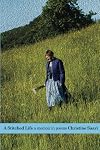
One of the best poetry collections I've ever read. Christine Saari's clarity of vision, remarkable life story, and engagement with the natural world all contribute to the deep pleasure of this book.
I confess that I have known Christine for more than 30 years, and I consider her - and her husband Jon - good friends. One year I had the good opportunity of house-sitting for them while they were one of their many prolonged experiences abroad. And I also am proud to own a couple of Christine's remarkable photographs as well. One of the most interesting people I know.
I confess that I have known Christine for more than 30 years, and I consider her - and her husband Jon - good friends. One year I had the good opportunity of house-sitting for them while they were one of their many prolonged experiences abroad. And I also am proud to own a couple of Christine's remarkable photographs as well. One of the most interesting people I know.

It's hard to give an honest review of The Passionate Friends without plot spoilers aplenty. Suffice it to say that IMHO the ending of this pre-WWI novel is tremendously disappointing.
Wells writes well [!] and he understands the way to structure "the narrative arc" in a novel of appropriate length. The Passionate Friends is not too long, nor too short. There are a lot of elements in the novel that are interesting from the perspective of a historian - it provides a coherent, cogent perspective upon the point of view of a progression non-orthodox socialist in 1913, its year of publication, on the eve of the cataclysm of World War I. And it serves as a reminder that while Wells was in many way a prophetic visionary, he is also identifiable as a man of the lower middle classes born in 1866, unable to escape the semi-misogynistic views of his youth and young adulthood.
The paperback edition I read - from the Hogarth Press released in 1986 - contains an excellent introduction by Victoria Glendinning. She "gets" Wells, I think.
Wells writes well [!] and he understands the way to structure "the narrative arc" in a novel of appropriate length. The Passionate Friends is not too long, nor too short. There are a lot of elements in the novel that are interesting from the perspective of a historian - it provides a coherent, cogent perspective upon the point of view of a progression non-orthodox socialist in 1913, its year of publication, on the eve of the cataclysm of World War I. And it serves as a reminder that while Wells was in many way a prophetic visionary, he is also identifiable as a man of the lower middle classes born in 1866, unable to escape the semi-misogynistic views of his youth and young adulthood.
The paperback edition I read - from the Hogarth Press released in 1986 - contains an excellent introduction by Victoria Glendinning. She "gets" Wells, I think.
I knew I was in for it when I saw that the author Richard Sennett dedicated this book to the memory of Michel Foucault.
It really does seem as if this were meant to be a series of lectures on Anglo-French cultural history in the 1830s and 1840s, focusing upon architectural and theatrical taste in Paris and London. Sennett is superbly qualified to offer such a tome.
What he doesn't seem capable of providing is an approachable or interesting historical novel.
Palais-Royal does have its moments of interest. And it's better than the recently published novel I finished most recently, Ian McEwan's Lessons. My favorite historical personage in the book was the famed operatic tenor Adolphe Nourrit. Unfortunately, he's a minor character, not around long enough.
It really does seem as if this were meant to be a series of lectures on Anglo-French cultural history in the 1830s and 1840s, focusing upon architectural and theatrical taste in Paris and London. Sennett is superbly qualified to offer such a tome.
What he doesn't seem capable of providing is an approachable or interesting historical novel.
Palais-Royal does have its moments of interest. And it's better than the recently published novel I finished most recently, Ian McEwan's Lessons. My favorite historical personage in the book was the famed operatic tenor Adolphe Nourrit. Unfortunately, he's a minor character, not around long enough.

Author Farr is convinced - and fairly convincing - on the point that the relationship between the Queen and the Count was fully physical, sexual, and all-loving. I like it when a book like this takes a position and defends it - it's the history teacher in me!
Another strength of the book is the illumination it provides on late 18th century Swedish politics and its relevance for general European affairs.
I also liked the background details on the politics and workings of the French court in the 1780s and 1790s. Also, Evelyn Farr provides interesting character sketches of minor characters who are worth knowing. Before reading this, I had not known anything about the fascinating Eleonore Sullivan (1750-1833), former Italian actress, courtesan, mistress of Emperor Joseph II [!], later lover and help-mate of Count Fersen in Paris and Brussels. Sullivan was able to provide financial and emotional support for the Swede in his efforts to rescue Marie Antoinette once she had been taken captive by the revolutionaries. So interesting the way that the aspirational life of Eleonore Sullivan illustrates the louche side of the late Enlightenment! And by a fascinating coincidence, she was the grandmother of the famous 19th century French dandy the Count d'Orsay.
Another strength of the book is the illumination it provides on late 18th century Swedish politics and its relevance for general European affairs.
I also liked the background details on the politics and workings of the French court in the 1780s and 1790s. Also, Evelyn Farr provides interesting character sketches of minor characters who are worth knowing. Before reading this, I had not known anything about the fascinating Eleonore Sullivan (1750-1833), former Italian actress, courtesan, mistress of Emperor Joseph II [!], later lover and help-mate of Count Fersen in Paris and Brussels. Sullivan was able to provide financial and emotional support for the Swede in his efforts to rescue Marie Antoinette once she had been taken captive by the revolutionaries. So interesting the way that the aspirational life of Eleonore Sullivan illustrates the louche side of the late Enlightenment! And by a fascinating coincidence, she was the grandmother of the famous 19th century French dandy the Count d'Orsay.
I had no idea that Anne de Courcy was so old! She was 18 years old when Margot Asquith died, so she could have met her as a girl.
I believe that de Courcy was 87 when she published this book - that is inspirational. It also inclines me to be somewhat more "forgiving" of what I see as a lack of focus and an occasional tendency to go off on tangents.
(I also believe de Courcy is still alive as I write this review in November 2024.)
Although the book is called “Margot at War,” it takes until Chapter 15 – and page 169 of a 355 page book – to get to the war. And there's a lot of material in this book that does not really pertain to the Asquith menage. As if de Courcy had originally planned a separate book on the social world of early 20th Century London, and decided at a later stage to combine it with another work on the affairs of the wartime Prime Minister.
Incidentally, it is clear that while de Courcy has great personal respect for Asquith and Margot, she is persuasive that by late 1916 it was past time for him to step down and pass the leadership to a younger and more energetic leader.
Venetia Stanley comes across as the least sympathetic figure in the drama.
I believe that de Courcy was 87 when she published this book - that is inspirational. It also inclines me to be somewhat more "forgiving" of what I see as a lack of focus and an occasional tendency to go off on tangents.
(I also believe de Courcy is still alive as I write this review in November 2024.)
Although the book is called “Margot at War,” it takes until Chapter 15 – and page 169 of a 355 page book – to get to the war. And there's a lot of material in this book that does not really pertain to the Asquith menage. As if de Courcy had originally planned a separate book on the social world of early 20th Century London, and decided at a later stage to combine it with another work on the affairs of the wartime Prime Minister.
Incidentally, it is clear that while de Courcy has great personal respect for Asquith and Margot, she is persuasive that by late 1916 it was past time for him to step down and pass the leadership to a younger and more energetic leader.
Venetia Stanley comes across as the least sympathetic figure in the drama.
I haven't read any negative reviews of this book, only positive ones - so it was a disappointment to me all the more. I'm uncomfortable with the entire "counter-factual" premise of Crewe's endeavor. And I also thought that much of the novel was rather poorly written - overwritten in parts, underwritten in others.
It's not just that Crewe has altered major details of history - like having the character based on John Addington Symonds outlive his life by several important years - it is also that Crewe has altered minor details as well, so that this is actually a kind of "fantasia" on historical themes. Maybe as a dues-paying professional historian I take "adherence to the historical record" too seriously. But if you start out with a writer taking a cheerfully blatant disrespect for "facts" - what is to stop certain demagogic politicians from doing likewise?
I also didn't like the ending! Haha.
But I do like the time period and the place that the book is set in, and it made me think of other, better books either written in that era or dealing with it.
It's not just that Crewe has altered major details of history - like having the character based on John Addington Symonds outlive his life by several important years - it is also that Crewe has altered minor details as well, so that this is actually a kind of "fantasia" on historical themes. Maybe as a dues-paying professional historian I take "adherence to the historical record" too seriously. But if you start out with a writer taking a cheerfully blatant disrespect for "facts" - what is to stop certain demagogic politicians from doing likewise?
I also didn't like the ending! Haha.
But I do like the time period and the place that the book is set in, and it made me think of other, better books either written in that era or dealing with it.
Excellent biography that comfortably situates Burne-Jones in the center of a complex social network of aspirational taste-makers - the equivalent of our meme-era "influencers." I hadn't been fully aware of how close Burne-Jones was to William Morris, but MacCarthy clarifies and elucidates their enduring, symbiotic relationship.
What also becomes clear is how Burne-Jones was close to the center of the political world as well. Arthur Balfour was a key client and patron; Mary Gladstone Drew, the G.O.M.'s daughter and biographer, was a model and friend of Burne-Jones; and of course Rudyard Kipling and Stanley Baldwin were not only his wife's nephews, they were also frequent visitor's to Burne-Jones' home at Rottingdean, on the Sussex Coast.
What also becomes clear is how Burne-Jones was close to the center of the political world as well. Arthur Balfour was a key client and patron; Mary Gladstone Drew, the G.O.M.'s daughter and biographer, was a model and friend of Burne-Jones; and of course Rudyard Kipling and Stanley Baldwin were not only his wife's nephews, they were also frequent visitor's to Burne-Jones' home at Rottingdean, on the Sussex Coast.
"The events described in this book played out in an age when the line between reliable historical information on the one hand, and the myths, legends and narratives of later ages on the other, is often blurred, and sometimes impossible to draw clearly for historians. My aim has been to write a coherent, documentable account based on primary sources and on insight from 150 years of historical, archaeological and philological research, without tiring my readers with long clarifications, discussions and reservations. This is a difficult balance to achieve, SINCE ALL OUR KNOWLEDGE OF THIS DISTANT AGE IS FUNDAMENTALLY UNCERTAIN." [emphasis added]
Personally, I would have liked to have had some of those "long clarifications, discussions and reservations".
There's a lot of fascinating material in this text, and it covers a period that I am tremendously ignorant of. The core of the book is an extended comparison and contrast of two great Viking warrior kings, Cnut of Denmark and St. Olav of Norway. I was interested and intrigued to find out that St. Olav was neither saintly not particularly successful at establishing a last Norwegian "regime" - but he benefitted posthumously from poets, historians, and poet-historians who seem to have whitewashed his reputation for posterity and the Christian churches of Scandinavia.
The printed text does include some sketchy source notes - although it is not really possible to connect the material in the text with the original texts which provide show more historian Skeie with his material.
The edition I read didn't include an index, which would have been very helpful. I also would have liked a geneological family tree. show less
Personally, I would have liked to have had some of those "long clarifications, discussions and reservations".
There's a lot of fascinating material in this text, and it covers a period that I am tremendously ignorant of. The core of the book is an extended comparison and contrast of two great Viking warrior kings, Cnut of Denmark and St. Olav of Norway. I was interested and intrigued to find out that St. Olav was neither saintly not particularly successful at establishing a last Norwegian "regime" - but he benefitted posthumously from poets, historians, and poet-historians who seem to have whitewashed his reputation for posterity and the Christian churches of Scandinavia.
The printed text does include some sketchy source notes - although it is not really possible to connect the material in the text with the original texts which provide show more historian Skeie with his material.
The edition I read didn't include an index, which would have been very helpful. I also would have liked a geneological family tree. show less

These are short portraits of ten significant twentieth century figures, acquaintances of the author, ranging from the poet Auden and the mystery writer Agatha Christie to political figures like Nancy Astor, Lord Beaverbrook, and Winston Churchill. Historians will be particularly interested to read Rowse's accounts of G.M. Trevelyan and Samuel Eliot Morison. Throughout, Rowse lives up to his reputation as a vain but witty controversialist. Some people will probably find Rowse's conceits to be "too much," but I find him to be more than tolerable in small doses.
This is a model monograph: a detailed, informative, and historically compelling narrative that investigates the men who challenged gender norms by entering into the profession of air stewards/flight attendants, from the 1930s to the present. (The book was published in 2012.)
It's true that I am something of an ideal reader for Plane Queer: a gay historian who has taught courses on Queer American Life. Moreover, I am the product of an airline household - my mother a stewardess in the 1950s, until upon marriage she was forced to give up her career, and my father a life-long employee of TWA, who spent much of his employment as a manager and trainer of ground services. Having had something of a front-row seat into the aviation industry for much of my life, I was fascinated to read Tiemeyer's excellent account of the way in which male flight attendants battled the sexism of American society and of national and international airlines, until they were ultimately allowed to succeed in a career that was well attuned to their interests and personalities.
It's true that I am something of an ideal reader for Plane Queer: a gay historian who has taught courses on Queer American Life. Moreover, I am the product of an airline household - my mother a stewardess in the 1950s, until upon marriage she was forced to give up her career, and my father a life-long employee of TWA, who spent much of his employment as a manager and trainer of ground services. Having had something of a front-row seat into the aviation industry for much of my life, I was fascinated to read Tiemeyer's excellent account of the way in which male flight attendants battled the sexism of American society and of national and international airlines, until they were ultimately allowed to succeed in a career that was well attuned to their interests and personalities.

Creative, thoughtful, original, often funny. "Mrs. Engels" is a vibrant historical novel, set in London and Manchester in the mid-19th century, giving voice to the illiterate Irish laboring woman who was mistress/companion of pioneering socialist Friedrich Engels.
Impressively, this is Gavin McCrea's first published novel.
Impressively, this is Gavin McCrea's first published novel.
Ah, the War of the Spanish Succession - and its seemingly never ending campaigns in Flanders. There's a lot of writing in this book that is basically variations on this typical sentence: "Cadogan had now got his infantry into line from Groenewald towards Shaerken, with Natzmer's and Rantzau's horsemen on his right flank."
Well, okay, I admit I skimmed over a lot of the details of the post-Blenheim battles fought - and won - by Marlborough. After all, this is Richard Holmes' book, and there is perfect sense in him concentrating his greatest attention to details of the practicalities of Marlborough's manuevers in the decade that he was the chief Commander of British (and allied) forces, on the ground in the low countries. But it's not a genre of historical writing that I really seek. I would have preferred to have had more on Marlborough the courtier - and survivor of the turbulent politics of the later Stuarts.
Holmes successfully explains Marlborough's rise to power, through the machinations of his manipulative and ambitious wife, and his own unerring ability as a courtier and influencer of men. It's rather a pity that Holmes only allots about 25 pages of his 480 page text to the last decade of Marlborough's life. As with the adage, Marlborough faded away from his glory. . . and it was definitely a sad period of his life. He did play an important role in the transition to the Hanoverian which occurred after the death of Queen Anne. It would have been good to have had more show more about that. But I completely understand the logic of using traditional military history as the lens through which to appreciate and understand his contributions to England and the monarchs he served. show less
Well, okay, I admit I skimmed over a lot of the details of the post-Blenheim battles fought - and won - by Marlborough. After all, this is Richard Holmes' book, and there is perfect sense in him concentrating his greatest attention to details of the practicalities of Marlborough's manuevers in the decade that he was the chief Commander of British (and allied) forces, on the ground in the low countries. But it's not a genre of historical writing that I really seek. I would have preferred to have had more on Marlborough the courtier - and survivor of the turbulent politics of the later Stuarts.
Holmes successfully explains Marlborough's rise to power, through the machinations of his manipulative and ambitious wife, and his own unerring ability as a courtier and influencer of men. It's rather a pity that Holmes only allots about 25 pages of his 480 page text to the last decade of Marlborough's life. As with the adage, Marlborough faded away from his glory. . . and it was definitely a sad period of his life. He did play an important role in the transition to the Hanoverian which occurred after the death of Queen Anne. It would have been good to have had more show more about that. But I completely understand the logic of using traditional military history as the lens through which to appreciate and understand his contributions to England and the monarchs he served. show less

In the late 1690s, the recently widowed and much bereaved King William III consoled himself by spending a lot of time in Newmarket, at the races where one the favorite horses that he ran was named "Stiff Dick."
Sometimes a single historical detail can illuminate an era.
I guess historians will never know for certain if King William III ever "got it on" with his young handsome favorite Keppel/the Earl of Albemarle. Rumors were extensive at the time - and no less an "expert" than the King's cousin "Liselotte" - the Duchess of Orleans at the French court, married to the flamingly gay "Monsiuer" - believed them. Just as in the case with William's great-grandfather King James VI & I with Villiers/the Duke of Buckingham, we don't have the testimony of the bedsheets. Personally, I think William III is a much more sympathetic figure than James. And I hope that whatever the King needed from his protege, he received in abundance. There clearly seems to have been a deep love there.
Sometimes a single historical detail can illuminate an era.
I guess historians will never know for certain if King William III ever "got it on" with his young handsome favorite Keppel/the Earl of Albemarle. Rumors were extensive at the time - and no less an "expert" than the King's cousin "Liselotte" - the Duchess of Orleans at the French court, married to the flamingly gay "Monsiuer" - believed them. Just as in the case with William's great-grandfather King James VI & I with Villiers/the Duke of Buckingham, we don't have the testimony of the bedsheets. Personally, I think William III is a much more sympathetic figure than James. And I hope that whatever the King needed from his protege, he received in abundance. There clearly seems to have been a deep love there.
Augustus the Strong: Tracing the Steps of the Elector of Saxony in and around Dresden by Arnt Cobbers (2016-03-09) by Arnt Cobbers
This is primarily a picture/travel & tourism book, which is fine. There are some nice photos of Dresden and environs.
It would have been nice to have at least one map.
Also, I understand that this kind of book doesn't generally have footnotes or a bibliography. But still it would have been nice to have at least a list of books to consult for research reading and information about Augustus, Electoral Saxony, or early 18th century Germany and Poland. For example, the story about Augustus once having pulled apart a horseshoe with his own hands. Okay, I guess I believe the story, but it would have been nice to know where the stories about Augustus and remarkable strength were first recounted.
It would have been nice to have at least one map.
Also, I understand that this kind of book doesn't generally have footnotes or a bibliography. But still it would have been nice to have at least a list of books to consult for research reading and information about Augustus, Electoral Saxony, or early 18th century Germany and Poland. For example, the story about Augustus once having pulled apart a horseshoe with his own hands. Okay, I guess I believe the story, but it would have been nice to know where the stories about Augustus and remarkable strength were first recounted.
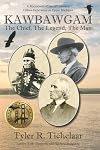
Exemplary. Tyler Tichelaar has truly done a very good thing here, furthering the understanding of the complex relationship between the settler populations and indigenous native american communities on the south shore of Lake Superior in the 19th century.
Charlie Kawbawgam is probably the best known indigenous figure of the 19th century central upper peninsula to be still remembered into the 21st century, and his story and stories are illustrative of many broad historical themes which are carefully elucidated in this biography. Wisely, the author writes about the entire complex social network which surrounded him, both settler and native, both family and non-family.
Importantly, Tichelaar boldly attempts to untangle myth, narrative, story-telling, and memory. No doubt his considerable experience as a novelist helps him greatly in portraying the human, all-too-human fractures and fissures of remembrance. Portions of this book could and should be used in college classes as successful examples of the use of historical methodology.
The author is also notably generous in his inclusion of maps, family trees, photographs, acknowledgements, and full "scholarly apparatus" including endnotes and bibliography. I wish all academic and commercial publishers of 2021 were so comprehensive in their treatment of histories.
Charlie Kawbawgam is probably the best known indigenous figure of the 19th century central upper peninsula to be still remembered into the 21st century, and his story and stories are illustrative of many broad historical themes which are carefully elucidated in this biography. Wisely, the author writes about the entire complex social network which surrounded him, both settler and native, both family and non-family.
Importantly, Tichelaar boldly attempts to untangle myth, narrative, story-telling, and memory. No doubt his considerable experience as a novelist helps him greatly in portraying the human, all-too-human fractures and fissures of remembrance. Portions of this book could and should be used in college classes as successful examples of the use of historical methodology.
The author is also notably generous in his inclusion of maps, family trees, photographs, acknowledgements, and full "scholarly apparatus" including endnotes and bibliography. I wish all academic and commercial publishers of 2021 were so comprehensive in their treatment of histories.
Dry police procedural which is not one of Simenon's better efforts, IMHO. The title in English is somewhat misleading insofar that Mme. Maigret's contributions to solving the case are not the central focus of the narrative.
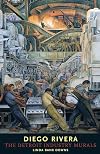
I concur with the author's final paragraph:
"Rivera reached a level of understanding about himself, his work, and the world that is reflected in the Detroit murals and that does not appear in any of his work before or after. . . In its Pan-American perspective, thematic richness, complexity of design, boldness of presentation, and vibrance of color, the Detroit mural cycle has no peer in the history of modern art. _Detroit Industry_ remains today a historical record of a fictive past, a utopian vision of the industrial culture of Detroit played out on a cosmic scale, an inspiration to the entrepreneur and social reformer alike, and a monumental modern work of art to be contemplated, studied, and enjoyed."
I was down in Detroit a few months ago, and had the ability to visit the DIA in ideal conditions, when they were limiting the number of admittances (due to COVID-19), yet most of the galleries - and the Rivera courtyard - were open. I haven't seen the DIA ever look better - and I was able to spend a good half hour contemplating the _Detroit Industry_ murals without the pressure of crowds (and school groups, hahaha). I left convinced more than ever that it really is a great work of art, and Detroit is incredibly fortunate that the circumstances of its creation worked out the way they did. Linda Bank Downs does a fine job of showing how everything had to come together "just right" in order for the mural sequence to be such an ideal representation of its creator, its patrons, show more and its city. show less
"Rivera reached a level of understanding about himself, his work, and the world that is reflected in the Detroit murals and that does not appear in any of his work before or after. . . In its Pan-American perspective, thematic richness, complexity of design, boldness of presentation, and vibrance of color, the Detroit mural cycle has no peer in the history of modern art. _Detroit Industry_ remains today a historical record of a fictive past, a utopian vision of the industrial culture of Detroit played out on a cosmic scale, an inspiration to the entrepreneur and social reformer alike, and a monumental modern work of art to be contemplated, studied, and enjoyed."
I was down in Detroit a few months ago, and had the ability to visit the DIA in ideal conditions, when they were limiting the number of admittances (due to COVID-19), yet most of the galleries - and the Rivera courtyard - were open. I haven't seen the DIA ever look better - and I was able to spend a good half hour contemplating the _Detroit Industry_ murals without the pressure of crowds (and school groups, hahaha). I left convinced more than ever that it really is a great work of art, and Detroit is incredibly fortunate that the circumstances of its creation worked out the way they did. Linda Bank Downs does a fine job of showing how everything had to come together "just right" in order for the mural sequence to be such an ideal representation of its creator, its patrons, show more and its city. show less

Chatty and engaging. More indiscreet than many Royal memoirs of the time. Interesting recollections of his mother-in-law, the Dowager Empress Maria Feodorovna, and her sister Queen Alexandra.
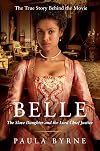
There's not a lot of "history" here - that is, not a lot of actual documentation in the story of "Dido Elizabeth Belle." But Paula Byrne has done a good job with what little there is.
Really though, there's a lot more here about William, Lord Mansfield, the Chief Justice. But, to be honest, it is a lot easier these days to market films and books which foreground attractive young women.
Really though, there's a lot more here about William, Lord Mansfield, the Chief Justice. But, to be honest, it is a lot easier these days to market films and books which foreground attractive young women.
A disappointment. I have read three other "police procedurals" in the Dublin Murder Squad, and unfortunately this was for me the least convincing and compelling of the series. It's not a good thing for me when it takes two and a half months to complete what should really be a "page-turner." I just could not raise much interest in the particular crime or in the particular team of detectives set to unravel the case. Unfortunately, French relies on a few too many plot implausibilities for the final "solve" to be very convincing. The novel drags seriously in its middle parts, only picking up momentum in its final 70 pages or so.

A young gay American has a "sentimental education" while teaching English in Bulgaria - and receives his predictable epiphanies just as you expect he will.
WBTY is well-written in the "Iowa Writers' Workshop" manner, but the novel was of limited appeal to me because of the 1st person narrator, who (to me) comes across as vain, condescending, and narcissistic - somewhat the typical young American abroad.
And I don't understand why the middle section is written in one long unbroken paragraph that goes on for forty pages. IMHO, just because Faulkner did it, doesn't mean it needs to be done again.
WBTY is well-written in the "Iowa Writers' Workshop" manner, but the novel was of limited appeal to me because of the 1st person narrator, who (to me) comes across as vain, condescending, and narcissistic - somewhat the typical young American abroad.
And I don't understand why the middle section is written in one long unbroken paragraph that goes on for forty pages. IMHO, just because Faulkner did it, doesn't mean it needs to be done again.

Very helpful for me as I prepare to deal with bi-phobia and bi-erasure in an LGBTQ/queer history class that I am presently teaching.
My confession: I have taught this course ten times over the last twenty years, but I don't feel that I've ever really adequately dealt with bisexual perspectives and experiences.
Although this is clearly a British book, prepared and written for a readership that is British, I feel that there are sufficient trans-atlantic commonalities to make it a worthwhile read for those interested in North American gender culture and experiences.
My confession: I have taught this course ten times over the last twenty years, but I don't feel that I've ever really adequately dealt with bisexual perspectives and experiences.
Although this is clearly a British book, prepared and written for a readership that is British, I feel that there are sufficient trans-atlantic commonalities to make it a worthwhile read for those interested in North American gender culture and experiences.
Sorry not sorry for the "low rating" - but this is not the way that the correspondence of a major cultural figure should be published. There's too much of the editor - and too much "editing" of some of the letters, and not enough editing out and separating of what's really important from what is not.
Look at the index, too:
Noel Coward, homosexuality of: 6-7, 730.
Two mentions of NC's homosexuality in a 750 page tome? This book was published in 2007, 34 years after Coward's death, and 40 years after homosexual acts between consenting adults ceased being a criminal act in the United Kingdom. The editor, Barry Day, explains his perspective in the text: "To the end of his life, even when the social climate had become more permissive - he remained firmly private in his private life, a decision that one wishes today's gay community would honor." Well, EXCUUUUUSE me! Barry Day has published a 750 book of Noel Coward's private correspondence, so it seems to me that that the "privacy" horse left the barn a long time ago.
Look at the index, too:
Noel Coward, homosexuality of: 6-7, 730.
Two mentions of NC's homosexuality in a 750 page tome? This book was published in 2007, 34 years after Coward's death, and 40 years after homosexual acts between consenting adults ceased being a criminal act in the United Kingdom. The editor, Barry Day, explains his perspective in the text: "To the end of his life, even when the social climate had become more permissive - he remained firmly private in his private life, a decision that one wishes today's gay community would honor." Well, EXCUUUUUSE me! Barry Day has published a 750 book of Noel Coward's private correspondence, so it seems to me that that the "privacy" horse left the barn a long time ago.
The first nine index entries in order for Camilla, Duchess of Cornwall and Rothsesay:
-- friendly/warm personality
-- as strong character
-- groundedness of
-- compassion of
-- family as paramount for
-- advocate for women
-- as emotional support for Charles
-- passion for books and literacy
-- charities supported by
You get the idea? This is clearly a "Pro-Camilla" work. But admittedly, this is well-done, clearly written, and pretty convincing.
-- friendly/warm personality
-- as strong character
-- groundedness of
-- compassion of
-- family as paramount for
-- advocate for women
-- as emotional support for Charles
-- passion for books and literacy
-- charities supported by
You get the idea? This is clearly a "Pro-Camilla" work. But admittedly, this is well-done, clearly written, and pretty convincing.

450 pages on a minor French princess - originally from Savoy - and who died at the age of 26 - might see like a bit much, but this is also a biography of Marie Adelaide's husband, the Duc de Bourgogne, and really also a history of the court of Louis XIV during the period 1695-1712 - the era of the War of the Spanish Succession. The book is mostly well-written and quite interesting. The author follows the Flemish military campaigns of the Duc de Bourgogne with as much diligence and detail that he uses in describing the intrigues and machinations of the byzantine world of Versailles.
I've tried, not I haven't been able to find out _anything_ about the author, Charles W. Elliott. This seems to have been to his only publication, and it's not at all clear how he came to be interested in the subject - I'd be interested to find out.
I've tried, not I haven't been able to find out _anything_ about the author, Charles W. Elliott. This seems to have been to his only publication, and it's not at all clear how he came to be interested in the subject - I'd be interested to find out.
Darling Monster: The Letters of Lady Diana Cooper to her Son John Julius Norwich 1939-1952 by Lady Diana Cooper
I am probably way out of line, and perhaps I am betraying my lack of sound historical understanding, but maybe it's not such a great idea to have a son edit his mother's letters that she wrote to him when he was an adolescent. Maybe I'm being churlish, but I can't help but think that someone outside the family romance would have made better choices of what to leave out - and probably there would be fewer repetitive letters (that go on for page after page) of Lady Diana complaining about her servants, or making allusions to society gossip that probably interested only 50 or 60 people at the time.
There are some witty bits, particularly about the Duke and Duchess of Windsor. Also, Lady Diana's letters about living in London during the Blitz are a tremendously valuable resource of history. But - IMHO - not really enough of the "good stuff" to justify 465 pages of text.
There are some witty bits, particularly about the Duke and Duchess of Windsor. Also, Lady Diana's letters about living in London during the Blitz are a tremendously valuable resource of history. But - IMHO - not really enough of the "good stuff" to justify 465 pages of text.
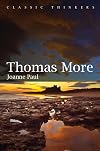
Joanne Paul writes exceptionally well about complex ideas in their historical context. Through close text reading and a willingness to engage with humanist thought on its own terms, Paul provides illumination and elucidation both of the time period of which she writes, and the emblematic, occasionally contradictory, and fascinating figure of Thomas More.