
Patrick Merla
Author of Boys Like Us: Gay Writers Tell Their Coming Out Stories
About the Author
Works by Patrick Merla
Boys Like Us: Gay Writers Tell Their Coming Out Stories (1996) — Editor; Introduction — 425 copies, 2 reviews
New York Native (Issue #84) "Days of Courage, Nights of Hell: The Story of a Person with AIDS" 1 copy
New York Native (Issue #144) "Say Hello to 'Parting Glances': The Gay Film Festival Picks a Winner' 1 copy
Christopher Street, Vol. 3, No. 8, March 1979: "The Life and Death of Harvey Milk by Randy Shilts" 1 copy
Tagged
Common Knowledge
- Canonical name
- Merla, Patrick
- Birthdate
- 20th century
- Gender
- male
- Occupations
- literary agent
editor - Nationality
- USA
- Birthplace
- New York, New York, USA
- Associated Place (for map)
- New York, USA
Members
Reviews

What a storehouse of tales about boys coming out about their gay being. Being gay is an important aspect of every story in this book, yet it is not just the center of the being of each narrator it is their life. Each life, however, is different and it is that difference that makes this book so interesting. In a certain way there are as many stories about being gay as their are individuals, yet each of us (and I include myself in that group) shares something with the other. That is what is show more explored in this wonderful and unique look at what it means to be gay and to live as a gay man and to come out. show less
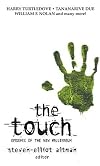
A series of short sci-fi stories based upon a common fictitious epidemic created by Steven-Elliot Altman, called "The Depriver Syndrome."
Depriver Syndrome is transmitted by touch. There is no cure. It may be manifested in a number of different ways; sight, sound, taste, smell, memory, pain, or something totally different. Deprivation may be temporary... or permanent. The severity and type of deprivation relates to the person who transmitted the affliction. Avoiding contact with others is show more paramount; although for some, the thrill of temporary deprivation is worth the exposure. show less
Depriver Syndrome is transmitted by touch. There is no cure. It may be manifested in a number of different ways; sight, sound, taste, smell, memory, pain, or something totally different. Deprivation may be temporary... or permanent. The severity and type of deprivation relates to the person who transmitted the affliction. Avoiding contact with others is show more paramount; although for some, the thrill of temporary deprivation is worth the exposure. show less

Given as a gift when I came out. This book sheds light on small but poignant stories that are rarely discussed.
Awards

You May Also Like


Associated Authors
Statistics
- Works
- 53
- Members
- 520
- Popularity
- #47,759
- Rating
- 3.8
- Reviews
- 3
- ISBNs
- 8