
Christopher Bram
Author of Father of Frankenstein
About the Author
Image credit: Photo by Robert Giard, at the New York Public Library Digital Gallery
Works by Christopher Bram
Associated Works
Boys Like Us: Gay Writers Tell Their Coming Out Stories (1996) — Contributor — 426 copies, 2 reviews
Tagged
Common Knowledge
- Canonical name
- Bram, Christopher
- Birthdate
- 1952-02-22
- Gender
- male
- Education
- College of William and Mary (BA)
- Occupations
- author
- Organizations
- New York University
- Awards and honors
- Bill Whitehead Lifetime Achievement Award (2003)
Guggenheim Fellowship (2001) - Nationality
- USA
- Birthplace
- Buffalo, New York, USA
- Places of residence
- New York, New York, USA
Virginia Beach, Virginia, USA - Associated Place (for map)
- New York, USA
Members
Reviews
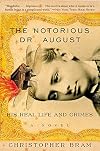
I was fortunate to meet Christopher Bram several months ago at a Dim Sum brunch hosted by a mutual friend. He personally recommended this book since I had expressed an interest in historical fiction. The novel spans the period from the civil war when the narrator Augustus Fitzwilliam Boyd (stage name, Notorious Dr. August) is a teenager to the 1920s when Augustus is an old man narrating his life story to his silent nephew Tristan (unlike the somewhat annoying "boy" in Interview with the show more Vampire who you wish would keep his mouth shut) who also eventually shows up as a character in the book, first as a young boy and later as a grown man. There are classic historical novel elements such as major real-world events, people, and places like the Civil War, a cameo appearance by Brahms, and one of the amusement parks in Coney Island, Dreamland. These true-to-life landmarks, and other allusions, do ground the novel in real world history, and as the author notes at the end, "A lifelong love affair with American literature stands behind this novel." But the main character, Dr. August, "is entirely fictional but was inspired by several real improvisational pianists." That fact, makes this novel closer to a work of historical fiction like Aztec, by Gary Jennings whose main character Mixtli-Dark Cloud is entirely imagined vs. one like Lincoln by Gore Vidal where the protagonist was once a flesh and blood human. So for me, while I absolutely loved the historical context, this felt much more like a regular work of fiction enriched by history, but not one that really elucidated it to any degree. This is not meant as a criticism so much as an observation. As a pure work of fiction, whether historical or not, this novel succeeds on so many levels. Fitz is a witty and entertaining observer of his own life and that of his lifelong companions, Isaac, an ex-slave he meets as a teenager, and the prim and proper governess from Connecticut Alice they meet on a ship to Europe whom Isaac eventually marries. Fitz honestly opines about everyone he meets and everything he experiences. He's something of a free spirit, an itinerant musician, spiritualist, conjurer of ghosts, irreverent, and ungodly in a religious age. And while his behavior and choices as a younger man, by modern standards, may be called into question, as a whole he does have a moral character and lives what may be called a virtuous life. Bram, like any great writer, can inhabit very different characters and personalities, and imbue them with life and personality. He touches on big issues such as the racism embedded in American and European societies, as well as smaller issues of how individuals face up to their moral and spiritual struggles, the choices they make along the way, and the very real consequence of those choices. show less

A fine book, well-crafted and sensitive. The characters are those slightly-idealized versions of real people that only fiction can present; they are models to which we can compare ourselves. Which is, ultimately, what this book is about: it's about us. It asks us--explicitly at last, in the final few pages--to look inward at ourselves, at our own lives, and loves, and desires, and to judge ourselves fairly and honestly. I get the feeling that readers of this book will all see it slightly show more differently, because, looking inward, they will all discover something unique to themselves. At times, the metaphors can get cloying, the "know thyself" rhetoric a bit clumsy. But this is perhaps only an attempt to appeal to the less jaded among us--those who still enjoy a parable, even while recognizing its inadequacies. Bram comes from the same place as Tolstoy here, albeit a modernized version, well-schooled by modern liberalism and ubiquitous psychoanalysis. He has a point to make about the ways we live, now. This is a book that is intended to be Good For You. But he writes with honesty, craft, and abundant love. I was won over, despite my cynic's heart. show less
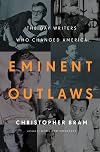
Eminent Outlaws is one juicy anecdote after another that builds up into a sweeping history. I found this book almost gossipy at times, yet incredibly thought-provoking. It reminded me of Randy Shilts' historical "non-fiction novels," except this one is about famous men, not regular people. This book is only about gay male writers, so it doesn't cover any lesbian or gender non-conforming writers. The author Christopher Bram explains that he needed to narrow the scope, because it was already a show more big topic, and that lesbian literature deserves its own historian. Fair enough, and Bram mentions writers like Audre Lord, M.E. Kerr, Susan Sontag, and Ann Bannon when they enter his story. Eminent Outlaws is also focused solely on literary fiction, poetry, and plays. I was hoping to hear about science fiction legend Samuel R. Delany, and he's mentioned briefly. But Bram didn't try to make his book all things for all people; he stuck to what he is clearly very passionate and knowledgeable about.
Each chapter focuses mostly on one particular writer, but includes material about other writers that keeps the narrative colorful, connected, and flowing. You get to hear about Gore Vidal throughout the entire book because he's so long-lived. The book is divided into decades. My favorite parts were the Fifties and Sixties. It was such a different time, with such virulent homophobia. Reading about Gore Vidal, Truman Capote, and Tennessee Williams especially, I got such a sense of how corrosive and damaging prejudice and self-hatred are, not just to human beings but also to writing. These guys were so talented and yet a lot of what they wrote was so wacko (from my modern-day viewpoint, which is the only one I have.) A lot of this early work sounds interesting historically, but the last thing I want to read is some story about a tortured, unhappy queer person who comes to a bad end (like being eaten by cannibals.) Apparently Christopher Isherwood was the first writer to have non-tragic gay characters who are happy, in The World In The Evening.
One thing that was really striking was that these fellas had such bad shrinks and literary agents! Tennessee Williams' therapist told him to stop having sex with men; James Baldwin's agent told him to burn Giovanni's Room. The only instance of good advice was when Allen Ginsberg, still a nobody, saw a dollar-a-session therapist in Berkeley who told him he should go ahead and live with the guy he liked if he wanted and he didn't have to live as a heterosexual. "You're a nice person; there's always people who will like you," he said. Ginsberg ended up staying with the guy he liked until the end of his life forty years later.
Another thing that I can't stop thinking about is the description of how the magazine Christopher Street opened in 1976, creating a space for a new generation of gay writers. The editors imagined that gay writers would have desks stuffed with unpublished gay-themed work that they could now send to Christopher Street. But in fact all the submissions were newly-written. This makes so much sense to me. Writers aren't morons. Generally we don't write for magazines that don't exist. And that makes me think two things, 1) That is as true today as it ever was. What are the holes in our literature now? What is not getting written? What audiences don't get to read stories that reflect them? Because I'm a YA writer, the first thing that comes to mind is that there is no YA novel about a transgender character that is written by a writer who is transgender. Where are the YA editors who are not just open to transgender stories, but who will go down in history for recruiting and championing the Great American Transgender YA Novel? 2) But some writers ARE that crazy, to write for markets that the publishing industry does not believe exist. That's what all the Eminent Outlaws in this book did. Thanks, guys! Much appreciated. I do get a real sense of "standing on their shoulders."
The section on the Eighties was a big downer, as you can imagine. It's tough to read about all these promising writers dying, or their friends and lovers dying. I was a little surprised at what a negative portrayal Larry Kramer got. Some of the things that he did that Bram described as "shooting himself in the foot" seemed pretty sensible to me (like leaving GMHC, which he had helped found, after not being invited to a meeting that he had made happen.) I also can't understand Bram's critique that Kramer criticized Mayor Koch too early and too often. Seriously? How could that even be possible? Larry Kramer clearly had a harsh, abrasive personality and gave unwarranted bad reviews to other writers. But he doesn't seem any worse in those departments than James Baldwin or Truman Capote, and they were described lovingly. I think maybe it's because unpleasant literary pioneers are cast in a warm glow of forgiveness once they are dead, and their struggles are not our struggles so we can't be so judgmental. Whereas Larry Kramer is a contemporary figure and, I dunno, maybe Bram has seen him at a party being a jerk and he just can't stand the guy.
My favorite part of the Eighties section, and not just because it was peppy and upbeat, was the part about Charles Ludlam. I saw Charles Ludlam as Camille and I saw The Mystery of Irma Vep, and as funny as the parts Bram quotes are, they were even more funny in real life. Those plays were probably the funniest things I have ever seen, so it was a pleasure to read about them.
I learned a lot from this book, like who the Publishing Triangle's Ferro-Grumley awards are named after. (I always figured it was some guy named Ferro-Grumley, but no.) And I learned about a bunch of writers I had never heard of, like Matt Crowley, Melvin Dixon, and Frank O'Hara (I had kind of vaguely heard of him, but had him mixed up in my head with both John O'Hara and Frank O'Connor.) And Eminent Outlaws has made me want to read or re-read some of the novels mentioned in it. I have to say that my least favorite aspect was Bram's literary evaluations, comments like that Gore Vidal was smarter than Tennessee Williams, or what James Baldwin's worst novel was. But I think that's the price you pay to read literary history.
If you've never heard of all these people and you think you'd find this book boring, I really doubt it. I got Eminent Outlaws out of the library at the recommendation of my high school art teacher/Facebook friend. It looked so long and dull that I left it unread and kept renewing it. Only when I could renew it no longer and it was coming due did I crack it open, promising to read at least fifty pages before I gave up. Twenty pages and I was totally sucked in. It's seriously dynamite. Famous people wander in and out of the book, in little incidents like JFK getting cruised, Ian McKellen deciding to come out, Jerome Robbins dancing with Lauren Bacall, Lincoln Kirstein coming up with the title "Breakfast at Tiffany's." I don't have the expertise to judge, but it sure seemed like a solidly-researched, factually-accurate book to me. I think it's a work for the ages. show less
Each chapter focuses mostly on one particular writer, but includes material about other writers that keeps the narrative colorful, connected, and flowing. You get to hear about Gore Vidal throughout the entire book because he's so long-lived. The book is divided into decades. My favorite parts were the Fifties and Sixties. It was such a different time, with such virulent homophobia. Reading about Gore Vidal, Truman Capote, and Tennessee Williams especially, I got such a sense of how corrosive and damaging prejudice and self-hatred are, not just to human beings but also to writing. These guys were so talented and yet a lot of what they wrote was so wacko (from my modern-day viewpoint, which is the only one I have.) A lot of this early work sounds interesting historically, but the last thing I want to read is some story about a tortured, unhappy queer person who comes to a bad end (like being eaten by cannibals.) Apparently Christopher Isherwood was the first writer to have non-tragic gay characters who are happy, in The World In The Evening.
One thing that was really striking was that these fellas had such bad shrinks and literary agents! Tennessee Williams' therapist told him to stop having sex with men; James Baldwin's agent told him to burn Giovanni's Room. The only instance of good advice was when Allen Ginsberg, still a nobody, saw a dollar-a-session therapist in Berkeley who told him he should go ahead and live with the guy he liked if he wanted and he didn't have to live as a heterosexual. "You're a nice person; there's always people who will like you," he said. Ginsberg ended up staying with the guy he liked until the end of his life forty years later.
Another thing that I can't stop thinking about is the description of how the magazine Christopher Street opened in 1976, creating a space for a new generation of gay writers. The editors imagined that gay writers would have desks stuffed with unpublished gay-themed work that they could now send to Christopher Street. But in fact all the submissions were newly-written. This makes so much sense to me. Writers aren't morons. Generally we don't write for magazines that don't exist. And that makes me think two things, 1) That is as true today as it ever was. What are the holes in our literature now? What is not getting written? What audiences don't get to read stories that reflect them? Because I'm a YA writer, the first thing that comes to mind is that there is no YA novel about a transgender character that is written by a writer who is transgender. Where are the YA editors who are not just open to transgender stories, but who will go down in history for recruiting and championing the Great American Transgender YA Novel? 2) But some writers ARE that crazy, to write for markets that the publishing industry does not believe exist. That's what all the Eminent Outlaws in this book did. Thanks, guys! Much appreciated. I do get a real sense of "standing on their shoulders."
The section on the Eighties was a big downer, as you can imagine. It's tough to read about all these promising writers dying, or their friends and lovers dying. I was a little surprised at what a negative portrayal Larry Kramer got. Some of the things that he did that Bram described as "shooting himself in the foot" seemed pretty sensible to me (like leaving GMHC, which he had helped found, after not being invited to a meeting that he had made happen.) I also can't understand Bram's critique that Kramer criticized Mayor Koch too early and too often. Seriously? How could that even be possible? Larry Kramer clearly had a harsh, abrasive personality and gave unwarranted bad reviews to other writers. But he doesn't seem any worse in those departments than James Baldwin or Truman Capote, and they were described lovingly. I think maybe it's because unpleasant literary pioneers are cast in a warm glow of forgiveness once they are dead, and their struggles are not our struggles so we can't be so judgmental. Whereas Larry Kramer is a contemporary figure and, I dunno, maybe Bram has seen him at a party being a jerk and he just can't stand the guy.
My favorite part of the Eighties section, and not just because it was peppy and upbeat, was the part about Charles Ludlam. I saw Charles Ludlam as Camille and I saw The Mystery of Irma Vep, and as funny as the parts Bram quotes are, they were even more funny in real life. Those plays were probably the funniest things I have ever seen, so it was a pleasure to read about them.
I learned a lot from this book, like who the Publishing Triangle's Ferro-Grumley awards are named after. (I always figured it was some guy named Ferro-Grumley, but no.) And I learned about a bunch of writers I had never heard of, like Matt Crowley, Melvin Dixon, and Frank O'Hara (I had kind of vaguely heard of him, but had him mixed up in my head with both John O'Hara and Frank O'Connor.) And Eminent Outlaws has made me want to read or re-read some of the novels mentioned in it. I have to say that my least favorite aspect was Bram's literary evaluations, comments like that Gore Vidal was smarter than Tennessee Williams, or what James Baldwin's worst novel was. But I think that's the price you pay to read literary history.
If you've never heard of all these people and you think you'd find this book boring, I really doubt it. I got Eminent Outlaws out of the library at the recommendation of my high school art teacher/Facebook friend. It looked so long and dull that I left it unread and kept renewing it. Only when I could renew it no longer and it was coming due did I crack it open, promising to read at least fifty pages before I gave up. Twenty pages and I was totally sucked in. It's seriously dynamite. Famous people wander in and out of the book, in little incidents like JFK getting cruised, Ian McKellen deciding to come out, Jerome Robbins dancing with Lauren Bacall, Lincoln Kirstein coming up with the title "Breakfast at Tiffany's." I don't have the expertise to judge, but it sure seemed like a solidly-researched, factually-accurate book to me. I think it's a work for the ages. show less
Eminent Outlaws (the title is a mash-up of Lytton Strachey’s Eminent Victorians and John Rechy’s The Sexual Outlaw) is a briskly paced and much needed exploration of how gay male literature created that change. Beginning with Gore Vidal, the “godfather of gay literature in spite of himself” who, post-Stonewall, becomes more like a Moses who “pointed us in a new direction, but he could not go there himself,” Bram explores how literature shined a light on the previously unspoken of show more world of gay men. The work of Vidal, Truman Capote, Tennessee Williams, Christopher Isherwood and James Baldwin were not only guides to that world for courageous heterosexual readers, but also gave gay men their first glimpses of themselves in mainstream print and onstage...Bram continually manages to be personal yet balanced in his assessments of writers of the past and present, as well as deliciously gossipy. Eminent Outlaws is reminiscent of a gay version of the documentary A Personal Journey with Martin Scorsese Through American Movies, with a practitioner of the art looking back at its history, his influences and his peer. This fleet yet solid literary history was so engrossing that I even read through the footnotes, not wanting stop listening to Bram’s entertaining voice or for the book to end. show less
Lists
Five star books (1)
Awards


You May Also Like


Associated Authors
Statistics
- Works
- 16
- Also by
- 13
- Members
- 2,436
- Popularity
- #10,538
- Rating
- 3.8
- Reviews
- 32
- ISBNs
- 63
- Languages
- 4
- Favorited
- 15