
Ethan Mordden
Author of I've a Feeling We're Not in Kansas Anymore
About the Author
Ethan Mordden is the author of Make Believe: The Broadway Musical in the 1920s, Everything's Coming Up Roses: The Broadway Musical in the 1950s, Beautiful Mornin': The Broadway Musical in the 1940s, Open a New Window: The Broadway Musical in the 1960s, and One More Kiss: The Broadway Musical in the show more 1970s show less
Series
Works by Ethan Mordden
The Happiest Corpse I've Ever Seen: The Last Twenty-Five Years of the Broadway Musical (2004) 73 copies
The Guest List: How Manhattan Defined American Sophistication---from the Algonquin Round Table to Truman Capote's Ball (2010) 37 copies
And Eric Said He'd Come 1 copy
Coming Up Roses 1 copy
How's Your Romance? 1 copy
One Day in France 1 copy
The mute boy {short story} 1 copy
The ghost of Champ McQuest 1 copy
Stonewall Boys 1 copy
Associated Works
Tagged
Common Knowledge
- Legal name
- Mordden, Ethan
- Other names
- Verlaine, M. J.
- Birthdate
- 1947-01-27
- Gender
- male
- Education
- University of Pennsylvania (B A ∙ History)
Friends Academy, Locust Valley, New York, USA - Occupations
- writer
music director - Nationality
- USA
- Birthplace
- Pennsylvania, USA
- Places of residence
- Pennsylvania, USA
Venice, Italy
Long Island, New York, USA - Associated Place (for map)
- USA
Members
Reviews
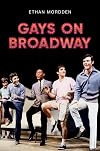
Ethan Mordden has had a long career as a historian of American theater; his 7-volume history of the 20th-century Broadway musical is an extraordinary accomplishment. At his best, he combines thorough research and personal knowledge with a sharply opinionated, highly entertaining style. He writes as if he were there, and for anything after the mid-60s or so, he probably was.
In this book, he presents a decade-by-decade history of gay men and women on Broadway, mostly as actors, playwrights, show more and composers, but with some mention of directors and choreographers. The chapters get longer as the book progresses and gay visibility increases; the opening chapter on the 1910s and 1920s is 12 pages long in the print edition; the chapter on the 1970s is more than three times as long.
Mordden hits the obvious names -- Tennessee Williams, Tallullah Bankhead, The Boys in the Band, Edward Albee (who gets an entire chapter all to himself) -- but also talks about lesser-known people and plays who have been largely lost to history. He writes about the big hits and the flops in a way that will make you wish you'd seen them all. (Wouldn't you love, for instance, to have seen the 1989 Broadway cast of Terrence McNally's The Lisbon Traviata: Anthony Heald, Nathan Lane, Dan Butler, and John Slattery!)
On the downside, Mordden goes a little heavier on the Bitchy Queen side of his personality in this book than he has in the past, and it's sometimes tiring to wade through that much attitude. And in the first half of the book, he hunts awfully hard for the implication of gay characters and relationships where there probably don't exist. An understandable impulse, I suppose, when writing about so many years when implication was all that was allowed.
But those are relatively small flaws in a book that is both a breezy, entertaining read and a valuable historical reference. show less
In this book, he presents a decade-by-decade history of gay men and women on Broadway, mostly as actors, playwrights, show more and composers, but with some mention of directors and choreographers. The chapters get longer as the book progresses and gay visibility increases; the opening chapter on the 1910s and 1920s is 12 pages long in the print edition; the chapter on the 1970s is more than three times as long.
Mordden hits the obvious names -- Tennessee Williams, Tallullah Bankhead, The Boys in the Band, Edward Albee (who gets an entire chapter all to himself) -- but also talks about lesser-known people and plays who have been largely lost to history. He writes about the big hits and the flops in a way that will make you wish you'd seen them all. (Wouldn't you love, for instance, to have seen the 1989 Broadway cast of Terrence McNally's The Lisbon Traviata: Anthony Heald, Nathan Lane, Dan Butler, and John Slattery!)
On the downside, Mordden goes a little heavier on the Bitchy Queen side of his personality in this book than he has in the past, and it's sometimes tiring to wade through that much attitude. And in the first half of the book, he hunts awfully hard for the implication of gay characters and relationships where there probably don't exist. An understandable impulse, I suppose, when writing about so many years when implication was all that was allowed.
But those are relatively small flaws in a book that is both a breezy, entertaining read and a valuable historical reference. show less
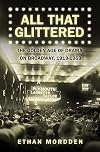
Reading "All that Glittered" is like listening to a chatty fried who's a theater devotee with an encyclopedic memory. Mordden sometimes wanders off on piquant tangents—theatrical, political or social—but always returns to his key narrative. His enthusiastic chronicle reminds us how potent theater can be. You may not always agree with him, but the debate will be lively

Really quite wonderful. Mordden's book has one great flaw: it was written in 1987. Beyond the fact that an entire generation of singers have recorded these works in that time, approaches to singing and performance have shifted yet again, the reputations of opera houses and composers have altered, and of course the LP vs CD debate has largely been rendered redundant. (All those questions do help make this book a useful time capsule, but they're ultimately a hindrance to a younger reader such show more as myself.)
Still, that's damning with faint praise. Mordden writes with great clarity about nine decades of recording history. He explores everything you could want to know, starting with the history of opera recording (back when five minutes per disc was a luxury!) and moving intelligently and insightfully through the rest of history. The book also doubles as a potted history of opera (the author smartly judges his audience as being enthusiastic but not necessarily knowledgeable about the works). And his great breadth of knowledge allows him to show reasoned opinions on the works. His is not a "hate or love" Amazon review; it's a work of true passion.
Of course, the 27-year difference brings its own challenges. Many of these recordings remain classics, but there are certainly operas or performers, performing styles or approaches, not to mention record labels, that are now slightly archaic. That doesn't make them wrong - as Mordden so passionately convinces us - but it may challenge younger opera fans or newcomers. So, what I'd suggest is pretty simple. Read this book (or at least browse it) to get an overall idea. It's probably helpful to grab the Gramophone guide, read some Amazon reviews, and maybe do some preview listening on Spotify to get an idea of how the land lies. But you still can't go wrong with this one. show less
Still, that's damning with faint praise. Mordden writes with great clarity about nine decades of recording history. He explores everything you could want to know, starting with the history of opera recording (back when five minutes per disc was a luxury!) and moving intelligently and insightfully through the rest of history. The book also doubles as a potted history of opera (the author smartly judges his audience as being enthusiastic but not necessarily knowledgeable about the works). And his great breadth of knowledge allows him to show reasoned opinions on the works. His is not a "hate or love" Amazon review; it's a work of true passion.
Of course, the 27-year difference brings its own challenges. Many of these recordings remain classics, but there are certainly operas or performers, performing styles or approaches, not to mention record labels, that are now slightly archaic. That doesn't make them wrong - as Mordden so passionately convinces us - but it may challenge younger opera fans or newcomers. So, what I'd suggest is pretty simple. Read this book (or at least browse it) to get an overall idea. It's probably helpful to grab the Gramophone guide, read some Amazon reviews, and maybe do some preview listening on Spotify to get an idea of how the land lies. But you still can't go wrong with this one. show less

A narrator with a fitness fixation invades the Hundred-Acre Wood and tries to convince the Pooh friends to take up exercise regimens.
The first and final chapters carry the day as Ethan Mordden manages to capture A. A. Milne's style quite well and has the Pooh friends staying true to themselves even as the narrator attempts to change and improve them.
The middle of the book drags quite a bit, unfortunately, as Mordden tries to turn every Ernest H. Shepard picture with even a little bit of show more motion in it into an unimpressive form of exercise for the Pooh friends. He also pads out the book by dropping in long segments of text from Milne's original, and it's always a mistake to remind the reader of what they could be having instead of the imitation they've got.
Still, it finishes strong with an amusing marathon that will please any child who can get past the sagging middle section (an apt description of mine and Pooh's general shapes, by the way).
FOR REFERENCE:
Contents: Introduction -- 1. Planning a Fitness Program -- 2. Exercises for the Tigger Shape -- 3. Exercises for the Pooh Shape -- 4. Exercises for the Piglet Shape -- 5. Exercises That Get Something Done -- 6. An Exercise for Savage Weather -- 7. Stretch-and-Flex Exercises -- 8. Water Sports -- 9. Making Up Personal Workout Charts -- 10. The Forest Exercise Club -- 11. The Forest Marathon -- 12. An Exercise for Resting Up After
(My Pooh Project: I love Winnie the Pooh, and so does my wife. Having a daughter gave us a chance to indoctrinate her into the cult by buying and reading her every Pooh book we came across. How many is that? I’m going to count them this year by reading and reviewing one every day and seeing which month I finally run out. Track my progress here:
https://www.goodreads.com/review/list/23954351-rod-brown?ref=nav_mybooks&she... ) show less
The first and final chapters carry the day as Ethan Mordden manages to capture A. A. Milne's style quite well and has the Pooh friends staying true to themselves even as the narrator attempts to change and improve them.
The middle of the book drags quite a bit, unfortunately, as Mordden tries to turn every Ernest H. Shepard picture with even a little bit of show more motion in it into an unimpressive form of exercise for the Pooh friends. He also pads out the book by dropping in long segments of text from Milne's original, and it's always a mistake to remind the reader of what they could be having instead of the imitation they've got.
Still, it finishes strong with an amusing marathon that will please any child who can get past the sagging middle section (an apt description of mine and Pooh's general shapes, by the way).
FOR REFERENCE:
Contents: Introduction -- 1. Planning a Fitness Program -- 2. Exercises for the Tigger Shape -- 3. Exercises for the Pooh Shape -- 4. Exercises for the Piglet Shape -- 5. Exercises That Get Something Done -- 6. An Exercise for Savage Weather -- 7. Stretch-and-Flex Exercises -- 8. Water Sports -- 9. Making Up Personal Workout Charts -- 10. The Forest Exercise Club -- 11. The Forest Marathon -- 12. An Exercise for Resting Up After
(My Pooh Project: I love Winnie the Pooh, and so does my wife. Having a daughter gave us a chance to indoctrinate her into the cult by buying and reading her every Pooh book we came across. How many is that? I’m going to count them this year by reading and reviewing one every day and seeing which month I finally run out. Track my progress here:
https://www.goodreads.com/review/list/23954351-rod-brown?ref=nav_mybooks&she... ) show less
Lists
Awards


You May Also Like


Associated Authors
Statistics
- Works
- 69
- Also by
- 6
- Members
- 3,515
- Popularity
- #7,226
- Rating
- 3.8
- Reviews
- 38
- ISBNs
- 151
- Languages
- 6
- Favorited
- 1