
Larry Kramer (1) (1935–2020)
Author of Faggots
For other authors named Larry Kramer, see the disambiguation page.
About the Author
Larry Kramer co-founded Gay Men's Health Crisis, the world's first provider of services to people with HIV and 1987, he founded ACT UP, the worldwide advocacy and protest organization.
Image credit: Photo by David Shankbone, 2007 (Wikimedia Commons)
Works by Larry Kramer
The American People: Volume 2: The Brutality of Fact: A Novel (The American People Series) (2020) 27 copies
Women in Love and Other Dramatic Writings: Women in Love, Sissies' Scrapbook, A Minor Dark Age, Just Say No, The Farce in Just Saying No (2003) 19 copies
Associated Works
In Search of Stonewall: The Riots at 50, The Gay and Lesbian Review at 25, Best Essays 1994-2018 (2019) — Contributor — 94 copies, 1 review
The Actor's Book of Scenes from New Plays: 70 Scenes for Two Actors, from Today's Hottest Playwrights (1988) — Contributor — 87 copies, 1 review
Queer: A Collection of LGBTQ Writing from Ancient Times to Yesterday (2021) — Contributor, some editions — 66 copies
Tagged
Common Knowledge
- Legal name
- Kramer, Laurence David
- Birthdate
- 1935-06-25
- Date of death
- 2020-05-27
- Gender
- male
- Education
- Yale University (BA|English)
- Occupations
- playwright
author
public health advocate
LGBT rights activist
AIDS activist - Organizations
- ACT UP
Gay Men's Health Crisis /GMHC (co-founder) - Awards and honors
- American Academy of Arts and Letters Academy Award (1996)
Public Service Award (Common Cause)
Obie Award, The Destiny of Me, (1992-1993) - Relationships
- Kramer, Arthur (brother)
Webster, William David (spouse) - Cause of death
- pneumonia
- Nationality
- USA
- Birthplace
- Bridgeport, Connecticut, USA
- Places of residence
- London, England, UK
New York, New York, USA
Washington, D.C., USA - Place of death
- Manhattan, New York, USA
- Associated Place (for map)
- USA
Members
Discussions
Was Lincoln Gay? in History: On learning from and writing history (May 2015)
Reviews
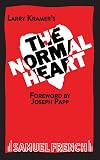
I picked this up after seeing it performed on my campus recently. You can read my review of the performancein my personal blog. A lot of what I wrote there does apply to my reading of the text. Some may say the play is dated, but I think it remains as relevant as ever. Though the LGBTQ community has made many strides from the last century, there is still a lot of work to be done, and there is still a lot of ignorance, bigotry, neglect, and other issues, plus the AIDS epidemic remains as show more lethal as ever. This is a moving and powerful play depicting the early days of the epidemic when no one really knew what was going on and a few people were just trying to figure out what to do and how to help while the rest just sat idly aside whether due to fear, prejudice, ignorance, or just flat out arrogance. The gay community was divided, right after the sexual revolution of the 1960s, confronted by an emerging epidemic that they felt threatened anything they achieved out of the revolution. The medical establishment, save for one or two brave souls, pretty much did nothing other than fight internally for the glory of maybe snagging a Nobel Prize for discovering the virus rather than actually collaborating. And then there was the government at all levels. As it is said in the play, no one really comes out looking well after all of this.
Well worth reading, and if it happens to come to your town or college campus, go see it. show less
Well worth reading, and if it happens to come to your town or college campus, go see it. show less
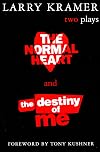
Larry Kramer was an outspoken advocate in the 1980s, the early days of the AIDS epidemic. While many in the gay community were caught up in celebrating hard-fought sexual freedoms, Kramer argued that these freedoms must be curtailed somehow to protect against biological disease. This position, unfortunately, won him scorn from many fellow gays. However, he wrote this award-winning play in 1985 to advocate for his position while shining the light on what it was like to be gay in this era. show more Without a doubt, this play humanized the entire confusing experience and teaches us still how to live under threat of disease.
In this work, Ned Weeks, the main protagonist, symbolizes Kramer’s work in the gay community. Ned is a writer who organizes to bring the AIDS agenda to the public’s mind. He shines a light on the hypocrisy of how few resources and publicity are devoted to this epidemic when compared to other recent healthcare scares (like the 1982 Tylenol crisis). Though his organizing efforts are successful, he is pushed out of leadership because he is seen as too radical. Ned simply advocates that the value of life amidst disease should trump any freedoms.
The characters in the play are based on historical figures in Kramer’s life experiences. There is love. There is death. The characters stand out. Ever-moving, they humanize the conflicting cultural forces at play. In 2011, HBO filmed this play and put it on the television. This film version even won kudos from then-president Obama. If you prefer to see plays instead of read them, this film is still available for rental.
It is simultaneously an engaging play and a piece of history. Kramer went on to continue to organize his advocacy and won hard-fought recognition of the AIDS crisis. (Remember, Reagan famously didn’t utter the word “AIDS” until the seventh year of his presidency.) He wrote a follow-up play The Destiny of Me which also won awards. The AIDS epidemic still rages globally despite vaccine and pharmacological efforts. The gay community has continued to win hard-fought rights and acceptance into wider American society.
The play closes on a moving note. It calls us to remember our common humanity amidst crisis – something too easy to forget. I write this review in the midst of another pandemic, and many of the lessons of the AIDS pandemic have been forgotten today. We still attack each other because masks – gasp! – are too restrictive to save human lives. As with Ned, people are pushed away for advocating sane public health measures. We cannot and should not forget the last scene in this book, for it repeats itself in our present history. Likewise, we cannot and should not forget the lives of a marginalized group targeted by biologic agents, for one day, it might be all of us. All this to say, this play has broad relevance to present readers, not just the LGBTQ+ community. show less
In this work, Ned Weeks, the main protagonist, symbolizes Kramer’s work in the gay community. Ned is a writer who organizes to bring the AIDS agenda to the public’s mind. He shines a light on the hypocrisy of how few resources and publicity are devoted to this epidemic when compared to other recent healthcare scares (like the 1982 Tylenol crisis). Though his organizing efforts are successful, he is pushed out of leadership because he is seen as too radical. Ned simply advocates that the value of life amidst disease should trump any freedoms.
The characters in the play are based on historical figures in Kramer’s life experiences. There is love. There is death. The characters stand out. Ever-moving, they humanize the conflicting cultural forces at play. In 2011, HBO filmed this play and put it on the television. This film version even won kudos from then-president Obama. If you prefer to see plays instead of read them, this film is still available for rental.
It is simultaneously an engaging play and a piece of history. Kramer went on to continue to organize his advocacy and won hard-fought recognition of the AIDS crisis. (Remember, Reagan famously didn’t utter the word “AIDS” until the seventh year of his presidency.) He wrote a follow-up play The Destiny of Me which also won awards. The AIDS epidemic still rages globally despite vaccine and pharmacological efforts. The gay community has continued to win hard-fought rights and acceptance into wider American society.
The play closes on a moving note. It calls us to remember our common humanity amidst crisis – something too easy to forget. I write this review in the midst of another pandemic, and many of the lessons of the AIDS pandemic have been forgotten today. We still attack each other because masks – gasp! – are too restrictive to save human lives. As with Ned, people are pushed away for advocating sane public health measures. We cannot and should not forget the last scene in this book, for it repeats itself in our present history. Likewise, we cannot and should not forget the lives of a marginalized group targeted by biologic agents, for one day, it might be all of us. All this to say, this play has broad relevance to present readers, not just the LGBTQ+ community. show less

It must be going on for twenty years since the last time I read this - I got it down off the shelf again after seeing Larry Kramer talking about the 70s in a TV programme. It's very much a book that could only have been written at one moment in history: an ironic, satirical, but also very affectionate account of the excesses of gay life in New York in the years between Stonewall and AIDS, with a group of characters looking for love, but finding sex.
I was going to write "don't read this book show more if you're easily shocked," but on reflection, that's wrong. The whole point of the book is épater la bourgeoisie. If you're not shocked, ask for your money back. Kramer gleefully depicts in detail almost every imaginable kind of sex act (and some you probably prefer not to imagine), in all the classic settings (the Piers, the Baths, Fire Island, ...) and takes a pot shot at pretty much every sacred cow he can think of — religion, race, family, marriage, youth, politics, literature: nothing is safe. The book created a new spirit of harmony and understanding between gay and straight critics when it was first published: they all hated it equally. Andrew Holleran's Dancer from the dance, published the same year, claimed a mystical, liberating, transformative beauty for the New York gay disco culture; Kramer depicts it as selfish, vain, dirty, hedonistic, profitable and dangerous. Not surprisingly, many gay men who were part of that culture felt that Kramer had let them down.
From the distance of thirty years we don't really have to engage with the politics any more. Hindsight has called off all bets. But we can take pleasure in Kramer's powers of observation and description, and in particular his eccentric, ironic stylistic mix - two parts Damon Runyon, one part underground porn film, two parts Woody-Allenesque cod psychology, and an occasional shot of Henry James. There are some great lists, some delightfully bogus statistics and citations from scientific articles, and of course lots of poor-taste jokes. Suffice it to say that one of the principal characters is called Randy Dildough, a name "combining ... allusions to the American Big Three: sex, money, and food". show less
I was going to write "don't read this book show more if you're easily shocked," but on reflection, that's wrong. The whole point of the book is épater la bourgeoisie. If you're not shocked, ask for your money back. Kramer gleefully depicts in detail almost every imaginable kind of sex act (and some you probably prefer not to imagine), in all the classic settings (the Piers, the Baths, Fire Island, ...) and takes a pot shot at pretty much every sacred cow he can think of — religion, race, family, marriage, youth, politics, literature: nothing is safe. The book created a new spirit of harmony and understanding between gay and straight critics when it was first published: they all hated it equally. Andrew Holleran's Dancer from the dance, published the same year, claimed a mystical, liberating, transformative beauty for the New York gay disco culture; Kramer depicts it as selfish, vain, dirty, hedonistic, profitable and dangerous. Not surprisingly, many gay men who were part of that culture felt that Kramer had let them down.
From the distance of thirty years we don't really have to engage with the politics any more. Hindsight has called off all bets. But we can take pleasure in Kramer's powers of observation and description, and in particular his eccentric, ironic stylistic mix - two parts Damon Runyon, one part underground porn film, two parts Woody-Allenesque cod psychology, and an occasional shot of Henry James. There are some great lists, some delightfully bogus statistics and citations from scientific articles, and of course lots of poor-taste jokes. Suffice it to say that one of the principal characters is called Randy Dildough, a name "combining ... allusions to the American Big Three: sex, money, and food". show less

Great works of literature transcend their specific cultural context. "Hamlet," for example, or "Candide" or "Moby-Dick" or "The Canterbury Tales" are still considered masterpieces that resonate with significance and artistic integrity hundreds of years after they were written. Perhaps it is trickier for a satire to preserve its accessibility or its appeal as time passes, since a satire often targets topical rather than timeless concerns. Brilliantly written and insightful satires, such as show more “A Modest Proposal” and "Don Quixote," however, manage to remain relevant long after their heyday.
Sadly, "Faggots," which fancies itself a satire and has been hailed as a tour de force of modern queer literature, merits none of these distinctions. In truth, in can hardly be characterized as a novel at all, since it lacks most of the defining elements of the genre on a very fundamental level—for example, a well-constructed plot or complex and thoughtfully developed characters. The story, such as it is, consists of allegedly witty vignettes or set pieces strung together with little sense of coherence or narrative veracity and populated by an unnecessarily large cast of undeveloped flat characters. A generous reading might presume that Kramer is attempting a stream-of-consciousness style, but if that’s the case, his novelistic skill is not up to the task, since such a style requires profound psychological insight into the complex thought patterns of a character who provides narrative perspective.
Upon its publication in 1978, "Faggots" sowed controversy due to its graphic depiction of gay sex, fetishes, drug use, incest, and other scandalous “perversities.” To be fair, as a depiction of pre-AIDS era gay culture in New York City, the novel retains great cultural value as an artifact of that specific historical moment. But it cannot be considered a work of literature. One suspects that there is good reason why Kramer, who penned the magnificent play (and later screenplay) "The Normal Heart" and contributed greatly to queer activism in the latter part of the 20th century, never wrote another novel. show less
Sadly, "Faggots," which fancies itself a satire and has been hailed as a tour de force of modern queer literature, merits none of these distinctions. In truth, in can hardly be characterized as a novel at all, since it lacks most of the defining elements of the genre on a very fundamental level—for example, a well-constructed plot or complex and thoughtfully developed characters. The story, such as it is, consists of allegedly witty vignettes or set pieces strung together with little sense of coherence or narrative veracity and populated by an unnecessarily large cast of undeveloped flat characters. A generous reading might presume that Kramer is attempting a stream-of-consciousness style, but if that’s the case, his novelistic skill is not up to the task, since such a style requires profound psychological insight into the complex thought patterns of a character who provides narrative perspective.
Upon its publication in 1978, "Faggots" sowed controversy due to its graphic depiction of gay sex, fetishes, drug use, incest, and other scandalous “perversities.” To be fair, as a depiction of pre-AIDS era gay culture in New York City, the novel retains great cultural value as an artifact of that specific historical moment. But it cannot be considered a work of literature. One suspects that there is good reason why Kramer, who penned the magnificent play (and later screenplay) "The Normal Heart" and contributed greatly to queer activism in the latter part of the 20th century, never wrote another novel. show less
Lists
Awards


You May Also Like


Associated Authors
Statistics
- Works
- 31
- Also by
- 5
- Members
- 2,044
- Popularity
- #12,578
- Rating
- 3.8
- Reviews
- 24
- ISBNs
- 65
- Languages
- 2
- Favorited
- 2

