
Harvey Fierstein
Author of Torch Song Trilogy
About the Author
Image credit: Courtesy of the NYPL Digital Gallery (image use requires permission from the New York Public Library)
Works by Harvey Fierstein
From Shtetl to Swing 1 copy
Torch Song Triolgy 1 copy
Widows and Children First! 1 copy
Fugue in a Nursery 1 copy
The International Stud 1 copy
Associated Works
Tagged
Common Knowledge
- Legal name
- Fierstein, Harvey Forbes
- Birthdate
- 1954-06-06
- Gender
- male
- Education
- Pratt Institute (B.F.A. 1973)
- Occupations
- playwright
actor
librettist
gay rights activist - Awards and honors
- Tony Award
- Nationality
- USA
- Birthplace
- Brooklyn, New York, USA
- Places of residence
- Brooklyn, New York, USA
- Associated Place (for map)
- Brooklyn, New York, USA
Members
Reviews
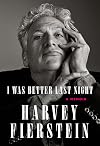
Personal, poignant, and unmistakeably in his own voice (and I’d really recommend listening to this in audiobook if you can), Harvey Fierstein’s memoir recounts his career and discusses what it was like to be a gay man coming of age in the New York of the ‘70s and living through the AIDS crisis of the ‘80s and ‘90s. There’s plenty of wit and dish here, and while Fierstein sometimes leaves the subject of an anecdote mercifully anonymous, others are named and shamed (Ginger Rogers, show more for instance, does not come across well here). But it’s not all frothy celebrity gossip. He is bluntly honest about his alcoholism, and while Fierstein’s recounting of how his parents accidentally found out he was gay is still clearly painful for him to tell, he does so with admirable honesty and clarity.
(A small side note, but I did find it very amusing that this quintessentially street-wise New Yorker still has not, a quarter of a century later, realised that he’d had his leg pulled by an Irish person. He briefly mentions a tour stop in Dublin in about 1995 or 1996, during which he asked for the location of the nearest gay bar. A local tells him that there isn’t one: Ireland had decriminalised homosexuality so long ago that all the bars were integrated. Fierstein muses that this shows just how far behind the U.S. was in some ways. … Except of course that Ireland only decriminalised homosexuality in 1993, and by the middle of the decade, the George (long may it reign) was heading into its second decade of existence in the heart of Dublin. Ireland now is in many ways more socially progressive than the U.S., but not then!) show less
(A small side note, but I did find it very amusing that this quintessentially street-wise New Yorker still has not, a quarter of a century later, realised that he’d had his leg pulled by an Irish person. He briefly mentions a tour stop in Dublin in about 1995 or 1996, during which he asked for the location of the nearest gay bar. A local tells him that there isn’t one: Ireland had decriminalised homosexuality so long ago that all the bars were integrated. Fierstein muses that this shows just how far behind the U.S. was in some ways. … Except of course that Ireland only decriminalised homosexuality in 1993, and by the middle of the decade, the George (long may it reign) was heading into its second decade of existence in the heart of Dublin. Ireland now is in many ways more socially progressive than the U.S., but not then!) show less

I was reminded of this story, written by actor, playwright and gay rights activist Harvey Fierstein, and published back in 2002, after picking up a copy of Margaret Friskey's 1940 picture-book, Seven Diving Ducks, and discovering that the stern paternal figure of that vintage anatine tale had castigated his seventh offspring as a 'sissy,' due to his inability to dive. My, how times have changed! From a mark of shame (one which involves a threat of familial excommunication), in Friskey's show more tale, being known as a 'sissy duckling' has been transformed, in Feirstein's, into a declaration of pride...
Elmer, the duckling in question, marches to a different drummer in this story: more interested in baking, than boxing, and in puppet theater, than football, he soon has a reputation as a 'sissy,' and becomes a target for the school bully, Drake Duckling. Even worse, his own father disapproves of him, and soon he and Elmer's mother are having tense, late-night discussions on the subject. Desperately unhappy at this point, Elmer runs away, deciding not to accompany the other ducks south on their yearly migration. But when his father is injured by hunters, this 'sissy' duckling isn't afraid to step in...
As is often the case, with this sort of overtly message-driven children's book, there is a mix of good and bad (or, perhaps not bad, so much as not as good) in The Sissy Duckling. I approve of the message, of course, that children should be themselves and follow their own interests, even if this leads them out of the spectrum of 'normal' behavior, for their sex and gender. I certainly agree that teasing and bullying, as the result of any kind of difference, is hurtful and should be discouraged, and that we often miss the sterling qualities of the people around us (like Elmer's bravery) by putting derogatory labels on them (like 'sissy').
That said, while I understand that Fierstein is trying to rehabilitate the term 'sissy' here, somehow the result - more of an inversion of the qualities associated with the concept (being a sissy is a good thing, rather than a bad one) than a real deconstruction of what is inherently problematic about the concept in the first place (maybe there really isn't any such thing as a 'sissy,' because the concept rests on the false notions that there should be a strict gender division, when it comes to interests and behavior, and that those things generally associated with the feminine are somehow inferior?) - didn't quite work for me. I also wasn't really sure what to think of the fact that Elmer's redemption, in the eyes of the community, lies in a heroic action that a) most victims of bullying and/or discrimination will not be able to duplicate, and b) runs counter to the natural behavior of his nominal species (ie: migration). Doesn't this latter imply, however unintentionally, that in order to be who he is, Elmer has to be unnatural, in some fundamental way? I guess that, in the end, I feel that using some anthropomorphized animals to expound upon a human issue can be a rather tricky thing to bring off, and The Sissy Duckling didn't completely convince me...
Still, I give it, and its author, full marks for good intentions, and I enjoyed reading it, as an interesting companion piece to Margaret Friskey's laughably bad examination of another duck family. show less
Elmer, the duckling in question, marches to a different drummer in this story: more interested in baking, than boxing, and in puppet theater, than football, he soon has a reputation as a 'sissy,' and becomes a target for the school bully, Drake Duckling. Even worse, his own father disapproves of him, and soon he and Elmer's mother are having tense, late-night discussions on the subject. Desperately unhappy at this point, Elmer runs away, deciding not to accompany the other ducks south on their yearly migration. But when his father is injured by hunters, this 'sissy' duckling isn't afraid to step in...
As is often the case, with this sort of overtly message-driven children's book, there is a mix of good and bad (or, perhaps not bad, so much as not as good) in The Sissy Duckling. I approve of the message, of course, that children should be themselves and follow their own interests, even if this leads them out of the spectrum of 'normal' behavior, for their sex and gender. I certainly agree that teasing and bullying, as the result of any kind of difference, is hurtful and should be discouraged, and that we often miss the sterling qualities of the people around us (like Elmer's bravery) by putting derogatory labels on them (like 'sissy').
That said, while I understand that Fierstein is trying to rehabilitate the term 'sissy' here, somehow the result - more of an inversion of the qualities associated with the concept (being a sissy is a good thing, rather than a bad one) than a real deconstruction of what is inherently problematic about the concept in the first place (maybe there really isn't any such thing as a 'sissy,' because the concept rests on the false notions that there should be a strict gender division, when it comes to interests and behavior, and that those things generally associated with the feminine are somehow inferior?) - didn't quite work for me. I also wasn't really sure what to think of the fact that Elmer's redemption, in the eyes of the community, lies in a heroic action that a) most victims of bullying and/or discrimination will not be able to duplicate, and b) runs counter to the natural behavior of his nominal species (ie: migration). Doesn't this latter imply, however unintentionally, that in order to be who he is, Elmer has to be unnatural, in some fundamental way? I guess that, in the end, I feel that using some anthropomorphized animals to expound upon a human issue can be a rather tricky thing to bring off, and The Sissy Duckling didn't completely convince me...
Still, I give it, and its author, full marks for good intentions, and I enjoyed reading it, as an interesting companion piece to Margaret Friskey's laughably bad examination of another duck family. show less
This story is about a man who knew within the confines of his heart what was normal for him and didn’t let the prejudices of his age prevent him from finding love in its various forms.
But finding fulfillment was a much more tortuous road, as it is for us all.
Among the more moving parts of actor, cross-dresser, playwright, screenwriter, and voiceover artist Harvey Fierstein’s memoir are his remembrances of how people first greeted news of AIDS.
Not that it was a pandemic affecting the show more lives of millions of people, but that it came from queers who got what they deserved.
Not us but them.
I think the drive to tell these stories from an “us” perspective is what drove him, that we are people just like you. That there’s no reason to fear us and push us into society’s dark corners. That we also deserve respect.
His memoir shows why he indeed deserved the respect and love of his parents, and how he turned that sensibility into some of the most memorable theatre of his age. show less
But finding fulfillment was a much more tortuous road, as it is for us all.
Among the more moving parts of actor, cross-dresser, playwright, screenwriter, and voiceover artist Harvey Fierstein’s memoir are his remembrances of how people first greeted news of AIDS.
Not that it was a pandemic affecting the show more lives of millions of people, but that it came from queers who got what they deserved.
Not us but them.
I think the drive to tell these stories from an “us” perspective is what drove him, that we are people just like you. That there’s no reason to fear us and push us into society’s dark corners. That we also deserve respect.
His memoir shows why he indeed deserved the respect and love of his parents, and how he turned that sensibility into some of the most memorable theatre of his age. show less
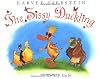
I absolutely love Harvey's children's book. Kindergarten-Grade 3-Elmer is not like the other male ducklings. "They boxed while Elmer baked. When they built forts, Elmer made sand castles. They had a football game, and Elmer put on a puppet show." When they call him a sissy, his mother insists that he is simply special, and "being special sometimes scares those who are not." Eventually, he is threatened by the local bully, Drake, and when he runs instead of fighting, his embarrassed father show more declares, "He's no son of mine!" Heartbroken, Elmer runs away and sets up house deep in the forest. As the air turns cooler, he sneaks to the great pond to view his parents one last time before they fly south and sees his father shot by hunters. He takes him home and nurses him back to health, and when the flock returns in the spring, Elmer's father boasts about his son's bravery and loyalty. Fierstein's book, based on his award-winning animated HBO special, sends out a positive message about differences and acceptance. The cartoon images are bright and colorful. The characters are engaging, and their faces and body language are wonderfully expressive. Snappy dialogue and enhancing details abound, from Elmer's flowered backpack, to the framed picture of his parents he packs in his pillowcase before his departure. show less
Lists
Awards


You May Also Like


Associated Authors
Statistics
- Works
- 34
- Also by
- 27
- Members
- 1,434
- Popularity
- #17,941
- Rating
- 4.1
- Reviews
- 34
- ISBNs
- 41
- Languages
- 1
- Favorited
- 1