
Tony Kushner (1) (1956–)
Author of Angels in America, Part One: Millennium Approaches
For other authors named Tony Kushner, see the disambiguation page.
About the Author
Playwright Tony Kushner was born in New York City and raised in Louisiana. In addition to his plays, Kushner teaches at New York University and has co-written an opera with Bobby McFerrin. Kushner is best known for Angels in America: A Gay Fantasia on National Themes, a two-part seven-hour play show more that has won many awards (two Tony Awards, a Pulitzer Prize, two Drama Desk Awards, the Evening Standard Award, the New York Critics Circle Award, and the Los Angeles Drama Critics Circle Award). It was also selected one of the ten best plays of the 20th century by London's Royal National Theatre. (Bowker Author Biography) show less
Image credit: Unaccredited image from www.writing.upenn.edu
Series
Works by Tony Kushner
Angels in America: A Gay Fantasia on National Themes, Parts 1 & 2 (1991) — Author — 1,465 copies, 16 reviews
Angels in America: A Gay Fantasia on National Themes: Part One: Millennium Approaches Part Two: Perestroika (2003) 785 copies, 11 reviews
Thinking About the Longstanding Problems of Virtue and Happiness, Essays, A Play, Two Poems and A Prayer (1995) 122 copies
Wrestling with Zion: Progressive Jewish-American Responses to the Israeli-Palestinian Conflict (2003) — Editor — 84 copies, 1 review
Tony Kushner in Conversation (Triangulations: Lesbian/Gay/Queer Theater/Drama/Performance) (1997) 48 copies
The Intelligent Homosexual's Guide to Capitalism and Socialism with a Key to the Scriptures (2013) 19 copies
Methuen Drama Modern Classics : The good person of Sezuan {Kushner} + Der gute Mensch von Setzuan {parallel texts} (2011) — Translator — 10 copies
Munich : screenplay 3 copies
Three Plays for Young Audiences 2 copies
TDR #157 1 copy
Assassination Vacation 1 copy
Lincoln: The Screenplay 1 copy
Associated Works
Arthur Miller: Collected Plays 1944-1961 (Library of America) (2000) — Editor, some editions — 331 copies, 1 review
The Design of Dissent: Socially and Politically Driven Graphics (2005) — Foreword — 168 copies, 3 reviews
Arthur Miller: Collected Plays 1964-1982 (Library of America) (2012) — Editor — 107 copies, 1 review
Love's Fire: Seven New Plays Inspired By Seven Shakespearean Sonnets (1998) — Contributor — 73 copies
Tagged
Common Knowledge
- Canonical name
- Kushner, Tony
- Legal name
- Kushner, Anthony Robert
- Birthdate
- 1956-07-16
- Gender
- male
- Education
- Columbia University (BA, 1978)
New York University (1984) - Occupations
- playwright
screenwriter - Organizations
- American Academy of Arts and Letters (Literature, 2005)
- Awards and honors
- Laura Pels Foundation Awards for Drama (2002)
Spirit of Justice Award from the Gay and Lesbian Advocates and Defenders
Cultural Achievement Award from The National Foundation for Jewish Culture
American Academy of Arts and Letters Academy Award (Literature, 1994)
Whiting Writers' Award (1990)
Steinberg Distinguished Playwright Award (2008) (show all 7)
Carl Sandburg Literary Award (2022) - Relationships
- Harris, Mark (5) (husband)
- Nationality
- USA
- Birthplace
- Manhattan, New York, USA
- Places of residence
- Lake Charles, Louisiana, USA
New York, New York, USA - Associated Place (for map)
- New York, USA
Members
Reviews
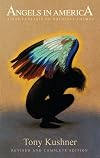
Millennium Approaches: 4.5 Stars. This play is so vast and beautiful yet ugly and gritty. It elates and disgusts--terrifies and intrigues. It poses questions that many of us ask and that many of us are too afraid to ask. It is the most realistic fantasy of life in play form that I have ever read and will always have a special place in my heart.
Perestroika: 5 Stars. Just wow. After having to read Millennium Approaches for a class, I decided to read Perestroika out of curiosity; but I never show more imagined it could be so...vast, so absolutely beautiful. The progression of the characters both in Perestroika alone and in the work as a whole is just riveting. No character is static, which kept my mind turning, trying to come to terms with each of them. I love the reality of their emotions. The reality of anger, of fear, of abandonment, of insane distancing. It all meshes together so well in a shower of emotions and ideologies and paradigms. Honestly, it's just hard to describe how much I enjoyed this play. Even the use of sex as a metaphor is handled so tactfully and candidly that it didn't turn me away from the play but really emphasized the tones and themes Kushner tried to present. The strongest part, however, was definitely the ending. The hope that just poured out of that last scene brought tears to my eyes, because it wasn't some fantasy hope filled with rainbows and unicorns, it was the hope of someone who knows that life sucks sometimes and that crap hits the fan unexpectedly sometimes, but that despite it all we can still keep moving forward. That sentiment is the most important thing I will take away from the entirety of Angels in America. show less
Perestroika: 5 Stars. Just wow. After having to read Millennium Approaches for a class, I decided to read Perestroika out of curiosity; but I never show more imagined it could be so...vast, so absolutely beautiful. The progression of the characters both in Perestroika alone and in the work as a whole is just riveting. No character is static, which kept my mind turning, trying to come to terms with each of them. I love the reality of their emotions. The reality of anger, of fear, of abandonment, of insane distancing. It all meshes together so well in a shower of emotions and ideologies and paradigms. Honestly, it's just hard to describe how much I enjoyed this play. Even the use of sex as a metaphor is handled so tactfully and candidly that it didn't turn me away from the play but really emphasized the tones and themes Kushner tried to present. The strongest part, however, was definitely the ending. The hope that just poured out of that last scene brought tears to my eyes, because it wasn't some fantasy hope filled with rainbows and unicorns, it was the hope of someone who knows that life sucks sometimes and that crap hits the fan unexpectedly sometimes, but that despite it all we can still keep moving forward. That sentiment is the most important thing I will take away from the entirety of Angels in America. show less
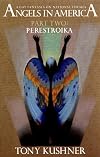
It is a madman's undertaking, Angels in America.
It's a work of staggering grandiosity and ambition, no doubt. To portray human drama intimately and without pretension; to examine the politics and morality at play in a cross-section of not-too-distant history; to create a cast of characters that are three-dimensional and complex; to ruminate on the Big Stuff, love and death and forgiveness, and the Contemporary Stuff, homosexuality and modern religion and partisanship; to weave all these show more things into a gripping, moving, hilarious, intense, strange, wonderful story, all the while infusing it with all manner of Judeo-Christian allusion and historical context and intriguing philosophy. Who on Earth would sign up for such a task of their own volition? Who could even attempt to carry all of this out?
Tony Kushner, apparently. And, by God, does he do a fucking spectacular job of it.
Perestroika is a very different play than Millennium Approaches, and you'll realise that quickly, but you'll understand just as quickly that the quality and the heart of the second remains just as high and just as true as in the first. While Part I cultivated a sense of eagerness and impending salvation mixed with a foreboding and a fear of judgment, Part II deals with the messy business of what happens after the Angel arrives, after the Great Work is undertaken.
It doesn't make sense to talk much about the plot, because it's a continuation of Part I and giving a way a little bit is liable to cause the whole spool to unravel, and I don't want to spoil anything. What I will say, though, is that I feel like I should've been unsatisfied, but I wasn't. In any other story, I probably would dislike the looseness, the lack of structure, the way that—objectively—not much actually happens (compared to Millennium, at least). But something about this play made all of that perfect. I still felt closure, and it felt like a coherent plot that didn't have the sort of intricate twists that a less talented writer has to rely on, simply because it didn't need them. The characters and the internal dynamics were more than enough.
This (Angels in America as a whole) is a very gay play, and I mean that in the absolute best way. And not just that many of the characters are gay (I don't think there's one heterosexual kiss in the entirety of Part II) but that homosexuality and AIDS and drag and such are dealt with really well, with such tenderness and introspection and searching for truth. Kushner himself is gay so this shouldn't be surprising, but it still is; because on television and in movies and even in several books, the most we see of gay people are their surfaces, very rarely do authors or creators take the time to consider gay characters not based on how they can further the plot or help the (always hetero) protagonist, but what they're like as people, how being gay affects their lives and their relationships. Kushner doesn't stick to focusing on saccharine positives (cheery, sassy Gay Best Friend) nor on melodramatic negatives (Bury Your Gays). Prior, Louis, Belize, Joe, Roy—being gay affects them all in different ways, highlighting different facets of their personalities, revealing much more about themselves in how they react to it rather than by the simple (and rather bland) fact that they're "friends of Dorothy."
I should talk about the humour here too, which is something I forgot to mention in my review of Part I. Tony Kushner is funny, and the comedic touches in these two plays are always tasteful and they always land—Prior himself made me laugh out loud a few times, and not because he's the stereotypical witty queen, but because he's legitimately intelligent and fiercely emotional and the way he speaks his mind is bloody hilarious. And even apart from the dialogue, there's something so deliciously subversive in making the Prophet a gay man dying of AIDS, or fully embracing the hermaphroditism of angels, or sending the Valium-addicted Mormon housewife up to heaven for a little detour. Apart from being funny with their absurdity, they mirror the absurdity of life and history, and they're profound in that they blend the mundane and the fantastic together so well.
Which leads me right into where I wanted to end, my greatest praise of Angels in America: its astonishing ability to meld raw humanity with lofty philosophy. Authors who can paint beautifully in broad strokes, waxing poetic on grand points and skilfully weaving theories and belief systems, your Ralph Waldo Emersons or whathaveyous, they captivate us. Authors who can frame a simple conflict or personal dilemma to reveal the depths and complexities of the human heart, who can probe our spirit and our emotions with incredible subtlety and nuance, they make us feel. But authors who can do both, who can fuse the concrete and the abstract, the idyllic and the real, the broad and the narrow, the should-be and the is, who can play the part of the Angel and the AIDS patient and recognise that both are equally important and powerful—they're masterful. And rare.
And Tony Kushner is one of them. show less
It's a work of staggering grandiosity and ambition, no doubt. To portray human drama intimately and without pretension; to examine the politics and morality at play in a cross-section of not-too-distant history; to create a cast of characters that are three-dimensional and complex; to ruminate on the Big Stuff, love and death and forgiveness, and the Contemporary Stuff, homosexuality and modern religion and partisanship; to weave all these show more things into a gripping, moving, hilarious, intense, strange, wonderful story, all the while infusing it with all manner of Judeo-Christian allusion and historical context and intriguing philosophy. Who on Earth would sign up for such a task of their own volition? Who could even attempt to carry all of this out?
Tony Kushner, apparently. And, by God, does he do a fucking spectacular job of it.
Perestroika is a very different play than Millennium Approaches, and you'll realise that quickly, but you'll understand just as quickly that the quality and the heart of the second remains just as high and just as true as in the first. While Part I cultivated a sense of eagerness and impending salvation mixed with a foreboding and a fear of judgment, Part II deals with the messy business of what happens after the Angel arrives, after the Great Work is undertaken.
It doesn't make sense to talk much about the plot, because it's a continuation of Part I and giving a way a little bit is liable to cause the whole spool to unravel, and I don't want to spoil anything. What I will say, though, is that I feel like I should've been unsatisfied, but I wasn't. In any other story, I probably would dislike the looseness, the lack of structure, the way that—objectively—not much actually happens (compared to Millennium, at least). But something about this play made all of that perfect. I still felt closure, and it felt like a coherent plot that didn't have the sort of intricate twists that a less talented writer has to rely on, simply because it didn't need them. The characters and the internal dynamics were more than enough.
This (Angels in America as a whole) is a very gay play, and I mean that in the absolute best way. And not just that many of the characters are gay (I don't think there's one heterosexual kiss in the entirety of Part II) but that homosexuality and AIDS and drag and such are dealt with really well, with such tenderness and introspection and searching for truth. Kushner himself is gay so this shouldn't be surprising, but it still is; because on television and in movies and even in several books, the most we see of gay people are their surfaces, very rarely do authors or creators take the time to consider gay characters not based on how they can further the plot or help the (always hetero) protagonist, but what they're like as people, how being gay affects their lives and their relationships. Kushner doesn't stick to focusing on saccharine positives (cheery, sassy Gay Best Friend) nor on melodramatic negatives (Bury Your Gays). Prior, Louis, Belize, Joe, Roy—being gay affects them all in different ways, highlighting different facets of their personalities, revealing much more about themselves in how they react to it rather than by the simple (and rather bland) fact that they're "friends of Dorothy."
I should talk about the humour here too, which is something I forgot to mention in my review of Part I. Tony Kushner is funny, and the comedic touches in these two plays are always tasteful and they always land—Prior himself made me laugh out loud a few times, and not because he's the stereotypical witty queen, but because he's legitimately intelligent and fiercely emotional and the way he speaks his mind is bloody hilarious. And even apart from the dialogue, there's something so deliciously subversive in making the Prophet a gay man dying of AIDS, or fully embracing the hermaphroditism of angels, or sending the Valium-addicted Mormon housewife up to heaven for a little detour. Apart from being funny with their absurdity, they mirror the absurdity of life and history, and they're profound in that they blend the mundane and the fantastic together so well.
Which leads me right into where I wanted to end, my greatest praise of Angels in America: its astonishing ability to meld raw humanity with lofty philosophy. Authors who can paint beautifully in broad strokes, waxing poetic on grand points and skilfully weaving theories and belief systems, your Ralph Waldo Emersons or whathaveyous, they captivate us. Authors who can frame a simple conflict or personal dilemma to reveal the depths and complexities of the human heart, who can probe our spirit and our emotions with incredible subtlety and nuance, they make us feel. But authors who can do both, who can fuse the concrete and the abstract, the idyllic and the real, the broad and the narrow, the should-be and the is, who can play the part of the Angel and the AIDS patient and recognise that both are equally important and powerful—they're masterful. And rare.
And Tony Kushner is one of them. show less
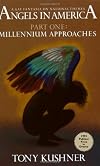
Well that really was something.
It's hard for me to write a real review of Angels in America: Millennium Approaches because I finished it a few minutes ago and I'm dying, dying to start part two, Perestroika, which is sitting right next to me. But let's try anyway. Quick and dirty, no funny business.
This play is something special, and I knew that almost immediately. Reading the cast of characters page was a bit of a trip at first—it includes a drag queen-turned-nurse, two ghosts, a rabbi, show more Ethel Rosenberg, an Eskimo, an imaginary travel agent, and an angel, among others. But don't let that turn you off, because it is really, really, really good, and not as bizarre as you might think.
Right off the bat, the dialogue is superb. The way the characters speak and interact feels so real, and this isn't something I'd normally comment on but Kushner's use of punctuation is very effective, it gives a really good indication of the cadence of the lines without actually having to put any parenthetical direction into it. Everyone has a unique way of speaking, too, which is something I notice playwrights tend to struggle with without resorting to drastic accents or overly emotive stage cues.
And every character felt like a real person (not just the ones who actually were, like Roy Cohn & Ethel Rosenberg). It's stunning, truly, how well they're fleshed out despite the length of the play (far too short! I want more!) and the fact that they all have to share the spotlight. They transcend stereotypes in beautiful ways, their words are powerful but human, and the conversations they have are anything but easy and pleasant. They react to heartbreak and disease and confusion the way real people do, they don't act like characters in a play. And there wasn't a single one I disliked, not even the ones that act despicably or forsake the ones they love, because I can understand every one of them, and I can relate to something deep at the core of each one.
There are touches of surrealism, or magical realism at least—a mutual dream scene, a brief foray into Antarctica, divinity-induced arousal. But it really is remarkable how well these blend in with the rest of the piece, and even though they're clearly more fantastical, they feel no less real. I don't think I've ever pictured any play more clearly in my head than this; I had vivid mental images of every character, I could visualise the split scenes (another playwriting tactic Kushner uses to great effect here), I could see the heavenly light and the angel breaking out from above on the very last page, I could hear the triumphant sublimity of the chorus, Hallelujah!, Hallelujah! Glory to!
The whole play cultivates this incredible feeling of something coming, of being right on the very cusp of something profound and terrifying and blindingly beautiful, something unknown but all the more powerful for the not knowing. There's this sense of upheaval, of things set in motion, of being swept up into the awe-inspiring heart of mankind and everything we are. The climax comes at the very end, which of course leads right into part two, but the building anticipation is anything but unsatisfying. What is coming? What is on the other side? What is this grand, sublime thing that has come to save us or smite us, is it plague and damnation or salvation and "softness, compliance, forgiveness, grace"? What will happen when it arrives?
In all this praise I realise I haven't yet answered the big question: What is Millennium Approaches actually ABOUT? Hard to say. I suppose I could just say "the 1980s" or "the AIDS crisis" and that would technically be true, but it wouldn't be much truer than saying the Statue of Liberty is a decently-sized figurine or the Grand Canyon is a large crack. It just doesn't cover it. Yes, the four main male characters are all homosexual; yes, two of them have AIDS; yes, it takes place in New York City in 1985/1986; yes, there's a drag scene and a gay sex scene and several dying-of-AIDS scenes. But the subtitle really says it all: A Gay Fantasia on National Themes. A significant part of Angels in America is about homosexuality, certainly, but rather than ending the theme there—homophobia is bad, AIDS is bad, that's all folks thanks for coming—Tony Kushner uses it as a jumping-off point to explore the complexities of love, justice, identity, religion. And he does so beautifully.
If or when you get the chance, read this play. It is not to be missed. show less
It's hard for me to write a real review of Angels in America: Millennium Approaches because I finished it a few minutes ago and I'm dying, dying to start part two, Perestroika, which is sitting right next to me. But let's try anyway. Quick and dirty, no funny business.
This play is something special, and I knew that almost immediately. Reading the cast of characters page was a bit of a trip at first—it includes a drag queen-turned-nurse, two ghosts, a rabbi, show more Ethel Rosenberg, an Eskimo, an imaginary travel agent, and an angel, among others. But don't let that turn you off, because it is really, really, really good, and not as bizarre as you might think.
Right off the bat, the dialogue is superb. The way the characters speak and interact feels so real, and this isn't something I'd normally comment on but Kushner's use of punctuation is very effective, it gives a really good indication of the cadence of the lines without actually having to put any parenthetical direction into it. Everyone has a unique way of speaking, too, which is something I notice playwrights tend to struggle with without resorting to drastic accents or overly emotive stage cues.
And every character felt like a real person (not just the ones who actually were, like Roy Cohn & Ethel Rosenberg). It's stunning, truly, how well they're fleshed out despite the length of the play (far too short! I want more!) and the fact that they all have to share the spotlight. They transcend stereotypes in beautiful ways, their words are powerful but human, and the conversations they have are anything but easy and pleasant. They react to heartbreak and disease and confusion the way real people do, they don't act like characters in a play. And there wasn't a single one I disliked, not even the ones that act despicably or forsake the ones they love, because I can understand every one of them, and I can relate to something deep at the core of each one.
There are touches of surrealism, or magical realism at least—a mutual dream scene, a brief foray into Antarctica, divinity-induced arousal. But it really is remarkable how well these blend in with the rest of the piece, and even though they're clearly more fantastical, they feel no less real. I don't think I've ever pictured any play more clearly in my head than this; I had vivid mental images of every character, I could visualise the split scenes (another playwriting tactic Kushner uses to great effect here), I could see the heavenly light and the angel breaking out from above on the very last page, I could hear the triumphant sublimity of the chorus, Hallelujah!, Hallelujah! Glory to!
The whole play cultivates this incredible feeling of something coming, of being right on the very cusp of something profound and terrifying and blindingly beautiful, something unknown but all the more powerful for the not knowing. There's this sense of upheaval, of things set in motion, of being swept up into the awe-inspiring heart of mankind and everything we are. The climax comes at the very end, which of course leads right into part two, but the building anticipation is anything but unsatisfying. What is coming? What is on the other side? What is this grand, sublime thing that has come to save us or smite us, is it plague and damnation or salvation and "softness, compliance, forgiveness, grace"? What will happen when it arrives?
HARPER: I'm undecided. I feel... that something is going to give. It's 1985. Fifteen years till the third millennium. Maybe Christ will come again. Maybe seeds will be planted, maybe there'll be harvests then, maybe early figs to eat, maybe new life, maybe fresh blood, maybe companionship and love and protection, safety from what's outside, maybe the door will hold, or maybe... maybe the troubles will come, and the end will come, and the sky will collapse and there will be terrible rains and showers of poison light, or maybe my life is really fine, maybe Joe loves me and I'm only crazy thinking otherwise, or maybe not, maybe it's even worse than I know, maybe... I want to know, maybe I don't. The suspense, Mr. Lies, it's killing me.
In all this praise I realise I haven't yet answered the big question: What is Millennium Approaches actually ABOUT? Hard to say. I suppose I could just say "the 1980s" or "the AIDS crisis" and that would technically be true, but it wouldn't be much truer than saying the Statue of Liberty is a decently-sized figurine or the Grand Canyon is a large crack. It just doesn't cover it. Yes, the four main male characters are all homosexual; yes, two of them have AIDS; yes, it takes place in New York City in 1985/1986; yes, there's a drag scene and a gay sex scene and several dying-of-AIDS scenes. But the subtitle really says it all: A Gay Fantasia on National Themes. A significant part of Angels in America is about homosexuality, certainly, but rather than ending the theme there—homophobia is bad, AIDS is bad, that's all folks thanks for coming—Tony Kushner uses it as a jumping-off point to explore the complexities of love, justice, identity, religion. And he does so beautifully.
If or when you get the chance, read this play. It is not to be missed. show less
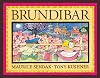
Two children go into town to fetch fresh milk for their ailing mother. However, they don't have the money to pay for it so they try singing in the square to make some change. But Brundibar drowns out their singing with his organ grinding. Can the children overcome the bully and get the milk their mother needs?
This book is based on an opera of the same name, which was infamously performed by children held in a Nazi concentration camp. While the text of the book makes no mention of anything show more related to World War II or the Holocaust, Sendak's illustrations do. An optimistic ending about help always being available keeps the book from being too heartbreaking, but then a final page spread has a note from Brundibar saying how "Bullies don't give up completely. One departs, the next appears..." I suppose that is meant to be cautionary in a "never forget" way, but it does leave the book on a bit of downer. show less
This book is based on an opera of the same name, which was infamously performed by children held in a Nazi concentration camp. While the text of the book makes no mention of anything show more related to World War II or the Holocaust, Sendak's illustrations do. An optimistic ending about help always being available keeps the book from being too heartbreaking, but then a final page spread has a note from Brundibar saying how "Bullies don't give up completely. One departs, the next appears..." I suppose that is meant to be cautionary in a "never forget" way, but it does leave the book on a bit of downer. show less
Lists
Awards


You May Also Like


Associated Authors
Statistics
- Works
- 47
- Also by
- 15
- Members
- 8,111
- Popularity
- #2,984
- Rating
- 3.9
- Reviews
- 93
- ISBNs
- 157
- Languages
- 7
- Favorited
- 16