
David Mamet
Author of Glengarry Glen Ross: A Play
About the Author
David Mamet, November 30, 1947 - David Mamet was born on November 30, 1947 in Flossmoor, Illinois. He attended Goddard College in Vermont and the Neighborhood Playhouse School of Theater in New York. He began his career as an actor and a director, but soon turned to playwriting. He won acclaim in show more 1976 with three Off-Broadway plays, "The Duck Variations," "Sexual Perversity in Chicago" and "American Buffalo." His work became known for it's strong male characters and the description of the decline of morality in the world. In 1984, Mamet received the Pulitzer Prize in Literature for his play, "Glengarry Glen Ross." In 1981, before he received the Pulitzer, Mamet tried his hand at screenwriting. he started by adapting "The Postman Always Rings Twice," and then adapting his own "Glengarry Glen Ross" as well as writing "The Untouchables" and Wag the Dog." He also taught at Goddard College, Yale Drama School and New York University. Mamet won the Jefferson Award in 1974, the Obie Award in 1976 and 1983, the New York Drama Critics Circle Award in 1977 and 1984, the Outer Circle Award in 1978, the Society of West End Theater Award in 1983, The Pulitzer Prize in 1984, The Dramatists Guild Hall-Warriner Award in 1984, and American Academy Award in 1986 and a Tony Award in 1987. He is considered to be one of the greatest artists in his field. (Bowker Author Biography) show less
Image credit: Brigitte Lacombe
Series
Works by David Mamet
Bambi vs. Godzilla: On the Nature, Purpose, and Practice of the Movie Business (2007) 320 copies, 7 reviews
Five Cities of Refuge: Weekly Reflections on Genesis, Exodus, Leviticus, Numbers, and Deuteronomy (2003) — Author — 69 copies
Everywhere an Oink Oink: An Embittered, Dyspeptic, and Accurate Report of Forty Years in Hollywood (2023) 43 copies
Five Television Plays: A Waitress in Yellowstone; Bradford; The Museum of Science and Industry Story; A Wasted Weekend; We Will Take You There (1994) 33 copies
David Mamet Plays: 2 "Reunion", "Dark Pony", "A Life in the Theatre", "The Woods", "Lakeboat", "Edmond" (Methuen World Classics) (Vol 2) (1996) 30 copies
Sexual Perversity in Chicago 7 copies
Yes 4 copies
Twelve Angry Men 3 copies
Litko: A Dramatic Monologue 2 copies
Maple Sugaring 2 copies
Food 2 copies
Cross Patch 2 copies
Two Conversations 2 copies
Two Scenes 2 copies
Conversations with the Spirit World 2 copies
Pint's a Pound the World Around 2 copies
Dowsing 2 copies
Deer Dogs 2 copies
In the Mall 2 copies
Morris and Joe 2 copies
The Dog 2 copies
Mr. Happiness 2 copies
A Life with No Joy in It 2 copies
Film Crew 2 copies
The Power Outage 2 copies
Four A.M. 2 copies
Columbus Avenue 2 copies
Businessmen 2 copies
All Men Are Whores: An Inquiry 2 copies
In Old Vermont 2 copies
Shoeshine 2 copies
A Sermon 2 copies
Cold 2 copies
Epilogue 2 copies
The Hat 2 copies
Doctor 2 copies
Prologue: American Twilight 2 copies
Steve McQueen 2 copies
Bambi protiv Godzile 1 copy
Almost Done 1 copy
Monologue 1 copy
Short Plays and Monlogues 1 copy
Dark Pony 1 copy
The Luftmensch 1 copy
Keep your Pantheon [audio] 1 copy
Reunion 1 copy
Prairie du Chien 1 copy
We Will Take You There 1 copy
A Wasted Weekend 1 copy
Two Enthusiasts 1 copy
Bradford 1 copy
A Waitress in Yellowstone 1 copy
6 Action Movies [DVD] — Director — 1 copy
Secret Names 1 copy
The Owl 1 copy
L.A. Sketches 1 copy
The Diary of Anne Frank 1 copy
Jolly 1 copy
The Unit (Seasons 1-3) 1 copy
Speed the Plow: Screenplay 1 copy
Joseph Dintenfass 1 copy
Dodge 1 copy
Sunday Afternoon 1 copy
A Perfect Mermaid 1 copy
A Scene - Australia 1 copy
Fish 1 copy
No One Will Be Immune 1 copy
The Joke Code 1 copy
Hanglage Meerblick 1 copy
TOPLU OYUNLARI 1 1 copy
Associated Works
The Cherry Orchard (1904) — Adapter, some editions; Introduction, some editions — 1,785 copies, 27 reviews
Writers on Writing: Collected Essays from the New York Times (2001) — Contributor — 482 copies, 5 reviews
Writers on Writing, 2: More Collected Essays from the New York Times (2003) — Contributor — 201 copies, 3 reviews
The Actor's Book of Contemporary Stage Monologues: More Than 150 Monologues from More Than 70 Playwrights (1987) — Contributor — 193 copies
An American Album: One Hundred and Fifty Years of Harper's Magazine (2000) — Contributor — 145 copies, 1 review
The Actor's Book of Scenes from New Plays: 70 Scenes for Two Actors, from Today's Hottest Playwrights (1988) — Contributor — 87 copies, 1 review
Genesis as It Is Written: Contemporary Writers on Our First Stories (1996) — Contributor — 69 copies
Here Lies My Heart: Essays on Why We Marry, Why We Don't, and What We Find There (1999) — Contributor — 62 copies, 3 reviews
The Best of Off-Broadway: Eight Contemporary Obie-Winning Plays (1980) — Contributor — 46 copies, 1 review
Lapham's Quarterly - Lines of Work: Volume IV, Number 2, Spring 2011 (2011) — Contributor — 32 copies, 2 reviews
A Clockwork Orange / Glengarry Glen Ross / Massage / Kvetch / Macbeth / The Maids / Disco Pigs (2000) — Contributor — 3 copies
Tagged
Common Knowledge
- Legal name
- Mamet, David Alan (birth name)
- Birthdate
- 1947-11-30
- Gender
- male
- Education
- Goddard College
- Occupations
- playwright
screenwriter - Organizations
- American Academy of Arts and Letters (Literature, 1994)
Atlantic Theater Company (founding member) - Awards and honors
- American Academy of Arts and Letters Academy Award (Literature, 1986)
Pulitzer Prize (1984)
American Theater Hall of Fame (2002)
PEN/Laura Pels Theater Award (2010)
Carl Sandburg Literary Award (2006) - Nationality
- USA
- Birthplace
- Chicago, Illinois, USA
- Places of residence
- Flossmoor, Illinois, USA
Chicago, Illinois, USA
Plainfield, Vermont, USA
New York, New York, USA
Santa Monica, California, USA - Associated Place (for map)
- USA
Members
Reviews
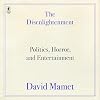
The Disenlightenment by David Mamet is by far the strangest book I have read in a decade or more. It is puzzling to me how a wordsmith and expert dramatist like Mamet can put together a screed of nearly 50 chapters that amount to absolutely nothing. Worse, it is a Trojan Horse to get across his personal fealty to - Donald Trump. Yes, Donald Trump.
The thing about Mamet is his understanding of communication. He makes his character rich and deep, but they all have the critical talent of moving show more the story along as economically and powerfully as possible. For The Disenlightenment to meander, switch gears and constantly circle back to Donald Trump is a shock readers will likely find offputting. And as there is no story here, no real point to absorb, it is all in the cause of nothing. What difference does it make in June 2025 what David Mamet believes of politics? He doesn’t say.
It begins very badly, with Mamet discussing dramatization, and suddenly switching to this: “Since Obama the deep state of the American Left has been the enemy of Constitutional democracy,” which elicits a “Huh?” from the reader. But Mamet is not just throwing off a reference. The paragraph becomes: “…their unwarranted prosecutions tormenting President Trump, could only be understood as tactics in an ongoing coup. The Left’s strategic objective was the destruction of representative government, and all its contributory tactics made sense.” But leave us not mince words. Mamet just comes straight out and says “Trump is a hero, and his heirs will, God willing, increase the longevity of the American Experiment.”
This is a structure repeated dozens of times throughout the book. What begins as a look at film, TV, theater, writing, directing, studios – suddenly switches to withering accusations and lies about Democrats and the mythical Left, and endless pity and praise for Donald Trump, Our Savior.
So, in a chapter called Gandhi and Me, the first paragraph is about Mohandas Gandhi, and the rest is about – Donald Trump. Another one, titled Woody Allen and the IDF, has nothing whatever to do with the Israeli Defense Forces, but everything to do with – you guessed it – Donald Trump.
In a chapter on The Kennedys, whose huge families were their calling card, Mamet says “The modern left works, consciously or not, to destroy the family as the basic unit of loyalty and replace it with allegiance to the state, which can only mean those proclaiming themselves the champions of the state (political chieftains), the states’ incarnation (dictators), or their like in the states’ demise (effectively warlords).” This constant breaking away from his own narrative ruins every single chapter in the book.
He praises the Mafia for its focus on making money as the measure of its success, and then asks “What is the business of government?” Government, of course, is not a business, by definition, so the question is moot, dead on arrival.
Thirty-nine pages in, Mamet decides to let the reader in on the secret: “This book is an attempt to identify a seemingly unconnected set of symptoms as a single disease.” And by page 50 he’s going after specific sectors of society: “The superrich, academia, Islamists, Marxists, communists, and the media have colluded to suppress the true and suggest the false.” The true being Trump and the false being The Left. And it gets worse as it goes; Mamet never needs to come up for air.
If you didn’t get his reference to what the book was about, by page 64 he “clarifies” it somewhat: “Government can be compared to Hollywood, and both to myth, which is perhaps the subject of this book.” Well, if he doesn’t know, whom should the reader ask?
But soon, we’re down another rabbit hole: “That you or I could not, perhaps, imagine the operation or makeup of a return to constitutional American democracy is understandable. That Trump and his supporters did is an instance of extraordinary intellectual courage.” This is the Trump who on a Sunday morning news show just one month before publication of this book was asked “But don’t you need to uphold the constitution?” And Trump answered: “I don’t know.” I don’t know?! (4 May 2025)
But it gets even worse. Mamet starts spouting truisms he makes up, and tries to make points with them. He says “It is impossible to cheat a peasant, and a lead pipe a cinch to take someone who believes in his superior intellect.” Peasants, of course, are cheated all day long every day. And we have only to look at self-important billionaires to know the second part of Mamet’s statement is just as wrong. They’re too busy cheating the peasants.
Mamet also has it in for the trans community, bringing it up in different chapters: “If someone told you twenty years ago that people are regularly born into the wrong sex and must alter themselves surgically, you would think them deranged. What has changed?” What has changed is useful knowledge. Trans is not a fad. Trans people have always been with us because sex is a spectrum, not a rigid border. There are an estimated 80 million non cisgendered people in the world, and denying their existence is totally beneath David Mamet – or at least it should be. Instead, Mamet uses them as a cudgel, claiming their role is to destroy the nuclear family: “To assert that they are not interrelated is a sign not of social disintegration, but of the mass preference for social disintegration.” This is a kind of diverting tactic used by college professors on unsuspecting freshmen, throwing them off the track: it is not fact, it is a preference. Mamet does this a few times in his arguments in the book. It doesn’t so much change minds as make people wonder why bother responding at all.
And of course, he attacks the Biden Administration with all the lies Trump regularly uses on it, from the “government-mandated removal of the southern border” to “A Jew who votes for Democrats is a damned fool.” Or how about: “Biden was simply a figurehead hack. Trump was an entrepreneur from Queens, and the media furor a Manichean myth of good versus world destruction.” With Trump as the Good and Biden as the Destruction. “It was absurd to believe 51 percent of the country would agree in bulk to the various enormities of: inflation, crime, abolishment of police, abandonment of Afghanistan and Israel, DEI, sexual indoctrination of children, censorship; and the candidacy first of an obviously senile crook; and, after him, an incoherent nullity.” In case this why you bought the book.
In general, “The Left is a regression to infancy” is an easy way to avoid defending his position while he equates “common sense” with “conservatism”.
But even Democrats will reap the rewards of our savior Trump: “They will also benefit—each of them—from the decrease in crime and inflation, a happy stock market, …”
Then, just for fun, there are cheap shots for all tastes: “Quakers were laissez-faire fools.” “Books today are being censored and banned by protocommunist forces.” And the “woke” are “maniacs who were then applauded by cowards.” Such a pleasant read.
Basically, the book is a sickening jumble of personal prejudices, political, social, and sexual. It is written so clumsily, readers could easily delete one sentence from every paragraph and it would make no difference to the flow, to the buildup (of which there is none) or the conclusion, which is stated at the beginning: Trump is our savior. A total disaster of a book, and so ironic for a wordsmith normally so precise and skilled in making an argument or a story work for him to resolve a problem.
David Wineberg show less
The thing about Mamet is his understanding of communication. He makes his character rich and deep, but they all have the critical talent of moving show more the story along as economically and powerfully as possible. For The Disenlightenment to meander, switch gears and constantly circle back to Donald Trump is a shock readers will likely find offputting. And as there is no story here, no real point to absorb, it is all in the cause of nothing. What difference does it make in June 2025 what David Mamet believes of politics? He doesn’t say.
It begins very badly, with Mamet discussing dramatization, and suddenly switching to this: “Since Obama the deep state of the American Left has been the enemy of Constitutional democracy,” which elicits a “Huh?” from the reader. But Mamet is not just throwing off a reference. The paragraph becomes: “…their unwarranted prosecutions tormenting President Trump, could only be understood as tactics in an ongoing coup. The Left’s strategic objective was the destruction of representative government, and all its contributory tactics made sense.” But leave us not mince words. Mamet just comes straight out and says “Trump is a hero, and his heirs will, God willing, increase the longevity of the American Experiment.”
This is a structure repeated dozens of times throughout the book. What begins as a look at film, TV, theater, writing, directing, studios – suddenly switches to withering accusations and lies about Democrats and the mythical Left, and endless pity and praise for Donald Trump, Our Savior.
So, in a chapter called Gandhi and Me, the first paragraph is about Mohandas Gandhi, and the rest is about – Donald Trump. Another one, titled Woody Allen and the IDF, has nothing whatever to do with the Israeli Defense Forces, but everything to do with – you guessed it – Donald Trump.
In a chapter on The Kennedys, whose huge families were their calling card, Mamet says “The modern left works, consciously or not, to destroy the family as the basic unit of loyalty and replace it with allegiance to the state, which can only mean those proclaiming themselves the champions of the state (political chieftains), the states’ incarnation (dictators), or their like in the states’ demise (effectively warlords).” This constant breaking away from his own narrative ruins every single chapter in the book.
He praises the Mafia for its focus on making money as the measure of its success, and then asks “What is the business of government?” Government, of course, is not a business, by definition, so the question is moot, dead on arrival.
Thirty-nine pages in, Mamet decides to let the reader in on the secret: “This book is an attempt to identify a seemingly unconnected set of symptoms as a single disease.” And by page 50 he’s going after specific sectors of society: “The superrich, academia, Islamists, Marxists, communists, and the media have colluded to suppress the true and suggest the false.” The true being Trump and the false being The Left. And it gets worse as it goes; Mamet never needs to come up for air.
If you didn’t get his reference to what the book was about, by page 64 he “clarifies” it somewhat: “Government can be compared to Hollywood, and both to myth, which is perhaps the subject of this book.” Well, if he doesn’t know, whom should the reader ask?
But soon, we’re down another rabbit hole: “That you or I could not, perhaps, imagine the operation or makeup of a return to constitutional American democracy is understandable. That Trump and his supporters did is an instance of extraordinary intellectual courage.” This is the Trump who on a Sunday morning news show just one month before publication of this book was asked “But don’t you need to uphold the constitution?” And Trump answered: “I don’t know.” I don’t know?! (4 May 2025)
But it gets even worse. Mamet starts spouting truisms he makes up, and tries to make points with them. He says “It is impossible to cheat a peasant, and a lead pipe a cinch to take someone who believes in his superior intellect.” Peasants, of course, are cheated all day long every day. And we have only to look at self-important billionaires to know the second part of Mamet’s statement is just as wrong. They’re too busy cheating the peasants.
Mamet also has it in for the trans community, bringing it up in different chapters: “If someone told you twenty years ago that people are regularly born into the wrong sex and must alter themselves surgically, you would think them deranged. What has changed?” What has changed is useful knowledge. Trans is not a fad. Trans people have always been with us because sex is a spectrum, not a rigid border. There are an estimated 80 million non cisgendered people in the world, and denying their existence is totally beneath David Mamet – or at least it should be. Instead, Mamet uses them as a cudgel, claiming their role is to destroy the nuclear family: “To assert that they are not interrelated is a sign not of social disintegration, but of the mass preference for social disintegration.” This is a kind of diverting tactic used by college professors on unsuspecting freshmen, throwing them off the track: it is not fact, it is a preference. Mamet does this a few times in his arguments in the book. It doesn’t so much change minds as make people wonder why bother responding at all.
And of course, he attacks the Biden Administration with all the lies Trump regularly uses on it, from the “government-mandated removal of the southern border” to “A Jew who votes for Democrats is a damned fool.” Or how about: “Biden was simply a figurehead hack. Trump was an entrepreneur from Queens, and the media furor a Manichean myth of good versus world destruction.” With Trump as the Good and Biden as the Destruction. “It was absurd to believe 51 percent of the country would agree in bulk to the various enormities of: inflation, crime, abolishment of police, abandonment of Afghanistan and Israel, DEI, sexual indoctrination of children, censorship; and the candidacy first of an obviously senile crook; and, after him, an incoherent nullity.” In case this why you bought the book.
In general, “The Left is a regression to infancy” is an easy way to avoid defending his position while he equates “common sense” with “conservatism”.
But even Democrats will reap the rewards of our savior Trump: “They will also benefit—each of them—from the decrease in crime and inflation, a happy stock market, …”
Then, just for fun, there are cheap shots for all tastes: “Quakers were laissez-faire fools.” “Books today are being censored and banned by protocommunist forces.” And the “woke” are “maniacs who were then applauded by cowards.” Such a pleasant read.
Basically, the book is a sickening jumble of personal prejudices, political, social, and sexual. It is written so clumsily, readers could easily delete one sentence from every paragraph and it would make no difference to the flow, to the buildup (of which there is none) or the conclusion, which is stated at the beginning: Trump is our savior. A total disaster of a book, and so ironic for a wordsmith normally so precise and skilled in making an argument or a story work for him to resolve a problem.
David Wineberg show less
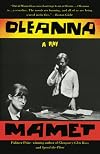
Reading this shortly after having read Speed-the-Plow was like finding some soup in the fridge that you remember was tasty, heating it up, and realizing too late that it's been in there way too long. Like that play just four years earlier, this pits a grandiose abrasive middle-aged man against a younger woman whose goals aren't immediately clear, with the power dynamic between them changing several times; also in both plays, the characters talk about a book containing rants about modern show more society that Mamet probably intends to be over the top. But virtually none of the things he did so effectively earlier work this time, and it's just a moldy, poisonous glop; where I envied actors who got to do some of his scenes in 1988, I feel sorry for anyone who had to try to give life to the stilted screeds in this.
There was a lot of talk in 1992, and again when he did the movie, about how Oleanna was supposedly a brilliantly ambiguous thing where either character might be in the wrong, that men would definitely see it one way and women the other way, and that it would start fights in the audience (which was supposedly cool). I'm glad those critics got something out of it, I guess, but I feel like a much more accurate description would be this: Mamet wrote two acts of a play where the man is a fairly realistic arrogant asshole who does some asshole things that he's fairly realistically oblivious of, and then some more extreme things that are also plausible but that he has no possible excuse for being oblivious of—and in this play, the woman is a fairly realistic confused college student who may not be a great student, but definitely doesn't need to hear about this guy's mid-life crisis or his philosophical pretensions and is perceptive enough to be creeped out by his increasing lack of boundaries. Then, Mamet wrote a third act of a different play where the man is an even worse asshole but he's totally justified because the woman is a PC totalitarian schemer straight out of a Rush Limbaugh fever dream, taking direction from a shadowy "Group" of similar creatures, and she's out to destroy him. Then he pasted them together.
Now, it's true that different viewers or readers could take this in different ways. Like, if you're a middle-aged dude who's paranoid about feminists and students and has heard horror stories about how bad they are and so you're predisposed to think the third act is realistic, then obviously the student is a horrible villain and the first two acts don't really matter even if the professor is kind of a dick—surely no one deserves to be destroyed like that even if they innocently got a bit upset (his wife's fault really, look how she stressed him out on the phone) and ended up physically restraining someone who was screaming "LET ME GO", I mean, that'd just be a slippery slope leading to innocent dudes being thrown in jail just for giving someone a nice compliment... etc. Whereas if you're a woman or pretty much anyone else with some experience of life and no massive axes to grind, you can see that the third act is just that first dude's paranoia in script form, and that the female character in that part is neither right nor wrong because she's not a person, she's a cartoon monster who has almost nothing in common with the character of the same name in the first part (or with anyone else in particular for that matter, since she changes from a meek nervous wreck with a basic vocabulary to some kind of Red Guard cadre who happens to rant in exactly the same elaborate style as the professor, and back again, depending on which key Mamet feels like pressing on his two-note piano)—and so you just ignore that part and judge the characters by the first part, in which the guy wasn't a cartoon monster but was still quite an asshole, of a type you've probably met in the actual world, who did exactly what she says he did. So this is only a clever test of the audience's unconscious bias in the same way that surprising someone with first a stuffed skunk, and then a Freddy Krueger mask, and seeing which one scares them more, would be a clever test of whether someone believes in Freddy Krueger as an imminent threat and has never seen a skunk in his life. There might be an unfortunate number of such people, but if the lesson you take from that is not "WTF, they are confused" but rather "I guess no one's entirely right or wrong", either you have failed or the teacher has.
(Speaking of teachers, the older character in this play supposedly is one. I defy you to figure out 1. what subject he could possibly be teaching, as an associate professor, to students who are in their junior year, where the required reading is his own book about why higher education is all bullshit and why they probably shouldn't even be here, 2. how he's managed to get by with no complaints till now, and 3. how he's about to get tenure even though he likes telling random people that the tenure committee are all fools.)
Whether Mamet is really on the professor's side, and thinks Act III Carol represents a real danger to civilization, is almost beside the point; even if he'd written this as a parody of what a self-pitying right-wing sexist might believe, that wouldn't make it work as a play. As I read it and started to get a bad feeling about where it might be going, I tried to just enjoy the use of language, and realized with dismay that I didn't; even early on when the characters are more recognizable, the dialogue is neither natural nor stylized in a way that indicates a good ear, it's just randomly emitted out of them as if the playwright is poking them in the back with a sharp stick. When they start three different sentences and can't finish, it doesn't seem to be because they're trying to tell the other person anything in particular, it just means the playwright needs them to sound inarticulate. When they start babbling and saying inappropriate things, it means the playwright needs to give the other person an excuse to be offended. The dialogue in Speed-the-Plow, even at its most exaggerated, had clear emotional through-lines and a sense of why things were moving from one state to another; here, despite a few good turns of phrase, it's more like Mamet had a note card saying "He has to get more upset by this point" or "She tries her same thing again." That kind of writing always makes me suspect the author is driven less by an interest in human behavior, and more by having a specific ending they're determined to get to, and/or a massive ax to grind. The one thing I'm pretty sure of is that Mamet did not set out to write an illustration of how men and women see things differently and no one's entirely right or wrong, that that was a rationalization after the fact by nervous producers or critics, because he is smart enough to have made it genuinely ambiguous if that's what he wanted rather than stacking the deck this way. show less
There was a lot of talk in 1992, and again when he did the movie, about how Oleanna was supposedly a brilliantly ambiguous thing where either character might be in the wrong, that men would definitely see it one way and women the other way, and that it would start fights in the audience (which was supposedly cool). I'm glad those critics got something out of it, I guess, but I feel like a much more accurate description would be this: Mamet wrote two acts of a play where the man is a fairly realistic arrogant asshole who does some asshole things that he's fairly realistically oblivious of, and then some more extreme things that are also plausible but that he has no possible excuse for being oblivious of—and in this play, the woman is a fairly realistic confused college student who may not be a great student, but definitely doesn't need to hear about this guy's mid-life crisis or his philosophical pretensions and is perceptive enough to be creeped out by his increasing lack of boundaries. Then, Mamet wrote a third act of a different play where the man is an even worse asshole but he's totally justified because the woman is a PC totalitarian schemer straight out of a Rush Limbaugh fever dream, taking direction from a shadowy "Group" of similar creatures, and she's out to destroy him. Then he pasted them together.
Now, it's true that different viewers or readers could take this in different ways. Like, if you're a middle-aged dude who's paranoid about feminists and students and has heard horror stories about how bad they are and so you're predisposed to think the third act is realistic, then obviously the student is a horrible villain and the first two acts don't really matter even if the professor is kind of a dick—surely no one deserves to be destroyed like that even if they innocently got a bit upset (his wife's fault really, look how she stressed him out on the phone) and ended up physically restraining someone who was screaming "LET ME GO", I mean, that'd just be a slippery slope leading to innocent dudes being thrown in jail just for giving someone a nice compliment... etc. Whereas if you're a woman or pretty much anyone else with some experience of life and no massive axes to grind, you can see that the third act is just that first dude's paranoia in script form, and that the female character in that part is neither right nor wrong because she's not a person, she's a cartoon monster who has almost nothing in common with the character of the same name in the first part (or with anyone else in particular for that matter, since she changes from a meek nervous wreck with a basic vocabulary to some kind of Red Guard cadre who happens to rant in exactly the same elaborate style as the professor, and back again, depending on which key Mamet feels like pressing on his two-note piano)—and so you just ignore that part and judge the characters by the first part, in which the guy wasn't a cartoon monster but was still quite an asshole, of a type you've probably met in the actual world, who did exactly what she says he did. So this is only a clever test of the audience's unconscious bias in the same way that surprising someone with first a stuffed skunk, and then a Freddy Krueger mask, and seeing which one scares them more, would be a clever test of whether someone believes in Freddy Krueger as an imminent threat and has never seen a skunk in his life. There might be an unfortunate number of such people, but if the lesson you take from that is not "WTF, they are confused" but rather "I guess no one's entirely right or wrong", either you have failed or the teacher has.
(Speaking of teachers, the older character in this play supposedly is one. I defy you to figure out 1. what subject he could possibly be teaching, as an associate professor, to students who are in their junior year, where the required reading is his own book about why higher education is all bullshit and why they probably shouldn't even be here, 2. how he's managed to get by with no complaints till now, and 3. how he's about to get tenure even though he likes telling random people that the tenure committee are all fools.)
Whether Mamet is really on the professor's side, and thinks Act III Carol represents a real danger to civilization, is almost beside the point; even if he'd written this as a parody of what a self-pitying right-wing sexist might believe, that wouldn't make it work as a play. As I read it and started to get a bad feeling about where it might be going, I tried to just enjoy the use of language, and realized with dismay that I didn't; even early on when the characters are more recognizable, the dialogue is neither natural nor stylized in a way that indicates a good ear, it's just randomly emitted out of them as if the playwright is poking them in the back with a sharp stick. When they start three different sentences and can't finish, it doesn't seem to be because they're trying to tell the other person anything in particular, it just means the playwright needs them to sound inarticulate. When they start babbling and saying inappropriate things, it means the playwright needs to give the other person an excuse to be offended. The dialogue in Speed-the-Plow, even at its most exaggerated, had clear emotional through-lines and a sense of why things were moving from one state to another; here, despite a few good turns of phrase, it's more like Mamet had a note card saying "He has to get more upset by this point" or "She tries her same thing again." That kind of writing always makes me suspect the author is driven less by an interest in human behavior, and more by having a specific ending they're determined to get to, and/or a massive ax to grind. The one thing I'm pretty sure of is that Mamet did not set out to write an illustration of how men and women see things differently and no one's entirely right or wrong, that that was a rationalization after the fact by nervous producers or critics, because he is smart enough to have made it genuinely ambiguous if that's what he wanted rather than stacking the deck this way. show less
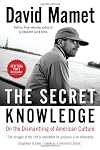
First off, reading this book is like reading someone's private journal; the thoughts are broken up, there are incongruous jumps between what are laid out as sections of the same chapter; ideas are just thrown out with minimal or no argument or development. Not what one is looking for in an argumentative or persuasive book. On the other hand, if you want to get a peek inside Mamet's head, this is for you.
Okay, now on to the review of the content.
He comes right out and identifies himself in show more the first three pages: a Liberal who, in late mid-life, discovered that life is made of trade-offs and therefore became a conservative. Immediately, for me, the alarms are going off: here is a guy who claims that only in his 50's or 60's did it occurred to him that, “surprise!” life is made of trade-offs and we can't have everything; by extension, we're left to believe that as a “Liberal” he must have believed was that there were no trade-offs and we could indeed have everything.
Next follow a slew of “musings with titles” that we are to take, apparently, as chapters or essays. He fills this with many curious assertions that will sound familiar if you've listened to Fox or Limbaugh.
1. “Liberals hate capitalism.” Full stop.
2. A running screed, spread across a few of his titled musings, that can be summed up as, “Young Liberals suck. Liberal Arts degrees suck. FILM SCHOOLS SUCK.” (He really, really, really does not like film schools.)
3. In particular, “Young Liberals” (he capitalizes that repeatedly) have been, and are now, ruining our country because they hate (economic) freedom, America (-ness..?), and Israel. He softens this here and there by downgrading, “hate freedom,” to something along the lines of, “liberals want the same things conservatives want, but are just hopelessly confused about how to get them.”
Who precisely are these people he hates/pities/dismisses? Apparently they are uneducated and lazy, naïve and clueless, busy doing their yoga, getting their houses feng shui'd, and standing around watching their immigrant gardeners sweat under the Sun while moaning about how it is so unfair they don't get paid more, while faithfully recycling their cans and bottles in a desperate attempt to fill the void left by their rejection of responsibility/authority/God. This is not hyperbole (on my part). Mamet actually writes this.
Do these people even exist? What “Young” person owns a house, complete with gardeners and interior decorators, while going to school and being unemployed and, presumable, otherwise living a life of dissipation? Perhaps in David Mamet's world, this is a reality; but in that case he is not impugning liberalism or Liberalism, but some Mamet construction that simply shares the name Liberalism. Perhaps in the circles he runs in, this is happening (*cough* *cough* looking at the Mamet kids and their friends.) But not anywhere I've been.
In any case, these 20 and 30-somethings have been exerting their terrible power by... actually, that is also not clear. They way he describes them they would seem to unable to even feed themselves. But, as it would seem he has particularly singled out people that have become adults only in the last decade or, at the most two decades, one must assume they not only overcame their obvious disabilities, but also have access to a time machine... or that these people formed a cabal while still in diapers... or something. It's almost like Mamet is blaming today's “Young Liberals” as a way of not blaming... I dunno, just to make up some random numbers, people who at this point, roughly 50, 60, 70?
Moving on a bit, we also find out that liberals are all God hating, but Nature loving because Nature is the new God; as is, confusingly, Government, Equality, and -yet more confusingly- Liberalism itself. Unless Liberalism is just a new religion. I forget. At times his paragraphs are koan-like... or simply nonsense.
Next, we move on to finding out that Mamet hates bureaucracies. A lot. (When Mamet doesn't like something, he really goes all in.) Government, management, labor (presumably organized labor?), safety inspectors, and I'm sure more that I am forgetting; in any case, all of them are leeches, all only existing to perpetuate their own existence. I'm not sure who, in broad strokes, this leaves, but apparently engineers (but only good ones), writers (of course) and set designers are okay. Again, I'm not making this up, that's his list. Also, students who are NOT LIBERAL ARTS MAJORS maybe get a pass.
I suspect he really means to give a pass to some “Rand-ian” class of creators. And he really does seem to mean this in a Randian way; the innovator, the creator, the unfettered striver is the pinnacle of human development, etc.. Of course, he several times tells us that, yes, we need government for roads, police, military, and a handful of other activities; presumably these people would not belong to any bureaucracy, and the above mentioned strivers would not either.
In other words, we will all exist as small, autonomous teams and individuals. Roads, military, police and a few other functions are still to be provided by the (nonexistent) (non-bureaucratic) government (run on, as we later find out many pages later, a 0% tax rate: since lower taxes raise earnings, and higher earnings raise tax revenues, having no taxes at all will generate the most tax rev... wait... hrmm. Oh, wait, nevermind. My 3rd grade arithmetic was bothering me, but I'm all better now.) Unfettered growth and prosperity will be provided by entrepreneurs; in teams of 4 or less, of course, since management and labor are THE HATED BUREAUCRACY.
And of course, it goes without saying, no one will have heard of David Mamet because *?*$ {@&*! LIBERAL ART MAJORS.
Sigh. I wish I was making this up (well, the last bit I did.)
To recapitulate, since I'm letting loose with a bit of stream-of-consciousness myself:
1. Mamet only just now discovered that life is trade-offs and this SHOCK! has shown him the error of his “liberal” ways.
2. Needless to say, having defined Liberalism to be the kind of doe-eyed naivete that would embarrass a Care Bear, Mamet finds tearing it apart is fairly easy.
3. Then, foisting this belief onto others, Mamet invents from whole cloth an entire generation whiling away their time in film school making art pornos, with barely enough time left to split between complaining to their interior decorators, eating ice-cream, and spitting on the grave of Jefferson while writing checks to Hezbollah (presumably from their trust funds.)
4. One wonders, given this, why anyone under the age of 45 is complaining at all, what with the feng shui and peeled grapes and all: David Mamet doesn't deign to address this.
5. Clearly, David Mamet needs to get out more.
Mamet is really angry at the 1960's and 70's, the excesses and absurdities of some strains of Liberalism of these decades. Mamet is angry at the Roosevelts and Taft (and maybe Freud.) And he is angry at film school, and, at this point is so angry he is making the Hulk jealous. David Mamet wants the kids to get off the goddamned lawn.
That said, I am a bit sad: he does broach, in moments of clarity, some issues that deserve to be discussed. Some larger issues like, “What exactly is meant by Equality? How much is enough? How do we know when we've gotten there, and what do we measure in order to know that we've gotten there?” These, and questions like these, are real, difficult, and worthy of serious consideration; and I don't think they are often approached by people of a more leftist leaning; there is a presumption that “equality” is worth whatever it takes, whatever that might mean, and whatever exactly equality means. I think that is a fair point.
But those questions are all buried in a angry prose of a guy who -again- only just now figured out that life is made of trade-offs. This is from a guy who lauds plumbers and farmers, but who apparently doesn't get out enough to realize that there might be more to Liberals than his daughter's “heiress” classmates and his friends' “doyen” dinner circles, and that there might be more to the “Liberal Young” than evidenced by the 40 or going-on-50 year old snapshot he has in his head.
This from guy who hates social studies because it is indoctrination, which the schools should not be doing, because culture can only be learned in the family, because only in the family can we learn morals, moral reasoning, and the application of justice... which you have no right to apply in law because games would suck without rules, which is why if you cheat in business maybe you can get a pass, but you should be ostracize anyone who would cheat in a game of poker. Oh, and despite all those platitudes, families are really truly valuable because of their economic impact. Which is why you can't have gay marriage. (Is your head spinning yet?)
The amount of illogic deployed in this book is, literally, dizzying.
Ignoring all that, the book, for me can be paraphrased, emotionally at least, in one passage: Mamet is enjoying a visit to an art gallery and is Disgusted! Angered! Revolted! to see a lady not throw out her paper plate, but instead fold it up and put it in her purse, presumably to reuse. Obviously, he concludes, she is a Liberal desperately placating her untenable nihilism. (Again, that is not sarcasm on my part; this is paraphrasing what Mamet writes.)
Think about this. Run through this yourself. Really ponder what kind of person (a) even notices someone else doing something like this, (b) has any kind of emotional reaction whatsoever to it, much less a reaction of being disgusted and angered, (c) concludes that this is yet more proof of the vast conspiracy against righteousness, and (d) writes about it in a book and publishes it.
That's who wrote this book, and that's what, God help me, I just spent a part of my life reading. show less
Okay, now on to the review of the content.
He comes right out and identifies himself in show more the first three pages: a Liberal who, in late mid-life, discovered that life is made of trade-offs and therefore became a conservative. Immediately, for me, the alarms are going off: here is a guy who claims that only in his 50's or 60's did it occurred to him that, “surprise!” life is made of trade-offs and we can't have everything; by extension, we're left to believe that as a “Liberal” he must have believed was that there were no trade-offs and we could indeed have everything.
Next follow a slew of “musings with titles” that we are to take, apparently, as chapters or essays. He fills this with many curious assertions that will sound familiar if you've listened to Fox or Limbaugh.
1. “Liberals hate capitalism.” Full stop.
2. A running screed, spread across a few of his titled musings, that can be summed up as, “Young Liberals suck. Liberal Arts degrees suck. FILM SCHOOLS SUCK.” (He really, really, really does not like film schools.)
3. In particular, “Young Liberals” (he capitalizes that repeatedly) have been, and are now, ruining our country because they hate (economic) freedom, America (-ness..?), and Israel. He softens this here and there by downgrading, “hate freedom,” to something along the lines of, “liberals want the same things conservatives want, but are just hopelessly confused about how to get them.”
Who precisely are these people he hates/pities/dismisses? Apparently they are uneducated and lazy, naïve and clueless, busy doing their yoga, getting their houses feng shui'd, and standing around watching their immigrant gardeners sweat under the Sun while moaning about how it is so unfair they don't get paid more, while faithfully recycling their cans and bottles in a desperate attempt to fill the void left by their rejection of responsibility/authority/God. This is not hyperbole (on my part). Mamet actually writes this.
Do these people even exist? What “Young” person owns a house, complete with gardeners and interior decorators, while going to school and being unemployed and, presumable, otherwise living a life of dissipation? Perhaps in David Mamet's world, this is a reality; but in that case he is not impugning liberalism or Liberalism, but some Mamet construction that simply shares the name Liberalism. Perhaps in the circles he runs in, this is happening (*cough* *cough* looking at the Mamet kids and their friends.) But not anywhere I've been.
In any case, these 20 and 30-somethings have been exerting their terrible power by... actually, that is also not clear. They way he describes them they would seem to unable to even feed themselves. But, as it would seem he has particularly singled out people that have become adults only in the last decade or, at the most two decades, one must assume they not only overcame their obvious disabilities, but also have access to a time machine... or that these people formed a cabal while still in diapers... or something. It's almost like Mamet is blaming today's “Young Liberals” as a way of not blaming... I dunno, just to make up some random numbers, people who at this point, roughly 50, 60, 70?
Moving on a bit, we also find out that liberals are all God hating, but Nature loving because Nature is the new God; as is, confusingly, Government, Equality, and -yet more confusingly- Liberalism itself. Unless Liberalism is just a new religion. I forget. At times his paragraphs are koan-like... or simply nonsense.
Next, we move on to finding out that Mamet hates bureaucracies. A lot. (When Mamet doesn't like something, he really goes all in.) Government, management, labor (presumably organized labor?), safety inspectors, and I'm sure more that I am forgetting; in any case, all of them are leeches, all only existing to perpetuate their own existence. I'm not sure who, in broad strokes, this leaves, but apparently engineers (but only good ones), writers (of course) and set designers are okay. Again, I'm not making this up, that's his list. Also, students who are NOT LIBERAL ARTS MAJORS maybe get a pass.
I suspect he really means to give a pass to some “Rand-ian” class of creators. And he really does seem to mean this in a Randian way; the innovator, the creator, the unfettered striver is the pinnacle of human development, etc.. Of course, he several times tells us that, yes, we need government for roads, police, military, and a handful of other activities; presumably these people would not belong to any bureaucracy, and the above mentioned strivers would not either.
In other words, we will all exist as small, autonomous teams and individuals. Roads, military, police and a few other functions are still to be provided by the (nonexistent) (non-bureaucratic) government (run on, as we later find out many pages later, a 0% tax rate: since lower taxes raise earnings, and higher earnings raise tax revenues, having no taxes at all will generate the most tax rev... wait... hrmm. Oh, wait, nevermind. My 3rd grade arithmetic was bothering me, but I'm all better now.) Unfettered growth and prosperity will be provided by entrepreneurs; in teams of 4 or less, of course, since management and labor are THE HATED BUREAUCRACY.
And of course, it goes without saying, no one will have heard of David Mamet because *?*$ {@&*! LIBERAL ART MAJORS.
Sigh. I wish I was making this up (well, the last bit I did.)
To recapitulate, since I'm letting loose with a bit of stream-of-consciousness myself:
1. Mamet only just now discovered that life is trade-offs and this SHOCK! has shown him the error of his “liberal” ways.
2. Needless to say, having defined Liberalism to be the kind of doe-eyed naivete that would embarrass a Care Bear, Mamet finds tearing it apart is fairly easy.
3. Then, foisting this belief onto others, Mamet invents from whole cloth an entire generation whiling away their time in film school making art pornos, with barely enough time left to split between complaining to their interior decorators, eating ice-cream, and spitting on the grave of Jefferson while writing checks to Hezbollah (presumably from their trust funds.)
4. One wonders, given this, why anyone under the age of 45 is complaining at all, what with the feng shui and peeled grapes and all: David Mamet doesn't deign to address this.
5. Clearly, David Mamet needs to get out more.
Mamet is really angry at the 1960's and 70's, the excesses and absurdities of some strains of Liberalism of these decades. Mamet is angry at the Roosevelts and Taft (and maybe Freud.) And he is angry at film school, and, at this point is so angry he is making the Hulk jealous. David Mamet wants the kids to get off the goddamned lawn.
That said, I am a bit sad: he does broach, in moments of clarity, some issues that deserve to be discussed. Some larger issues like, “What exactly is meant by Equality? How much is enough? How do we know when we've gotten there, and what do we measure in order to know that we've gotten there?” These, and questions like these, are real, difficult, and worthy of serious consideration; and I don't think they are often approached by people of a more leftist leaning; there is a presumption that “equality” is worth whatever it takes, whatever that might mean, and whatever exactly equality means. I think that is a fair point.
But those questions are all buried in a angry prose of a guy who -again- only just now figured out that life is made of trade-offs. This is from a guy who lauds plumbers and farmers, but who apparently doesn't get out enough to realize that there might be more to Liberals than his daughter's “heiress” classmates and his friends' “doyen” dinner circles, and that there might be more to the “Liberal Young” than evidenced by the 40 or going-on-50 year old snapshot he has in his head.
This from guy who hates social studies because it is indoctrination, which the schools should not be doing, because culture can only be learned in the family, because only in the family can we learn morals, moral reasoning, and the application of justice... which you have no right to apply in law because games would suck without rules, which is why if you cheat in business maybe you can get a pass, but you should be ostracize anyone who would cheat in a game of poker. Oh, and despite all those platitudes, families are really truly valuable because of their economic impact. Which is why you can't have gay marriage. (Is your head spinning yet?)
The amount of illogic deployed in this book is, literally, dizzying.
Ignoring all that, the book, for me can be paraphrased, emotionally at least, in one passage: Mamet is enjoying a visit to an art gallery and is Disgusted! Angered! Revolted! to see a lady not throw out her paper plate, but instead fold it up and put it in her purse, presumably to reuse. Obviously, he concludes, she is a Liberal desperately placating her untenable nihilism. (Again, that is not sarcasm on my part; this is paraphrasing what Mamet writes.)
Think about this. Run through this yourself. Really ponder what kind of person (a) even notices someone else doing something like this, (b) has any kind of emotional reaction whatsoever to it, much less a reaction of being disgusted and angered, (c) concludes that this is yet more proof of the vast conspiracy against righteousness, and (d) writes about it in a book and publishes it.
That's who wrote this book, and that's what, God help me, I just spent a part of my life reading. show less
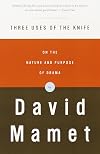
The purpose of theater, like magic, like religion . . . is to inspire cleansing awe. What makes good drama? And why does drama matter in an age that is awash in information and entertainment? David Mamet, one of our greatest living playwrights, tackles these questions with bracing directness and aphoristic authority. He believes that the tendency to dramatize is essential to human nature, that we create drama out of everything from today’s weather to next year’s elections. But the show more highest expression of this drive remains the theater.
With a cultural range that encompasses Shakespeare, Bretcht, and Ibsen, Death of a Salesman and Bad Day at Black Rock, Mamet shows us how to distinguish true drama from its false variants. He considers the impossibly difficult progression between one act and the next and the mysterious function of the soliloquy. The result, in Three Uses of the Knife, is an electrifying treatise on the playwright’s art that is also a strikingly original work of moral and aesthetic philosophy. show less
With a cultural range that encompasses Shakespeare, Bretcht, and Ibsen, Death of a Salesman and Bad Day at Black Rock, Mamet shows us how to distinguish true drama from its false variants. He considers the impossibly difficult progression between one act and the next and the mysterious function of the soliloquy. The result, in Three Uses of the Knife, is an electrifying treatise on the playwright’s art that is also a strikingly original work of moral and aesthetic philosophy. show less
Lists
Awards


You May Also Like


Associated Authors
Statistics
- Works
- 209
- Also by
- 35
- Members
- 11,666
- Popularity
- #2,019
- Rating
- 3.7
- Reviews
- 187
- ISBNs
- 450
- Languages
- 18
- Favorited
- 21