
John Guare
Author of Six Degrees of Separation
About the Author
Born of Irish Catholic parents in New York City, Guare was an only child. His parents led intense but somewhat separate lives and young Guare found himself increasingly alone as he grew up. He spent his childhood reading, listening to albums of Broadway musicals, and writing plays. His first play show more was presented in a neighbor's garage when he was eleven. Guare first came to public attention with his one-act play Muzeeka (1968), a biting social satire about an ambitious man who works for a canned-music company that inflicts its banal arrangements on the entire country. The hero, Jack Argue, is a modern guilt-ridden "Everyman" who has sold himself out to the system. The play was first performed at Connecticut's Eugene O'Neill Memorial Theatre, then at the Mark Taper Forum in Los Angeles. On April 28, 1968, it opened off-Broadway at the Provincetown Playhouse on a double bill with Sam Shepard's Red Cross. Muzeeka ran for 65 performances and earned its author an Obie Award that year. The House of Blue Leaves (1971), Guare's first full-length play, is set in a Queens apartment on the day the Pope is making his first visit to New York City. A savage farce, The House of Blue Leaves presents an unrelenting attack on lower middle-class values. It shows the emptiness of the characters' inner lives and the horror of their senseless acts of violence. The play won both an Obie and the New York Drama Critics Circle Award in 1971. In 1986 it enjoyed a highly successful revival at New York's Lincoln Center, which further established Guare as a unique and critically acclaimed American playwright. His more recent plays, such as Six Degrees of Separation (1990), show the playwright turning toward a more tragic outlook. Critics have been almost universal in their praise of Guare's screenplay for Louis Malle's film, Atlantic City (1981). Although not published in book form, the Canadian-French film has been distributed by Paramount in the United States. It is a bittersweet, Runyonesque tale about a small-time numbers runner, played by Burt Lancaster, and a small-town waitress, played by Susan Sarandon. Atlantic City received a number of honors, including best-screenplay awards by the National Society of Film Critics, the Los Angeles Film Critics Society, and the New York Film Critics Circle. (Bowker Author Biography) show less
Series
Works by John Guare
John Guare, Vol. 1: The War Against the Kitchen Sink (Contemporary American Playwrights) (1996) 38 copies, 1 review
Two Gentlemen of Verona: A Re-Creation, Complete with Pictures and Sheet Music (1973) 21 copies, 1 review
Landscape of the Body 5 copies
New York Actor 2 copies
The Loveliest Afternoon of the Year 2 copies
Six Degrees of Separation: The Vivian Beaumont Theater (November 8, 1990 - January 5, 1991) Playbill 1 copy
The House of Blue Leaves abd Two Other Plays: Landscape of the Body and Bosoms and Neglect by John Guare (1987-03-01) (1632) 1 copy
Cop-Out 1 copy
Home Fires 1 copy
Moon Under Miami 1 copy
A Day for Surprises 1 copy
The Talking Dog 1 copy
Associated Works
The Actor's Book of Contemporary Stage Monologues: More Than 150 Monologues from More Than 70 Playwrights (1987) — Contributor — 192 copies
The Actor's Book of Scenes from New Plays: 70 Scenes for Two Actors, from Today's Hottest Playwrights (1988) — Contributor — 86 copies, 1 review
Love's Fire: Seven New Plays Inspired By Seven Shakespearean Sonnets (1998) — Contributor — 72 copies
The Collected Short Plays of Thornton Wilder, Vol. 1 (1997) — Introduction, some editions — 68 copies
Tagged
Common Knowledge
- Birthdate
- 1938-02-05
- Gender
- male
- Education
- Georgetown University (BA)
Yale University (MFA) - Occupations
- playwright
screenwriter - Organizations
- American Academy of Arts and Letters (Literature, 1989)
- Awards and honors
- Laura Pels Foundation Awards for Drama (2003)
Gold Medal, American Academy of Arts and Letters (Drama, 2004) - Agent
- Susan Schulman Literary Agency
- Nationality
- USA (birth)
- Birthplace
- New York, New York, USA
- Places of residence
- New York, New York, USA
- Associated Place (for map)
- New York, New York, USA
Members
Reviews
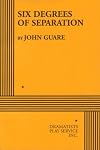
First things first: read this play in one sitting.
Seriously. You've got to read it all at once. There are no acts or scene breaks and the dialogue and action is continuous, plus it's only 55 pages, so read it in one sitting.
Onto the play itself. It's brilliant. Or at least I thought it was. It's clever—very clever—but it never becomes pretentious or crosses the line into self-indulgence. The dialogue never seems separated from the action, in fact it conveys the action, it is the action. show more It's intelligent and breathless and effervescent, with characters constantly finishing each other's sentences and speaking on the phone and speaking to the audience, but it's smooth, too, transitioning seamlessly from flashbacks and reminiscences to dream sequences and fights.
"Seamlessness" seems to be a word used a lot in praise of this play—in fact, on the back of my copy, it's used in two of the three blurbs:
"...cunningly executed, seemingly seamlessly joined, interlarded with clever one-liners, alternating comic situations with mildly disturbing ones... SIX DEGREES OF SEPARATION is a play about everything, with something in it for everyone..." —New York Magazine
"Among the many remarkable aspects of Mr. Guare's writing is the seamlessness of his imagery, characters and themes, as if this play had erupted from his own imagination in one perfect piece." —The New York Times
"In one perfect piece." That's how I'd describe it, too. Which is funny because Guare, in his preface, talks about the inherent difficulty of writing and of getting back to that which is truly "us," and in doing so he tries to get us to believe that he has slaved over this play, but I still suspect that it only took him as long as it takes to physically type up the script—two days, max. Which makes me incredibly envious.
Sure, there's more to it than brilliant writing. There are larger concepts churning behind all this wonderful dialogue—love, death, class, the value of the imagination, the purpose of deception, the fragmented nature of a life—but the great thing about Six Degrees of Separation is that even if you don't bother thinking about any of these themes and just take the play on its face, it's still wonderful. Which seems impossible, because like The Times said above, everything is so SEAMLESSLY bound up together, characters-themes-dialogue-plot, but the magic of this play is that somehow, somehow (is it magic?) they all stand on their own too.
Before I go, I want to mention the movie adaptation. I actually watched it before reading the play (sacrilege, I know—but, in my defence, I didn't know it was an adaptation until after I saw it!) and loved it. I have a lot more respect for it after reading the source material, too; the script is almost exactly the same, word for word. All the actors are great and I highly recommend it—the ending is slightly more definitive than the play's ending, too—plus the casting, in my opinion, is spot on. Young, gay Will Smith! (I'm pretty sure this was his debut movie, too.) Hippie Anthony Michael Hall! South African Ian McKellen! Stockard Channing & Donald Sutherland at their most charming! What could be better? And if, for some unfathomable reason, you don't want to read the play and want to watch it instead, I'm confident that you'd get alllllmost as much out of the movie as you would out of the play, since they're so close.
All in all, I loved this play, I loved this story. There are some really breathtaking monologues and witty exchanges and the dialogue is generally noteworthy, but taken as a whole, this play is just something else. Five stars, easy. show less
Seriously. You've got to read it all at once. There are no acts or scene breaks and the dialogue and action is continuous, plus it's only 55 pages, so read it in one sitting.
Onto the play itself. It's brilliant. Or at least I thought it was. It's clever—very clever—but it never becomes pretentious or crosses the line into self-indulgence. The dialogue never seems separated from the action, in fact it conveys the action, it is the action. show more It's intelligent and breathless and effervescent, with characters constantly finishing each other's sentences and speaking on the phone and speaking to the audience, but it's smooth, too, transitioning seamlessly from flashbacks and reminiscences to dream sequences and fights.
"Seamlessness" seems to be a word used a lot in praise of this play—in fact, on the back of my copy, it's used in two of the three blurbs:
"...cunningly executed, seemingly seamlessly joined, interlarded with clever one-liners, alternating comic situations with mildly disturbing ones... SIX DEGREES OF SEPARATION is a play about everything, with something in it for everyone..." —New York Magazine
"Among the many remarkable aspects of Mr. Guare's writing is the seamlessness of his imagery, characters and themes, as if this play had erupted from his own imagination in one perfect piece." —The New York Times
"In one perfect piece." That's how I'd describe it, too. Which is funny because Guare, in his preface, talks about the inherent difficulty of writing and of getting back to that which is truly "us," and in doing so he tries to get us to believe that he has slaved over this play, but I still suspect that it only took him as long as it takes to physically type up the script—two days, max. Which makes me incredibly envious.
Sure, there's more to it than brilliant writing. There are larger concepts churning behind all this wonderful dialogue—love, death, class, the value of the imagination, the purpose of deception, the fragmented nature of a life—but the great thing about Six Degrees of Separation is that even if you don't bother thinking about any of these themes and just take the play on its face, it's still wonderful. Which seems impossible, because like The Times said above, everything is so SEAMLESSLY bound up together, characters-themes-dialogue-plot, but the magic of this play is that somehow, somehow (is it magic?) they all stand on their own too.
Before I go, I want to mention the movie adaptation. I actually watched it before reading the play (sacrilege, I know—but, in my defence, I didn't know it was an adaptation until after I saw it!) and loved it. I have a lot more respect for it after reading the source material, too; the script is almost exactly the same, word for word. All the actors are great and I highly recommend it—the ending is slightly more definitive than the play's ending, too—plus the casting, in my opinion, is spot on. Young, gay Will Smith! (I'm pretty sure this was his debut movie, too.) Hippie Anthony Michael Hall! South African Ian McKellen! Stockard Channing & Donald Sutherland at their most charming! What could be better? And if, for some unfathomable reason, you don't want to read the play and want to watch it instead, I'm confident that you'd get alllllmost as much out of the movie as you would out of the play, since they're so close.
All in all, I loved this play, I loved this story. There are some really breathtaking monologues and witty exchanges and the dialogue is generally noteworthy, but taken as a whole, this play is just something else. Five stars, easy. show less
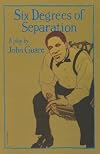
I'm not a director, but if I were, this is the one play I would love to stage. "Six Degrees of Separation" is a meditation on trust and friendship, as we witness a group of disconnected characters caught up in one lie that grows and grows and grows. It's a portrait of lonely people, at heart, and asks where the line is drawn between true experience, and the coldness of living only for anecdotes. The dialogue is crisp and alternates between hilarity and tears. The film - with Will Smith and show more Stockard Channing - is greatly enjoyable, but I'd love to see it performed on stage with actors of the same calibre. show less

Though not as sublime as Six Degrees of Separation, the plays in this collection demonstrate again the skill of a master playwright. These two plays look at love and madness, murder and death. If that makes them sound banal...well, the real skill is in how to deal with subjects that on the face of it sound trite. These works are not trite. And as with any good work of art, they leave you with more questions than answers. What is the responsibility we have to each other? Do artists have an show more obligation to consider their subject? What is the nature of sin and guilt? Guare challenges us to look at ourselves by creating characters we aren't (quite) like, and letting us peek voyeuristically at their lives. We cringe, but can't turn away. show less

Mostly short plays from the award-winning playwright; the title play is full length, but the rest are one-acts. The author, as usual, doesn't bother to observe the conventions of theatre, but allows the characters to break through time and space, talk to the audience, back up when they need to, and move forward when it's time. This is one of the things that makes him great; when they show him a rule, he immediately breaks it. Very few of these plays observe the standard "three-act" show more beginning, middle, and end structure. They begin when they begin, end when they end, and wander wherever they want to in the middle. Somehow they manage to get where they are going, and the characters often have no "arc" that's worth mentioning. In spite of such blatant disregard for the "rules" of his art, most of what he does work. Favorite line - If I had a baby, I wouldn't let it hang glide. show less
Lists
Awards


You May Also Like


Associated Authors
Statistics
- Works
- 55
- Also by
- 10
- Members
- 1,646
- Popularity
- #15,604
- Rating
- 3.8
- Reviews
- 25
- ISBNs
- 83
- Languages
- 3
- Favorited
- 3