
Martin Buber (1878–1965)
Author of I and Thou
About the Author
Martin Buber was born in Vienna, the son of Solomon Buber, a scholar of Midrashic and medieval literature. Martin Buber studied at the universities of Vienna, Leipzig, Zurich, and Berlin, under Wilhelm Dilthey and Georg Simmel. As a young student, he joined the Zionist movement, advocating the show more renewal of Jewish culture as opposed to Theodor Herzl's political Zionism. At age 26 he became interested in Hasidic thought and translated the tales of Nahman of Bratslav. Hasidism had a profound impact on Buber's thought. He credited it as being the inspiration for his theories of spirituality, community, and dialogue. Buber is responsible for bringing Hasidism to the attention of young German intellectuals who previously had scorned it as the product of ignorant eastern European Jewish peasants. Buber also wrote about utopian socialism, education, Zionism, and respect for the Palestinian Arabs, and, with Franz Rosenzweig, he translated the Bible. He was appointed to a professorship at the University of Frankfurt in 1925, but, when the Nazis came to power, he received an appointment at the Hebrew University of Jerusalem. Buber died in 1965. (Bowker Author Biography) show less
Image credit: Owen Barfield World Wide Website
Series
Works by Martin Buber
Two Types of Faith: A Study of the Interpretation of Judaism and Christianity (1977) 301 copies, 2 reviews
De vraag naar de mens het anthropologisch probleem historisch en dialogisch ontvouwd (1982) 35 copies, 2 reviews
The Jew: Essays from Martin Buber's "Journal de Jude", 1916-28 (Judaic studies series) (1980) 14 copies
Sluitsteen 7 copies
Der hellige weg 4 copies
Die Schrift: Verdeutscht von Martin Buber gemeinsam mit Franz Rosenzweig - Mit Bildern von Marc Chagall (2007) 4 copies
Vom Geist des Judentums 4 copies
Voorvallen en ontmoetingen 4 copies
Die Frage an den Einzelnen 3 copies
Martin Buber 2 copies
Qué es el hombre? 2 copies
Die Schrift I: Das Buch im Anfang 2 copies
Die rede, die lehre und das lied 2 copies
Die Schrift und ihre Verdeutschung 2 copies
Worte an die Jugend 2 copies
Zion als Ziel und als Aufgabe : Gedanken aus drei Jahrzehnten : mit einer Rede über Nationalismus als Anhang (1936) 2 copies
Život Chasidů 2 copies
Bronnen van samenzijn 2 copies
Do Diálogo e do Dialógico 1 copy
The philosophical library existentialism collection : hasidism, essays in metaphysics, and the emotions. (2018) 1 copy
Worte an die Jugend 1 copy
Or ha-ganuz sipure hasidim 1 copy
Lidské a mezilidské 1 copy
I And Thou. 1 copy
Te'udah ve-ye'ud. 1 copy
?Qué es el hombre? 1 copy
Eu si tu 1 copy
El eclipse de Dios 1 copy
Bronnen van vrede : gedachten en gedichten van Buber, Gandhi, Gotthelf, Hesse, Jaspers, King e.a. 1 copy
Izbrannye proizvedenii͡a 1 copy
ユートピアの途 : PFADE IN UTOPIA 1 copy
Logos Zwei Reden 1 copy
Drei Legenden 1 copy
EKSTATISCHE KONFESSIONEN 1 copy
Que es el Hombre? 1 copy
Werke [only 1 volume: book2] 1 copy
Die Jüdische Bewegung, Vol. 1: Gesammelte Aufsätze und Ansprachen; 1900-1914 (Classic Reprint) (German Edition) (2017) 1 copy
Ereignisse und Begegnungen; 1 copy
Do diálogo e do dialógico 1 copy
Künder: Das Buch der Zwölf 1 copy
Völker, Staaten und Zion 1 copy
Torat ha-neviim 1 copy
Bilder Von Gut Und Böse 1 copy
Martin Buber : werke 1, 2, 3 1 copy
Les Récits hassidiques 1 copy
Το πρόβλημα του ανθρώπου 1 copy
il problema dell'uomo 1 copy
Associated Works
The Jewish caravan : great stories of twenty-five centuries (1965) — Contributor, some editions — 139 copies
Wrestling with Zion: Progressive Jewish-American Responses to the Israeli-Palestinian Conflict (2003) — Contributor — 84 copies, 1 review
Parabola: Myth, Tradition, and the Search for Meaning, Vol. 24, No. 4: Evil (1999) — Contributor — 8 copies
Chaim Weizmann, a tribute on his seventieth birthday, edited by Paul Goodman (1945) — Contributor — 8 copies
Tagged
Common Knowledge
- Canonical name
- Buber, Martin
- Other names
- מָרְדֳּכַי
Buber, Mordechai - Birthdate
- 1878-02-08
- Date of death
- 1965-06-13
- Gender
- male
- Education
- University of Vienna (Ph.D|1904)
University of Leipzig (History of Art, Philosophy)
University of Berlin
University of Zurich - Occupations
- philosopher
Professor, Hebrew University
Editor, Der Jude, and Die Kreatur
ethicist - Awards and honors
- Freedom of Jerusalem Award (1965)
Nobel Prize nominee (literature - 10 times | peace - 7 times)
Erasmus Prize (1963)
Goethe Award (1951)
German Book Trade Peace Prize (1953)
Israel Prize for Humanities (1958) (show all 7)
Bialik Prize for Jewish Thought (1961) - Relationships
- Buber, Solomon (grandfather)
Winkler, Paula (wife)
Susman, Margarete (friend) - Nationality
- Austria
Israel - Birthplace
- Vienna, Austria
- Places of residence
- Vienna, Austria
Jerusalem, Israel
Lviv, Ukraine
Heppenheim, Germany - Place of death
- Jerusalem, Israel
- Burial location
- Har Hamenuhot Cemetery, Jerusalem, Israel
- Map Location
- Israel
Members
Reviews
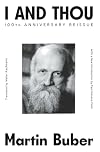
Though Buber's writing can be quite thick (he himself confessed to not understanding all that he wrote, working from a sense of inspiration), his basic premise is incredibly simple: true life is lived in relationship. By relationship, Buber does not mean experiencing or using others, for then we are treating them as objects. But, when we confront and relate to others, we live in the presence of God, the "eternal You." Buber likewise disdains a view of God that confines Him to religious forms show more and God-space. God is earthy and active, and we know Him as we live out His revelation in the day to day. show less
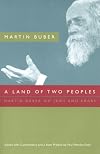
The first time I read Martin Buber, I gave up after a few pages. The second time, too. But something kept pulling me back—his reputation, his connection to Judaism, and the rumor that he’d opposed the very zionist project he helped enable. So I picked up A Land of Two Peoples and tried again.
This book gave me whiplash; one moment Buber was my hero and I was in complete agreement with him, and then suddenly he'd say something super arrogant or racist and I'd want to fight him. Martin show more Buber was, like all of us, a complex human being with complex thoughts and feelings; he was obviously very principled and a deep humanist, but also couldn't rid himself of his belief in nationalism and the superiority of the Jewish race. But he has been called a moral voice for Jews for many generations and, while he's not a hero by any means, he did have some really good stuff to say.
I have sympathy for those who seek safety. I have even more sympathy to the Jews in the 19th and 20th century who desired a homeland after thousands of years of pogroms and horrible mistreatment everywhere they went. I lost a great percentage of my family in the holocaust and after, when they tried to return home only to find out they no longer had one, many of them wanted to go to Palestine. I'm glad my grandparents didn't succeed, but I could have easily been a Sabra. Unfortunately, none of this excuses what came next.
Buber was the voice for all the Jews who had a problem with wiping out an entire people, with stealing land, with committing atrocities in the name of their own safety; but he was still a bit of a supremacist. Not once in this 305 page book does he refer to Palestinians as anything but Arabs, minimizing their unique culture. There were so many times throughout these essays that Buber refers to the ignorance of the Arabs; the biggest one perhaps is his claim that the soil loves Jews more than Arabs and that Jews had done more for the land in 50 years than Arabs had in 1200. At times he sounds exactly like the European colonizers (the ones we needed to escape from) and the way they talked about the native population on Turtle Island. The closest I came to putting this book down was when I read, “[Israel] is the one people which was sent on the road of its history by commandment of the Divine Power.” Barf. That line, like many others, reminded me that for all Buber’s moral courage, he never stopped seeing Jews as uniquely chosen—a belief that shaped both his ethics and his blind spots.
We're all full of contradictions, but when they come from a great thinking like Buber and when they involve the humanity of people, they can be a little harder to take. Buber claims to have solid ethics—repeatedly insisting the ends are the means, that killing people to achieve safety does not work—while also sticking to his guns that Jews have a legitimate claim to Palestinian land. In one essay he'll say something like “Independence of one's own must not be gained at the expense of another's independence,” but then follow that up a few essays later with “The best of us had no hope of remaining guiltless and unsullied for our future generations, for we knew we were reducing the space for future generations of the Arabs.” Pick a side Martin. The mental gymnastics one has to perform to recognize injustice, but lack the ability to remove oneself from the ideology that fuels it, must be exhausting. I can't think of a world in which I would call myself a zionist, yet Buber refuses to give up that title.
Despite what I've said so far, I did truly enjoy reading this book. His ability to use empathy—to try and place himself in the shoes of the Palestinians—is far too rare in our culture. He has the chutzpah to remind his fellow Jews to imagine “as if we were the residents of Palestine and the others were the immigrants who were coming into the country in increasing numbers, year by year, taking it away from us. How would we react to events?” He was also clear in his belief, throughout the book, that one people's freedom should never come at the expense of another's, even if he was unable to follow these thoughts far enough to renounce zionism.
There were times throughout A Land of Two Peoples where Buber felt like a comrade, like his ideas had been implanted into my head without ever having read them. He talks about how sacrificing Jewish values in order to take something that they feel like they have a right to, is the biggest form of assimilation. I'm constantly imagining a world without assimilation, a world where all cultures could keep their foundational beliefs and customs while getting along and thriving with other cultures. Buber did too. Perhaps the way in which I most related to him was in our mutual belief that the switch from a moral/ethical tradition to a colonial nation-state has done more than any enemy to destroy Judaism from the inside.
Buber also talked about dual power decades before I've seen anyone else, even if he didn't use that term. He insists that, instead of sucking up to Britain and other European nations, they should work together with the people already living there to create something that would make British rule obsolete. He wanted one state where all of the inhabitants are treated equally and have an fair share in steering the ship. Eventually he moved on from this to talk about a Near East Federation that would be similar to the United States. These are suggestions that appear naive (something I've been called a lot in my day) but points toward solidarity instead of domination.
He also recognized that, to put it too simply, hurt people hurt people. That perhaps thousands of years of attempted extermination, culminating in the holocaust, has created a situation where “after an action of extermination of this kind, the poor human soul is inclined to see extermination lurking everywhere.” This was obvious even in the 1940s, but is even more glaring today. The paranoia of zionists is disgusting and see through, and it baffles me why the world can't see this.
Obviously I have some mixed feelings about this book and its writer. His essays and speeches are full of contradictions, many of them painful, but he tried. Perhaps more than anyone else at the time. While he couldn't free himself from arrogance and racism, he created a path for this generations anti-zionists to follow. show less
This book gave me whiplash; one moment Buber was my hero and I was in complete agreement with him, and then suddenly he'd say something super arrogant or racist and I'd want to fight him. Martin show more Buber was, like all of us, a complex human being with complex thoughts and feelings; he was obviously very principled and a deep humanist, but also couldn't rid himself of his belief in nationalism and the superiority of the Jewish race. But he has been called a moral voice for Jews for many generations and, while he's not a hero by any means, he did have some really good stuff to say.
I have sympathy for those who seek safety. I have even more sympathy to the Jews in the 19th and 20th century who desired a homeland after thousands of years of pogroms and horrible mistreatment everywhere they went. I lost a great percentage of my family in the holocaust and after, when they tried to return home only to find out they no longer had one, many of them wanted to go to Palestine. I'm glad my grandparents didn't succeed, but I could have easily been a Sabra. Unfortunately, none of this excuses what came next.
Buber was the voice for all the Jews who had a problem with wiping out an entire people, with stealing land, with committing atrocities in the name of their own safety; but he was still a bit of a supremacist. Not once in this 305 page book does he refer to Palestinians as anything but Arabs, minimizing their unique culture. There were so many times throughout these essays that Buber refers to the ignorance of the Arabs; the biggest one perhaps is his claim that the soil loves Jews more than Arabs and that Jews had done more for the land in 50 years than Arabs had in 1200. At times he sounds exactly like the European colonizers (the ones we needed to escape from) and the way they talked about the native population on Turtle Island. The closest I came to putting this book down was when I read, “[Israel] is the one people which was sent on the road of its history by commandment of the Divine Power.” Barf. That line, like many others, reminded me that for all Buber’s moral courage, he never stopped seeing Jews as uniquely chosen—a belief that shaped both his ethics and his blind spots.
We're all full of contradictions, but when they come from a great thinking like Buber and when they involve the humanity of people, they can be a little harder to take. Buber claims to have solid ethics—repeatedly insisting the ends are the means, that killing people to achieve safety does not work—while also sticking to his guns that Jews have a legitimate claim to Palestinian land. In one essay he'll say something like “Independence of one's own must not be gained at the expense of another's independence,” but then follow that up a few essays later with “The best of us had no hope of remaining guiltless and unsullied for our future generations, for we knew we were reducing the space for future generations of the Arabs.” Pick a side Martin. The mental gymnastics one has to perform to recognize injustice, but lack the ability to remove oneself from the ideology that fuels it, must be exhausting. I can't think of a world in which I would call myself a zionist, yet Buber refuses to give up that title.
Despite what I've said so far, I did truly enjoy reading this book. His ability to use empathy—to try and place himself in the shoes of the Palestinians—is far too rare in our culture. He has the chutzpah to remind his fellow Jews to imagine “as if we were the residents of Palestine and the others were the immigrants who were coming into the country in increasing numbers, year by year, taking it away from us. How would we react to events?” He was also clear in his belief, throughout the book, that one people's freedom should never come at the expense of another's, even if he was unable to follow these thoughts far enough to renounce zionism.
There were times throughout A Land of Two Peoples where Buber felt like a comrade, like his ideas had been implanted into my head without ever having read them. He talks about how sacrificing Jewish values in order to take something that they feel like they have a right to, is the biggest form of assimilation. I'm constantly imagining a world without assimilation, a world where all cultures could keep their foundational beliefs and customs while getting along and thriving with other cultures. Buber did too. Perhaps the way in which I most related to him was in our mutual belief that the switch from a moral/ethical tradition to a colonial nation-state has done more than any enemy to destroy Judaism from the inside.
Buber also talked about dual power decades before I've seen anyone else, even if he didn't use that term. He insists that, instead of sucking up to Britain and other European nations, they should work together with the people already living there to create something that would make British rule obsolete. He wanted one state where all of the inhabitants are treated equally and have an fair share in steering the ship. Eventually he moved on from this to talk about a Near East Federation that would be similar to the United States. These are suggestions that appear naive (something I've been called a lot in my day) but points toward solidarity instead of domination.
He also recognized that, to put it too simply, hurt people hurt people. That perhaps thousands of years of attempted extermination, culminating in the holocaust, has created a situation where “after an action of extermination of this kind, the poor human soul is inclined to see extermination lurking everywhere.” This was obvious even in the 1940s, but is even more glaring today. The paranoia of zionists is disgusting and see through, and it baffles me why the world can't see this.
Obviously I have some mixed feelings about this book and its writer. His essays and speeches are full of contradictions, many of them painful, but he tried. Perhaps more than anyone else at the time. While he couldn't free himself from arrogance and racism, he created a path for this generations anti-zionists to follow. show less
Theology is really not my thing, is what I'm coming around to. I and Thou is one of the masterpieces of 20th century philosophy, written in the aftermath of the modernist slaughter of World War I, and gaining new relevance in decades since. In looping elliptical sentences masterfully translated by Walter Kaufman, Buber describes a transition between an I-It view of the world, one of finite systems and ends, towards an infinite I-Thou conversation with the divine spirit.
It's a gorgeous book, show more and mostly reinforces my take that you either get spirituality, or you don't. And a lot of people who claim to do, probably don't. It's not really something you can put into words. Buber got it.
I'll close with a story. My grandmother was working at the American Jewish Committee in New York when Martin Buber made his first visit to the United States in 1951. Every single one of the rabbinical students was desperate to be his secretary for the visit, which is why the director gave it to my grandmother (22 years old, definitely not going to be rabbi, carried herself as a bit of ditz). All of the boys were furious. And as for the great Jewish theologian, well as my grandmother put, "I never felt like more of an 'it' than when I worked for Martin Buber." show less
It's a gorgeous book, show more and mostly reinforces my take that you either get spirituality, or you don't. And a lot of people who claim to do, probably don't. It's not really something you can put into words. Buber got it.
I'll close with a story. My grandmother was working at the American Jewish Committee in New York when Martin Buber made his first visit to the United States in 1951. Every single one of the rabbinical students was desperate to be his secretary for the visit, which is why the director gave it to my grandmother (22 years old, definitely not going to be rabbi, carried herself as a bit of ditz). All of the boys were furious. And as for the great Jewish theologian, well as my grandmother put, "I never felt like more of an 'it' than when I worked for Martin Buber." show less
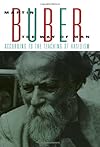
In my younger years, I had already read something by the Jewish philosopher-mystic Martin Buber (1878–1965) *Paths of Utopia*, and I found that impressive, even though it was more of a textbook. This small book, not even 50 pages long, made an even greater impression on me. It was published in 1948 and belongs to what one might call wisdom literature. In six vignettes, Buber sets out a number of aspects of his religious and philosophical convictions.
He almost always begins with a short show more anecdote concerning a Hasidic scholar. For that is the religious movement with which Buber identifies most closely. Personally, I know Hasidism only from the Jewish community established in my hometown of Antwerp, which is regarded as "strictly orthodox," easily recognizable due to the typical attire. But apparently, Hasidism covers a much broader, much looser spirituality, at least if I interpret Buber correctly. His plea for multiple paths to God strikes me as anything but a rigid, dogmatic conviction. And his plea for an active life here on earth strikes me as anything but losing oneself in an otherworldly reality after life. For that, according to Buber, is the essence of “Judaism”: a life here, in the place where we are, “It is here, in the very place where we find ourselves, that we must let the light of the hidden divine life shine forth.”». To some people, all this may still sound too spiritual, but if one reads Buber’s texts carefully, they are wonderful exhortations to lead a more authentic, fulfilling life. show less
He almost always begins with a short show more anecdote concerning a Hasidic scholar. For that is the religious movement with which Buber identifies most closely. Personally, I know Hasidism only from the Jewish community established in my hometown of Antwerp, which is regarded as "strictly orthodox," easily recognizable due to the typical attire. But apparently, Hasidism covers a much broader, much looser spirituality, at least if I interpret Buber correctly. His plea for multiple paths to God strikes me as anything but a rigid, dogmatic conviction. And his plea for an active life here on earth strikes me as anything but losing oneself in an otherworldly reality after life. For that, according to Buber, is the essence of “Judaism”: a life here, in the place where we are, “It is here, in the very place where we find ourselves, that we must let the light of the hidden divine life shine forth.”». To some people, all this may still sound too spiritual, but if one reads Buber’s texts carefully, they are wonderful exhortations to lead a more authentic, fulfilling life. show less
Lists
Awards


You May Also Like


Associated Authors
Statistics
- Works
- 244
- Also by
- 16
- Members
- 12,917
- Popularity
- #1,809
- Rating
- 4.0
- Reviews
- 101
- ISBNs
- 552
- Languages
- 23
- Favorited
- 29