
Paul Tillich (1886–1965)
Author of The Courage to Be
About the Author
Paul Johannes Tillich was born into a German Lutheran pastor's family in that part of Germany that is now Poland. He attended several universities, earning the doctorate in philosophy in 1910, then taught at several more from 1919 to 1933. Removed from his professorate at Frankfurt by the Nazi show more government, he emigrated to the United States, with the encouragement of Reinhold Niebuhr, and taught at Union Theological Seminary in New York (1933--55), Harvard University (1955--62), and the University of Chicago (1962--65). The fullest biography, including some fairly lurid material of a psychosexual nature, can be found in the appreciative work by Wilhelm and Marion Pauck. The student who wants to encounter Tillich at his most succinct might turn to The Courage To Be (1952) or The Theology of Paul Tillich (1982). He is sometimes classified as Neo-orthodox, but that label does not fit him as well as it does Karl Barth, who had small regard for Tillich's "theology of correlation," where responding to the world's questions is seen as the proper way of practicing theology. (Bowker Author Biography) show less
Series
Works by Paul Tillich
Systematic Theology, vol. 3: Life and the Spirit: History and the Kingdom of God (1963) 470 copies, 2 reviews
Die Frage nach dem Unbedingten : Schriften zur Religionsphilosophie (Gesammelte Werke Band V) (1987) 6 copies
Writings in the Philosophy of Religion/Religionsphilosophische Schriften (Main Works / Hauptwerke) (English and German Edition) (1987) 6 copies
The Construction of the History of Religion in Schelling's Positive Philosophy: Its Presuppositions and Principles. (1975) 6 copies
Systematische Theologie, Bd.1/2, Vernunft und Offenbarung; Sein und Gott; Die Existenz und der Christus (1987) 5 copies
La dimension religieuse de la culture : les écrits du premier enseignement (1919-1926) (1990) 4 copies
Die neue Wirklichkeit 3 copies
Existential philosophy 2 copies
Gesammelte Werke. Ergänzungs- und Nachlaßbände: Band 14: Dogmatik-Vorlesung (Dresden 1925-1927) (2005) 2 copies
An meine deutschen Freunde : die politischen Reden Paul Tillichs während des Zweiten Weltkriegs über die "Stim (1987) 2 copies
Visionary science : a translation of Tillich's "on the idea of a theology of culture" with an interpretive essay (1987) 2 copies
Filosofía de la Religión 2 copies
Love, Power and Injustice 2 copies
Vorlesungen über die Geschichte des christlichen Denkens ; Teil 1. Urchristentum bis Nachreformation (1971) 2 copies
Das religiöse Fundament des moralischen Handelns : Schriften zur Ethik und zum Menschenbild (Ges. Werke Band III) (1989) 2 copies
Der Widerstreit von Raum und Zeit : Schriften zur Geschichtsphilosophie (Gesammelte Werke Band VI) (1987) 2 copies
Paul Tillich 1 copy
Register, Bibliographie und Textgeschichte zu den gesammelten Werken von Paul Tillich (Gesammelte Werke Band XIV) (1975) 1 copy
Die Hoffnung der Christen 1 copy
Fruhe Haupt Werke Band 1 1 copy
SU OBRA Y SU INFLUENCIA 1 copy
La dimensión peerdida 1 copy
Mporalidad y algo más 1 copy
Religionsphilosophie. 1 copy
Impressionen und Reflexionen : ein Lebensbild in Aufsätzen, Reden und Stellungnahmen (Gesammelte Werke Band XIII) (1972) 1 copy
all 1 copy
Retrospect And Future 1 copy
Matthieu 27: 45-46 et 50-54 1 copy
Gesammelte Werke (vol. 1) 1 copy
Kairos [The Protestant era] 1 copy
Associated Works
Theories and Documents of Contemporary Art: A Sourcebook of Artists' Writings (1995) — Contributor — 420 copies, 1 review
The Glorious American Essay: One Hundred Essays from Colonial Times to the Present (2020) — Contributor — 119 copies
Voluntary associations, a study of groups in free societies; essays in honor of James Luther Adams (1966) — Foreword — 7 copies
Tagged
Common Knowledge
- Canonical name
- Tillich, Paul
- Legal name
- Tillich, Paul Johannes
- Birthdate
- 1886-08-20
- Date of death
- 1965-10-22
- Gender
- male
- Education
- University of Breslau (Ph.D|1911)
University of Halle-Wittenberg (licentiate of theology, 1912) - Occupations
- theologian
professor
minister - Organizations
- University of Chicago Divinity School
Harvard Divinity School
Union Theological Seminary
University of Frankfurt
University of Leipzig
Dresden University of Technology (show all 10)
University of Marburg
University of Berlin
German Army (Chaplain, WWI)
Evangelical Lutheran Church of the Prussian Union (ordained, 1912) - Awards and honors
- Friedenspreis des Deutschen Buchhandels (1962)
Iron Cross (1918) - Relationships
- Taubes, Susan (student)
May, Rollo (student) - Short biography
- Paul Tillich is generally considered one of the century's outstanding and influential thinkers. After teaching theology and philosophy at various German universities, he came to the United States in 1933. For many years he was Professor of Philosophical Theology at Union Theological Seminary in New York City, then University Professor at Harvard University. His books include Systematic Theology; The Courage to Be; Dynamics of Faith; Love, Power and Justice; Morality and Beyond; and Theology of Culture. (taken from http://www.religion-online.org/showbo...)
- Cause of death
- heart attack
- Nationality
- Germany (birth)
USA (naturalized 1940) - Birthplace
- Starzeddel, Province of Brandenburg, Prussia, German Empire (now Starosiedle, Poland)
- Places of residence
- Berlin, Germany
Marburg, Germany
Frankfurt am Main, Germany
New York, New York, USA
Cambridge, Massachusetts, USA
Chicago, Illinois, USA - Place of death
- Chicago, Illinois, USA
- Burial location
- Paul Tillich Park, New Harmony, Indiana
Members
Reviews

I came to Paul Tillich after a long period of searching, and my overwhelming feeling is of having arrived. Like a spiritual physician, Tillich diagnoses the existential disease condition of modern man, describes the pathophysiology going back to Classical times, and prescribes the cure. Along the way, he delivers penetrating analyses of Stoicism and other philosophies, various types of political collectivism, Existentialism, the Reformation, and much more. The premise of the book itself, show more brilliant in its simplicity and originality, is that courage reveals being and vice versa. Other resounding ideas include absolute faith, accepting acceptance, existential anxiety, anxiety vs. fear, theological theism, God above God (of theism), non-being (and its dependence on being), the courage of confidence and of despair, and many others. These are ideas with the power to fundamentally alter one’s worldview. They have definitely altered mine.
Regarding the categorization of Tillich as a liberal Christian: I bristle at this because of liberal Christianity’s emphasis on feeling over reason, its relativism, the tenets of its social(ist) Gospel, and its inaccurate but inevitable association with political liberalism (I am a conservative). Though I see how certain of Tillich’s conclusions could lead to this categorization, particularly his anti-authoritarianism, I think it is mistaken. If Tillich rebels against worldly religious authority, it is because he appeals to a higher authority: Christ himself. “The Church stands under the judgment of the Cross” is one of his most important ideas. How could a man who reaches back through the ages to establish an absolutist view of God, and who believes that secularism is a type of faith inimical to Christianity, be accurately associated with a movement that embraces relativism and social(ist) Gospel? I just don’t see it. Elsewhere he is categorized as neo-orthodox. Little minds try to box in what they cannot understand. This is exactly what Tillich rails against in what he calls theological theism. Tillich’s thinking is too original to fit into a tidy box. show less
Regarding the categorization of Tillich as a liberal Christian: I bristle at this because of liberal Christianity’s emphasis on feeling over reason, its relativism, the tenets of its social(ist) Gospel, and its inaccurate but inevitable association with political liberalism (I am a conservative). Though I see how certain of Tillich’s conclusions could lead to this categorization, particularly his anti-authoritarianism, I think it is mistaken. If Tillich rebels against worldly religious authority, it is because he appeals to a higher authority: Christ himself. “The Church stands under the judgment of the Cross” is one of his most important ideas. How could a man who reaches back through the ages to establish an absolutist view of God, and who believes that secularism is a type of faith inimical to Christianity, be accurately associated with a movement that embraces relativism and social(ist) Gospel? I just don’t see it. Elsewhere he is categorized as neo-orthodox. Little minds try to box in what they cannot understand. This is exactly what Tillich rails against in what he calls theological theism. Tillich’s thinking is too original to fit into a tidy box. show less

Faith is a big word which points towards an even bigger concept. In the New Testament, faith stands for a deep trust and belief. In Dynamics of Faith, Tillich offers his take on this concept. Put succinctly:
"Faith is the state of being ultimately concerned" (1).
This, of course, is an expansion on the New Testament's idea of deep trust and belief in a person—Tillich's faith comes from a philosophical viewpoint which engages all religions. While Christian faith in the person of Jesus Christ show more falls under his definition of "being ultimately concerned," so do many other faiths, even secular and national faiths.
Dynamics of Faith is a very thoughtful book which deserves a careful reading. There are elements on every page to evaluate theologically.
Tillich does a fine job at clearing away some of the misunderstandings of faith. Faith is no mere "act of knowledge that has a low degree of evidence" (31), nor is it "the feeling of unconditional dependence" (38) à la Schleiermacher.
Another strength of this book is Tillich's acceptance of doubt as part of faith. Consider this argument (that has been picked up today by Peter Rollins):
"If faith is understood as belief that something is true, doubt is incompatible with the act of faith. If faith is understood as being ultimately concerned, doubt is a necessary element in it. It as a consequence of the risk of faith" (18).
What a powerfully pastoral idea! Doubt could actually be part of faith rather than an enemy of it.
My biggest problem with Tillich's argument came with his separation between the ultimate and other fields of study. When explaining potential conflicts between faith and science, history, and philosophy, he strongly asserted the need to keep these realms separate:
"Science has no right and no power to interfere with faith and faith has no power to interfere with science. One dimension of meaning is not able to interfere with another dimension" (81-2).
Of course, if you understand the incarnation as the hypostatic union between God and humanity, then dimensional interference is precisely what happened!
Dynamics of Faith was published in 1957. Now, over 50 years later, it is still a good way to spark meaningful theological discussion and thought on one of the biggest theological categories in scripture. show less
"Faith is the state of being ultimately concerned" (1).
This, of course, is an expansion on the New Testament's idea of deep trust and belief in a person—Tillich's faith comes from a philosophical viewpoint which engages all religions. While Christian faith in the person of Jesus Christ show more falls under his definition of "being ultimately concerned," so do many other faiths, even secular and national faiths.
Dynamics of Faith is a very thoughtful book which deserves a careful reading. There are elements on every page to evaluate theologically.
Tillich does a fine job at clearing away some of the misunderstandings of faith. Faith is no mere "act of knowledge that has a low degree of evidence" (31), nor is it "the feeling of unconditional dependence" (38) à la Schleiermacher.
Another strength of this book is Tillich's acceptance of doubt as part of faith. Consider this argument (that has been picked up today by Peter Rollins):
"If faith is understood as belief that something is true, doubt is incompatible with the act of faith. If faith is understood as being ultimately concerned, doubt is a necessary element in it. It as a consequence of the risk of faith" (18).
What a powerfully pastoral idea! Doubt could actually be part of faith rather than an enemy of it.
My biggest problem with Tillich's argument came with his separation between the ultimate and other fields of study. When explaining potential conflicts between faith and science, history, and philosophy, he strongly asserted the need to keep these realms separate:
"Science has no right and no power to interfere with faith and faith has no power to interfere with science. One dimension of meaning is not able to interfere with another dimension" (81-2).
Of course, if you understand the incarnation as the hypostatic union between God and humanity, then dimensional interference is precisely what happened!
Dynamics of Faith was published in 1957. Now, over 50 years later, it is still a good way to spark meaningful theological discussion and thought on one of the biggest theological categories in scripture. show less
Summary: A philosophical discussion of being or ontology, the crisis of anxiety, and the nature of the courage to be, the affirmation of our being in the face of nonbeing, accepting our acceptance by the God above God despite our unacceptability.
This book has been around all my life (plus a couple years) on certainly on the edge of my awareness. I read, more or less uncomprehendingly (this is a dense read), an excerpt from this in my Intro to Philosophy course. Tillich was one of the giants show more of Twentieth century theology. In my Jesus Movement evangelical days of the early ’70s, I just dismissed him as one of “those” theological liberals.
Consequently, I ignored him in my reading. Until now. The Courage to Be, based on the Terry Lectures given at Yale in the early 1950’s, strikes me as an attempt to do at Yale something like another Paul did on the Areopagus.
Tillich writes in what has been describe as “The Age of Anxiety,” memorialized in a poem of W. H. Auden by that name. One of the most significant contributions of this book is an analysis of our anxiety, which he describes as coming in three forms: ontological, concerned with death (non-being) and our ultimate fate, spiritual, concerned with despair and loss of meaning, and moral, concerned with guilt and condemnation. The “courage to be” is the honest facing of this anxiety and choosing to affirm one’s being.
He traces the expression of this “courage” in the history of thought, discussing collectivist thought under the head of “courage and participation,” from feudal societies to Nietzsche, Marx, and the rise of communism and fascism. Under the head of “courage and individualization, he looks at the concept of selfhood both in religious contexts and the rise of Romanticism and naturalism, culminating in Existentialism, a radical courage in the face of life without inherent meaning.
The concluding chapter is the most “Christian” as he describes courage as the ultimate faith that accepts our acceptance despite our guilt and unacceptability, finding its source in “the God above God” the ground of our being. Tillich concludes with this italicized peroration:
“The courage to be is rooted in the God who appears when God has disappeared in the anxiety of doubts.”
In his analysis of anxiety stemming from the human condition and his historical survey of forms of “the courage to be” in face of the inescapable realities of death, the loss of meaning, and our implicatedness, Tillich names our reality. His framing of justification by faith is an imaginative re-framing of this core Reformation idea that retains the “I-Thou” nature of faith. Yet it is a framing without the central figure of Jesus and the crucial events of cross and resurrection. Jesus only receives two passing references in this work. As such, this work is only prolegomenon, leaving me wondering what follows in Tillich’s thought.
Perhaps that was Tillich’s intent in these lectures and this book, to invite his hearers and readers to say more about “the God who appears.” show less
This book has been around all my life (plus a couple years) on certainly on the edge of my awareness. I read, more or less uncomprehendingly (this is a dense read), an excerpt from this in my Intro to Philosophy course. Tillich was one of the giants show more of Twentieth century theology. In my Jesus Movement evangelical days of the early ’70s, I just dismissed him as one of “those” theological liberals.
Consequently, I ignored him in my reading. Until now. The Courage to Be, based on the Terry Lectures given at Yale in the early 1950’s, strikes me as an attempt to do at Yale something like another Paul did on the Areopagus.
Tillich writes in what has been describe as “The Age of Anxiety,” memorialized in a poem of W. H. Auden by that name. One of the most significant contributions of this book is an analysis of our anxiety, which he describes as coming in three forms: ontological, concerned with death (non-being) and our ultimate fate, spiritual, concerned with despair and loss of meaning, and moral, concerned with guilt and condemnation. The “courage to be” is the honest facing of this anxiety and choosing to affirm one’s being.
He traces the expression of this “courage” in the history of thought, discussing collectivist thought under the head of “courage and participation,” from feudal societies to Nietzsche, Marx, and the rise of communism and fascism. Under the head of “courage and individualization, he looks at the concept of selfhood both in religious contexts and the rise of Romanticism and naturalism, culminating in Existentialism, a radical courage in the face of life without inherent meaning.
The concluding chapter is the most “Christian” as he describes courage as the ultimate faith that accepts our acceptance despite our guilt and unacceptability, finding its source in “the God above God” the ground of our being. Tillich concludes with this italicized peroration:
“The courage to be is rooted in the God who appears when God has disappeared in the anxiety of doubts.”
In his analysis of anxiety stemming from the human condition and his historical survey of forms of “the courage to be” in face of the inescapable realities of death, the loss of meaning, and our implicatedness, Tillich names our reality. His framing of justification by faith is an imaginative re-framing of this core Reformation idea that retains the “I-Thou” nature of faith. Yet it is a framing without the central figure of Jesus and the crucial events of cross and resurrection. Jesus only receives two passing references in this work. As such, this work is only prolegomenon, leaving me wondering what follows in Tillich’s thought.
Perhaps that was Tillich’s intent in these lectures and this book, to invite his hearers and readers to say more about “the God who appears.” show less
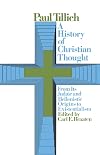
Paul Tillich was perhaps the most important and influential 20th Century theologian writing in English. His books, however, are tough slogging--especially for those who haven't read all the many continental philosophers and theologians with whom Tillich was arguing. This book, which consists of transcriptions of lectures Tillich gave on the history of Christian thought, is, besides being a wonderful introduction to the subject matter, the best possible introduction to Tillich's own thinking. show more Wonderfully accessible, engaging and lively, this book is thoroughly readable. If only more of his lectures on other topics were available! show less
Lists
Awards


You May Also Like


Associated Authors
Statistics
- Works
- 136
- Also by
- 8
- Members
- 12,689
- Popularity
- #1,843
- Rating
- 3.9
- Reviews
- 58
- ISBNs
- 262
- Languages
- 16
- Favorited
- 17
