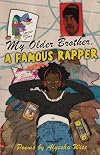
I waited almost three months to read this collection because I was afraid it wouldn’t live up to my experience hearing Wise when she was featured at the Philly Pigeon Late-ish show in the spring. I wanted to love her poems in print the way I loved them when spoken aloud and my experience with the last few books of poetry I read left me doubtful that I could. Fortunately, Wise’s skill shines on the page just as much as it does on the stage. At times, it shone in writing even more so.
Because on the page, I could see more clearly the intentionality of her flow, the way she weaves the poetry sprouting on the city streets with the poetry budding behind not-always-accessible classroom doors. While reading, I could hear more clearly how her poetry sings not just because of how she performs it but also because of how she structures it on the page. And that level of craftsmanship created a rich, evocative environment that made it easy to lean into the love and pain, joy and grief, certainty and wonder that poured out of these poems.
From the first several pages, this collection of poetry gripped me emotionally, artistically, personally, and professionally, and rarely let me go until the end. I cannot wait to experience more of Wise’s work now that I have finished this book.
Because on the page, I could see more clearly the intentionality of her flow, the way she weaves the poetry sprouting on the city streets with the poetry budding behind not-always-accessible classroom doors. While reading, I could hear more clearly how her poetry sings not just because of how she performs it but also because of how she structures it on the page. And that level of craftsmanship created a rich, evocative environment that made it easy to lean into the love and pain, joy and grief, certainty and wonder that poured out of these poems.
From the first several pages, this collection of poetry gripped me emotionally, artistically, personally, and professionally, and rarely let me go until the end. I cannot wait to experience more of Wise’s work now that I have finished this book.
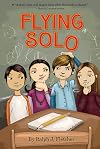
3.75 Stars. When I first read this book in elementary school over 20 years ago, there was something about it that stuck with me long after I finished it. It was one of few books I encountered that showed kids around my age dealing with something bigger than trying to fit in, do well in school, be themselves, and/or get along with their families. I loved plenty of books that focused on those other themes, but this book always felt more affirming of my own experiences as a kid who felt things deeply and reflected intensely on my thoughts and feelings.
With all that in mind, I finally decided to reread this book to see if it held up to my childhood memories. Fortunately, for the most part, it did.
Despite not having as tight of a narrative arc as I would have liked and not having much explicit diversity beyond socioeconomic status, this book was just as funny, heartfelt, and interesting in a nuanced yet kid-friendly way as I remembered it. More significantly, it still did a really solid job of showing how kids are impacted by different kinds of loss and how much kids silently carry unbeknownst to those around them. This was the message that was most important to me as a kid and remains the best part of the book for me as an adult.
Although I don’t know that I’d recommend this book to modern day kids because it feels very nineties in a way I don’t know that they could appreciate, I am glad I read it as a kid and glad I took the time to reread it as an adult. Also, this show more book 100% should have been made into a 90s movie because I would have worn that VHS out. show less
With all that in mind, I finally decided to reread this book to see if it held up to my childhood memories. Fortunately, for the most part, it did.
Despite not having as tight of a narrative arc as I would have liked and not having much explicit diversity beyond socioeconomic status, this book was just as funny, heartfelt, and interesting in a nuanced yet kid-friendly way as I remembered it. More significantly, it still did a really solid job of showing how kids are impacted by different kinds of loss and how much kids silently carry unbeknownst to those around them. This was the message that was most important to me as a kid and remains the best part of the book for me as an adult.
Although I don’t know that I’d recommend this book to modern day kids because it feels very nineties in a way I don’t know that they could appreciate, I am glad I read it as a kid and glad I took the time to reread it as an adult. Also, this show more book 100% should have been made into a 90s movie because I would have worn that VHS out. show less

Magnetic and expansive, these poems almost seamlessly thread together the sacred and the sensual, the liminal and the tangible, the spiritual and the physical, the extraordinary and the mundane. Izenson’s linguistic precision grounded in gripping, embodied earthy verb and metaphor usage sent chills down my spine on almost every page and drew me into the cosmic collaboration of creation in ways I didn’t expect. While these poems are so unlike most of the poetry I love and included some portions I couldn't fully wrap my head around, I found that, overall, these poems offered a lot of liberation for me as a reader, writer, and dreamer of different worlds. If you can handle trans Jewish surrealism and sexuality, if you’ve ever wondered what it would be like to experience a dream while wide awake, if you can appreciate the space where pleasure and pain overlap, then perhaps, you’ll find these poems offer some liberation for you as well.
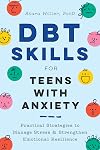
DBT Skills for Teens with Anxiety: Practical Strategies to Manage Stress and Strengthen Emotional Resilience by Atara Hiller
[I received a free copy of this book from Zeitgeist Publishing, an imprint of Penguin Random House.]
After appreciating but, to some extent, struggling through DBT Made Simple: A Step-by-Step Guide to Dialectical Behavior, I found this book to be refreshingly accessible from start to finish. Hiller describes the DBT skills in language that feels easier to process and use with high school students than the language offered in DBT Made Simple. The latter sections offering strategies for navigating specific scenarios and overviews of each section of the book did an excellent job tying the book together and providing a path for continuing to use the book going forward. Since starting this book, I've found myself reaching for it at least once a week during my conversations with students and I’m excited to use it even more intentionally now that I’ve finished it.
Despite really appreciating the language and organization of this book, I did wish Hiller had included a section at the end of each skill for readers to reflect on their attempts at practicing the skill rather than expecting teen readers to commit to using a separate journal to do that work. I also wish she hadn’t offered the most simplified version of some of the DBT skills (e.g., pros and cons list) as if teenagers couldn’t handle a more complex version (e.g., cost benefits analysis). The simplifications felt like they shortchanged young people of important opportunities to think critically about their show more behaviors and internalize the principles of DBT in a deeper way.
All in all, I would still definitely recommend this book for teens struggling with anxiety or other dysregulated emotions and for school counselors working with them. My one caveat for counselors would be to make sure to read a more comprehensive guide to DBT before reading this one in order to be able to fill some of the gaps left by Hiller’s simplifications. show less
After appreciating but, to some extent, struggling through DBT Made Simple: A Step-by-Step Guide to Dialectical Behavior, I found this book to be refreshingly accessible from start to finish. Hiller describes the DBT skills in language that feels easier to process and use with high school students than the language offered in DBT Made Simple. The latter sections offering strategies for navigating specific scenarios and overviews of each section of the book did an excellent job tying the book together and providing a path for continuing to use the book going forward. Since starting this book, I've found myself reaching for it at least once a week during my conversations with students and I’m excited to use it even more intentionally now that I’ve finished it.
Despite really appreciating the language and organization of this book, I did wish Hiller had included a section at the end of each skill for readers to reflect on their attempts at practicing the skill rather than expecting teen readers to commit to using a separate journal to do that work. I also wish she hadn’t offered the most simplified version of some of the DBT skills (e.g., pros and cons list) as if teenagers couldn’t handle a more complex version (e.g., cost benefits analysis). The simplifications felt like they shortchanged young people of important opportunities to think critically about their show more behaviors and internalize the principles of DBT in a deeper way.
All in all, I would still definitely recommend this book for teens struggling with anxiety or other dysregulated emotions and for school counselors working with them. My one caveat for counselors would be to make sure to read a more comprehensive guide to DBT before reading this one in order to be able to fill some of the gaps left by Hiller’s simplifications. show less
DBT Made Simple: A Step-by-Step Guide to Dialectical Behavior Therapy (The New Harbinger Made Simple Series) by Sheri Van Dijk MSW
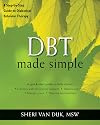
As a school counselor looking for more strategies to support my students who struggle with emotion dysregulation, I found this book to be both accessible and challenging. The opening sections helped me understand the foundations of DBT in a way I had never been able to in the past and I appreciated the inclusion of sample client-therapist conversations and step-by-step guidance on how to introduce concepts and skills to clients.
That being said, I struggled with some of the author’s descriptions, particularly as we got further in the book and I had to retain more information. There were several concepts that she didn’t explain thoroughly enough for me to gain even a surface level understanding and it was hard to discern why she didn’t always use sample conversations or concrete examples in places where they would have been helpful.
I also struggled with the lack of even brief consideration of how DBT might be tailored for specific populations, such as adolescents and/or those from marginalized communities, who may have a more nuanced positionality compared to clinicians and the world at large. While Van Dijk does recommend rereading the book multiple times to truly grasp the concepts and also offers some continued learning resources near the end of the book, I believe some of the tips and approaches I’ve discovered through articles and books that more specifically address these populations would have made this book stronger if they had been included (see: show more target="_top">"Considerations for the Use of Dialectical Behavior Therapy for Individuals Experiencing Oppression" and DBT Skills for Teens with Anxiety: Practical Strategies to Manage Stress and Strengthen Emotional Resilience).
All in all, I’m really glad I decided to buy this book as part of my professional development plan this year. When I finished it last week, I felt like it would take me months to be able to synthesize it and implement some of the skills I learned with my students, but I’m finding even as I’m still processing the book, I have been able to speak to some DBT principles and skills already in sessions with my students, which is a testament to how effective this book is despite its limitations. show less
That being said, I struggled with some of the author’s descriptions, particularly as we got further in the book and I had to retain more information. There were several concepts that she didn’t explain thoroughly enough for me to gain even a surface level understanding and it was hard to discern why she didn’t always use sample conversations or concrete examples in places where they would have been helpful.
I also struggled with the lack of even brief consideration of how DBT might be tailored for specific populations, such as adolescents and/or those from marginalized communities, who may have a more nuanced positionality compared to clinicians and the world at large. While Van Dijk does recommend rereading the book multiple times to truly grasp the concepts and also offers some continued learning resources near the end of the book, I believe some of the tips and approaches I’ve discovered through articles and books that more specifically address these populations would have made this book stronger if they had been included (see: show more target="_top">"Considerations for the Use of Dialectical Behavior Therapy for Individuals Experiencing Oppression" and DBT Skills for Teens with Anxiety: Practical Strategies to Manage Stress and Strengthen Emotional Resilience).
All in all, I’m really glad I decided to buy this book as part of my professional development plan this year. When I finished it last week, I felt like it would take me months to be able to synthesize it and implement some of the skills I learned with my students, but I’m finding even as I’m still processing the book, I have been able to speak to some DBT principles and skills already in sessions with my students, which is a testament to how effective this book is despite its limitations. show less

I loved Maud Martha as a character and as a representation of Black womanhood in the early 20th century, but I found the structure of the novel left me wanting something more. While Brooks’ writing was easy to live in for extended periods of time (partially due to her grounding, evocative descriptions), the fragmented approach to storytelling made it hard for me to stay or want to stay rooted in the plot. I spent many chapters waiting for a clarity, contextualizing, or feeling that never came. Thus, I ended the novel with the sense of having experienced something enjoyable but not-quite-finished.
Despite my critiques, I found Brooks’ writing beautiful in an almost mundane way. She made everyday moments and experiences vivid in a way I want to study and, while her narrative structure didn’t fully work for me in her fiction, I have the sense I’ll appreciate it more in her poetry. I look forward to hopefully trying one of her poetry collections later this year to test that thought.
Despite my critiques, I found Brooks’ writing beautiful in an almost mundane way. She made everyday moments and experiences vivid in a way I want to study and, while her narrative structure didn’t fully work for me in her fiction, I have the sense I’ll appreciate it more in her poetry. I look forward to hopefully trying one of her poetry collections later this year to test that thought.
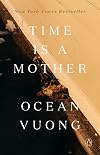
While I appreciated the particularity of Vuong’s word choices and the ways his imagery sucked me into the world of his poems, I struggled with his overarching style. His poetic skill just could not overcome my personal preference for poems where the biggest punch is often at the end and the cut of lines mirror the edge of my own thoughts and feelings. Ultimately, although I could appreciate that objectively he is a talented poet, on a subjective level, I could not emotionally connect to his work as much as I’d hoped I would. I loved several lines and even a few individual poems but, in the end, I think I’m just not the best audience for his work.
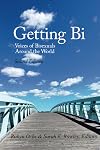
3.75 Stars. I really wanted to love this book. After many years of having it recommended to me and even recommending it to others in my professional work, I thought it was a given that it would resonate with me the way it resonated with others. To say I was disappointed when it didn’t is a huge understatement.
I did not expect to struggle as much as I did with the inconsistent skill level of the many different writers or with language and assertions that felt outdated when compared to modern bi+ organizing. I didn’t expect to feel so emotionally distant from so many of the narratives.
But, although I didn’t love this book, by the end, I came to respect it immensely.
I have often said that my favorite thing about the bisexual+ community is how multiplicitous we are. Our entire community is maintained not by pigeonholing ourselves into one finite definition and experience but by creating space for multiple definitions and experiences to coexist simultaneously across and sometimes even within individual stories. This book is one of the best examples of our multifaceted nature.
By showcasing a mix of overlapping and contradicting narratives, the editors reinforced repeatedly that there is not one way to be bisexual or to think about bisexuality. They also provided a historical snapshot of how people were experiencing or thinking about bisexuality during the mid-to-late 2000s, combatting any arguments that seek to erase the existence of bisexual people around the world show more during that time.
While I may not have needed the messages of this book at this point in my bisexual journey, I know that the closeted teen I was when it was first published did. I know that the movement that has progressed in so many ways over the past 20 years, partially because of this book, did. I know there are likely individuals across the globe who need these messages still.
For those reasons, I am grateful I stuck with this bi+ classic until the end and grateful that it exists. show less
I did not expect to struggle as much as I did with the inconsistent skill level of the many different writers or with language and assertions that felt outdated when compared to modern bi+ organizing. I didn’t expect to feel so emotionally distant from so many of the narratives.
But, although I didn’t love this book, by the end, I came to respect it immensely.
I have often said that my favorite thing about the bisexual+ community is how multiplicitous we are. Our entire community is maintained not by pigeonholing ourselves into one finite definition and experience but by creating space for multiple definitions and experiences to coexist simultaneously across and sometimes even within individual stories. This book is one of the best examples of our multifaceted nature.
By showcasing a mix of overlapping and contradicting narratives, the editors reinforced repeatedly that there is not one way to be bisexual or to think about bisexuality. They also provided a historical snapshot of how people were experiencing or thinking about bisexuality during the mid-to-late 2000s, combatting any arguments that seek to erase the existence of bisexual people around the world show more during that time.
While I may not have needed the messages of this book at this point in my bisexual journey, I know that the closeted teen I was when it was first published did. I know that the movement that has progressed in so many ways over the past 20 years, partially because of this book, did. I know there are likely individuals across the globe who need these messages still.
For those reasons, I am grateful I stuck with this bi+ classic until the end and grateful that it exists. show less
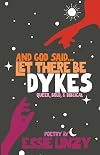
3.75 Stars. I came so close to giving this collection four stars because I found it super emotionally resonant as a Black queer Christian. I loved that many of these poems thrust me into my own memories of living at the junction of Blackness, queerness, and Christianity while showcasing the author’s skill at building up to a powerful ending and using wordplay to blend usually discordant themes. For all that I enjoyed in this work, I struggled with the sense that many poems were one or two revisions shy of meeting their full potential.
I see in Linzy’s work glimpses of the type of emotionally evocative, intellectually stimulating, and technically strong poetry I associate with authors like Danez Smith or Yazmin Monét Watkins, so I am looking forward to seeing her achieve even more of her own potential as she continues to hone and develop her craft.
I see in Linzy’s work glimpses of the type of emotionally evocative, intellectually stimulating, and technically strong poetry I associate with authors like Danez Smith or Yazmin Monét Watkins, so I am looking forward to seeing her achieve even more of her own potential as she continues to hone and develop her craft.
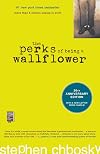
This was a beautiful book. Chbosky's wording and characterization made this book flow like a soft, pleasantly melancholy song. In the end, it left me with a somber yet hopeful feeling. I like that the most.
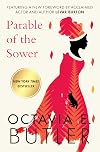
This is a heavy, necessary read. Butler offers the most realistically harrowing portrayal of the suffering we can expect if American society continues down its current path that I’ve ever read. Rather than allegorizing the matrix of domination as it currently exists, she masterfully outlines how the same matrix we suffer under now will rapidly grow even more oppressive as the world worsens. The systemic injustice and cruelty of Lauren’s world is simply the next evolutionary stage of what we see today.
Somehow, in spite of the depth of suffering and trauma in this book, I was unable to lose sight of a thin thread of hope throughout Lauren’s story. Perhaps, because I once was a strange Black girl obsessed with self-preservation and journaling my way to the future world of my dreams. Perhaps, because at this stage of my life, I have found strength in looking toward the horizon even when all around me is ablaze. Whatever the reason may be, I finished this book viewing it to be less of a horror show to despair over and more of a rationale for continuing to work towards something better. Even as things get worse, even when everything is lost, there are still reasons to be hopeful. There are still reasons to love, to care, to fight for the people and the things you believe in. There are still reasons to let other people in. There are still reasons to imagine a better way and to try to get as close to that way as possible.
I considered rating this higher because that takeaway show more and the intersectional vantage point with a Black girl at the center felt so powerful to me; however, I decided not to due to some confusing segments, some unnecessarily questionable romantic and sexual relationships, and my feeling conflicted about the necessity of portraying suffering as graphically and realistically as Butler did.
That being said, I would still highly recommend this book to anyone who can handle a plethora of violence, death, sexual assault, and other forms of suffering without being pulled under by it all. show less
Somehow, in spite of the depth of suffering and trauma in this book, I was unable to lose sight of a thin thread of hope throughout Lauren’s story. Perhaps, because I once was a strange Black girl obsessed with self-preservation and journaling my way to the future world of my dreams. Perhaps, because at this stage of my life, I have found strength in looking toward the horizon even when all around me is ablaze. Whatever the reason may be, I finished this book viewing it to be less of a horror show to despair over and more of a rationale for continuing to work towards something better. Even as things get worse, even when everything is lost, there are still reasons to be hopeful. There are still reasons to love, to care, to fight for the people and the things you believe in. There are still reasons to let other people in. There are still reasons to imagine a better way and to try to get as close to that way as possible.
I considered rating this higher because that takeaway show more and the intersectional vantage point with a Black girl at the center felt so powerful to me; however, I decided not to due to some confusing segments, some unnecessarily questionable romantic and sexual relationships, and my feeling conflicted about the necessity of portraying suffering as graphically and realistically as Butler did.
That being said, I would still highly recommend this book to anyone who can handle a plethora of violence, death, sexual assault, and other forms of suffering without being pulled under by it all. show less
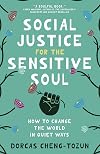
This was one of the most frustrating books I’ve read recently. On the one hand, I appreciated the validation it provided - particularly in the first section - for those of us who are highly sensitive but still eager to actively build a more just world. On the other hand, I found the foundational lens through which Cheng-Tozun considered social justice work so narrow and frankly inadequate for the times in which we’re living that it was difficult to tolerate much of the latter two sections of the book, even when she was stating something helpful and true.
I deeply struggled with the ways she presented self-awareness and self-comfort as the primary tools to finding your place in social justice work and with her prioritization of forms of social justice work that reform systems without dismantling them. It felt like these foci allowed her to frequently encourage readers to be content doing the least amount of work (or no work at all) rather than helping them better value the ways they can consistently contribute to social justice work by building a stronger understanding of how the work they do fits into the collective work of dismantling systemic oppression. This unbalanced perspective combined with her tendency to cite substandard sources and to leave out important aspects of historical narratives she shared left me supremely unsatisfied by the time I finished the book.
If you’re content with reading a book that will make you feel good and inspire you to consider ways show more to reform systems of injustice that still feel comfortable to you, you may be the intended audience for the book. But, if, like me, you’re looking for a book that will not only validate you as a highly sensitive person but also better equip you to engage in sustainable liberation work with the goal of dismantling the matrix of domination, I’d suggest you look elsewhere. (For example, this newsletter by Von Reyes: https://buttondown.com/vonreyes/archive/local-lessons-on-global-liberation/). show less
I deeply struggled with the ways she presented self-awareness and self-comfort as the primary tools to finding your place in social justice work and with her prioritization of forms of social justice work that reform systems without dismantling them. It felt like these foci allowed her to frequently encourage readers to be content doing the least amount of work (or no work at all) rather than helping them better value the ways they can consistently contribute to social justice work by building a stronger understanding of how the work they do fits into the collective work of dismantling systemic oppression. This unbalanced perspective combined with her tendency to cite substandard sources and to leave out important aspects of historical narratives she shared left me supremely unsatisfied by the time I finished the book.
If you’re content with reading a book that will make you feel good and inspire you to consider ways show more to reform systems of injustice that still feel comfortable to you, you may be the intended audience for the book. But, if, like me, you’re looking for a book that will not only validate you as a highly sensitive person but also better equip you to engage in sustainable liberation work with the goal of dismantling the matrix of domination, I’d suggest you look elsewhere. (For example, this newsletter by Von Reyes: https://buttondown.com/vonreyes/archive/local-lessons-on-global-liberation/). show less
Diverse, evocative, beautiful, and brave, these poems slunk under my skin in the best ways and inhabited me just as I inhabited them. They resonated with me in both technical and experiential ways and inspired me to share them almost immediately after I closed the book. The greatest gift, however, of this well-crafted collection was the hope it provided for my own bi+ lines. Nothing I have read since I found my way back to writing poetry semi-consistently has nurtured my hope that there is a literary space for my poems the way this anthology did. This work felt made for me in ways I wasn't even prepared for, and for that, I will be forever grateful.
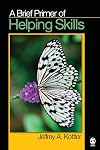
When I initially skimmed this book for a counseling class in college, I told myself I would read it in depth before I started grad school or before I started my career as a school counselor. I am years past both of those points, but I decided to still come back to this book now because I will be supervising an intern this year and I hoped the book would serve as a solid refresher on both counseling theory/techniques and what it feels like to be a beginner in the field.
For the most part, this book accomplished exactly what I had hoped. Kottler provides short, accessible introductions to counseling concepts and techniques while also exploring the concerns and questions many beginning counselors will have. He offers some great recommendations for additional reading and several well-chosen examples of what it looks like to apply the concepts discussed.
That being said, as someone with almost 5 years of experience as a counselor, I sometimes wished Kottler had highlighted additional important aspects of certain theories & techniques. I also wished he had articulated more explicitly and consistently how his own biases and positionality influenced the suggestions he made. As a school counselor, I similarly wished he had spent more time highlighting how the application of the concepts and skills he described look different in various counseling roles.
Despite those critiques, I believe this book could serve as a helpful supplement to more comprehensive counseling texts and to the show more experiential learning offered in counseling courses and internship experiences. I’m not entirely certain I would use this book if I were teaching an intro counseling course but I am glad I finally took the time to read it even at this stage in my career. show less
For the most part, this book accomplished exactly what I had hoped. Kottler provides short, accessible introductions to counseling concepts and techniques while also exploring the concerns and questions many beginning counselors will have. He offers some great recommendations for additional reading and several well-chosen examples of what it looks like to apply the concepts discussed.
That being said, as someone with almost 5 years of experience as a counselor, I sometimes wished Kottler had highlighted additional important aspects of certain theories & techniques. I also wished he had articulated more explicitly and consistently how his own biases and positionality influenced the suggestions he made. As a school counselor, I similarly wished he had spent more time highlighting how the application of the concepts and skills he described look different in various counseling roles.
Despite those critiques, I believe this book could serve as a helpful supplement to more comprehensive counseling texts and to the show more experiential learning offered in counseling courses and internship experiences. I’m not entirely certain I would use this book if I were teaching an intro counseling course but I am glad I finally took the time to read it even at this stage in my career. show less
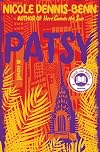
While I wouldn’t say this book was a total waste of time, I also wouldn’t say that I’m particularly glad I gave it a chance. I found the plot interesting enough but I never felt gripped by the characters and their emotions for more than a few pages at a time. I felt bored by the excessive descriptiveness which felt like a mediocre attempt at the beautiful descriptions I’ve seen from some of the writers the author and I mutually admire. I also struggled with the way information about the past was unfurled and the overall pace of the book. By the end of the book, I felt like I had spent 400+ pages swimming through molasses only to receive the smallest consolation prize for my trouble.
All in all, I realized while there are people for whom this book would be a good fit, I simply am not one of them.
All in all, I realized while there are people for whom this book would be a good fit, I simply am not one of them.
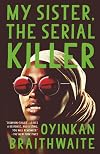
Captivating but not as emotionally resonant as I had hoped. The characters, plot, and writing style made this book difficult to put down but the speed with which the author moved from experience to experience and thought to thought made it nearly impossible to really inhabit the emotions of the characters. Ultimately, this was a quick, enjoyable read that left me wanting even more psychological and emotional meat to wrestle with.
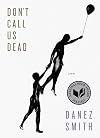
If I had just once sentence to describe this book, I would say that it is a gift. Smith’s indefatigable commitment to truth – through beauty and ugliness, through clarity and doubt, through love and fear – challenges readers to look modern day Black/queer realities dead in the eyes and to imagine something better for Black/queer futures. I highly recommend reading this collection and accepting that challenge.
[I received a free copy of this book as part of an agreement to write a review for a publication.]
2025 Edit
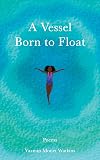
In the epigraph of Yazmin Monét Watkins’s poetry collection, A Vessel Born to Float, she declares, “For us. I see you sis.” Upon reading those words, I immediately felt a litany of desires for this book flowing out of my soul. If she really saw me, I wanted her poems to disrobe me and lay bare parts of my heart I hadn’t yet put into words. If she really wrote this for us, I wanted her poems to assure me that she understood how joy, grief, certainty, and doubt were all making a home in my Black, bisexual woman skin. In a season when I was desperate for ways to return to myself, I yearned for her poems to confirm it wasn’t foolish to believe that every single one of us living in the borderlands, especially Black bi women, have a right to be seen, known, and understood. Fortunately, Watkins met my desires at nearly every turn....
Read the rest of my full length review in Bi Women Quarterly: https://www.biwomenquarterly.com/she-see-us-sis-a-review-of-a-vessel-born-to-flo....
------------
Original Review
I will come back and edit this once my full review is published next year but for now I will say this is such a necessary work. Different in some ways from the poetry I'm most often strongly drawn to but still impactful and necessary for folks who are often missing from the narrative.
2025 Edit
In the epigraph of Yazmin Monét Watkins’s poetry collection, A Vessel Born to Float, she declares, “For us. I see you sis.” Upon reading those words, I immediately felt a litany of desires for this book flowing out of my soul. If she really saw me, I wanted her poems to disrobe me and lay bare parts of my heart I hadn’t yet put into words. If she really wrote this for us, I wanted her poems to assure me that she understood how joy, grief, certainty, and doubt were all making a home in my Black, bisexual woman skin. In a season when I was desperate for ways to return to myself, I yearned for her poems to confirm it wasn’t foolish to believe that every single one of us living in the borderlands, especially Black bi women, have a right to be seen, known, and understood. Fortunately, Watkins met my desires at nearly every turn....
Read the rest of my full length review in Bi Women Quarterly: https://www.biwomenquarterly.com/she-see-us-sis-a-review-of-a-vessel-born-to-flo....
------------
Original Review
I will come back and edit this once my full review is published next year but for now I will say this is such a necessary work. Different in some ways from the poetry I'm most often strongly drawn to but still impactful and necessary for folks who are often missing from the narrative.
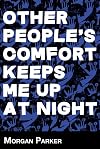
3.5 Stars. I appreciated the wording, imagery, and nuanced approaches within many of the poems in this collection; however, I found that overall it didn’t live up to Parker’s later collections which were my introduction to her work. I felt like she was holding herself back in some ways compared to her later works and consequently, forcing readers to mine deeper for emotional resonance than I’m used to when reading her poems. Her frame of reference for this work also felt more dissimilar from my own than her frame in her later works, so my inability to connect emotionally to the poems the way I have in her other books may be more a product of our different life experiences than her restraint or limitations as a writer at the time she wrote this.
Despite my critiques, I still found this to be a solid collection of work which I feel demands a reread to dive more into the emotions. I’m grateful that I gave it a try and that it has given me a deeper appreciation of Parker’s trajectory as an artist.
Despite my critiques, I still found this to be a solid collection of work which I feel demands a reread to dive more into the emotions. I’m grateful that I gave it a try and that it has given me a deeper appreciation of Parker’s trajectory as an artist.
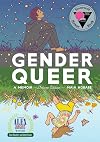
Before I dive into this review, I feel compelled to open with the disclaimer I am not really the intended audience for this format. I have never voluntarily read a full-length graphic novel that wasn’t manga, manwha, or a cartoon-spinoff until this book and I’m not sure I ever will again after finishing this book. I think they’re just not aligned with the way my brain processes information; so if you do love graphic novels outside of very specific contexts, this review is probably not for you.
With that in mind, overall, I found this book underwhelming. I struggled with the pacing and the nonlinear storytelling, especially without the more individual comic strip-esque framing the author had given to the individual stories when they were published on eir website. I felt like a lot of the stories were given a surface level treatment that made it hard for me to consistently connect to the author on an emotional level even as I sympathized with eir plight.
I also struggled with the lack of broader contextualization throughout the story. There were a few times when it felt like Kobabe wrote about eir internal world as if e was in a vacuum, separate from important external world implications and that felt deeply uncomfortable a couple of times, especially the brief discussion of autoandrophilia without any mention of how that term is still used to harm transgender folks.
All that being said, I can clearly see how Kobabe’s story could be life-changing for other nonbinary show more people, particularly those who do not have any possibility models in their lives, and how it could help folks communicate their experiences more clearly to folks that love them. I think it is definitely appropriate for secondary students but should be paired with some additional resources to address some of the contextualization that was missing from certain sections. show less
With that in mind, overall, I found this book underwhelming. I struggled with the pacing and the nonlinear storytelling, especially without the more individual comic strip-esque framing the author had given to the individual stories when they were published on eir website. I felt like a lot of the stories were given a surface level treatment that made it hard for me to consistently connect to the author on an emotional level even as I sympathized with eir plight.
I also struggled with the lack of broader contextualization throughout the story. There were a few times when it felt like Kobabe wrote about eir internal world as if e was in a vacuum, separate from important external world implications and that felt deeply uncomfortable a couple of times, especially the brief discussion of autoandrophilia without any mention of how that term is still used to harm transgender folks.
All that being said, I can clearly see how Kobabe’s story could be life-changing for other nonbinary show more people, particularly those who do not have any possibility models in their lives, and how it could help folks communicate their experiences more clearly to folks that love them. I think it is definitely appropriate for secondary students but should be paired with some additional resources to address some of the contextualization that was missing from certain sections. show less
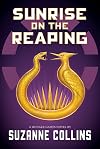
Things I enjoyed about this book: Living in Haymitch’s teenage voice. Understanding exactly why Haymitch became the version of himself we met in the original trilogy. Learning how characters were connected to each other long before Katniss’s Games. Watching the relationships among the Newcomers develop. Knowing how most of the songs sounded. Finding reasons to hate Snow even more than I already did. Finding reasons to continue to hate Plutarch as much as I always have. Noting all the ways this book served as a solid bridge between The Ballad of Songbirds and Snakes and the original trilogy.
Things I struggled with in this book: The return to a more narrow narrative focus after two books that offered a more blatant focus on real world connections and parallels. The pacing in a few sections. The realization I had been lied to in Catching Fire and Mockingjay. The never-ending poem I’ve been trying to avoid since I was a teenager.
Overall, while I didn’t love it as much as the last prequel, this still was a very solid addition to the series. It made me laugh and cry, broke my heart in several places, but still left me with some of the hopefulness I always feel after finishing a read of the original trilogy. I'm both very frustrated and excited to see what other stories Collins has been stowing away in this world because this book felt like a declaration that she is still not done with this world yet.
Things I struggled with in this book: The return to a more narrow narrative focus after two books that offered a more blatant focus on real world connections and parallels. The pacing in a few sections. The realization I had been lied to in Catching Fire and Mockingjay. The never-ending poem I’ve been trying to avoid since I was a teenager.
Overall, while I didn’t love it as much as the last prequel, this still was a very solid addition to the series. It made me laugh and cry, broke my heart in several places, but still left me with some of the hopefulness I always feel after finishing a read of the original trilogy. I'm both very frustrated and excited to see what other stories Collins has been stowing away in this world because this book felt like a declaration that she is still not done with this world yet.
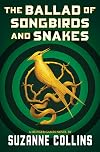
I put off reading this book for five years partially because I didn’t think I was going to enjoy it nearly as much as I enjoyed the original series. To my great surprise, however, this book delivered in ways I never would have anticipated and is now tied as one of my favorites in the entire Hunger Games world.
Collins’ exploration of a younger, greener Snow is both sympathetic and scathing. She invites readers to understand his worldview in a way that humanizes him while still holding him accountable for the harmful choices he makes. This invitation is bolstered by her ability to contextualize his choices within the flawed systems, structures, and relationships that influence him. This careful characterization allows for a story that speaks more deeply to the question of human nature than most novels I’ve encountered.
This book also stands out because of how well it showcases Collins’ keen understanding of Western history and the matrix of domination. In many ways, the book is a tapestry of both blatant and subtle parallels between Panem, our current societies, and the societies that preceded us. Collins' ability to weave those parallels together without being heavy handed with her message, ineffective with her plot, sloppy with her characters, or dismissive of the books that initially drew readers to the world of Panem make this truly one of the best late additions to a series I've read.
The ultimate result of all of these characteristics and author choices was my show more being glued to this book as much as possible and finding so much unexpected resonance with the story based on my racial, socioeconomic, professional, and familial experiences.
I am both excited and terrified to read the next book which I’m sure will both challenge and destroy me. show less
Collins’ exploration of a younger, greener Snow is both sympathetic and scathing. She invites readers to understand his worldview in a way that humanizes him while still holding him accountable for the harmful choices he makes. This invitation is bolstered by her ability to contextualize his choices within the flawed systems, structures, and relationships that influence him. This careful characterization allows for a story that speaks more deeply to the question of human nature than most novels I’ve encountered.
This book also stands out because of how well it showcases Collins’ keen understanding of Western history and the matrix of domination. In many ways, the book is a tapestry of both blatant and subtle parallels between Panem, our current societies, and the societies that preceded us. Collins' ability to weave those parallels together without being heavy handed with her message, ineffective with her plot, sloppy with her characters, or dismissive of the books that initially drew readers to the world of Panem make this truly one of the best late additions to a series I've read.
The ultimate result of all of these characteristics and author choices was my show more being glued to this book as much as possible and finding so much unexpected resonance with the story based on my racial, socioeconomic, professional, and familial experiences.
I am both excited and terrified to read the next book which I’m sure will both challenge and destroy me. show less
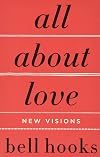
Imperfect yet utterly necessary, this is a book that I believe I will be coming back to for the rest of my life. Parts of the book felt intimately affirming of feelings and experiences I hadn’t yet put into clear words while other parts pushed me to think more broadly about love and relationship in exactly the ways I needed to be pushed in this season of my life. I found that some of my most frustrating relationships made more sense within the context of the worldview hooks offered in this book, which allowed me to grow from them in new ways.
While there were some minor sections throughout the book with which I didn’t agree, the one major failing of this book was that hooks often used a binary, heterocentric-lens when discussing gender and/or romantic relationships. I wish she had elevated more strongly how the barriers to true loving relationship she ascribed to certain genders or different-gender couples can manifest in people of any gender and in same-gender relationships.
Even with that major failing, the underlying premise of this book - the notion that love is a conscious commitment to nurture the growth of one’s self and another and that such a commitment should impact every area of our lives - made the book so worth it that I still would highly recommend it to anyone and everyone. I’d also recommend Adult Children of Emotionally Immature Parents: How to Heal from Distant, Rejecting, or Self-Involved Parents as a good, less binary, companion book to go a bit show more deeper into how family dysfunction can negatively shape an individual’s approach to building loving relationship and how to move into a space of more love towards self and others. show less
While there were some minor sections throughout the book with which I didn’t agree, the one major failing of this book was that hooks often used a binary, heterocentric-lens when discussing gender and/or romantic relationships. I wish she had elevated more strongly how the barriers to true loving relationship she ascribed to certain genders or different-gender couples can manifest in people of any gender and in same-gender relationships.
Even with that major failing, the underlying premise of this book - the notion that love is a conscious commitment to nurture the growth of one’s self and another and that such a commitment should impact every area of our lives - made the book so worth it that I still would highly recommend it to anyone and everyone. I’d also recommend Adult Children of Emotionally Immature Parents: How to Heal from Distant, Rejecting, or Self-Involved Parents as a good, less binary, companion book to go a bit show more deeper into how family dysfunction can negatively shape an individual’s approach to building loving relationship and how to move into a space of more love towards self and others. show less
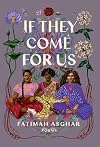
Asghar brings to life the complexities of their personal histories alongside the horrors (past and present) of the Partition with vivid, provocative imagery and thought-provoking storytelling. I struggled at times with some of their choices around phrasing and meter but ultimately quite enjoyed this collection. I look forward to reading more of their work.
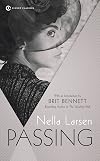
This book was thought-provoking, challenging, and unexpected in so many ways. More so than Quicksand, which I read over a decade ago, this novel inspired me to think about different degrees of racial passing, how Black people who don’t pass physically can pass socially, and the ways racial passing can intersect with other forms of passing. Because I saw pieces of myself in Irene’s obsession with stability and safety, the book also forced me to reflect on times when I’ve chosen to be inauthentic due to some perceived benefit. That forced self-reflection helped me have a little bit more empathy for Clare than I anticipated. All in all, my big takeaway from this story is that all forms of passing come with a cost that we can't always see until we're forced to pay it.
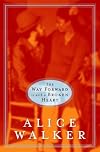
More so than any other book I’ve read this year, this book healed me.
It cradled me in its lush arms and affirmed my questions and my heartbreak, my love and my grief, my frustration and my need. When I felt on the verge of self-denigration, Walker’s stories saw me fully and invited me to self-compassion while challenging me to own more of my truth - in my personal relationships and in my writing too. I don’t know who I would be at the end of this year had I not given in to the impulse to grab this book from my childhood home the week my relationship ended. I’m grateful that I will never have to know and grateful this evocative, intimate work exists.
It cradled me in its lush arms and affirmed my questions and my heartbreak, my love and my grief, my frustration and my need. When I felt on the verge of self-denigration, Walker’s stories saw me fully and invited me to self-compassion while challenging me to own more of my truth - in my personal relationships and in my writing too. I don’t know who I would be at the end of this year had I not given in to the impulse to grab this book from my childhood home the week my relationship ended. I’m grateful that I will never have to know and grateful this evocative, intimate work exists.
Prayers from the Edges: Prayers and Litanies Written by LGBTQ+ Christians by The Generous Space Community

This book gets four stars not because the writing overall is spectacular (though there are several moving, well-written prayers in here - especially in the General Litanies section) but because the authenticity of this collection is. I bought this book on a whim and consequently underestimated how much beauty and healing can emerge when LGBTQ+ Christians are allowed to share their prayers in an authentic, written manner. Reading this collection was deeply affirming and soul-filling for me as I felt it reflected many of my own experiences of doubt and faith and those of people I love. I also appreciated the fact this book made space for both raw, non-poetic prayers as well as poetic and/or liturgical prayers. I highly recommend this collection to LGBTQ+ Christians looking for some prayers to help sustain them in their journeys with God and to Christian allies looking to offer more space in their church, liturgy, or denomination for the experiences of LGBTQ+ Christians.

From the first chapters of this book, I knew two things for certain.
First, I knew that I adored the character of Ruby. Her emotional intensity and melodrama, her obsessiveness and ignorance, her loneliness and need - all of these things reminded me so much of my teenage self and my teenage writing that I loved her immediately. It felt especially refreshing to resonate so strongly with a main character after the last novel I finished.
Second, I knew that my final rating of this book would depend heavily on how it ended. While I spent most of the book rating it a 3.75, the emotional and mental impact of the final chapter bumped it up to 4 stars for me. I couldn’t help thinking as I read it that this was the kind of uncomfortable, authentic sapphic storytelling I had hoped for when I read Lies We Tell Ourselves years ago. There’s a bitterness to the ending but there’s also something necessary there, like medicine. I felt like it forced me to really sit with what the choices Daphne and Ruby made said about love, about human relationships, about intimacy, about identity, about growth, about society. I appreciated the way it lingered in my heart and mind after I finished.
While I immediately had an affinity for Ruby, I saw parts of myself in Daphne too (especially her teenage arrogance and need to be right). I saw parts of my first relationship in both of them as well, so it made sense to methat Ruby’s low self-worth and inability to choose growth and Daphne’s beliefs show more about the world and her need to remain emotionally unaffected would be a large part of their relationship ending and their openness to consider dating boys once again. Unlike several other readers, I didn’t read these choices as wins for compulsory heterosexuality but as evidence of the emotional immaturity of both girls and as authentic portrayals of the ways we, especially multisexual/bisexual+ folks, have been taught to cut parts of ourselves off to protect ourselves from our desires or fears. The ending scenes with Calvin also really resonated with me, helped me see his character in a fuller light, and felt painfully true to my experience growing up with a mental illness in a Black household in some ways (and I would definitely argue that Ruby is likely mentally ill and needs a good Black therapist in her life).
All in all, I’m grateful for this first known sapphic YA novel. While I’m not sure teens today would enjoy the 70s style, I enjoyed this book much more than expected and feel like it helped me process some things from my own sapphic relationships while also being thoughtful and fun at various parts. I’m looking forward to getting my hands on the other two books in this loose trilogy so I can learn more about some of the other young women in this world Guy created. (And I'm keeping my fingers crossed that someone will adapt this book into a mini-series or a play someday because it deserves it.) show less
First, I knew that I adored the character of Ruby. Her emotional intensity and melodrama, her obsessiveness and ignorance, her loneliness and need - all of these things reminded me so much of my teenage self and my teenage writing that I loved her immediately. It felt especially refreshing to resonate so strongly with a main character after the last novel I finished.
Second, I knew that my final rating of this book would depend heavily on how it ended. While I spent most of the book rating it a 3.75, the emotional and mental impact of the final chapter bumped it up to 4 stars for me. I couldn’t help thinking as I read it that this was the kind of uncomfortable, authentic sapphic storytelling I had hoped for when I read Lies We Tell Ourselves years ago. There’s a bitterness to the ending but there’s also something necessary there, like medicine. I felt like it forced me to really sit with what the choices Daphne and Ruby made said about love, about human relationships, about intimacy, about identity, about growth, about society. I appreciated the way it lingered in my heart and mind after I finished.
While I immediately had an affinity for Ruby, I saw parts of myself in Daphne too (especially her teenage arrogance and need to be right). I saw parts of my first relationship in both of them as well, so it made sense to me
All in all, I’m grateful for this first known sapphic YA novel. While I’m not sure teens today would enjoy the 70s style, I enjoyed this book much more than expected and feel like it helped me process some things from my own sapphic relationships while also being thoughtful and fun at various parts. I’m looking forward to getting my hands on the other two books in this loose trilogy so I can learn more about some of the other young women in this world Guy created. (And I'm keeping my fingers crossed that someone will adapt this book into a mini-series or a play someday because it deserves it.) show less
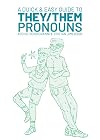
3.5 Stars. This guide offers a lot of useful information for folks just learning about gender neutral pronouns but the style and tone felt not quite right for some of the people I know who most need something like this. It also didn’t feel like it would have been the most helpful starting place for me when I was first learning about these concepts years ago. That being said, I feel like this could be helpful for some younger folks - I’m thinking especially of cis queer teenagers I’ve worked with who already question the gender binary but aren’t fully affirming of nonbinary identities yet. I also think it could be helpful for folks who use gender neutral pronouns because the section of the book for them felt the strongest.
As an educator who trains other educators on supporting LGBTQ+ students, I probably will no longer recommend this book to everyone who attends one of my sessions but I will be thinking about how I could work through the book collaboratively with my participants as a way to share some of the good information in the book while mitigating some of the issues I had with the style and tone.
As an educator who trains other educators on supporting LGBTQ+ students, I probably will no longer recommend this book to everyone who attends one of my sessions but I will be thinking about how I could work through the book collaboratively with my participants as a way to share some of the good information in the book while mitigating some of the issues I had with the style and tone.

This is one of the greatest Christian fiction as well as romance books, I have ever read. Mair Burney's portrayal of Nicky and Zora's romance has all the innocence of a childhood crush with all the complexities of adulthood. And her masterfully connection of their romance with the love of Jesus is inspiring. In the end, I think the best thing about this book is that it offers very important messages to readers about God, love, and prejudice.