

Judy Grahn
Author of Another Mother Tongue: Gay Words, Gay Worlds
About the Author
Judy Grahn is an internationally known poet, author, mythographer, and cultural theorist. Her work include A Simple Revolution: The Making of an Activist Poet, Descent to the Roses of a Family, Hanging on Our Own Bones, and Touching Creatures, Touching Spirit, and many others.
Works by Judy Grahn
Elephant Poem Coloring Book 1 copy
Grahn, Judy Archive 1 copy
The Inheritance 1 copy
Judy Grahn and Zamora 1 copy
Associated Works
Chloe Plus Olivia: An Anthology of Lesbian Literature from the 17th Century to the Present (1994) — Contributor — 482 copies, 1 review
Cries of the Spirit: A Celebration of Women's Spirituality (2000) — Contributor — 404 copies, 2 reviews
A Woman Like That: Lesbian and Bisexual Writers Tell Their Coming Out Stories (1999) — Contributor — 260 copies, 3 reviews
No More Masks: An Anthology of Twentieth-Century American Women Poets (1993) — Contributor, some editions — 226 copies, 3 reviews
Gay and Lesbian Poetry in Our Time (Stonewall Inn Editions) (1988) — Contributor — 189 copies, 1 review
Poems Between Women: Four Centuries of Love, Romantic Friendship, and Desire (1997) — Contributor — 97 copies, 1 review
She Rises Like the Sun: Invocations of the Goddess by Contemporary American Women Poets (1989) — Contributor — 71 copies
Hear the Silence: Stories by Women of Myth, Magic, & Renewal (1986) — Contributor — 51 copies, 1 review
Mom: Candid Memoirs by Lesbians About the First Woman in Their Life (1998) — Contributor — 25 copies
Editor's Choice II: Fiction, Poetry & Art from the U.S. Small Press, 1978 to 1983 (Contemporary Anthology Series) (1987) — Contributor — 6 copies
Stooge Thirteen, Spring 1975 — Contributor — 1 copy
"Orpheus" VORTEX: A Journal of New Vision (Volume 1, Number 2) — Contributor — 1 copy
Tagged
Common Knowledge
- Legal name
- Grahn, Judy Rae
- Birthdate
- 1940-07-28
- Gender
- female
- Education
- California Institute of Integral Studies
- Occupations
- poet
university teacher - Organizations
- New College of California
California Institute of Integral Studies
Institute for Transpersonal Psychology
Gay Women's Liberation Group - Awards and honors
- Publishing Triangle (Bill Whitehead Award for Lifetime Achievement, 1994)
Association for the Study of Women and Mythology Demeter Award for Leadership in Women's Spirituality (2020: Lifetime Achievement) - Nationality
- USA
- Birthplace
- Chicago, Illinois, USA
- Places of residence
- Chicago, Illinois, USA
- Associated Place (for map)
- Chicago, Illinois, USA
Members
Reviews

I feel like this retelling of Inanna's descent set in a lesbian bar was made for me. After writing and editing Tarot poetry for over two years, I still love the genre, and especially the Tarot reader in this text, Nin (Ninshubur). The theatrical elements of Queen of Swords remind me of acting in--and contributing a response poem to--a play written in verse by my Antioch College friend Angela. Long before I attended Antioch, I began researching Goddesses, including Inanna and Her other show more incarnations that are mentioned in Queen of Swords. And I have made several important decisions--like attending grad school at Mills College--in lesbian bars. show less
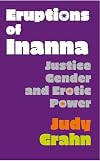
This is a really fascinating dive into the stories of Inanna as translated from the cuneiform tablets of Ancient Sumer. Grahn tells us of the first female poet known by name, Enheduanna, who was a high priestess of Inanna, and through whom we gleaned much of her stories. Grahn's poetic interpretation draws parallels between modern Christianity and the stories of the first known civilization of Mesopotamia. We see in this book feminine power, autonomy, and sexual prowess that is frowned upon show more today, but was once celebrated and considered a divine right. We see also ancient examples of transness and gender non-conformity, and how it was essential to Inanna's roll in the cosmos. A crucial read for intersectional feminists, LGBTQ folk and allies, and anyone who wants (still) to argue that men are inherently better than women or androgynous folks. show less

As a queer, working-class, Oakland-based, Adrienne-Rich-loving poet, I can't believe I haven't read Judy Grahn's poetry before now. So much language in this book spoke directly to me, from Rich's stellar introduction ("for women, the devil has most often taken the form of love rather than of power, gold or learning") to the Common Woman poems ("the common woman is as common as the best of bread / and will rise / and will become strong--I swear it to you"), to the conversations with death show more ("death, do you tell me I cannot touch this woman? / if we use each other up / on each other / that's a little bit less for you"), to the very last lines in the collection ("until then, my sweethearts, / let us speak simply of / romance, which is so much / easier and so much less / than any of us deserve").
Overall, a powerful and beautiful book. And this is the second book Goodreads has recommended that I've liked, so good job, Goodreads! show less
Overall, a powerful and beautiful book. And this is the second book Goodreads has recommended that I've liked, so good job, Goodreads! show less
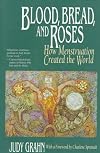
This book changed my entire worldview. Anyone who’s ever felt left out of history class by the prevalence of masculine pronouns has been waiting for Blood, Bread, and Roses. Grahn, celebrated feminist poet and writer, approaches anthropology from humanity’s very inception with the perspective that menstruation was the mother of invention. She argues that menstrual seclusion rituals, widespread among early societies, established human understanding of separation and synchronicity, and show more that they conveyed that understanding through metaform, behavior that communicates social mores and shared belief. Scholarly, but readable and stimulating, Grahn draws from prehistoric and modern cultural comparison, etymology, and poetic inference to detail the roots of religion, law, mythology, mathematics, science, clothing and eating. While readers may not agree with all her theories, the book is indispensable for anyone who has wondered about the other half of historical gender bias, and longed for more balanced alternate theories. show less
Lists
Awards


You May Also Like


Associated Authors
Statistics
- Works
- 29
- Also by
- 29
- Members
- 1,484
- Popularity
- #17,304
- Rating
- 4.0
- Reviews
- 8
- ISBNs
- 42
- Languages
- 1
- Favorited
- 2