
Gloria Naylor (1950–2016)
Author of The Women of Brewster Place
About the Author
Gloria Naylor was born in Manhattan, New York on January 25, 1950. She received a bachelor's degree in English from Brooklyn College and a master's degree in African American studies from Yale University. She taught at several universities including George Washington University, the University of show more Pennsylvania, New York University, Princeton University, and Boston University. Her first novel, The Women of Brewster Place, won the American Book Award and the National Book Award for first novel in 1983. It was adapted into a two-part television movie in 1989. Her other novels include Linden Hills, Mama Day, Bailey's Café, and The Men of Brewster Place. She died of heart failure on September 28, 2016 at the age of 66. (Bowker Author Biography) show less
Image credit: David Shankbone, August 2007
Works by Gloria Naylor
Children of the Night: The Best Short Stories by Black Writers, 1967 to the Present (1995) — Editor & Contributor — 126 copies
The Best Short Stories by Black Writers, 1899-1967; Children of the Night: The Best Short Stories by Black Writers, 1967-1995 (2002) — Editor — 39 copies
El bar de Bailey 1 copy
Associated Works
Breaking Ice: An Anthology of Contemporary African-American Fiction (1990) — Contributor — 304 copies, 1 review
The Norton Anthology of African American Literature {2nd edition} (2003) — Contributor, some editions — 282 copies, 2 reviews
Daughters of Africa: An International Anthology of Words and Writings by Women of African Descent from the Ancient Egyptian to the Present (1992) — Contributor — 186 copies
Calling the Wind: Twentieth Century African-American Short Stories (1992) — Contributor — 116 copies
Go the Way Your Blood Beats: An Anthology of Lesbian and Gay Fiction by African-American Writers (1996) — Contributor — 92 copies
Grand Mothers: Poems, Reminiscences, and Short Stories About the Keepers of Our Traditions (1994) — Contributor — 89 copies
The Haves and Have Nots: 30 Stories About Money and Class in America (1999) — Contributor — 36 copies
The Unforgetting Heart: An Anthology of Short Stories by African American Women, 1859-1993 (1993) — Contributor — 22 copies
The Bluelight Corner: Black Women Writing on Passion, Sex, and Romantic Love (1998) — Contributor — 10 copies
Tagged
Common Knowledge
- Birthdate
- 1950-01-25
- Date of death
- 2016-09-28
- Gender
- female
- Education
- Medgar Evers College
Brooklyn College (BA|1981)
Yale University (MA|1983) - Occupations
- novelist
- Organizations
- George Washington University
New York University
Boston University
University of Kent
University of Pennsylvania
Cornell University (show all 7)
Tulane University - Awards and honors
- NEA Fellowship (1985)
Guggenheim Fellowship (1988)
American Book Award (1983)
National Book Award (1983)
Candace Award (1986)
Lillian Smith Award (1989) - Agent
- Sterling Lord Literistic
- Cause of death
- heart attack
- Nationality
- USA
- Birthplace
- Manhattan, New York, USA
- Places of residence
- Harlem, New York, USA
Queens, New York, USA - Place of death
- Christiansted, U.S. Virgin Islands, USA
- Map Location
- USA
Members
Reviews

Linden Hills wasn’t black; it was successful. The shining surface of their careers, brass railings, and cars hurt his eyes because it only reflected the bright nothing that was inside of them.
Gloria Naylor's Lindon Hills is somehow a perfect allegory of race, gender, and sexuality within the black community and the power structures put in place to keep the status quo. The premise is simple: friends Willie and Lester—two 20-year-old black men who decide to travel through the glittering show more Linden Hills to scrape enough money together for the holiday season. What they find instead a community rotting from the inside out and the deeply twisted lives that are caught up in all of it in the daunting imagery of Dante's Inferno.
The novel has at times 4 simultaneous storylines running throughout: the present, involving Willie and Lester; the other presents depicting Mr. Nedeed and another with his wife trapped in the basement; and the backstories of the characters Willie and Lester interact with through their journey through Linden Hills.
I absolutely loved the characters Willie and Lester and how who interact with as they descend into Linden Hills. It almost felt a little like a mystery novel at times; the characters revealing subtle clues as to their ills before the great reveal of their "sins". We meet a gay man marrying and making his lover be his best man to get a foot into Linden Hills, a man mourning his conveniently dead wife before he marries another, an alcoholic, burned out priest, a woman who loses all sense of meaning after leaving the warm home of her grandmother and "making it", and a creepy historian who documents every happening of Linden Hills—including the acts of our own Willie and Lester from the past few days without anyone knowing. I kept wondering each chapter who'd I'd see, what cast of characters I'd meet and chip away word by word to see who they really were.
A vivid addition to the novel was the southern gothic elements of that comes alive around Willa Nedeed in her basement. There's major Wuthering Heights and Jane Eyre vibes in the calling across the hills of the trapped woman in the basement, the almost supernatural powers of Mr. Nedeed and his control over his own little section of hell. It's full of unnatural shadows and nightmares, dead children shrouded in lace and stiffening by the hour and fires (perhaps) purifying it all. It was exciting. It was something classic in an understandable, modern setting. It was amazing.
And so I really appreciated and enjoyed the ease that the book read in and the pervasiveness of the themes and symbols. For some, it may seem heavy-handed, but I think masking that in a novel such as this is would have been incredibly disingenuous and showed quite apparently the genius of Gloria Naylor. Her work in this story with the interwoven themes of and symbols of black and white, father and son, faces and identity, and material goods and their emptiness was beautiful and complex without being convoluted. It's the perfect allegory for the question of "making it" in a white man's world and a clear thesis against the philosophies of Booker T. Washington. It'll make you think, and I believe that's exactly what Naylor wanted.
"Being white was the furthest thing from his mind, since he spent every waking moment trying to be no color at all." show less
Gloria Naylor's Lindon Hills is somehow a perfect allegory of race, gender, and sexuality within the black community and the power structures put in place to keep the status quo. The premise is simple: friends Willie and Lester—two 20-year-old black men who decide to travel through the glittering show more Linden Hills to scrape enough money together for the holiday season. What they find instead a community rotting from the inside out and the deeply twisted lives that are caught up in all of it in the daunting imagery of Dante's Inferno.
The novel has at times 4 simultaneous storylines running throughout: the present, involving Willie and Lester; the other presents depicting Mr. Nedeed and another with his wife trapped in the basement; and the backstories of the characters Willie and Lester interact with through their journey through Linden Hills.
I absolutely loved the characters Willie and Lester and how who interact with as they descend into Linden Hills. It almost felt a little like a mystery novel at times; the characters revealing subtle clues as to their ills before the great reveal of their "sins". We meet a gay man marrying and making his lover be his best man to get a foot into Linden Hills, a man mourning his conveniently dead wife before he marries another, an alcoholic, burned out priest, a woman who loses all sense of meaning after leaving the warm home of her grandmother and "making it", and a creepy historian who documents every happening of Linden Hills—including the acts of our own Willie and Lester from the past few days without anyone knowing. I kept wondering each chapter who'd I'd see, what cast of characters I'd meet and chip away word by word to see who they really were.
A vivid addition to the novel was the southern gothic elements of that comes alive around Willa Nedeed in her basement. There's major Wuthering Heights and Jane Eyre vibes in the calling across the hills of the trapped woman in the basement, the almost supernatural powers of Mr. Nedeed and his control over his own little section of hell. It's full of unnatural shadows and nightmares, dead children shrouded in lace and stiffening by the hour and fires (perhaps) purifying it all. It was exciting. It was something classic in an understandable, modern setting. It was amazing.
And so I really appreciated and enjoyed the ease that the book read in and the pervasiveness of the themes and symbols. For some, it may seem heavy-handed, but I think masking that in a novel such as this is would have been incredibly disingenuous and showed quite apparently the genius of Gloria Naylor. Her work in this story with the interwoven themes of and symbols of black and white, father and son, faces and identity, and material goods and their emptiness was beautiful and complex without being convoluted. It's the perfect allegory for the question of "making it" in a white man's world and a clear thesis against the philosophies of Booker T. Washington. It'll make you think, and I believe that's exactly what Naylor wanted.
"Being white was the furthest thing from his mind, since he spent every waking moment trying to be no color at all." show less

Linden Hills is one of the creepiest books I've read, and certainly one of the most enjoyable. Gloria Naylor is a beautiful writer, hands down. Although her language is full of symbol and metaphor, she is still easily accesssable. I read Linden Hills after reading The Women of Brewster Place and expected something similar: stories of different people's stuggles with racism and class. Though I loved WBP, Linden Hills has an extra element, a feeling of being sucked down into disparity. The show more characters are all looking tho climb the social ladder of the bourgeois black comminuty. However, truly they seek a descent, both literally (the most coveted addresses are at the bottom of the hills) and figuratively (losing themselves and their souls to advance socially). I think this is a great book not only for its lessons about society, appearece and status, but also beacsue Naylor is a gifted storyteller. I finished this book within a day of starting it because I couldn't put it down. I'm dissapointed that Naylor isn't as highly recognized as some other contemorary authors: she definitely deserves a place beside Morrison for her beauty of language and Steinbeck for her examination of the human spirit in a crushing society. Bravo! show less

Why, oh, why must I believe everything I read? It sets grotesquely romantic expectations of my reality, causing me to behave like a total idiot in most situations. Case in point: I made the mistake of barreling through this book during my lunch breaks and 15-minute breaks. When I wasn't slumping in my chair desperately attempting to stifle tears, I roamed the halls in a stupor, oblivious to what was going on around me. At one point, when a co-worker said, "Hey, Lindsay! What's up?" I caught show more myself about to mutter, "Uhhhh...rape" (which might have been kind of hilarious, if not without its repercussions).
I turned to this book purposefully after finishing East of Eden because, while it was wonderful as Steinbeck can't help but be, I had about had it with whiny men. I craved women. Strong women, three dimensional women. And I knew Gloria Naylor could deliver. My heart raced the entire time reading these stories, both for the passion and suspense. I went pages barely able to take a breath. I exhaled low moans with Lucielia and Lorraine. It made me wonder how I ever manage to move on--back to work, on to another book, overcoming a formidable challenge. Thank goodness I'm inclined to take fiction as gospel. show less
I turned to this book purposefully after finishing East of Eden because, while it was wonderful as Steinbeck can't help but be, I had about had it with whiny men. I craved women. Strong women, three dimensional women. And I knew Gloria Naylor could deliver. My heart raced the entire time reading these stories, both for the passion and suspense. I went pages barely able to take a breath. I exhaled low moans with Lucielia and Lorraine. It made me wonder how I ever manage to move on--back to work, on to another book, overcoming a formidable challenge. Thank goodness I'm inclined to take fiction as gospel. show less
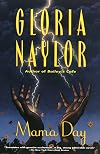
This is a story in parts - Mama Day strides across most of it like a colossus. I want to call her the matriarch, but she's not a mother. Perhaps the high priestess is a better description.
Cocoa, her grand-niece, and George, Cocoa's husband who ultimately sacrifices himself to save Cocoa's life because he can't understand the world he is in.
And that's the other part of this story. Mama Day lives in a world that we might call magical, although she denies she "does that Hoodoo nonsense." Cocoa show more crosses that world to the everyday world of job hunting, marriage, dinner parties and the like. George is firmly based in the mundane - he's an engineer who never has the grand idea, but takes the grand ideas of others and turns them into hard reality.
The clash of these ideas and worlds makes for a compelling, fascinating book. Unusually to my mind, George is the character that I strongly suspect most of us will relate to - he's the everyman that relates to this wild, old, confusing world in which his wife grew up. show less
Cocoa, her grand-niece, and George, Cocoa's husband who ultimately sacrifices himself to save Cocoa's life because he can't understand the world he is in.
And that's the other part of this story. Mama Day lives in a world that we might call magical, although she denies she "does that Hoodoo nonsense." Cocoa show more crosses that world to the everyday world of job hunting, marriage, dinner parties and the like. George is firmly based in the mundane - he's an engineer who never has the grand idea, but takes the grand ideas of others and turns them into hard reality.
The clash of these ideas and worlds makes for a compelling, fascinating book. Unusually to my mind, George is the character that I strongly suspect most of us will relate to - he's the everyman that relates to this wild, old, confusing world in which his wife grew up. show less
Lists
Awards


You May Also Like


Associated Authors
Statistics
- Works
- 11
- Also by
- 19
- Members
- 5,408
- Popularity
- #4,611
- Rating
- 4.0
- Reviews
- 69
- ISBNs
- 115
- Languages
- 11
- Favorited
- 18