
Bebe Moore Campbell (1950–2006)
Author of Brothers and Sisters
About the Author
Bebe Moore Campbell 1950-2006 Bebe Moore Campbell (b. 1950) is an award-winning author and a journalist. In her 1989 memoir, Sweet Summer: Growing up With and Without My Dad, she recalls living in Philadelphia with her mother during the school year and spending summers with her father in North show more Carolina. The book has been hailed for its bittersweet remembrances of a dual childhood and life in the South at the merge of the social revolution of the 1960s. Her other nonfiction includes Successful Women, Angry Men: Backlash in the Two-Career Marriage (1986). She has written the novels Your Blues Ain't Like Mine (1992) and Brothers and Sisters (1994). Campbell's interest in mental health prompted here to write her first children's book, Sometimes My Mommy Gets Angry, published in September 2003. This book won the National Alliance for the Mentally Ill (NAMI) Outstanding Literature Award for 2003. It tells the story of how a little girl copes with being reared by her mentally ill mother. Ms. Campbell was a member of the National Alliance for the Mentally Ill and a founding member of NAMI-Inglewood. Her book 72 Hour Hold also deals with mental illness. Her first play, "Even with the Madness", debuted in New York in June 2003. Campbell has contributed nonfiction articles to Ms, Working Mother, Ebony, the New York Times Magazine, the Washington Post, the Los Angeles Times, Seventeen, Parents, and Glamour, and is a regular commentator for National Public Radio's Morning Edition. She earned a B.S. in Elementary Education from the University of Pittsburgh. She died from complications related to brain cancer on November 27, 2006. (Bowker Author Biography) show less
Image credit: Barbara DuMetz
Works by Bebe Moore Campbell
Brother and sisters 1 copy
Associated Works
This Is My Best: Great Writers Share Their Favorite Work (2004) — Contributor — 175 copies, 3 reviews
Writing Women's Lives: An Anthology of Autobiographical Narratives by Twentieth-Century American Women Writers (1994) — Contributor — 128 copies, 3 reviews
Growing Up Ethnic in America: Contemporary Fiction About Learning to Be American (1999) — Contributor — 120 copies
Tagged
Common Knowledge
- Birthdate
- 1950-02-18
- Date of death
- 2006-11-27
- Gender
- female
- Education
- Philadelphia High School for Girls
University of Pittsburgh (BS, Elementary Education) - Occupations
- journalist
novelist
radio broadcaster - Organizations
- National Alliance for the Mentally Ill (member)
NAMI-Inglewood (founding member)
Alpha Kappa Alpha Sorority, Incorporated (honorary member)
National Public Radio - Short biography
- Bebe Moore Campbell lived in Angeles, California with her husband, son, and daughter. The author died of brain cancer at the age of 56.
- Cause of death
- brain cancer
- Nationality
- USA
- Birthplace
- Philadelphia, Pennsylvania, USA
- Place of death
- Los Angeles, California, USA
- Burial location
- Inglewood Park Cemetery, Inglewood, California, USA
- Associated Place (for map)
- California, USA
Members
Reviews
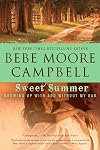
Bebe Moore Campbell, who suffered an untimely death from brain cancer in 2005, was from my same generation. Thus in reading her heart-warming memoir, I found that many of her memories of growing up were similar to mine. This made the book very fun for me to read. She also had an engaging way of writing that combined both humor and poetic qualities. She seemed like someone with whom I could have been good friends.
She was born in 1950 in Philadelphia. Her father, George Moore, was involved in show more a car crash that left him a paraplegic when Bebe was just ten months old. Soon thereafter, her parents separated. Her father moved back to his childhood home in North Carolina. As a young girl, she spent every summer with her father.
When she got older and found out that her father’s accident was his own fault, she was angry with him for a long time. But she was forgetting the price he himself had to pay, living his life confined to a wheelchair:
"How he forced the sadness from his eyes I do not know. Only one time did I witness him mourning the life he might have had. It was a terrible moment, but a healing one. That split second taught me that the best part of my father, the jewel stuck deep inside his core, was determination.”
Campbell was never satisfied with just summers – she wanted men in her life everyday instead of being surrounded and dominated by The Bosoms, as she called her mother and grandmother and aunt:
"If Sundays gave me a dependable supply of prayerful men, then during the week men were a piecemeal affair, a patchwork quilt I stitched together from whatever brilliant scraps of biceps and aftershave I could find.”
A self-professed “daddy’s girl,” she begins her book with her father George Moore's death in 1977 from another car accident. She writes of the North Carolina funeral, and of the many uncles and lifelong friends of her father:
"My loss was more than his death, much more…. My father took to his grave the short-sleeved, beer-swilling men of summer, big bellies, raucous laughter, pipe smoke and the aroma of cigars," she mourned. "My daddy is really gone and his vacant place is my cold, hard border. As always, my life is framed by his absence."
At his funeral, she wrote:
"It is still cool in North Carolina in April, a perfect time for a family reunion. Crowded in Grandma’s yard were all the faces that looked like her face, the resemblance lying somewhere between the chin and the character lines that ran straight across high foreheads.”
It causes her to look back and remember her early memories of her father:
“I was seven years old, sitting on the front steps waiting for my dad to come and take me to summer.”
She always got nervous and excited waiting for her daddy:
"I sat down, slipping my thumb back into my mouth. My right fingers rubbed my ear vigorously, so that all I could hear was a thin noise going thickathickathickathicka…”
[That had to be my favorite passage in the whole book. Who doesn't remember those bizarre insecure behaviors we did as children?]
Her mother, Doris Carter Moore, was a social worker who believed in high achievement and “correct” speaking. She observes, “The Bosoms wanted me to Be Somebody, to be the second generation to live out my life as far away from a mop and scrub brush and Miss Ann’s floors as possible.”
And achieve she did, graduating summa cum laude from the University of Pittsburgh, and becoming an acclaimed journalist and novelist. She attributes much of her accomplishments to having the love and support of her family, even if its members didn't all live together.
Evaluation: I laughed and cried with Bebe Moore Campbell while reading this memoir. The love and pain she felt over her father is so palpable you can feel it and taste it as you read. She laments, “My loss goes beyond the grave of my father; the void is vast and disorienting at times, causing me to grope and stumble until I feel the invisible props that will always support me.” In her acknowledgments, she writes:
"… I thank God for strong, black men who are good fathers regardless of what else they are not, and whose love for their children is their faith in a brighter tomorrow.”
Although she wrote a number of books before she died, it is sad to consider that she will write no more. This book a lovely tribute to her family, who helped Campbell become what she did, and in particular to her father, whom she loved fiercely. show less
She was born in 1950 in Philadelphia. Her father, George Moore, was involved in show more a car crash that left him a paraplegic when Bebe was just ten months old. Soon thereafter, her parents separated. Her father moved back to his childhood home in North Carolina. As a young girl, she spent every summer with her father.
When she got older and found out that her father’s accident was his own fault, she was angry with him for a long time. But she was forgetting the price he himself had to pay, living his life confined to a wheelchair:
"How he forced the sadness from his eyes I do not know. Only one time did I witness him mourning the life he might have had. It was a terrible moment, but a healing one. That split second taught me that the best part of my father, the jewel stuck deep inside his core, was determination.”
Campbell was never satisfied with just summers – she wanted men in her life everyday instead of being surrounded and dominated by The Bosoms, as she called her mother and grandmother and aunt:
"If Sundays gave me a dependable supply of prayerful men, then during the week men were a piecemeal affair, a patchwork quilt I stitched together from whatever brilliant scraps of biceps and aftershave I could find.”
A self-professed “daddy’s girl,” she begins her book with her father George Moore's death in 1977 from another car accident. She writes of the North Carolina funeral, and of the many uncles and lifelong friends of her father:
"My loss was more than his death, much more…. My father took to his grave the short-sleeved, beer-swilling men of summer, big bellies, raucous laughter, pipe smoke and the aroma of cigars," she mourned. "My daddy is really gone and his vacant place is my cold, hard border. As always, my life is framed by his absence."
At his funeral, she wrote:
"It is still cool in North Carolina in April, a perfect time for a family reunion. Crowded in Grandma’s yard were all the faces that looked like her face, the resemblance lying somewhere between the chin and the character lines that ran straight across high foreheads.”
It causes her to look back and remember her early memories of her father:
“I was seven years old, sitting on the front steps waiting for my dad to come and take me to summer.”
She always got nervous and excited waiting for her daddy:
"I sat down, slipping my thumb back into my mouth. My right fingers rubbed my ear vigorously, so that all I could hear was a thin noise going thickathickathickathicka…”
[That had to be my favorite passage in the whole book. Who doesn't remember those bizarre insecure behaviors we did as children?]
Her mother, Doris Carter Moore, was a social worker who believed in high achievement and “correct” speaking. She observes, “The Bosoms wanted me to Be Somebody, to be the second generation to live out my life as far away from a mop and scrub brush and Miss Ann’s floors as possible.”
And achieve she did, graduating summa cum laude from the University of Pittsburgh, and becoming an acclaimed journalist and novelist. She attributes much of her accomplishments to having the love and support of her family, even if its members didn't all live together.
Evaluation: I laughed and cried with Bebe Moore Campbell while reading this memoir. The love and pain she felt over her father is so palpable you can feel it and taste it as you read. She laments, “My loss goes beyond the grave of my father; the void is vast and disorienting at times, causing me to grope and stumble until I feel the invisible props that will always support me.” In her acknowledgments, she writes:
"… I thank God for strong, black men who are good fathers regardless of what else they are not, and whose love for their children is their faith in a brighter tomorrow.”
Although she wrote a number of books before she died, it is sad to consider that she will write no more. This book a lovely tribute to her family, who helped Campbell become what she did, and in particular to her father, whom she loved fiercely. show less
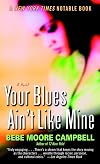
Who was the first person to say the truth hurts? Never is this more true than within the pages of Your Blues Ain't Like Mine. The premise of Campbell's 1950s story could have been ripped from the headlines of yesteryear or buried in the back pages of yesterday's online paper. Armstrong Todd is a smart fifteen year old who knows a little French. Being from Chicago, he does not realize life in rural Mississippi is racially divided and prejudicial hate runs deep. One slip of the tongue in the show more direction of a white woman ends up costing him his life. Never mind that it was an accident; the teen was not speaking to Lily. Never mind that the white woman did not understand what Armstrong had actually said in her direction. Suddenly, justice for a black teenager in southern Mississippi becomes a political fire starter around the topic of desegregating schools. Campbell doesn't contain the perspective to just one side of the color story. Lily, the "offended" (and extremely ignorant) white woman, is a poor young mother with an abusive husband. She only understands debilitating poverty, a screaming newborn, a whiney toddler, and the urgent need to keep on her husband's good side. She desperately walks a fine line of taking care of her starving family while scrambling for the little pleasures in life like a new tube of ruby red lipstick.
Beyond civil rights Campbell makes interesting connections between the lines of color. Women can be abused, regardless of race. A fist can bruise or split open any color of skin. Along those same lines, Campbell points out that women of any color use sex as a weapon to get what they want. Lila and Delotha are no different when it comes to using their bodies to manipulate their men.
Your Blues Ain't Like Mine spans generations. Moore guides the pace through political and pop culture cues like which president is in office and what songs are playing on the radio. Occasionally, a historical event will make an appearance like the Kent State University shootings. show less
Beyond civil rights Campbell makes interesting connections between the lines of color. Women can be abused, regardless of race. A fist can bruise or split open any color of skin. Along those same lines, Campbell points out that women of any color use sex as a weapon to get what they want. Lila and Delotha are no different when it comes to using their bodies to manipulate their men.
Your Blues Ain't Like Mine spans generations. Moore guides the pace through political and pop culture cues like which president is in office and what songs are playing on the radio. Occasionally, a historical event will make an appearance like the Kent State University shootings. show less
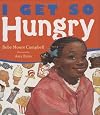
This is a sweet and insightful yet hopeful book about an obese little girl who sets out to lose weight with her plus-size teacher. The cherubic cheeks and expressive eyes of little Nikki immediately draws you in, makes you want to love her like a cuddly teddy bear. But it is those same characteristics that make my throat tighten with tears as she describes eating away her pain when a classmate makes fun of her. As a plus-size woman, I feel little Nikki's pain and understand her struggle. I show more want to hug her and tell her that she'll be okay, but the truth is that she does need to lose weight and eat healthier. This book says it gently and directly without preachiness. show less
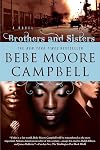
The setting is Los Angeles, 1992, weeks following the Rodney King verdict and the ensuing riots. The heroine, Esther Jackson-seemingly self confident but quaveringly intense-has a good position as a regional operations manager of a bank. Esther has glass-ceilinged her way to a two bedroom house in an L.A. suburb, but along with success, she carries the contradictory burdens of compromise, determination & humiliation required of women of color who move up the corporate ladder.
Lists
Awards


You May Also Like


Associated Authors
Statistics
- Works
- 16
- Also by
- 11
- Members
- 2,996
- Popularity
- #8,515
- Rating
- 3.8
- Reviews
- 121
- ISBNs
- 80
- Languages
- 3
- Favorited
- 5
