
Robert Frank (1) (1924–2019)
Author of The Americans
For other authors named Robert Frank, see the disambiguation page.
Works by Robert Frank
Looking In: Robert Frank's The Americans: Expanded Edition (2009) — Photographer — 185 copies, 2 reviews
Robert Frank and American Politics 3 copies
Sobre Valencia 1950 1 copy
Associated Works
The Rolling Stone Book of the Beats: The Beat Generation and American Culture (1999) — Contributor — 180 copies, 2 reviews
Item — Director — 7 copies
Tagged
Common Knowledge
- Canonical name
- Frank, Robert
- Legal name
- Frank, Robert Louis
- Birthdate
- 1924-11-09
- Date of death
- 2019-09-09
- Gender
- male
- Occupations
- photographer
documentary filmmaker - Organizations
- Harper's Bazaar
- Awards and honors
- American Academy of Arts and Letters (2016)
Guggenheim Fellowship (1955) - Relationships
- Frank, Mary (former spouse)
Brodovitch, Alexey (colleague)
Leaf, June (widow) - Nationality
- USA
- Birthplace
- Zürich, Switzerland
- Places of residence
- New York, New York, USA
Paris, France
Mabou, Nova Scotia, Canada - Place of death
- Inverness, Cape Breton, Nova Scotia, Canada
Members
Reviews
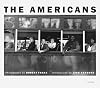
Robert Frank is a fucking master. This is life, this is real, this is humanity with pimples, warts, and a ribbon.
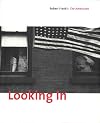
First published in France in 1958, then in the United States in 1959, Robert Frank's The Americans changed the course of twentieth-century photography. In 83 photographs, Frank looked beneath the surface of American life to reveal a people plagued by racism, ill-served by their politicians and rendered numb by a rapidly expanding culture of consumption. Yet he also found novel areas of beauty in simple, overlooked corners of American life. And it was not just his subject matter--cars, show more jukeboxes and even the road itself--that redefined the icons of America; it was also his seemingly intuitive, immediate, off-kilter style, as well as his method of brilliantly linking his photographs together thematically, conceptually, formally and linguistically, that made The Americans so innovative. More of an ode or a poem than a literal document, the book is as powerful and provocative today as it was 50 years ago.
Published to accompany a major exhibition at the National Gallery of Art, the San Francisco Museum of Modern Art and the Metropolitan Museum of Art, Looking In: Robert Frank's "The Americans" celebrates the fiftieth anniversary of this prescient book. Drawing on newly examined archival sources, it provides a fascinating in-depth examination of the making of the photographs and the book's construction, using vintage contact sheets, work prints and letters that literally chart Frank's journey around the country on a Guggenheim grant in 1955-1956. Curator and editor Sarah Greenough and her colleagues also explore the roots of The Americans in Frank's earlier books, which are abundantly illustrated here, and in books by photographers Walker Evans, Bill Brandt and others. The 83 original photographs from The Americans are presented in sequence in as near vintage prints as possible. The catalogue concludes with an examination of Frank's later reinterpretations and deconstructions of The Americans, bringing full circle the history of this resounding entry in the annals of photography.
This richly illustrated paperback edition of Looking In: Robert Frank's "The Americans" contains several engaging essays by curator Sarah Greenough that explore the roots of this seminal book, Frank's travels on a Guggenheim fellowship, the sequencing of The Americans and the book's impact on his later career. In addition, essays by Anne Wilkes Tucker, Stuart Alexander, Martin Gasser, Jeff L. Rosenheim, Michel Frizot and Luc Sante offer focused analyses of Frank's relationship with Louis Faurer, Edward Steichen, Gotthard Schuh, Walker Evans, Robert Delpire and Jack Kerouac, while Philip Brookman writes about his work with Frank on several exhibitions in the last 30 years. This paperback edition also reproduces many of Frank's earlier photographic sequences, as well as all of the photographs in The Americans and selected later works. show less
Published to accompany a major exhibition at the National Gallery of Art, the San Francisco Museum of Modern Art and the Metropolitan Museum of Art, Looking In: Robert Frank's "The Americans" celebrates the fiftieth anniversary of this prescient book. Drawing on newly examined archival sources, it provides a fascinating in-depth examination of the making of the photographs and the book's construction, using vintage contact sheets, work prints and letters that literally chart Frank's journey around the country on a Guggenheim grant in 1955-1956. Curator and editor Sarah Greenough and her colleagues also explore the roots of The Americans in Frank's earlier books, which are abundantly illustrated here, and in books by photographers Walker Evans, Bill Brandt and others. The 83 original photographs from The Americans are presented in sequence in as near vintage prints as possible. The catalogue concludes with an examination of Frank's later reinterpretations and deconstructions of The Americans, bringing full circle the history of this resounding entry in the annals of photography.
This richly illustrated paperback edition of Looking In: Robert Frank's "The Americans" contains several engaging essays by curator Sarah Greenough that explore the roots of this seminal book, Frank's travels on a Guggenheim fellowship, the sequencing of The Americans and the book's impact on his later career. In addition, essays by Anne Wilkes Tucker, Stuart Alexander, Martin Gasser, Jeff L. Rosenheim, Michel Frizot and Luc Sante offer focused analyses of Frank's relationship with Louis Faurer, Edward Steichen, Gotthard Schuh, Walker Evans, Robert Delpire and Jack Kerouac, while Philip Brookman writes about his work with Frank on several exhibitions in the last 30 years. This paperback edition also reproduces many of Frank's earlier photographic sequences, as well as all of the photographs in The Americans and selected later works. show less

"The Americans" is a much-acclaimed book of photographs lauded by practically all. I had wanted to see it for a long time, but I found it to be a disappointment.
"The Americans" ostensibly portrays a view of America in the late 1940's and early 1950s and it is easy to understand its appeal to those who believe the "greatness" of the United States is overrated. It focuses on working class individuals, many elderly. Those wealthy individuals it portrays are depicted in social situations with show more ostentatious displays of wealth (e.g., an elderly woman wearing a fur coat in Miami). Nowhere is there a sign of the hope or optimism that characterized large swaths of the American population during those times.
I recognize the difficulty of capturing the essence of America in a scant 83 photos but I was struck by how little of the rich diversity that characterizes America the book captures. For example, "The Americans" largely ignores or distorts the rites of passage that are so important in all societies. Babies, a source of joy to most Americans, are represented in a picture of a baby lying alone on the floor by a jukebox. Teens are depicted in static poses that deny their youthful exuberance. Weddings are absent, yet symbolic decapitations (by flags, stairs, and a tuba) appear repeatedly.
"The Americans" is not without some strong images. Frank's photo of passengers on a bus in New Orleans is widely acclaimed for its portrayal of social stratification in America; partially obscured white male followed by white female, white children, black male and black female. Another powerful photo shows a black nanny and white baby looking in different directions. The same symbolism is present is his photograph of a graduation ceremony. The young graduates face one direction and the weary older gentleman faces the opposite direction. These images present a striking metaphor of the different paths open to each. The vastness of the U. S. is captured in a photo of U. S. 285 in New Mexico and to a lesser extend in other photos. However, those images depict barren land marred by human artifacts that is devoid of any sense of majesty or beauty.
"The Americans" seen through Frank's camera lacks vitality and energy. In the absence of images that depict positive attributes such as energy, hope, compassion, or joy, Frank shows us empty rooms and spaces without people. Some of the images are of poor quality or of such a narrow range of focus that the message is muted.
Frank's purpose may have been merely to document what he saw, but I wonder if he saw only what appeared in the book. He has been credited with documenting the social stratification of America, but decades earlier the more compelling images of Dorothea Lange, Alfred Stieglitz, and Walker Evans, to mention only a select few, produced superior works that had a greater impact. For example, Frank depicts a Detroit assembly line as dark and unattractive, perhaps a fair social statement, but a decade earlier Lewis W. Hinds provided much more compelling photos of work and a more effective argument for social reform.
Finally, "The Americans" lacks page numbers and a list of photos. As a consequence, returning to examine particular images requires a time-consuming, page-turning search. show less
"The Americans" ostensibly portrays a view of America in the late 1940's and early 1950s and it is easy to understand its appeal to those who believe the "greatness" of the United States is overrated. It focuses on working class individuals, many elderly. Those wealthy individuals it portrays are depicted in social situations with show more ostentatious displays of wealth (e.g., an elderly woman wearing a fur coat in Miami). Nowhere is there a sign of the hope or optimism that characterized large swaths of the American population during those times.
I recognize the difficulty of capturing the essence of America in a scant 83 photos but I was struck by how little of the rich diversity that characterizes America the book captures. For example, "The Americans" largely ignores or distorts the rites of passage that are so important in all societies. Babies, a source of joy to most Americans, are represented in a picture of a baby lying alone on the floor by a jukebox. Teens are depicted in static poses that deny their youthful exuberance. Weddings are absent, yet symbolic decapitations (by flags, stairs, and a tuba) appear repeatedly.
"The Americans" is not without some strong images. Frank's photo of passengers on a bus in New Orleans is widely acclaimed for its portrayal of social stratification in America; partially obscured white male followed by white female, white children, black male and black female. Another powerful photo shows a black nanny and white baby looking in different directions. The same symbolism is present is his photograph of a graduation ceremony. The young graduates face one direction and the weary older gentleman faces the opposite direction. These images present a striking metaphor of the different paths open to each. The vastness of the U. S. is captured in a photo of U. S. 285 in New Mexico and to a lesser extend in other photos. However, those images depict barren land marred by human artifacts that is devoid of any sense of majesty or beauty.
"The Americans" seen through Frank's camera lacks vitality and energy. In the absence of images that depict positive attributes such as energy, hope, compassion, or joy, Frank shows us empty rooms and spaces without people. Some of the images are of poor quality or of such a narrow range of focus that the message is muted.
Frank's purpose may have been merely to document what he saw, but I wonder if he saw only what appeared in the book. He has been credited with documenting the social stratification of America, but decades earlier the more compelling images of Dorothea Lange, Alfred Stieglitz, and Walker Evans, to mention only a select few, produced superior works that had a greater impact. For example, Frank depicts a Detroit assembly line as dark and unattractive, perhaps a fair social statement, but a decade earlier Lewis W. Hinds provided much more compelling photos of work and a more effective argument for social reform.
Finally, "The Americans" lacks page numbers and a list of photos. As a consequence, returning to examine particular images requires a time-consuming, page-turning search. show less
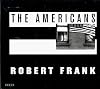
These images are surely the progenitors of modern photographic social commentary, and they are poignant and affecting, but I wasn’t wowed. I probably should try to appreciate them for their historical context, but that’s a drab, dull way to interact with art.
Also, I did not appreciate Kerouac’s repetitive, pretentious foreward. Yes, yes - you make up words that sound like feelings. Aren’t you amazing?!
Also, I did not appreciate Kerouac’s repetitive, pretentious foreward. Yes, yes - you make up words that sound like feelings. Aren’t you amazing?!
Lists
Beat (1)
Awards

You May Also Like


Associated Authors
Statistics
- Works
- 58
- Also by
- 2
- Members
- 2,638
- Popularity
- #9,738
- Rating
- 4.5
- Reviews
- 30
- ISBNs
- 164
- Languages
- 11
- Favorited
- 4
