
William Eggleston
Author of The Democratic Forest
About the Author
Works by William Eggleston
Associated Works
Tagged
Common Knowledge
- Birthdate
- 1939-07-27
- Gender
- male
- Education
- Vanderbilt University
Delta State College
University of Mississippi - Occupations
- photographer
- Nationality
- USA
- Associated Place (for map)
- USA
Members
Reviews
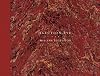
"On the eve of the election, when nothing had yet been decided, when everything―whatever that everything was―hung in the balance, Eggleston made an elegy … a statement of perfect calm." ―Lloyd Fonvielle
In 1977 William Eggleston released Election Eve, his first and most elaborate artist’s book, containing 100 original prints in two leatherbound volumes, housed in a linen box. It was published by Caldecot Chubb in New York in an edition of only five, and has since become show more Eggleston’s rarest collectible book. This new Steidl edition recreates the full original sequence of photos in a single volume, making it available to the wider public for the first time.
Election Eve contains images made in October 1976 during Eggleston’s pilgrimage from Memphis to the small town of Plains, Georgia, the home of Jimmy Carter who in November 1976 was elected 39th President of the United States. Eggleston began photographing even before he left Memphis and depicted the surrounding countryside and villages of Sumter County, before he reached Plains. His photos of lonesome roads, train tracks, cars, gas stations and houses are mostly empty of people and form an intuitive, unsettling portrait of Plains, starkly different from the idealized image of it subsequently promoted by the media. The book includes a preface by Hollywood screenwriter (The Mummy, 1999), director (Gotham, 1988) and author Lloyd Fonvielle. show less
In 1977 William Eggleston released Election Eve, his first and most elaborate artist’s book, containing 100 original prints in two leatherbound volumes, housed in a linen box. It was published by Caldecot Chubb in New York in an edition of only five, and has since become show more Eggleston’s rarest collectible book. This new Steidl edition recreates the full original sequence of photos in a single volume, making it available to the wider public for the first time.
Election Eve contains images made in October 1976 during Eggleston’s pilgrimage from Memphis to the small town of Plains, Georgia, the home of Jimmy Carter who in November 1976 was elected 39th President of the United States. Eggleston began photographing even before he left Memphis and depicted the surrounding countryside and villages of Sumter County, before he reached Plains. His photos of lonesome roads, train tracks, cars, gas stations and houses are mostly empty of people and form an intuitive, unsettling portrait of Plains, starkly different from the idealized image of it subsequently promoted by the media. The book includes a preface by Hollywood screenwriter (The Mummy, 1999), director (Gotham, 1988) and author Lloyd Fonvielle. show less
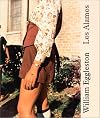
"Los Alamos" presents a series of photos that have never before been shown, yet it contains a blueprint of Eggleston's aesthetics, his subtle use of subdued color hues, the casual elegance of his trenchant observations of the mysteries of the mundane.
"I had this notion of what I called a democratic way of looking around, that nothing was more or less important," William Eggleston once said. This radical attitude guided his ground-breaking work in color photography, work that has prefigured show more many recent developments in art and photography. Los Alamos presents a series of photographs that has never before been shown, yet it contains a blueprint of Eggleston's aesthetics, his subtle use of subdued color hues, the casual elegance of his trenchant observations of the mysteries of the mundane. The photographs in Los Alamos were shot in Eggleston's native Memphis and on countless road trips across the American South from 1964 to 1968 and from 1972 to 1974. Initially, Eggleston wanted to create a vast compendium of more than 2000 photographs to be contained in 20 volumes; he wanted the viewer to look at the photographs the way one looks at the world. He eventually abandoned this project--and hardly any of the negatives were ever printed. Now, 30 years later, we finally get to see a selection of this encyclopedia of Southern everyday life and vernacular culture. It's a stunning discovery that makes the so-called snapshot photography of recent years pale in comparison. Eggleston's astonishingly timeless portraits, still lives, landscapes, and photographs of buildings add up to a profound investigation of the world and our way of looking at it, a poetics of pleasures hidden in full view. They transcend the merely descriptive and uncover the universal encapsulated in the details and the detritus of life in a consumer culture. Published in collaboration with Museum Ludwig, Cologne.
One of the few genuises in photography. --Andy Grundberg
The world is so visually complicated that the word "banal" scarcely is very intelligent to use. All days are similar, no matter what part of this planet we're in. --William Eggleston
Essays by Walter Hopps and Thomas Weski. show less
"I had this notion of what I called a democratic way of looking around, that nothing was more or less important," William Eggleston once said. This radical attitude guided his ground-breaking work in color photography, work that has prefigured show more many recent developments in art and photography. Los Alamos presents a series of photographs that has never before been shown, yet it contains a blueprint of Eggleston's aesthetics, his subtle use of subdued color hues, the casual elegance of his trenchant observations of the mysteries of the mundane. The photographs in Los Alamos were shot in Eggleston's native Memphis and on countless road trips across the American South from 1964 to 1968 and from 1972 to 1974. Initially, Eggleston wanted to create a vast compendium of more than 2000 photographs to be contained in 20 volumes; he wanted the viewer to look at the photographs the way one looks at the world. He eventually abandoned this project--and hardly any of the negatives were ever printed. Now, 30 years later, we finally get to see a selection of this encyclopedia of Southern everyday life and vernacular culture. It's a stunning discovery that makes the so-called snapshot photography of recent years pale in comparison. Eggleston's astonishingly timeless portraits, still lives, landscapes, and photographs of buildings add up to a profound investigation of the world and our way of looking at it, a poetics of pleasures hidden in full view. They transcend the merely descriptive and uncover the universal encapsulated in the details and the detritus of life in a consumer culture. Published in collaboration with Museum Ludwig, Cologne.
One of the few genuises in photography. --Andy Grundberg
The world is so visually complicated that the word "banal" scarcely is very intelligent to use. All days are similar, no matter what part of this planet we're in. --William Eggleston
Essays by Walter Hopps and Thomas Weski. show less
An amazing collection and, coming from Steidl, an outstanding edition. This 3-volumes book contains pictures taken between between 1965 and 1974, including the very first color photograph by Eggleston. This is the quintessential Eggleston book, exploring the beauty in the mundane in all the glory of Kodachrome. Wonderful book.
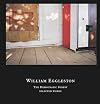
Over the course of nearly six decades, William Eggleston—often referred to as the “father of color photography”—has established a singular pictorial style that deftly combines vernacular subject matter with an innate and sophisticated understanding of color, form, and composition.
Eggleston has said, “I am at war with the obvious.” His photographs transform the ordinary into distinctive, poetic images that eschew fixed meaning. Though criticized at the time, his now legendary show more 1976 solo exhibition, organized by the visionary curator John Szarkowski at The Museum of Modern Art, New York—the first presentation of color photography at the museum—heralded an important moment in the medium's acceptance within the art-historical canon and solidified Eggleston's position in the pantheon of the greats alongside Henri Cartier-Bresson, Robert Frank, and Walker Evans.
Published on the occasion of David Zwirner's New York exhibition of selections from The Democratic Forest in the fall of 2016, this new catalogue highlights over sixty exceptional images from Eggleston's epic project. His photography is “democratic” in its resistance to hierarchy where, as noted by the artist, “no particular subject is more or less important than another.”
Featuring original scholarship by Alexander Nemerov, this notable presentation of The Democratic Forest provides historical context for a monumental body of work, while offering newcomers a foothold in Eggleston's photographic practice. show less
Eggleston has said, “I am at war with the obvious.” His photographs transform the ordinary into distinctive, poetic images that eschew fixed meaning. Though criticized at the time, his now legendary show more 1976 solo exhibition, organized by the visionary curator John Szarkowski at The Museum of Modern Art, New York—the first presentation of color photography at the museum—heralded an important moment in the medium's acceptance within the art-historical canon and solidified Eggleston's position in the pantheon of the greats alongside Henri Cartier-Bresson, Robert Frank, and Walker Evans.
Published on the occasion of David Zwirner's New York exhibition of selections from The Democratic Forest in the fall of 2016, this new catalogue highlights over sixty exceptional images from Eggleston's epic project. His photography is “democratic” in its resistance to hierarchy where, as noted by the artist, “no particular subject is more or less important than another.”
Featuring original scholarship by Alexander Nemerov, this notable presentation of The Democratic Forest provides historical context for a monumental body of work, while offering newcomers a foothold in Eggleston's photographic practice. show less
Lists
01 (1)
You May Also Like


Associated Authors
Statistics
- Works
- 37
- Also by
- 5
- Members
- 1,155
- Popularity
- #22,249
- Rating
- 4.1
- Reviews
- 12
- ISBNs
- 45
- Languages
- 2
- Favorited
- 1