
Diane Arbus (1923–1971)
Author of Diane Arbus: An Aperture Monograph
About the Author
Image credit: Allan Arbus/The Estate of Diane Arbus
Works by Diane Arbus
Diane Arbus 32 copies
Diane Arbus 9 copies
Die Monographie: Neuauflage 5 copies
Revelations 1st PAPERBACK edition by Arbus, Diane. published by Random House Paperback (2003) 2 copies
Associated Works
Tagged
Common Knowledge
- Other names
- Nemerov, Diane (birth)
- Birthdate
- 1923-03-14
- Date of death
- 1971-07-26
- Gender
- female
- Education
- Fieldston School for Ethical Culture
- Occupations
- photographer
magazine writer - Awards and honors
- Guggenheim Fellowship (1963, 1966)
- Relationships
- Arbus, Allan (husband)
Nemerov, Howard (brother)
Nemerov, Alexander (nephew)
Arbus, Doon (daughter)
Arbus, Amy (daughter) - Cause of death
- suicide
- Nationality
- USA
- Birthplace
- New York, New York, USA
- Places of residence
- New York, New York, USA
- Place of death
- New York, New York, USA
- Associated Place (for map)
- New York, New York, USA
Members
Reviews
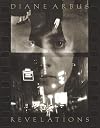
Diane Arbus redefined the concerns and the range of the art she practiced. Her bold subject matter and photographic approach have established her preeminence in the world of the visual arts. Her gift for rendering strange those things we consider most familiar, and uncovering the familiar within the exotic, enlarges our understanding of ourselves.
Diane Arbus Revelations affords the first opportunity to explore the origins, scope, and aspirations of what is a wholly original force in show more photography. Arbus’s frank treatment of her subjects and her faith in the intrinsic power of the medium have produced a body of work that is often shocking in its purity, in its steadfast celebration of things as they are. Presenting many of her lesser-known or previously unpublished photographs in the context of the iconic images reveals a subtle yet persistent view of the world.
The book reproduces two hundred full-page duotones of Diane Arbus photographs spanning her entire career, many of them never before seen. It also includes an essay, “The Question of Belief,” by Sandra S. Phillips, senior curator of photography at the San Francisco Museum of Modern Art, and “In the Darkroom,” a discussion of Arbus’s printing techniques by Neil Selkirk, the only person authorized to print her photographs since her death. A 104-page Chronology by Elisabeth Sussman, guest curator of the San Francisco Museum of Modern Art show, and Doon Arbus, the artist’s eldest daughter, illustrated by more than three hundred additional images and composed mainly of previously unpublished excerpts from the artist’s letters, notebooks, and other writings, amounts to a kind of autobiography. An Afterword by Doon Arbus precedes biographical entries on the photographer’s friends and colleagues by Jeff L. Rosenheim, associate curator of photographs at The Metropolitan Museum of Art. These texts help illuminate the meaning of Diane Arbus’s controversial and astonishing vision. show less
Diane Arbus Revelations affords the first opportunity to explore the origins, scope, and aspirations of what is a wholly original force in show more photography. Arbus’s frank treatment of her subjects and her faith in the intrinsic power of the medium have produced a body of work that is often shocking in its purity, in its steadfast celebration of things as they are. Presenting many of her lesser-known or previously unpublished photographs in the context of the iconic images reveals a subtle yet persistent view of the world.
The book reproduces two hundred full-page duotones of Diane Arbus photographs spanning her entire career, many of them never before seen. It also includes an essay, “The Question of Belief,” by Sandra S. Phillips, senior curator of photography at the San Francisco Museum of Modern Art, and “In the Darkroom,” a discussion of Arbus’s printing techniques by Neil Selkirk, the only person authorized to print her photographs since her death. A 104-page Chronology by Elisabeth Sussman, guest curator of the San Francisco Museum of Modern Art show, and Doon Arbus, the artist’s eldest daughter, illustrated by more than three hundred additional images and composed mainly of previously unpublished excerpts from the artist’s letters, notebooks, and other writings, amounts to a kind of autobiography. An Afterword by Doon Arbus precedes biographical entries on the photographer’s friends and colleagues by Jeff L. Rosenheim, associate curator of photographs at The Metropolitan Museum of Art. These texts help illuminate the meaning of Diane Arbus’s controversial and astonishing vision. show less
Diane Arbus Documents - Quotes, Correspondence, Writings, Commentary, Criticism, Bibliography - ...because what is written will become what is known... by Diane Arbus
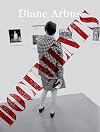
Texts by 55 authors, including Hilton Als, A. D. Coleman, Holland Cotter, Jacob Deschin, Germaine Greer, Hilton Kramer, Arthur Lubow, Janet Malcolm, Francine Prose, Sukhdev Sandhu, Peter Schjeldahl, Adrian Searle, Susan Sontag, Lynne Tillman, and Colm Tóibín
Edited by Max Rosenberg. Foreword by Jeffrey Fraenkel and Lucas Zwirner
Through an assemblage of articles, criticism, and essays from 1967 to the present, this groundbreaking publication charts the reception of the photographer’s work show more and offers comprehensive insight into the critical conversations, as well as misconceptions, around this highly influential artist.
Best known for her penetrating images exploring what it means to be human, Diane Arbus is a pivotal and singularfigure in American postwar photography. Arbus’s black-and-white photographs demolish aesthetic conventions and upend all certainties. Both lauded and criticized for her photographs of people deemed “outsiders,” Arbus continues to be a lightning rod for a wide range of opinions surrounding her subject matter and approach. Critics and writers have described her work as “sinister” and “appalling” as well as “revelatory,” “sincere,” and “compassionate.” Through an assemblage of articles, criticism, and essays from 1967 to the present, Diane Arbus Documents charts the reception of the revolutionary photographer's work.
Illuminating fifty years of evolution in the field of art criticism, Documents provides a new template for understanding the work of any formidable artist. Organized in eleven sections that focus on major exhibitions and significant events emerging from Arbus’s work, as well as on her methods and intentions, the sixty-nine facsimiles of previously published articles and essays––an archive by all accounts––trace the discourse on Arbus, contextualizing her inimitable oeuvre. Supplemented by an annotated bibliography of more than six hundred entries and a comprehensive exhibition history, Documents serves as an important resource for photographers, researchers, art historians, and art critics, in addition to students of art criticism and the interested reader alike.
Pull Quotes from Event
Diane Arbus Documents, Conversation Between Max Rosenberg & Jarrett Earnest, December 14, 2022
“This book is such a gift to future thinking and future writing, not just about Arbus or about photography, but about post-war American culture, the arts scene, and how to write.”
—Jarrett Earnest
“You could only assemble a book like this about a great artist. Only a great artist could sustain this level of discourse by some of the great writers and thinkers of our time.”
—Jarrett Earnest show less
Edited by Max Rosenberg. Foreword by Jeffrey Fraenkel and Lucas Zwirner
Through an assemblage of articles, criticism, and essays from 1967 to the present, this groundbreaking publication charts the reception of the photographer’s work show more and offers comprehensive insight into the critical conversations, as well as misconceptions, around this highly influential artist.
Best known for her penetrating images exploring what it means to be human, Diane Arbus is a pivotal and singularfigure in American postwar photography. Arbus’s black-and-white photographs demolish aesthetic conventions and upend all certainties. Both lauded and criticized for her photographs of people deemed “outsiders,” Arbus continues to be a lightning rod for a wide range of opinions surrounding her subject matter and approach. Critics and writers have described her work as “sinister” and “appalling” as well as “revelatory,” “sincere,” and “compassionate.” Through an assemblage of articles, criticism, and essays from 1967 to the present, Diane Arbus Documents charts the reception of the revolutionary photographer's work.
Illuminating fifty years of evolution in the field of art criticism, Documents provides a new template for understanding the work of any formidable artist. Organized in eleven sections that focus on major exhibitions and significant events emerging from Arbus’s work, as well as on her methods and intentions, the sixty-nine facsimiles of previously published articles and essays––an archive by all accounts––trace the discourse on Arbus, contextualizing her inimitable oeuvre. Supplemented by an annotated bibliography of more than six hundred entries and a comprehensive exhibition history, Documents serves as an important resource for photographers, researchers, art historians, and art critics, in addition to students of art criticism and the interested reader alike.
Pull Quotes from Event
Diane Arbus Documents, Conversation Between Max Rosenberg & Jarrett Earnest, December 14, 2022
“This book is such a gift to future thinking and future writing, not just about Arbus or about photography, but about post-war American culture, the arts scene, and how to write.”
—Jarrett Earnest
“You could only assemble a book like this about a great artist. Only a great artist could sustain this level of discourse by some of the great writers and thinkers of our time.”
—Jarrett Earnest show less
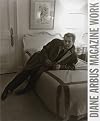
The photographs here vary between being haunting and enchanting--all are affecting. Having Arbus' text about the photographs, particularly in the first half of the collection, is an added treasure that brings to life many of her characters, all of whom are just as unbelievable as some of the portraits shown here. This is, in truth, a fascinating and wonderful collection that acts as a step back in time. Absolutely recommended.
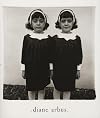
Ci sono autori letterari più citati che letti e forse su questo piano regge un parallelismo con Arbus, di cui si conoscono benissimo poche foto e molto meno bene molte altre. Questo è il suo capolavoro, opera imprescindibile che cambia il corso della fotografia. E ancora una volta va riconosciuto a Szarkowski di aver capito tutto quando presentò nel 1967 Arbus, Winogrand e Friedlander. La fotografia del futuro era tutta lì.
Awards

You May Also Like


Associated Authors
Statistics
- Works
- 23
- Also by
- 1
- Members
- 1,676
- Popularity
- #15,334
- Rating
- 4.4
- Reviews
- 12
- ISBNs
- 39
- Languages
- 5
- Favorited
- 2