

John Szarkowski (1925–2007)
Author of The Photographer's Eye
About the Author
John Szarkowski, is Director Emeritus of the Department of Photography, The Museum of Modern Art, New York. His book of photographs of the buildings of Louis Sullivan was recently reissued by Bulfinch Press. Szarkowski lives in East Chatham, NY, & New York City. (Bowker Author Biography)
Image credit:
Nicolai Klimaszewski
Series
Works by John Szarkowski
Looking at Photographs: 100 Pictures from the Collection of The Museum of Modern Art (1973) 457 copies, 4 reviews
Associated Works
Marie Cosindas : Polaroid color photographs — Contributor — 3 copies
Tagged
Common Knowledge
- Canonical name
- Szarkowski, John
- Legal name
- Szarkowski, Thaddeus John
- Birthdate
- 1925-12-18
- Date of death
- 2007-07-07
- Gender
- male
- Education
- University of Wisconsin-Madison (BA | Art History | 1948)
- Occupations
- photographer
curator
historian
critic - Organizations
- Walker Art Center
Museum of Modern Art
United States Army (WWII) - Awards and honors
- Guggenheim Fellowship (1954, 1961)
- Relationships
- Szarkowski, Jill (wife)
- Cause of death
- complications of a stroke
- Nationality
- USA
- Birthplace
- Ashland, Wisconsin, USA
- Places of residence
- Ashland, Wisconsin, USA
Minneapolis, Minnesota, USA
New York, New York, USA - Place of death
- Pittsfield, Massachusetts, USA
- Associated Place (for map)
- USA
Members
Reviews
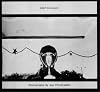
Lee Friedlander's surreal sensibility is on full display in this set of photographs, originally published in 1970. Here Friedlander focuses on the role of his own physical presence in his images. He writes: “At first, my presence in my photos was fascinating and disturbing. But as time passed and I was more a part of other ideas in my photos, I was able to add a giggle to those feelings.” Here readers can witness this progression as Friedlander appears in the form of his shadow, or show more reflected in windows and mirrors, and only occasionally fully visible through his own camera. In some photos he visibly struggles with the notion of self-portraiture, desultorily shooting himself in household mirrors and other reflective surfaces. Soon, though, he begins to toy with the pictures, almost teasingly inserting his shadow into them to amusing and provocative effect--elongated and trailing a group of women seen only from the knees down; cast and bent over a chair as if seated in it; mirroring the silhouette of someone walking down the street ahead of him; or falling on the desert ground, a large bush standing in for hair. These uncanny self-portraits evoke a surprisingly full landscape of the artist's life and mind. This reprint edition of Lee Friedlander: Self Portrait contains nearly 50 duotone images and an afterword by John Szarkowski, former Director of the Department of Photography at The Museum of Modern Art. show less
E.J. Bellocq: Storyville-Portraits Fotografien aus dem Red-Light District von New Orleans, um 1912 by E. J. Bellocq

·EJ Bellocq, Storyville Portraits, c. 1910–1912
·Natasha Trethewey, Bellocq's Ophelia, 2002
https://i.imgur.com/r49lc4p.jpg
I wear my best gown for the picture—
white silk with seed pearls and ostrich feathers—
my hair in a loose chignon. Behind me,
Bellocq's black scrum just covers the laundry—
tea towels, bleached and frayed, drying on the line.
I look away from his lens to appear
demure, to attract those guests not wanting
the lewd sights of Emma Johnson's circus.
Countess writes my show more description for the book—
“Violet,” a fair-skinned beauty, recites
poetry and soliloquies; nightly
she performs her tableau vivant, becomes
a living statue, an object of art—
and I fade again into someone I'm not.
After reading Michael Ondaatje's Coming Through Slaughter, I wanted to see more of the EJ Bellocq photographs that inspired many of the scenes – and so much of the mood – of that novel. The portraits he took of Storyville prostitutes were found many years after his death, and many of them are damaged, but this somehow adds to their air of poignancy. It's remarkable how much feeling and personality is captured in these strange shots, which Bellocq took privately and never showed to anyone except a few close friends.
They hit us, now, through multiple layers of interpretation – all carefully posed and set up by Bellocq, never candid, and therefore making you constantly aware of how we see these women through a male gaze, however complex. Natasha Trethewey's second poetry collection attempts to give them back a voice – an imagined one, of course, and therefore not without its own problems, but even so it's quite a powerful and inspiring feat of creative energy.
It's possible to flick back and forth between her book of poems and a book of the photographs, and look for one-to-one matches – I certainly did, and many of the sonnets do represent little bursts of direct ecphrasis:
https://i.imgur.com/LJdQ7MA.jpg
I pose nude for this photograph, awkward,
one arm folded behind my back, the other
limp at my side. Seated, I raise my chin,
my back so straight I imagine the bones
separating in my spine, my neck lengthening
like evening shadows. When I see this plate
I try to recall what I was thinking—
how not to be exposed, though naked, how
to wear skin like a garment, seamless.
Bellocq thinks I'm right for the camera, keeps
coming to my room. These plates are fragile,
he says, showing me how easy it is
to shatter this image of myself, how
a quick scratch carves a scar across my chest.
But many of them don't necessarily have direct correspondences in that way. Instead, they make up a sort of imagined biography of one (pick one) of the girls in a New Orleans ‘coloured’ brothel like Lula White's or Willie Piazza's in the second decade of the century – the letters home, the reflections on the different types of customer, the mixed feelings about posing for Bellocq.
It troubles me to think that I am suited
for this work—spectacle and fetish—
a pale odalisque. But then I recall
my earliest training—childhood—how
my mother taught me to curtsy and be still
so that I might please a white man, my father.
For him I learned to shape my gestures,
practiced expressions on my pliant face.
https://i.imgur.com/qEct5K4.jpg
I've learned the camera well—the danger
of it, the half-truths it can tell, but also
the way it fastens us to our pasts, makes grand
the unadorned moment.
https://i.imgur.com/7W6OEnX.jpg
In Trethewey's verse, these women are wry and articulate, thoughtful, analytical, well aware of their circumstances and opportunities. ‘I'm not so foolish / that I don't know this photograph that we make / will bear the stamp of his name, not mine,’ one says. How realistic it all is no one can say – certainly the faces in Bellocq's pictures suggest a variety of different responses and emotions whose range goes beyond even what can be captured in Trethewey's poems. Her writing sends you back to the photos, studying each subject anew, and thinking:
Imagine her a moment later—after
the flash, blinded—stepping out
of the frame, wide-eyed, into her life. show less
·Natasha Trethewey, Bellocq's Ophelia, 2002
https://i.imgur.com/r49lc4p.jpg
I wear my best gown for the picture—
white silk with seed pearls and ostrich feathers—
my hair in a loose chignon. Behind me,
Bellocq's black scrum just covers the laundry—
tea towels, bleached and frayed, drying on the line.
I look away from his lens to appear
demure, to attract those guests not wanting
the lewd sights of Emma Johnson's circus.
Countess writes my show more description for the book—
“Violet,” a fair-skinned beauty, recites
poetry and soliloquies; nightly
she performs her tableau vivant, becomes
a living statue, an object of art—
and I fade again into someone I'm not.
After reading Michael Ondaatje's Coming Through Slaughter, I wanted to see more of the EJ Bellocq photographs that inspired many of the scenes – and so much of the mood – of that novel. The portraits he took of Storyville prostitutes were found many years after his death, and many of them are damaged, but this somehow adds to their air of poignancy. It's remarkable how much feeling and personality is captured in these strange shots, which Bellocq took privately and never showed to anyone except a few close friends.
They hit us, now, through multiple layers of interpretation – all carefully posed and set up by Bellocq, never candid, and therefore making you constantly aware of how we see these women through a male gaze, however complex. Natasha Trethewey's second poetry collection attempts to give them back a voice – an imagined one, of course, and therefore not without its own problems, but even so it's quite a powerful and inspiring feat of creative energy.
It's possible to flick back and forth between her book of poems and a book of the photographs, and look for one-to-one matches – I certainly did, and many of the sonnets do represent little bursts of direct ecphrasis:
https://i.imgur.com/LJdQ7MA.jpg
I pose nude for this photograph, awkward,
one arm folded behind my back, the other
limp at my side. Seated, I raise my chin,
my back so straight I imagine the bones
separating in my spine, my neck lengthening
like evening shadows. When I see this plate
I try to recall what I was thinking—
how not to be exposed, though naked, how
to wear skin like a garment, seamless.
Bellocq thinks I'm right for the camera, keeps
coming to my room. These plates are fragile,
he says, showing me how easy it is
to shatter this image of myself, how
a quick scratch carves a scar across my chest.
But many of them don't necessarily have direct correspondences in that way. Instead, they make up a sort of imagined biography of one (pick one) of the girls in a New Orleans ‘coloured’ brothel like Lula White's or Willie Piazza's in the second decade of the century – the letters home, the reflections on the different types of customer, the mixed feelings about posing for Bellocq.
It troubles me to think that I am suited
for this work—spectacle and fetish—
a pale odalisque. But then I recall
my earliest training—childhood—how
my mother taught me to curtsy and be still
so that I might please a white man, my father.
For him I learned to shape my gestures,
practiced expressions on my pliant face.
https://i.imgur.com/qEct5K4.jpg
I've learned the camera well—the danger
of it, the half-truths it can tell, but also
the way it fastens us to our pasts, makes grand
the unadorned moment.
https://i.imgur.com/7W6OEnX.jpg
In Trethewey's verse, these women are wry and articulate, thoughtful, analytical, well aware of their circumstances and opportunities. ‘I'm not so foolish / that I don't know this photograph that we make / will bear the stamp of his name, not mine,’ one says. How realistic it all is no one can say – certainly the faces in Bellocq's pictures suggest a variety of different responses and emotions whose range goes beyond even what can be captured in Trethewey's poems. Her writing sends you back to the photos, studying each subject anew, and thinking:
Imagine her a moment later—after
the flash, blinded—stepping out
of the frame, wide-eyed, into her life. show less

Just a filmed lecture, and Szarkowski talks VERY slowly--but, every word is perfectly chosen and the photographs he displays, not just of Atgey, but of photographers such as Walker Evans who can rightly be said to have been influenced, consciously or not by Atgey are superb. Well worth the time it takes to watch. It will make you appreciate just what great art photography is.
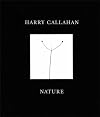
"Callahan did somehow arrive quickly at the sure knowledge that the function of his own work was to describe not the public issues of the great world, but the interior shape of his private experience." John Szarkowski
Nature is a selection of Harry Callahan's nature studies, 12 intimately scaled prints that the artist assembled into a series in the early 1990s, herein reproduced as beautiful tipped-in plates. Over the course of a career that spanned six decades, Callahan made nature of one show more his foremost themes, and continually researched new ways of seeing trees, weeds, snow and surf. Ranging in date from 1941 to 1991, these images are typical of the artist's innovative approach to these subjects, as well as of his intention to "capture a moment that people can't always see." Some images give a striking description of surface detail on natural forms, while others reduce those forms to compelling abstract patterns. Consistent throughout the series is the technical refinement that distinguishes Callahan's style and that has secured his place among the foremost American photographers of the twentieth century. show less
Nature is a selection of Harry Callahan's nature studies, 12 intimately scaled prints that the artist assembled into a series in the early 1990s, herein reproduced as beautiful tipped-in plates. Over the course of a career that spanned six decades, Callahan made nature of one show more his foremost themes, and continually researched new ways of seeing trees, weeds, snow and surf. Ranging in date from 1941 to 1991, these images are typical of the artist's innovative approach to these subjects, as well as of his intention to "capture a moment that people can't always see." Some images give a striking description of surface detail on natural forms, while others reduce those forms to compelling abstract patterns. Consistent throughout the series is the technical refinement that distinguishes Callahan's style and that has secured his place among the foremost American photographers of the twentieth century. show less
Lists
Art Books (1)
Awards


You May Also Like


Associated Authors
Statistics
- Works
- 46
- Also by
- 2
- Members
- 4,005
- Popularity
- #6,303
- Rating
- 4.2
- Reviews
- 32
- ISBNs
- 94
- Languages
- 5
- Favorited
- 1