
Annie Leibovitz
Author of Women
About the Author
Image credit: Albert Domasin
Works by Annie Leibovitz
Ritratti 1 copy
Annie Leibovitz: Photographs 1 copy
Master Set, Part 1 1 copy
Photographs 1 copy
Press Photo of M.F.K. Fisher by Annie Leibovitz for Promotion of Fisher's Book Sister Age 1 copy, 1 review
Press Photo of M.F.K. Fisher From Baltimore Sun Promoting Fisher's Book A Cordiall Water — Photographer — 1 copy, 1 review
Associated Works
The Rolling Stone Book of the Beats: The Beat Generation and American Culture (1999) — Contributor — 181 copies, 2 reviews
In Response to Place: Photographs from the Nature Conservancy's Last Great Places (2001) — Photographer — 66 copies
Tagged
Common Knowledge
- Canonical name
- Leibovitz, Annie
- Legal name
- Leibovitz, Anna-Lou
- Birthdate
- 1949-10-02
- Gender
- female
- Education
- San Francisco Art Institute
- Occupations
- photographer
- Organizations
- Rolling Stone
Vanity Fair
Condé Nast - Awards and honors
- International Photography Hall of Fame (2016)
Ordre des Arts et des Lettres (Commandeur, 2006)
Paez Medal of Art (2015)
Prince of Asturias Award for Communication (2013)
Lifetime Achievement Award, International Center of Photography (2009)
The Royal Photographic Society's Centenary Medal and Honorary Fellowship (2009) (show all 9)
Lucie Award (2003)
ADC Hall of Fame (1999)
ICP Applied Photography Award (1990) - Relationships
- Sontag, Susan (partner)
Leibovitz, Barbara (sister) - Nationality
- USA
- Birthplace
- Waterbury, Connecticut, USA
- Places of residence
- Waterbury, Connecticut, USA
Philippines
San Francisco, California, USA
New York, New York, USA
Amir, Israel - Associated Place (for map)
- USA
Members
Reviews

Annie Leibovitz’s Portraits illustrates the circular, insular role of fame. Many of her photos are interesting not because of the technical or artistic skill evident in the image but because the subject is a person of renown. A photo of a professional woman standing in an office with her back to the camera would be worth only a passing glance in most instances. If the person is Secretary of State Hillary Clinton and the office is in the White House, as is the case here, the interest value show more of the photo increases exponentially. Many of Leibovitz’s portraits in this book are mildly interesting because of the identity of the subject, but Leibovitz was permitted or invited to take the photo because she is an acclaimed photographer.
Most of the images in “Annie Leibovitz: Portraits” are technically sound but few are genuinely creative. An exception is the photograph of George Clooney which tells a mysterious story that harkens back to the late 19th-century approach of the Pictorialists. Most of the photos are rendered in dull, muddled shades of green and brown, and dim lighting. The result is both depressing and rather boring.
From an acclaimed photographer like Leibovitz, I was hoping for photos that reveal something about the inner character or genuine personality of the subject. Examples of the greatness I was looking for include are Dorothea Lange’s “Migrant Woman,” Yousuf Karsh’s photograph of Winston Churchill, Steve McCurry’s “The Afgan Girl,” and Philippe Halsman’s photograph of Salvadore Dali.
As in Leibovitz’s earlier book, many of the photos in this book are rendered in a large format that spreads across two pages with a large crevice down the middle of the image. “Butchered” is the word that comes to mind when viewing the images presented in this manner. It would have been far better to reduce the size of the images and present each on a single page.
I recommend skipping the 6-page introduction which is little more than a collection of clichés and pseudo-philosophical prattle masquerading as wisdom. It takes only a few minutes to read, but those minutes would be better spent brushing your teeth.
I recommend skipping this book. show less
Most of the images in “Annie Leibovitz: Portraits” are technically sound but few are genuinely creative. An exception is the photograph of George Clooney which tells a mysterious story that harkens back to the late 19th-century approach of the Pictorialists. Most of the photos are rendered in dull, muddled shades of green and brown, and dim lighting. The result is both depressing and rather boring.
From an acclaimed photographer like Leibovitz, I was hoping for photos that reveal something about the inner character or genuine personality of the subject. Examples of the greatness I was looking for include are Dorothea Lange’s “Migrant Woman,” Yousuf Karsh’s photograph of Winston Churchill, Steve McCurry’s “The Afgan Girl,” and Philippe Halsman’s photograph of Salvadore Dali.
As in Leibovitz’s earlier book, many of the photos in this book are rendered in a large format that spreads across two pages with a large crevice down the middle of the image. “Butchered” is the word that comes to mind when viewing the images presented in this manner. It would have been far better to reduce the size of the images and present each on a single page.
I recommend skipping the 6-page introduction which is little more than a collection of clichés and pseudo-philosophical prattle masquerading as wisdom. It takes only a few minutes to read, but those minutes would be better spent brushing your teeth.
I recommend skipping this book. show less
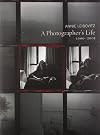
In comparison to the previous collection of Leibovitz's work that I read (On Work) this book has a much more personal touch. There are far fewer of her "professional" pieces (famoous portraits, Vogue editorials, etc) and instead we are given family photographs, travel montages, and candid shots which reveal the intimacy of her relationship with Susan Sontag. While many of these images are similar in subject and style to those seen in any family album (and are therefore not really a credit to show more Leibovitz's artistic portfolio), they still give readers a view behind the curtain to see a life that is no different than any other human being's. show less
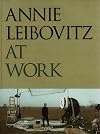
I have always thought og Leibovitz as a fashion photographer, but this book reveals how much more than that she is. The dominant theme of her photographic style is portraiture, but the variety of subject matter is very apparent through this presentation, which spans her work as a photojournalist and ad photographer as well as her time working for the major fashion publications. It's always true that photographers rarely cover only one type of photography, and Leibovitz is no different ub her show more evolution as an artist. I was most surprised by the section of war photos, taken during and after the conflicts in Sarajevo and Rwanda, which proves that the intensity of Leibovitz's portraits and subjects are not confined to the pages of Vogue and Vanity Fair. show less

This was the perfect book to peruse - perhaps with a bottle of wine after a hard day at the office. It is one of those attractive coffee table books, packed with visual treats from a well-known and talented photographer; all quite stunning and depicting women in a diverse range of activity, age and demeanor. It is not a book of nudes or beauty or glamour – she portrays lawyers and prostitutes and artists and politicians and doctors and kitchen workers and body builders.
The pictures speak show more for themselves, and Susan Sontag adds that political feminist angle to make us cogitate some more.
Susan Sontag writes a characteristically intelligent essay to start off the book, with her razor sharp and agile mind, describing the ‘post-judgmental ethos gaining ascendancy in societies whose norms are drawn from the practices of consumerism.”
She also explores stereotypes that are still attached to the expected role of women – beauty, power, economics, domestic violence, and so on. She states; "A man ages into his powers. A woman ages into no longer being desired."
Sontag ends her essay in summary: “A book of photographs; a book about women; a very American project; generous, ardent, inventive, open-ended. It’s for us to decide what to make of these pictures. After all, a photograph is not an opinion. Or is it?”
If you enjoy Sontag’s intellectual acrobatics, or Leibovitz’s honest and compelling photography, this is worthwhile. show less
The pictures speak show more for themselves, and Susan Sontag adds that political feminist angle to make us cogitate some more.
Susan Sontag writes a characteristically intelligent essay to start off the book, with her razor sharp and agile mind, describing the ‘post-judgmental ethos gaining ascendancy in societies whose norms are drawn from the practices of consumerism.”
She also explores stereotypes that are still attached to the expected role of women – beauty, power, economics, domestic violence, and so on. She states; "A man ages into his powers. A woman ages into no longer being desired."
Sontag ends her essay in summary: “A book of photographs; a book about women; a very American project; generous, ardent, inventive, open-ended. It’s for us to decide what to make of these pictures. After all, a photograph is not an opinion. Or is it?”
If you enjoy Sontag’s intellectual acrobatics, or Leibovitz’s honest and compelling photography, this is worthwhile. show less
Lists
Awards


You May Also Like


Associated Authors
Statistics
- Works
- 41
- Also by
- 7
- Members
- 3,816
- Popularity
- #6,640
- Rating
- 4.1
- Reviews
- 55
- ISBNs
- 88
- Languages
- 7
- Favorited
- 5

