

Joel Sternfeld
Author of Joel Sternfeld: American Prospects
About the Author
Image credit: Joel Sternfeld
Works by Joel Sternfeld
Tagged
Common Knowledge
- Birthdate
- 1944-06-30
- Education
- Dartmouth College
- Occupations
- photographer
- Organizations
- Sarah Lawrence College
- Awards and honors
- Two Guggenheim Fellowships
One Fellowship from the National Endowment for the Arts
Fellow of the American Academy in Rome (1991) - Nationality
- USA
- Birthplace
- New York, New York, USA
- Places of residence
- New York, New York, USA
- Associated Place (for map)
- New York, New York, USA
Members
Reviews
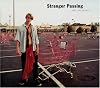
My wife and I were in San Francisco for a few days, and we spent a half-day in the Museum of Modern Art (MOMA). One of the exhibits was a sampling of Joel Sternfeld's photos from his Stranger Passing collection. I was so taken by them that I ordered a copy of Stranger Passing before I returned home. The entire collection grabbed my attention as much as the few I had seen at MOMA. I found myself imagining the lives of the individuals in the collection, their lives leading up to the photo show more being taken and their lives since the photo. Were their true stories more or less intriguing than the possibilities I found myself considering? show less
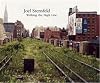
This books about the High Line documents the "found park" that existed after freight trains stopped running on the elevated railway and before it was transformed into an expensive and popular park. The carpet of green formed by seeds that blew onto the elevated surface was one of the strongest arguments for keeping the infrastructure and making it a public green space. Joel Sternfeld's photos of the pre-High Line High Line were one of the most important elements in convincing skeptical show more politicians and landowners to support the efforts of the Friends of the High Line. His photos in the New Yorker in 2001 that were accompanied by the words of Adam Gopnik brought the found beauty to a wider audience, both in New York City and beyond. Those photos and words were made into Walking the High Line in 2001.
A portion of the park's third section (on the west side of Hudson Yards) preserves the wildflowers and other plants that bloomed in the interim, but when that stretch is made up like the rest of the park all that will survive of the in-between years are photographs – and Sternfeld's are easily the best. No wonder Walking the High Line was reprinted in 2009, coinciding with the opening of the High Line's first section. show less
A portion of the park's third section (on the west side of Hudson Yards) preserves the wildflowers and other plants that bloomed in the interim, but when that stretch is made up like the rest of the park all that will survive of the in-between years are photographs – and Sternfeld's are easily the best. No wonder Walking the High Line was reprinted in 2009, coinciding with the opening of the High Line's first section. show less
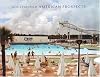
If Sternfeld's name is not familiar to you, many of the images from his six or seven previous books should be, and several here will be. The 60-some large-plate color portraits are of apparently ordinary Americans, taken over the last 15 years. All are memorable, not so much because of their faces, but because of the total environment—their tattoos and jewelry, their clothes, vehicles, houses, what they are sitting on, leaning on, working at, walking from. The subjects seem perfectly show more natural—at ease, as though you had just encountered them in a stroll through the neighborhood; but the portraits are perfectly composed, so we ought to know better. The images seem less contrived than Newman's work, less polemic than Avedon, less categoric than Sander, certainly not hostile as Arbus usually is, more sympathetic than Frank. One could learn something from every image here. I bought the coffee-table book because the publisher—Bulfinch—invariably makes superbly designed and printed volumes, but I'll treasure it because of Sternfeld's images. show less
This is a book about the psychology of climate change. Sternfeld took a number of high-quality prints of the faces of participants in a 2005 climate conference. Each print highlights a degree of shock and upset. These are interspersed with news stories. The book's layout highlights the objectivity of information - the faux 'readout' cover emphasises this. The contrast with the subjectivity of the emotions is striking. The overall effect is very powerful.
Awards

You May Also Like


Associated Authors
Statistics
- Works
- 17
- Members
- 709
- Popularity
- #35,751
- Rating
- 4.0
- Reviews
- 6
- ISBNs
- 30
- Languages
- 1