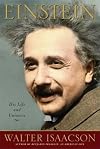
Isaacson does an absolutely wonderful job at introducing us to one of the most scientifically gifted and pacifistic souls to have lived.
Einstein was truly an inspiring human being, ardent in his belief of internationalism and his distaste for nationalism. He was kind-hearted, compassionate, and caring to the whole of the human race; at the same time he could be detached and austere when it came to his family. He would stand aloof from the pains of personal relationships and would prefer instead the comforts of solitude, where he would lose himself in scientific reverie.
Working as a Swiss Patent Office clerk afforded him a quiet environment in which he had time to dive into his equations and ponder his thought experiments. His annus mirabilis came in 1905, when he released five papers that would upend both Newtonian physics and scientific dogma on its ear.
For the rest of his life he spoke out against war and preached the importance of peace and understanding. He struggled to concede with the uncertainties and randomness of quantum physics and believed until his death that there existed an overall uniformity in the cosmos. God, he said multiple times, didn't play dice. He searched in vain for a unified field theory that unfortunately never came to fruition.
I found this book to be mentally stimulating. Isaacson does a great job at explaining General and Special Relativity. It did take me a couple of slow re-readings of his explanations and a handful of Youtube videos to show more grasp the concept. I can comfortably say I have a very (very!) basic understanding. How Einstein was able to formulate these theories is astounding. You can't help but aspire to emulate him. A wonderful soul he was. I wish I could've met him.
A highly recommended read. show less
Einstein was truly an inspiring human being, ardent in his belief of internationalism and his distaste for nationalism. He was kind-hearted, compassionate, and caring to the whole of the human race; at the same time he could be detached and austere when it came to his family. He would stand aloof from the pains of personal relationships and would prefer instead the comforts of solitude, where he would lose himself in scientific reverie.
Working as a Swiss Patent Office clerk afforded him a quiet environment in which he had time to dive into his equations and ponder his thought experiments. His annus mirabilis came in 1905, when he released five papers that would upend both Newtonian physics and scientific dogma on its ear.
For the rest of his life he spoke out against war and preached the importance of peace and understanding. He struggled to concede with the uncertainties and randomness of quantum physics and believed until his death that there existed an overall uniformity in the cosmos. God, he said multiple times, didn't play dice. He searched in vain for a unified field theory that unfortunately never came to fruition.
I found this book to be mentally stimulating. Isaacson does a great job at explaining General and Special Relativity. It did take me a couple of slow re-readings of his explanations and a handful of Youtube videos to show more grasp the concept. I can comfortably say I have a very (very!) basic understanding. How Einstein was able to formulate these theories is astounding. You can't help but aspire to emulate him. A wonderful soul he was. I wish I could've met him.
A highly recommended read. show less
Finished 2nd reading via audiobook on 4.01.21
It was wonderfully narrated by Dawkins and his wife and made it that much more enjoyable. I have changed as a person since I first read this book, in the sense that I'm trying better to understand why people hold on to religion so tightly. I have had friends and family pass away since I first read this book two years ago, and I can see why people feel comforted by the belief of an afterlife. I still don't subscribe to that belief -- I still identify as an atheist. I think as long as religion isn't being forced into the spheres of education or the judicial system, then let them eat. One of my good friends is Christian and a firm believer and yet whenever we get together we both have wonderful philosophical conversations on life and debate about belief versus non-belief.
Dawkins comes across as too aggressive in some parts, which I don't think will help convert the religious who do venture to read this. Calm debate and conversation is a better alternative. I think it's impossible to convert someone who is entrenched in their beliefs though. They have to want to change themselves, just as I did a long time ago. I was raised Catholic, but around my mid twenties I began to question my faith, and after a lot of thinking and pondering I let loose the chains of religion and embraced the freedom of thought that science gives.
1st reading:
Let me start off by saying that if you are an atheist, then this book will only strengthen your show more position. If you find yourself debating creationists/religious people and you need ammo then Dawkins will provide plenty for you.
If you are an agnostic, the arguments found within this book may make you leap into the realm of atheism.
If you are straddling the fence of Belief/Faith, with atheism on one side and agnosticism on the other, then this book may push you either way. I emphasize the word "may" because Dawkins comes off rather acidic and vitriolic and that might scare off those that are questioning their position on faith.
I started this book as an agnostic, but almost all of Dawkins' points only solidified my position and ultimately converted me into an atheist. I was already at the cusp of moving away from agnosticism and too many good points were brought up to think that a God/Gods exist. I can go on about this but I won't.
This was my first book by Dawkins and I enjoyed his writing style. He splits his arguments into sections so it was easy to close the book and reflect after ingesting the information. Ignoring his scathing comments about believers, there is plenty of logic and reasoning to be found within the pages. Overall, I liked the book.
I may read The Dawkins Delusion so I can read the other side's arguments. show less
It was wonderfully narrated by Dawkins and his wife and made it that much more enjoyable. I have changed as a person since I first read this book, in the sense that I'm trying better to understand why people hold on to religion so tightly. I have had friends and family pass away since I first read this book two years ago, and I can see why people feel comforted by the belief of an afterlife. I still don't subscribe to that belief -- I still identify as an atheist. I think as long as religion isn't being forced into the spheres of education or the judicial system, then let them eat. One of my good friends is Christian and a firm believer and yet whenever we get together we both have wonderful philosophical conversations on life and debate about belief versus non-belief.
Dawkins comes across as too aggressive in some parts, which I don't think will help convert the religious who do venture to read this. Calm debate and conversation is a better alternative. I think it's impossible to convert someone who is entrenched in their beliefs though. They have to want to change themselves, just as I did a long time ago. I was raised Catholic, but around my mid twenties I began to question my faith, and after a lot of thinking and pondering I let loose the chains of religion and embraced the freedom of thought that science gives.
1st reading:
Let me start off by saying that if you are an atheist, then this book will only strengthen your show more position. If you find yourself debating creationists/religious people and you need ammo then Dawkins will provide plenty for you.
If you are an agnostic, the arguments found within this book may make you leap into the realm of atheism.
If you are straddling the fence of Belief/Faith, with atheism on one side and agnosticism on the other, then this book may push you either way. I emphasize the word "may" because Dawkins comes off rather acidic and vitriolic and that might scare off those that are questioning their position on faith.
I started this book as an agnostic, but almost all of Dawkins' points only solidified my position and ultimately converted me into an atheist. I was already at the cusp of moving away from agnosticism and too many good points were brought up to think that a God/Gods exist. I can go on about this but I won't.
This was my first book by Dawkins and I enjoyed his writing style. He splits his arguments into sections so it was easy to close the book and reflect after ingesting the information. Ignoring his scathing comments about believers, there is plenty of logic and reasoning to be found within the pages. Overall, I liked the book.
I may read The Dawkins Delusion so I can read the other side's arguments. show less

An absolute classic in every sense of the word. Truly a wonderful piece of art.

Having lived through the last 4 years of the Trump presidency, I can't help but wonder what the hell had happened to the United States. According to the polls, half the country blindly supported him, regardless of what he said or did, regardless of any institutional norms he managed to destroy. His speeches (or, really, rambling rants stinking with the filth of racism, sexism, jingoism...) managed to make no difference in his followers' undying loyalty. Coming from 8 years prior with an intellectual president, Barack Obama, it was a complete 180 in the direction many thought the country would head to. If you were paying attention, then you were trying to search for answers as to why an anti-intellectual imbecile was voted to the highest office in the land.
My personal search brought me to Richard Hofstadter and to this very well researched work. He tackles the underlying theme of anti-intellectualism that has been prevalent in four major pillars of American society: the religious, political, educational and business institutions. He offers a broad look of history, jumping in between pre-Revolutionary times until the mid 20th century. Within all of these, it seems that practicality was deemed more important than being educated in a classroom. Here are some examples I remember:
1. In religion, it was said that the one true book anyone ever needed to read was the Bible, and to dive into other works was foolish and unnecessary. A learned preacher was looked at with suspicion, show more and his sermons were thought of as being too intellectual for the simple man to follow, too difficult to understand. As one group of evangelical workers had put it: "It is more difficult to labour with educated men, with cultivated minds and moreover predisposed to skepticism, than with the uneducated."
2. Politics suffered from the same accusations. A man who tilled the land and worked with his hands knew more about how to run a government, how to speak to the layman; the "egghead" with his face shoved in books couldn't possibly understand any of this.
3. Colleges were looked at with dubiety as well. It was believed that only the rich and educated could send their kids there; the son of the farmer had no chance of being accepted. Not to mention that taxes had to be paid to support these institutions of higher learning, and that didn't jive well with the common people.
4. Practicality and business went hand in hand in the early 18th century. As industrialism began to grow, it became apparent that the need of college-educated men was needed to tackle the increasingly complicated workings of a growing economy, and international commerce was beginning to become a thing. Regardless, intellectualism was still being attacked.
In our current times, anti-intellectualism is still alive and well. In media, the scientist is still portrayed as a wily-eyed, wild-haired maniac who's esoteric dialogues only aim to confuse. The educated were looked at as effeminate -- real men worked with their hands and were not leisurely lounging around with their heads clouded in reverie. How many movies depict the 'nerd' being bullied around by the athlete? Whenever the 'nerd' speaks about the wonders of the universe or the complexity of biology, what to make of the looks of disgust and the eye-rolls they are given?
If you are wondering how we in America got here, this would be a great place to begin. show less
My personal search brought me to Richard Hofstadter and to this very well researched work. He tackles the underlying theme of anti-intellectualism that has been prevalent in four major pillars of American society: the religious, political, educational and business institutions. He offers a broad look of history, jumping in between pre-Revolutionary times until the mid 20th century. Within all of these, it seems that practicality was deemed more important than being educated in a classroom. Here are some examples I remember:
1. In religion, it was said that the one true book anyone ever needed to read was the Bible, and to dive into other works was foolish and unnecessary. A learned preacher was looked at with suspicion, show more and his sermons were thought of as being too intellectual for the simple man to follow, too difficult to understand. As one group of evangelical workers had put it: "It is more difficult to labour with educated men, with cultivated minds and moreover predisposed to skepticism, than with the uneducated."
2. Politics suffered from the same accusations. A man who tilled the land and worked with his hands knew more about how to run a government, how to speak to the layman; the "egghead" with his face shoved in books couldn't possibly understand any of this.
3. Colleges were looked at with dubiety as well. It was believed that only the rich and educated could send their kids there; the son of the farmer had no chance of being accepted. Not to mention that taxes had to be paid to support these institutions of higher learning, and that didn't jive well with the common people.
4. Practicality and business went hand in hand in the early 18th century. As industrialism began to grow, it became apparent that the need of college-educated men was needed to tackle the increasingly complicated workings of a growing economy, and international commerce was beginning to become a thing. Regardless, intellectualism was still being attacked.
In our current times, anti-intellectualism is still alive and well. In media, the scientist is still portrayed as a wily-eyed, wild-haired maniac who's esoteric dialogues only aim to confuse. The educated were looked at as effeminate -- real men worked with their hands and were not leisurely lounging around with their heads clouded in reverie. How many movies depict the 'nerd' being bullied around by the athlete? Whenever the 'nerd' speaks about the wonders of the universe or the complexity of biology, what to make of the looks of disgust and the eye-rolls they are given?
If you are wondering how we in America got here, this would be a great place to begin. show less
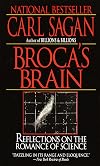
Broca's Brain by Carl Sagan is a series of essays that touch upon different aspects of science. Some topics range from the expansion of the universe, religion versus science, short biographies on scientific figures and the different dangers posed by pseudoscience.
There are a total of 25 chapters and I thought some of the essays were a bit dry and too long for my liking. One chapter was particularly long (about 50-something pages) and was a slog to read through. Carl picks apart the claims of another scientist who believes that events described in certain religious text (Great Flood or the splitting of Red Sea, etc) can be proven to be true by scientific means. While it was cool to see Sagan rip this hypotheses apart with this own wit and knowledge I ended up skimming through the rest of the pages.
Sagan usually does a fantastic job writing for the layman and making complicated topics easy to read and relate to but in Broca's Brain the writing can go from easy to difficult in a matter of paragraphs. This made some passages hard to keep up with.
However some other essays were an absolute joy to read! I particularly enjoyed the chapters about Albert Einstein and Robert H. Goddard. Those piqued my interest and persuaded me to learn more about them. Another chapter spoke on the process of how the nomenclature of the different planets and of their craters and mountains were chosen. The fact that Uranus was almost named George was hilarious! In the chapter "Science Fiction: A show more Personal View" he speaks on how the science-fiction stories of his youth helped start the spark for his love of science. It was nice to gain some insight into Carl's childhood.
Overall I enjoyed the book although it certainly wasn't my favorite. There are a handful of chapters I would go back to and reread but overall I found the book on some days a chore to read through. show less
There are a total of 25 chapters and I thought some of the essays were a bit dry and too long for my liking. One chapter was particularly long (about 50-something pages) and was a slog to read through. Carl picks apart the claims of another scientist who believes that events described in certain religious text (Great Flood or the splitting of Red Sea, etc) can be proven to be true by scientific means. While it was cool to see Sagan rip this hypotheses apart with this own wit and knowledge I ended up skimming through the rest of the pages.
Sagan usually does a fantastic job writing for the layman and making complicated topics easy to read and relate to but in Broca's Brain the writing can go from easy to difficult in a matter of paragraphs. This made some passages hard to keep up with.
However some other essays were an absolute joy to read! I particularly enjoyed the chapters about Albert Einstein and Robert H. Goddard. Those piqued my interest and persuaded me to learn more about them. Another chapter spoke on the process of how the nomenclature of the different planets and of their craters and mountains were chosen. The fact that Uranus was almost named George was hilarious! In the chapter "Science Fiction: A show more Personal View" he speaks on how the science-fiction stories of his youth helped start the spark for his love of science. It was nice to gain some insight into Carl's childhood.
Overall I enjoyed the book although it certainly wasn't my favorite. There are a handful of chapters I would go back to and reread but overall I found the book on some days a chore to read through. show less
"As happens sometimes, a moment settled and hovered and remained from much more than a moment. And sound stopped and movement stopped for much, much more than a moment."
In an instant, the world changed. Dreams stayed as dreams, and never got to formulate into reality. It is a quick glimpse, a brief moment in time where people meet and Fate delivers her decree. Sometimes we hurt those we love the most.
In an instant, the world changed. Dreams stayed as dreams, and never got to formulate into reality. It is a quick glimpse, a brief moment in time where people meet and Fate delivers her decree. Sometimes we hurt those we love the most.
I walked away from this book learning a good amount about Islam. Aslan covers its beginnings in Pre-Islamic Arabia and continues through history as the religion splinters into sects -- the same fate that befell Christianity and Judaism. He ends the book believing that Islam is currently going through its own Reformation now, and hopes that it goes back to its fundamentals, its core principles of pluralism and egalitarianism.
I couldn't help but feel an underlying bias that permeated this work since Aslan is himself a Muslim. It's not that one can't write about their own religion objectively, but sometimes I felt he underplayed certain statements found in the Quran (calls for violence and Muhammad having a child bride are some bits I remember reading). It's important to try and avoid the mistake of injecting our own beliefs, morals, and societal norms into the past simply because things that we deem horrible today weren't seen in that light in the past.
Overall, I enjoyed the book however I will look into other authors for a more well-rounded understanding of Islam.
I couldn't help but feel an underlying bias that permeated this work since Aslan is himself a Muslim. It's not that one can't write about their own religion objectively, but sometimes I felt he underplayed certain statements found in the Quran (calls for violence and Muhammad having a child bride are some bits I remember reading). It's important to try and avoid the mistake of injecting our own beliefs, morals, and societal norms into the past simply because things that we deem horrible today weren't seen in that light in the past.
Overall, I enjoyed the book however I will look into other authors for a more well-rounded understanding of Islam.
I fell in love with hiking years ago and when I learned about the legendary Appalachian Trail I was awed and wondered how people could manage to walk the entire trail. I have hiked parts of it in NJ and NY. It is one of those moments that drift up during little moments of reverie; how wonderful it would be to leave behind the boisterous cacophony of civilization and wander through the coniferous woodlands. One day maybe.
Bryson paints vividly the sights and sounds of the trails -- the tweeting birds, flowing rivers and the music the swaying trees make when a soft breeze flows through the forest. There were plenty of humorous moments as well as Bryson speaks of his misadventures with his friend and hiking buddy Stephen Katz.
The book was a joy and it has made me eager to hit the trails once again, with autumn and its colors slowly making their way to the east coast.
Bryson paints vividly the sights and sounds of the trails -- the tweeting birds, flowing rivers and the music the swaying trees make when a soft breeze flows through the forest. There were plenty of humorous moments as well as Bryson speaks of his misadventures with his friend and hiking buddy Stephen Katz.
The book was a joy and it has made me eager to hit the trails once again, with autumn and its colors slowly making their way to the east coast.
Civilizations are born, they live, and then they die. Empires are raised, and then, in due time they are razed. From tall and glorious to a ruined and smoldering heap, these man-made inventions seem to all meet the same fate at some point. In-fighting, war, greed, hubris... all seem to be the usual symptoms and the pronouncement of death is nigh.
Bradbury shows us in this wonderfully dark and revealing collection of vignettes the repercussions of planet-leaping and technologically drunk humans and their deadly dance with war. Beautifully written in his usual poetic prose, it was a joy immersing myself in this brilliant book.
Bradbury shows us in this wonderfully dark and revealing collection of vignettes the repercussions of planet-leaping and technologically drunk humans and their deadly dance with war. Beautifully written in his usual poetic prose, it was a joy immersing myself in this brilliant book.
Man’s Search for Meaning is a memoir written by Viktor Frankl who was a psychiatrist that survived several concentration camps during the Holocaust. Before being arrested and sent off, he was working on a new type of psychological thinking which he called “Logotherapy”. The word “logo”, which in Greek stands for “meaning”, is the basis of his work. Asking not what the meaning of life is, but rather what is life asking of you is the thesis of his work.
The book is broken into two chapters. In the first half of the book Frankl goes into detail about his horrible experiences in 4 different camps that he was shuffled around in. He elucidates the cramped and terrible conditions inside the trains, the horrendous events that unfolded inside the gates of Auschwitz and finally life after being freed from the clutches of unspeakable evil.
The second chapter gets a bit clinical. Here Frankl explains what Logotherapy is and gives examples of how he has treated and helped different patients with this type of teaching. I found that a lot of the information went over my head however if you’re a student of psychology or philosophy then you will have a better understanding of the terminology and examples he gives within these pages.
Overall I enjoyed the book. The vocabulary is intermediate in the first chapter but the second chapter introduces clinical jargon which can make it a challenge to read. His story is meant to evoke thought and to help inspire those who feel like show more they are lost and don’t have a meaning in life. I found it to be an inspirational story and it did shift my outlook on life. The people in my life and the hobbies I adore are my meaning for life. The meaning of life differs for everyone. It can be the love of someone or something. It can be the goal to finish reading 100 books. It can be to attain a Master’s Degree. According to Frankl even in suffering and wretched conditions a person can survive if they have a will to live and keep a goal to strive for. I give this piece of literature 3 out of 4 stars! show less
The book is broken into two chapters. In the first half of the book Frankl goes into detail about his horrible experiences in 4 different camps that he was shuffled around in. He elucidates the cramped and terrible conditions inside the trains, the horrendous events that unfolded inside the gates of Auschwitz and finally life after being freed from the clutches of unspeakable evil.
The second chapter gets a bit clinical. Here Frankl explains what Logotherapy is and gives examples of how he has treated and helped different patients with this type of teaching. I found that a lot of the information went over my head however if you’re a student of psychology or philosophy then you will have a better understanding of the terminology and examples he gives within these pages.
Overall I enjoyed the book. The vocabulary is intermediate in the first chapter but the second chapter introduces clinical jargon which can make it a challenge to read. His story is meant to evoke thought and to help inspire those who feel like show more they are lost and don’t have a meaning in life. I found it to be an inspirational story and it did shift my outlook on life. The people in my life and the hobbies I adore are my meaning for life. The meaning of life differs for everyone. It can be the love of someone or something. It can be the goal to finish reading 100 books. It can be to attain a Master’s Degree. According to Frankl even in suffering and wretched conditions a person can survive if they have a will to live and keep a goal to strive for. I give this piece of literature 3 out of 4 stars! show less
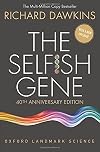
What makes a good book, in my opinion, is one that changes the way you view the world. It offers another way to think about how things are and why. It challenges you and amazes you. The Selfish Gene altered the way I see life on earth.
Dawkins is a fantastic writer and he does a superb job at describing complex operations using metaphors that are simple and connectable. It helped tremendously when he described the inner workings of DNA structure and the minute process of meiosis. I'm not too familiar with Game Theory but the examples he used made it easy to follow and understand for the most part.
The Selfish Gene shines most when Dawkins describes how certain animals behave in the wild, whether 'selfishly' or 'altruistically'. He uses real world studies which I found captivating. The fact that the female praying mantis rips the head off of her mate and then eats it either during or after copulation is wild!
By the end of the last chapter, I feel like I walked away with a fairly good understanding of his theory. The adage 'survival of the fittest' was never clear of who exactly benefits being the fittest. Is it the entire species? Is it the group of species? Is it the individual? Or is the answer found deeper inside the individual at the microscopic level?
Life arose as simple organisms but came to grow into extreme intricacy and complexity. The ancient single celled organism 'wanted' to proliferate and continue its existence. It came that through teamwork, or altruism, it show more (the replicating cell) could benefit itself, hence the selfishness. So I can see how this theory can have truth to it. I'm not a biologist however so of course I can be mistaken, but that's what I took away from this book.
Highly recommended to anyone interested in evolution and how life started on our beautiful planet. show less
Dawkins is a fantastic writer and he does a superb job at describing complex operations using metaphors that are simple and connectable. It helped tremendously when he described the inner workings of DNA structure and the minute process of meiosis. I'm not too familiar with Game Theory but the examples he used made it easy to follow and understand for the most part.
The Selfish Gene shines most when Dawkins describes how certain animals behave in the wild, whether 'selfishly' or 'altruistically'. He uses real world studies which I found captivating. The fact that the female praying mantis rips the head off of her mate and then eats it either during or after copulation is wild!
By the end of the last chapter, I feel like I walked away with a fairly good understanding of his theory. The adage 'survival of the fittest' was never clear of who exactly benefits being the fittest. Is it the entire species? Is it the group of species? Is it the individual? Or is the answer found deeper inside the individual at the microscopic level?
Life arose as simple organisms but came to grow into extreme intricacy and complexity. The ancient single celled organism 'wanted' to proliferate and continue its existence. It came that through teamwork, or altruism, it show more (the replicating cell) could benefit itself, hence the selfishness. So I can see how this theory can have truth to it. I'm not a biologist however so of course I can be mistaken, but that's what I took away from this book.
Highly recommended to anyone interested in evolution and how life started on our beautiful planet. show less
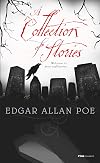
My introduction to Edgar Allan Poe was, like I'm sure for many, The Raven. I think many of us read the gloomy poem in school. I don't remember reading any of his other works. College came along and The Tale-Tell Heart was required reading for a Literature course I was attending.
I immensely enjoyed the short story, and that was when I opened the dark wooden cellar door that was located in the cob-webbed, cavernous, moldy dungeon that is the world of Edgar Allan Poe.
This book holds 17 of some of the best tales that Poe has to offer, and some that for me, missed the mark. I don't want to rate each story individually because I feel it might deter others from reading those tales, and I believe everyone should go into this book with an open mind.
Out of the 17 tales, I found 11 of them to be great and entertaining. Some of them were very dark and macabre. Some, surprisingly, had a humorous tinge to it, albeit a dark comical aspect. There are two stories included that can be listed as a "whodunit", or a detective tale. Those were certainly something! I had no idea Poe had dipped into that genre.
I highly recommend reading this if you come across it. It was a wonderful introduction to Poe's short, glum tales. I look forward to reading more of his others and also delving into his poetry.
I immensely enjoyed the short story, and that was when I opened the dark wooden cellar door that was located in the cob-webbed, cavernous, moldy dungeon that is the world of Edgar Allan Poe.
This book holds 17 of some of the best tales that Poe has to offer, and some that for me, missed the mark. I don't want to rate each story individually because I feel it might deter others from reading those tales, and I believe everyone should go into this book with an open mind.
Out of the 17 tales, I found 11 of them to be great and entertaining. Some of them were very dark and macabre. Some, surprisingly, had a humorous tinge to it, albeit a dark comical aspect. There are two stories included that can be listed as a "whodunit", or a detective tale. Those were certainly something! I had no idea Poe had dipped into that genre.
I highly recommend reading this if you come across it. It was a wonderful introduction to Poe's short, glum tales. I look forward to reading more of his others and also delving into his poetry.
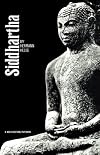
“Wisdom cannot be imparted. Wisdom that a wise man attempts to impart always sounds like foolishness to someone else ... Knowledge can be communicated, but not wisdom. One can find it, live it, do wonders through it, but one cannot communicate and teach it.” -Siddhartha
A sublime and lovely short read that follows the journey of a young boy who, after suffering many of life's trials and tribulations and getting caught in a whirlpool of vices, ends up deeply listening to a flowing river and achieves serenity and wisdom that can only come with the ripening years.
A sublime and lovely short read that follows the journey of a young boy who, after suffering many of life's trials and tribulations and getting caught in a whirlpool of vices, ends up deeply listening to a flowing river and achieves serenity and wisdom that can only come with the ripening years.
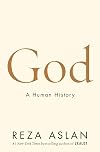
Author Reza Aslan gives a short history of how early humans may have began their belief in animism, the view that animals, plants, rivers, mountains and natural phenomenon possess a soul or a spiritual essence. He speaks about the cave art that has been discovered throughout western Europe that may confirm this theory. From there he travels though time and shows how polytheism (belief in multiple gods) eventually bloomed into monotheism (belief in single god).
Aslan is a great writer and his style kept me engaged and interested the whole time. The book is fairly short and easy to get through. I thought it was a delightful introduction to the history of religion, of how ancient humans looked at the world around them and tried to make sense of it all. I find it fascinating really. I look forward to reading his other books as well.
Aslan is a great writer and his style kept me engaged and interested the whole time. The book is fairly short and easy to get through. I thought it was a delightful introduction to the history of religion, of how ancient humans looked at the world around them and tried to make sense of it all. I find it fascinating really. I look forward to reading his other books as well.
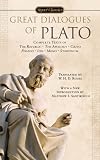
After reading [b:The Story of Philosophy: The Lives and Opinions of the World's Greatest Philosophers|31795|The Story of Philosophy The Lives and Opinions of the World's Greatest Philosophers|Will Durant|https://i.gr-assets.com/images/S/compressed.photo.goodreads.com/books/1438471992l/31795._SY75_.jpg|32011] by Will Durant, I was excited to begin my journey of wisdom with Plato. Socrates lays down the foundation of western thought and from here I plan to move throughout history with the philosophers that came thereafter.
This edition contains seven of Plato's greatest works and they are translated by W.H.D. Rouse. I have yet to read other translations, but I found this one to be superb and readable if this is your first time reading Plato. Plato was a splendid author and I didn't find myself dragging through verbosity or flowery poetics.
Of all the works I enjoyed The Republic and The Symposium the most. Initially Phaedo defeated me and I couldn't finish, but I came back at it with a clearer mind and finished it, and it was excellent. I felt I got to know Socrates throughout the book and I fell in love with the Socratic Method. Following the dialogue from beginning to end and seeing how he and the other interlocutors came to a conclusion through questioning was inspiring, and I plan to incorporate that into my thinking.
This edition contains seven of Plato's greatest works and they are translated by W.H.D. Rouse. I have yet to read other translations, but I found this one to be superb and readable if this is your first time reading Plato. Plato was a splendid author and I didn't find myself dragging through verbosity or flowery poetics.
Of all the works I enjoyed The Republic and The Symposium the most. Initially Phaedo defeated me and I couldn't finish, but I came back at it with a clearer mind and finished it, and it was excellent. I felt I got to know Socrates throughout the book and I fell in love with the Socratic Method. Following the dialogue from beginning to end and seeing how he and the other interlocutors came to a conclusion through questioning was inspiring, and I plan to incorporate that into my thinking.
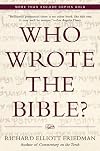
A short book presenting evidence that the Bible was written by many different authors, each adding passages that corresponded to their social and political environments at their time of living. Friedman does an excellent job presenting the evidence for this by showing differences in language and syntax found in the most famous stories, like Noah's Ark or Moses receiving the 10 commandments. These stories show up multiple times in the Bible but with different lines or certain words added, signifying that someone (or a group) changed the story around slightly. These have become known as the J, E, and P texts (Jahweh, Elohim, and Priestly).
I find it fascinating that so many people swear by it, follow it, praise it but know absolutely nothing about its history. It contains so many contradictions. I don't understand why people still continue to use the Bible as an authoritative text rather than use it as a means for spiritual guidance (although many parts of it that I've seen quoted are rather violent and primitive). I plan to read parts of it strictly as literature and for historical context, only because I find the Near East so interesting.
I find it fascinating that so many people swear by it, follow it, praise it but know absolutely nothing about its history. It contains so many contradictions. I don't understand why people still continue to use the Bible as an authoritative text rather than use it as a means for spiritual guidance (although many parts of it that I've seen quoted are rather violent and primitive). I plan to read parts of it strictly as literature and for historical context, only because I find the Near East so interesting.
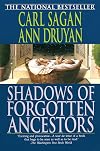
Carl Sagan and his wife Ann Druyan poetically present the humble beginnings of homo sapiens. They begin with the formulation of the universe and then with the many processes that went into the origination of our planet. The wonder that is DNA and genetics is then explained, showing how closely linked humans are to everything but just how intimately related we are to the great apes, mostly the chimpanzees.
The book is 80% about chimpanzee and other ape behavior and how they relate to us. I found it fascinating how many of our social behaviors are nearly identical with the apes. They function as a family unit. Mothers breastfeed their young and the young learn by seeing what the elders do. Apes groom each other and we like to give massages or cuddle with our loved ones. Chimps like Lucy displayed intelligence and the ability to think abstractedly. They have emotion and use facial expressions to communicate.
Apes are also highly sexual and can be really violent. Especially the Hamadrya baboon. Where the male chimps loosely guard their females when they are not ovulating, the male baboon treats the females like private property and will violently discipline them if they stray to another male. Apes will go patrolling in groups and are masters of stealth and strategy. The military branches of the world can take a page out of the chimp's playbook.
I found it all to be engrossing and enlightening. Carl and Ann shed a sliver of light on the shadows of our ancestors and bring them to show more the forefront for us to appreciate. We can learn so much about our past if we can continue to study our great antecedents. show less
The book is 80% about chimpanzee and other ape behavior and how they relate to us. I found it fascinating how many of our social behaviors are nearly identical with the apes. They function as a family unit. Mothers breastfeed their young and the young learn by seeing what the elders do. Apes groom each other and we like to give massages or cuddle with our loved ones. Chimps like Lucy displayed intelligence and the ability to think abstractedly. They have emotion and use facial expressions to communicate.
Apes are also highly sexual and can be really violent. Especially the Hamadrya baboon. Where the male chimps loosely guard their females when they are not ovulating, the male baboon treats the females like private property and will violently discipline them if they stray to another male. Apes will go patrolling in groups and are masters of stealth and strategy. The military branches of the world can take a page out of the chimp's playbook.
I found it all to be engrossing and enlightening. Carl and Ann shed a sliver of light on the shadows of our ancestors and bring them to show more the forefront for us to appreciate. We can learn so much about our past if we can continue to study our great antecedents. show less
The Glorious Cause: The American Revolution, 1763-1789 (Oxford History of the United States) by Robert Middlekauff
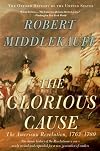
Unfortunately I did not finish. I went into this work because I wanted to know why the Americans rebelled against Great Britain. The beginning chapters explain these events fantastically. However, once the book got into battle formations, troop movement, military tactics etc, I became uninterested and struggled. Military theory isn't my cup of tea. Also I have taken a course on the events following post-Revolutionary War, so I know about the US Constitution and all the drama surrounding the ratification. I leave this work knowing a lot more than when I started.
A small little book filled with Van Gogh's famous paintings. On one side of the page Josephine explains the details and techniques Vincent uses on the painting featured on the opposite page. I don't know a whole lot about art critique and color theory so some things that Josephine would bring to light were things I didn't fully understand.
I enjoyed looking at the artwork and learning about the sad and tumultuous life of Vincent. It especially got sadder towards the end of the book, knowing his suicide was imminent.
A nice place to start I think for those interested in Van Gogh.
I enjoyed looking at the artwork and learning about the sad and tumultuous life of Vincent. It especially got sadder towards the end of the book, knowing his suicide was imminent.
A nice place to start I think for those interested in Van Gogh.
A truly heart-breaking read. Remarque's detailed descriptions about the horrors of war, the violence, the hopelessness -- it makes the reading heavy. Some passages will make you pause and reflect at the utter pointlessness of it all. This book should be required reading for all those suits in government who are gung-ho about declaring war.
Will the human race ever move beyond the waging of war?
Will the human race ever move beyond the waging of war?
Richard Dawkins does a wonderful job at leading the reader on a grand pilgrimage throughout the eons, introducing you to our great evolutionary ancestors. He starts the journey working backwards, beginning with Homo Sapiens and then the earliest bipedal apes like Homo Habilis, then ending with the earliest replicating life, the one that would've started it all billions of years ago. Unfortunately, it didn't leave any fossils behind (soft-body creatures tend not to sadly but it has happened at a site in China) but if we work the molecular clock backwards we can deduce that somewhere in the 'primordial soup' a molecule began to copy itself, and it was really good at it.
As we meet the different pilgrims Dawkins explains how evolution shaped life in the most exciting and unusual ways. Some creatures on our planet function in the most ridiculous ways. I don't wish to spoil these parts but it is awe-inspiring for sure.
This was a fun and truly educating read for me. I learned so much about the different kinds of life that inhabit our planet. Human beings are just one tiny branch in the grand tree of life. We have only been here for a second in geological time, a drop in the bucket. The Ancestor's Tale is a humbling experience.
As we meet the different pilgrims Dawkins explains how evolution shaped life in the most exciting and unusual ways. Some creatures on our planet function in the most ridiculous ways. I don't wish to spoil these parts but it is awe-inspiring for sure.
This was a fun and truly educating read for me. I learned so much about the different kinds of life that inhabit our planet. Human beings are just one tiny branch in the grand tree of life. We have only been here for a second in geological time, a drop in the bucket. The Ancestor's Tale is a humbling experience.
Finally I have finished this behemoth of a book -- not necessarily of physical size but because of the weight of the thought and knowledge inscribed within. The amount of wisdom and enlightenment that Durant crams into this work is phenomenal. So many different schools of thinking are introduced within these pages.
Reading The Story of Philosophy is the equivalent of Olympic training for the mind. As you read your way through the chapters, one perceives change occurring in one's own thought. Dogmatic beliefs are shattered. So many of these differing philosophies beg contemplation. Deep contemplation in return brings about more questions that begs the reader to pick the source texts of these learned men and to read their own words; to decrypt, solve, and pick apart their thoughts so that in return they sharpen and brighten your own.
This was for me a fantastic introduction to the world of Philosophy. I've read other "Philosophy 101" books but Will Durant's opus was supreme. It was a challenging read but a beneficial one. Challenging not so much in language but in the deciphering of the ideas and thoughts of these thinkers. That deciphering is the key to it all. To think and contemplate, to examine and observe, to dive deeply into one's intellect is truly the sweet fruit of life.
Reading The Story of Philosophy is the equivalent of Olympic training for the mind. As you read your way through the chapters, one perceives change occurring in one's own thought. Dogmatic beliefs are shattered. So many of these differing philosophies beg contemplation. Deep contemplation in return brings about more questions that begs the reader to pick the source texts of these learned men and to read their own words; to decrypt, solve, and pick apart their thoughts so that in return they sharpen and brighten your own.
This was for me a fantastic introduction to the world of Philosophy. I've read other "Philosophy 101" books but Will Durant's opus was supreme. It was a challenging read but a beneficial one. Challenging not so much in language but in the deciphering of the ideas and thoughts of these thinkers. That deciphering is the key to it all. To think and contemplate, to examine and observe, to dive deeply into one's intellect is truly the sweet fruit of life.
Heritage Studies Book 6
I will start this review by saying that I did NOT read the entire book, so I cannot give it a fair rating. As the other reviews on GR mention, this work was at times incredibly dry.
Rouse goes into very detailed explanations about the peopling of the Caribbean, Pre-Columbus. This was the study of the Pre-Taino era in which natives that came from North, Central and South America came to populate the Greater and Lesser Antilles. As the years went on other groups came to supplant those already there, most likely by genocide and war. By the time Columbus came around, the Taino were the dominate group.
Different ethnic groups came to live around the islands. I thought this was interesting because I thought that the Caribbean was under one umbrella of Taino. This wasn't the case; different races with different cultures and languages populated the different islands. It was not one race.
I did read in full the last two chapters where Rouse details the Columbus' voyages and the after effects of European colonization. There is also a short bit at the end about the Columbian Exchange, but the book by Alfred W. Crosby will be read for further reading.
I recommend this for serious students only. Even though Rouse states in the beginning that this was written for both academic and the laymen crowd, I felt it was certainly leaning more towards the former. Maybe I will revisit this one in the future.
I will start this review by saying that I did NOT read the entire book, so I cannot give it a fair rating. As the other reviews on GR mention, this work was at times incredibly dry.
Rouse goes into very detailed explanations about the peopling of the Caribbean, Pre-Columbus. This was the study of the Pre-Taino era in which natives that came from North, Central and South America came to populate the Greater and Lesser Antilles. As the years went on other groups came to supplant those already there, most likely by genocide and war. By the time Columbus came around, the Taino were the dominate group.
Different ethnic groups came to live around the islands. I thought this was interesting because I thought that the Caribbean was under one umbrella of Taino. This wasn't the case; different races with different cultures and languages populated the different islands. It was not one race.
I did read in full the last two chapters where Rouse details the Columbus' voyages and the after effects of European colonization. There is also a short bit at the end about the Columbian Exchange, but the book by Alfred W. Crosby will be read for further reading.
I recommend this for serious students only. Even though Rouse states in the beginning that this was written for both academic and the laymen crowd, I felt it was certainly leaning more towards the former. Maybe I will revisit this one in the future.
Einstein's Dreams is a charming book about what Albert Einstein was dreaming about as he worked on his General Theory of Relativity.
Alan Lightman presents a journey to different worlds where time behaves differently and how the people living there experience these alternative realities. Time moves extremely slow on one world and ridiculously fast in another. Time acts like light in between two mirrors, reflections spanning infinity or behaves like a current on a river, susceptible to minute changes and diversions by the slightest breeze.
A fun read indeed for those who enjoy reflecting on the wonders of time.
Alan Lightman presents a journey to different worlds where time behaves differently and how the people living there experience these alternative realities. Time moves extremely slow on one world and ridiculously fast in another. Time acts like light in between two mirrors, reflections spanning infinity or behaves like a current on a river, susceptible to minute changes and diversions by the slightest breeze.
A fun read indeed for those who enjoy reflecting on the wonders of time.
What were the Americas like before European contact? How many peoples lived on the continents? How many complex civilizations rose and fell before Christopher Columbus arrived in the Bahamas in 1492? How complex were these societies?
Mann attempts to locate answers for these burning questions. First and foremost, he is a journalist, not a specialist. And so, he meets with a slew of archaeologists, anthropologists, and historians to hear their side and to see what they’ve discovered. The main argument is whether the Americas were highly populated or lowly populated before the clashing of the East and the Western hemispheres.
The book goes into detail about how the Indians sculpted their environment and whether doing so helped them or led them to their destruction. We learn about how Native Americans did controlled burning to renew the land and to prepare new crops. The Inca terraced the high mountains of the Andes to avoid flooding in the lowlands. Ancient civilizations like the Norte Chico and the Olmecs thrived in their respective territories and arrived THOUSANDS of years before the more well-known Maya and Inca! The Cahokia of North America had built great pyramids that rivaled those of ancient Egypt!
I learned a good amount about civilizations that thrived before Columbus. At the end of the book, there is no clear answer to the question of just how many people lived in these lands pre-contact. By measuring the sites that archaeologists have studied, scientists can only show more estimate how many lived in those societies but we’ll never truly know.
The only thought that I was left with after finishing the book, aside from the wonder and awe of what I had learned, was those ancient groups that we had lost. If only the Europeans had sent historians and anthropologists instead of conquistadors, poets and artists to record the beauty of these lands instead of clerics aiming to eradicate the Indians’ culture, the invaders arming themselves with not swords and lances but with quill and paper to record the knowledge from these peoples that are now sadly lost to history. show less
Mann attempts to locate answers for these burning questions. First and foremost, he is a journalist, not a specialist. And so, he meets with a slew of archaeologists, anthropologists, and historians to hear their side and to see what they’ve discovered. The main argument is whether the Americas were highly populated or lowly populated before the clashing of the East and the Western hemispheres.
The book goes into detail about how the Indians sculpted their environment and whether doing so helped them or led them to their destruction. We learn about how Native Americans did controlled burning to renew the land and to prepare new crops. The Inca terraced the high mountains of the Andes to avoid flooding in the lowlands. Ancient civilizations like the Norte Chico and the Olmecs thrived in their respective territories and arrived THOUSANDS of years before the more well-known Maya and Inca! The Cahokia of North America had built great pyramids that rivaled those of ancient Egypt!
I learned a good amount about civilizations that thrived before Columbus. At the end of the book, there is no clear answer to the question of just how many people lived in these lands pre-contact. By measuring the sites that archaeologists have studied, scientists can only show more estimate how many lived in those societies but we’ll never truly know.
The only thought that I was left with after finishing the book, aside from the wonder and awe of what I had learned, was those ancient groups that we had lost. If only the Europeans had sent historians and anthropologists instead of conquistadors, poets and artists to record the beauty of these lands instead of clerics aiming to eradicate the Indians’ culture, the invaders arming themselves with not swords and lances but with quill and paper to record the knowledge from these peoples that are now sadly lost to history. show less
This play was my introduction into Tragedy and Drama and what an inauguration it was! The horrible circumstances that fall upon Oedipus are truly horrific and I wouldn't wish this on my worst enemy.
The Gods are a cruel bunch, but I already knew this after reading The Iliad. Oedipus learned the hard way that trying to change the course of his terrible destiny was fruitless and in vain. He just couldn't see (no pun intended hehe) that he was the reason the vile plague on Thebes continued. There is so much foreboding and cosmic irony stuffed into the story that its impossible to not laugh as you see the coincidences in the dialogue.
Truly a great, entertaining, sad, tragic, and amazing play. It would've been amazing to watch this performed in ancient Athens.
The Gods are a cruel bunch, but I already knew this after reading The Iliad. Oedipus learned the hard way that trying to change the course of his terrible destiny was fruitless and in vain. He just couldn't see (no pun intended hehe) that he was the reason the vile plague on Thebes continued. There is so much foreboding and cosmic irony stuffed into the story that its impossible to not laugh as you see the coincidences in the dialogue.
Truly a great, entertaining, sad, tragic, and amazing play. It would've been amazing to watch this performed in ancient Athens.
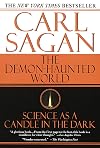
Second reading done on 12.11.19 - Because of the current political climate, especially in America, this book is more important now than ever. The relevancy of some passages about the dangers of not thinking critically during political theatrics was striking. The fact that this was written in 1997 and some issues that Sagan brings to light are still current means that the darkness of ignorance is ever enveloping around us, and so we must do our best to keep the candles lit.
It has been almost a year since I've read this wonderful book and whenever I hear false or misleading information being spread on television or online, I refer back to this gem. This was my first jump into the superb works of Carl Sagan and it was one I will never forget. This book opened my eyes to the amazing world of science and has helped me stop and think about how things work and why things are before believing something to be truthful. It has helped me analyze situations differently and has made me a more critical person.
The main theme is the importance of critical thinking. Sagan explains that asking questions leads down the wonderful path of knowledge. Simply accepting a statement at face value can be dangerous and can lead down slippery slope. Science is about experimentation and making observations, recording the results of those tests, coming to a theory or hypothesis and then releasing the information of the research so that other scientists can analyze your work and come to their own show more conclusions.
Nothing is ever definite in science and the results of one test can be overturned completely by another. The learning process is constant. That is what I find wonderful about the sciences; it is an expansive field that is constantly changing and flipping theories upside down or straight out the window!
Sagan warns about the dangers of religion and pseudo-science and their inability to accept any type of scrutinizing or examination. That leads to blind acceptance. Society should be constantly on its collective toes and be wary of the information being spread. We should all be asking more questions. Question your government. Question your religious institutions.
The chapter titled The Dragon in My Garage was one of my favorites. Definitely eye-opening.
I highly recommend this great book to EVERYONE. show less
It has been almost a year since I've read this wonderful book and whenever I hear false or misleading information being spread on television or online, I refer back to this gem. This was my first jump into the superb works of Carl Sagan and it was one I will never forget. This book opened my eyes to the amazing world of science and has helped me stop and think about how things work and why things are before believing something to be truthful. It has helped me analyze situations differently and has made me a more critical person.
The main theme is the importance of critical thinking. Sagan explains that asking questions leads down the wonderful path of knowledge. Simply accepting a statement at face value can be dangerous and can lead down slippery slope. Science is about experimentation and making observations, recording the results of those tests, coming to a theory or hypothesis and then releasing the information of the research so that other scientists can analyze your work and come to their own show more conclusions.
Nothing is ever definite in science and the results of one test can be overturned completely by another. The learning process is constant. That is what I find wonderful about the sciences; it is an expansive field that is constantly changing and flipping theories upside down or straight out the window!
Sagan warns about the dangers of religion and pseudo-science and their inability to accept any type of scrutinizing or examination. That leads to blind acceptance. Society should be constantly on its collective toes and be wary of the information being spread. We should all be asking more questions. Question your government. Question your religious institutions.
The chapter titled The Dragon in My Garage was one of my favorites. Definitely eye-opening.
I highly recommend this great book to EVERYONE. show less
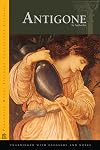
"Wisdom is by far the greatest part of joy,
and reverence towards the gods must be safeguarded.
The mighty words of the proud are paid in full
with mighty blows of fate, and at long last
those blows will teach us wisdom."
This final passage represents the theme for Antigone. These are the wise words that the Chorus speaks and are the ones that Creon should have listened to in the beginning. He was warned by his son. The blind prophet Tiresias told him to heed his words. Yet Creon did not. The price he pays for his insolence, disrespect, and lack of better judgement is a deep one; the loss of his son, wife, and niece, all by suicide. The sound made by the fall from grace is loud and thunderous.
Sophocles is a master of writing these downfalls from glory. He knew how to write a tale that would effect the crowd (and the reader) and have them reflect on their own lives. The reaction from the Athenian audience must've been one of shock and awe.
I enjoyed Oedipus the King more than this play. The destruction of the main characters are nearly the same, but how the events unfold for Oedipus is unrivaled by no other. Antigone is definitely worth the read though!
and reverence towards the gods must be safeguarded.
The mighty words of the proud are paid in full
with mighty blows of fate, and at long last
those blows will teach us wisdom."
This final passage represents the theme for Antigone. These are the wise words that the Chorus speaks and are the ones that Creon should have listened to in the beginning. He was warned by his son. The blind prophet Tiresias told him to heed his words. Yet Creon did not. The price he pays for his insolence, disrespect, and lack of better judgement is a deep one; the loss of his son, wife, and niece, all by suicide. The sound made by the fall from grace is loud and thunderous.
Sophocles is a master of writing these downfalls from glory. He knew how to write a tale that would effect the crowd (and the reader) and have them reflect on their own lives. The reaction from the Athenian audience must've been one of shock and awe.
I enjoyed Oedipus the King more than this play. The destruction of the main characters are nearly the same, but how the events unfold for Oedipus is unrivaled by no other. Antigone is definitely worth the read though!
I Never Metaphor I Didn't Like: A Comprehensive Compilation of History's Greatest Analogies, Metaphors, and Similes by Mardy Grothe
A great little book full of memorable quotes.
It was a pleasure reading this and I saved many passages. Some will have you pause and wade in reflection. Others will have you laughing out loud. Yet others may make you cry.
Dr. Mardy Grothe separates the chapters by topic: Insults, Relationships, Life and Love are some of the themes touched upon. There is a passage for every situation.
A cool book to have as a companion whenever you feel like your brain needs a metaphorical massage.
It was a pleasure reading this and I saved many passages. Some will have you pause and wade in reflection. Others will have you laughing out loud. Yet others may make you cry.
Dr. Mardy Grothe separates the chapters by topic: Insults, Relationships, Life and Love are some of the themes touched upon. There is a passage for every situation.
A cool book to have as a companion whenever you feel like your brain needs a metaphorical massage.
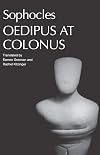
Oedipus at Colonus
The final chapter of the Theban Plays opens with old, weathered Oedipus arriving just outside of glorious Athens. Alongside him is his faithful daughter Antigone, who has been his guiding eyes ever since he took his own years ago. They end their trip directly in front of a sacred forest, where the Furies are worshipped. This is the site of Oepidus' final resting place, according to the prophecy that was told to him. He has been searching for this very spot for many years.
Multiple characters come on the scene and this is where the audience witnesses the fierceness and cutting anger that stirs inside Oedipus' heart. He has a good amount of indignation pent up after so many years, and his words come in the form of daggers which strike and stab his own son Polynices and his brother-in-law/uncle Creon. He doesn't hold back.
I found this play exciting and enthralling. The monologues were great and full of energy. The ending itself was great, with one of the most powerful gods letting his presence known. I enjoyed Oedipus the King greatly, and Oedipus at Colonus is a close second. Antigone was okay, but I have to reread it and see how I feel afterwards.
The final chapter of the Theban Plays opens with old, weathered Oedipus arriving just outside of glorious Athens. Alongside him is his faithful daughter Antigone, who has been his guiding eyes ever since he took his own years ago. They end their trip directly in front of a sacred forest, where the Furies are worshipped. This is the site of Oepidus' final resting place, according to the prophecy that was told to him. He has been searching for this very spot for many years.
Multiple characters come on the scene and this is where the audience witnesses the fierceness and cutting anger that stirs inside Oedipus' heart. He has a good amount of indignation pent up after so many years, and his words come in the form of daggers which strike and stab his own son Polynices and his brother-in-law/uncle Creon. He doesn't hold back.
I found this play exciting and enthralling. The monologues were great and full of energy. The ending itself was great, with one of the most powerful gods letting his presence known. I enjoyed Oedipus the King greatly, and Oedipus at Colonus is a close second. Antigone was okay, but I have to reread it and see how I feel afterwards.