
Roxane Gay
Author of Bad Feminist: Essays
About the Author
Roxane Gay is the New York Times bestselling author of Bad Feminist: Essays, the novel An Untamed State, the story collection Ayiti, and her memoir, Hunger: A Memoir of (My) Body. Her work has also appeared in Glamour, Best American Short Stories, and the New York Times Book Review. She won the PEN show more Center USA's 2015 Freedom to Write Award. The annual award is presented to individuals or organisations for 'producing notable work in the face of extreme adversity' or showing 'exceptional courage in the defense of free expression. In 2018, she was presented the Trustee Award for Excellence in Literature by the Lambda Literery Awards. She also won the Bisexual Nonfiction award for her memoir Hunger. (Bowker Author Biography) show less
Image credit: flavorwire.com
Series
Works by Roxane Gay
Opinions: A Decade of Arguments, Criticism, and Minding Other People's Business (2023) — Narrator, some editions — 221 copies, 5 reviews
The Year I Learned Everything 4 copies
The Banks #1 1 copy
Unruly Bodies 1 copy
Broads - story 1 copy
North Country 1 copy
A Cool Dry Place 1 copy
Associated Works
Go Tell It on the Mountain (1953) — Introduction, some editions; Narrator, some editions — 6,944 copies, 134 reviews
Conversations on Love: Lovers, Strangers, Parents, Friends, Endings, Beginnings (2021) — Contributor — 293 copies, 2 reviews
Tales of Two Americas: Stories of Inequality in a Divided Nation (2017) — Contributor — 229 copies, 7 reviews
Light the Dark: Writers on Creativity, Inspiration, and the Artistic Process (2017) — Contributor — 166 copies, 5 reviews
Hint Fiction: An Anthology of Stories in 25 Words or Fewer (2010) — Contributor — 150 copies, 26 reviews
Does Your Mama Know? An Anthology of Black Lesbian Coming Out Stories (1997) — Contributor — 137 copies, 1 review
New Daughters of Africa: An International Anthology of Writing by Women of African Descent (2019) — Contributor — 117 copies, 1 review
Black Ink: Literary Legends on the Peril, Power, and Pleasure of Reading and Writing (2018) — Contributor — 95 copies
Together We Rise: Behind the Scenes at the Protest Heard Around the World (2018) — Contributor — 83 copies
Drawing Power: Women's Stories of Sexual Violence, Harassment, and Survival (2019) — Introduction — 66 copies, 2 reviews
Best Actress: The History of Oscar®-Winning Women (2019) — Foreword, some editions — 20 copies, 1 review
Get Out of My Crotch! Twenty-One Writers Respond to America's War on Women's Rights and Reproductive Health (2013) — Contributor — 12 copies
Radicals, Volume 1: Fiction, Poetry, and Drama: Audacious Writings by American Women, 1830-1930 (Volume 1) (2021) — Foreword, some editions — 3 copies
Tagged
Common Knowledge
- Birthdate
- 1974-10-15
- Gender
- female
- Education
- Michigan Technological University (PhD|2010)
- Occupations
- university professor
teacher of creative writing
public intellectual
writer
editor - Organizations
- Purdue University
Eastern Illinois University
New York Times
Hear to Slay (podcast) - Agent
- Maria Massie
- Nationality
- USA
- Birthplace
- Omaha, Nebraska, USA
- Associated Place (for map)
- Nebraska, USA
Members
Discussions
Roxane Gay's Bad Feminist in Reading Books by Women (August 2016)
Bad Feminist in Feminist Theory (January 2015)
Reviews

Gay shares the experiences that have literally shaped her in this brave, heartbreaking memoir. A traumatic experience as an adolescent led to her developing coping mechanisms that involved using food for comfort and weight as a shield. Now, she faces the realities of existing in a world that is not set up to accommodate bodies of size.
While I don't share Gay's experience of trauma, I have (unfortunately) shared some of the experiences she relates about being a larger person in a world not show more suited for big figures. I applaud the bravery and raw honesty she shows in putting these words to paper. Gay starts out by telling her story chronologically, but then it feels like she moves over to handling things more topically, which leads to some jumping around in the timeline. Some later parts of the book also feel more like essays, leading me to wonder if they started out that way (the CIP data indicates that parts of the book appeared elsewhere prior to publication). I'm glad that I read this book. There's no lesson to be learned here -- Gay is on a journey, same as the rest of us; she hasn't figured out the magical secret to weight loss that we all would love to discover. show less
While I don't share Gay's experience of trauma, I have (unfortunately) shared some of the experiences she relates about being a larger person in a world not show more suited for big figures. I applaud the bravery and raw honesty she shows in putting these words to paper. Gay starts out by telling her story chronologically, but then it feels like she moves over to handling things more topically, which leads to some jumping around in the timeline. Some later parts of the book also feel more like essays, leading me to wonder if they started out that way (the CIP data indicates that parts of the book appeared elsewhere prior to publication). I'm glad that I read this book. There's no lesson to be learned here -- Gay is on a journey, same as the rest of us; she hasn't figured out the magical secret to weight loss that we all would love to discover. show less

I roared through this collection of essays for which the tag "feminism" falls far short. Gay certainly brings a feminist lens to her essays of literary criticism and deconstructions of pop culture, but her perspective is far more complex than that. The collection's title comes from her assertions that feminism is flawed, that she is an inconsistent feminist (aren't we all?), and that neither she nor feminism should be disregarded because of these facts. She notes, as well, that eschewing the show more entire movement based on its failings is exactly what those who would most benefit from the movement's demise would like to see happen.
Gay's essays explore race and class and sexuality as well as gender. I found myself laughing out loud at times, googling certain personalities or events to learn a bit more, saying "amen" under my breath. Her writing is deft and accessible, which is not to say that it's not sophisticated. It is. Her voice is steady but nuanced, suggesting that she is exquisitely conscious of various audiences. I love her boldness. I love her frankness. I love her vulnerability (although I suspect she would have something to say about why I love that latter quality). I loved the essay about the Scrabble tournament.
Here's one favorite example of her straightforward writing style:
In "Some Jokes Are Funnier than Others," she is exploring the ongoing debate about comics' and others' "right" to tell jokes at others' expense, especially rape jokes, racist jokes, etc. I hear this debate a lot on college campuses where the tension between "free speech" and "safe spaces" is palpable, and students all too frequently want their own free speech protected but not necessarily the free (and often hurtful) speech of others to be controlled by the administration. Gay simply says "We are free to speak as we choose without fear of prosecution or persecution, but we are not free to speak as we choose without consequence." I will be repeating this sentence.
The essay collection is divided into sections and the one called "Race and Entertainment" was where I learned the most. This is probably because, as a white woman, her musings on gender and feminism fit within my longer-term consciousness. Also, I'm in my mid-50s (well, I'm probably more accurately in my late 50s but who's to say?) so many of the pop cultural references were less familiar to me. I googled. I learned. I resonated and appreciated and considered my own reactions to some of the films or songs or tv shows with which I was familiar. This was an enlightening read.
I can't wait to read more of Gay's work. show less
Gay's essays explore race and class and sexuality as well as gender. I found myself laughing out loud at times, googling certain personalities or events to learn a bit more, saying "amen" under my breath. Her writing is deft and accessible, which is not to say that it's not sophisticated. It is. Her voice is steady but nuanced, suggesting that she is exquisitely conscious of various audiences. I love her boldness. I love her frankness. I love her vulnerability (although I suspect she would have something to say about why I love that latter quality). I loved the essay about the Scrabble tournament.
Here's one favorite example of her straightforward writing style:
In "Some Jokes Are Funnier than Others," she is exploring the ongoing debate about comics' and others' "right" to tell jokes at others' expense, especially rape jokes, racist jokes, etc. I hear this debate a lot on college campuses where the tension between "free speech" and "safe spaces" is palpable, and students all too frequently want their own free speech protected but not necessarily the free (and often hurtful) speech of others to be controlled by the administration. Gay simply says "We are free to speak as we choose without fear of prosecution or persecution, but we are not free to speak as we choose without consequence." I will be repeating this sentence.
The essay collection is divided into sections and the one called "Race and Entertainment" was where I learned the most. This is probably because, as a white woman, her musings on gender and feminism fit within my longer-term consciousness. Also, I'm in my mid-50s (well, I'm probably more accurately in my late 50s but who's to say?) so many of the pop cultural references were less familiar to me. I googled. I learned. I resonated and appreciated and considered my own reactions to some of the films or songs or tv shows with which I was familiar. This was an enlightening read.
I can't wait to read more of Gay's work. show less

"I grieved for many years the woman I would have been if...I had never been raped. She never got a chance to live. That is rape's legacy, the countless deaths women die just trying to keep existing in the world as it is." ("Reaping What Rape Culture Sows" by Elisabeth Fairfield Stokes)
This collection of personal reflections on rape, sexual assault, sexualized and misogynistic culture, survival, and pain packs a punch on nearly every page. I had to read it slowly, one or two essays a day, show more because it provided so much thought-provoking and rage-inducing content. As in any anthology, I found some entries better/more powerful than others. One that stands out is "Why I Stopped" by Zoe Medeiros which reflects on her determination to stop telling her rape story because she doesn't owe it to anyone.
"Not telling my story doesn't mean it didn't happen. I don't have to be open about my experiences, about all of them or even any of them, to be a real survivor. I am a real survivor because I survived, even if some days it feels like I didn't survive at all."
The whole piece is full of excellent insight and quotable passages and was worth the price of the book alone.
I appreciate that Roxane Gay, the editor of the collection, included a diversity of experiences and authors, further testament to the near universality experience of women - not all of whom will be violently violated, but I have yet to meet one who has not been subjected to behaviors that are seemingly deemed acceptable in the rape culture we currently exist in.
4.5 stars show less
This collection of personal reflections on rape, sexual assault, sexualized and misogynistic culture, survival, and pain packs a punch on nearly every page. I had to read it slowly, one or two essays a day, show more because it provided so much thought-provoking and rage-inducing content. As in any anthology, I found some entries better/more powerful than others. One that stands out is "Why I Stopped" by Zoe Medeiros which reflects on her determination to stop telling her rape story because she doesn't owe it to anyone.
"Not telling my story doesn't mean it didn't happen. I don't have to be open about my experiences, about all of them or even any of them, to be a real survivor. I am a real survivor because I survived, even if some days it feels like I didn't survive at all."
The whole piece is full of excellent insight and quotable passages and was worth the price of the book alone.
I appreciate that Roxane Gay, the editor of the collection, included a diversity of experiences and authors, further testament to the near universality experience of women - not all of whom will be violently violated, but I have yet to meet one who has not been subjected to behaviors that are seemingly deemed acceptable in the rape culture we currently exist in.
4.5 stars show less
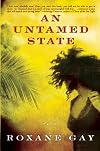
When Mireille Jameson returns to Haiti with her husband and infant son to visit her wealthy family she knows of the tensions between the island’s poor and its rich. What she cannot anticipate is that on their way to an afternoon at the beach a gang of men will stop their car, beat her husband and kidnap her at gunpoint. For almost two weeks these young men will hold her captive while waiting for her father to pay a million dollars in ransom. That her father is unwilling to do so is just show more one of the emotional aspects that makes Roxanne Gay’s An Untamed State a debut novel of explosive proportions.
When it becomes clear that Miri’s father will not pay the money, ostensibly because he believes it will incite further kidnappings against his family, the gang’s rage is taken out on Miri. A strong, fierce woman she is systematically stripped of her power and fierceness by being caged in a room, with little food or water, and being repeatedly raped, beaten, and burned. The stark brutality of Gay’s prose is such that there are points in An Untamed State where it feels as if the book must be pushed away, in the same way Miri tried to push away her rapists, because it is too much to bear. Finally, the only way she can bear it is to let go of herself, to deny the woman she was and to become no one. Even then there is no submission, everything ripped from her is taken by force even if it is the force of her own will that makes her dead and cold.
What makes An Untamed State such a gut-punch of a novel is how Gay uses situations in a way that evokes a visceral reaction. Some are easy in their fury- a father who won’t negotiate for his beloved daughter, leaving her to be subjected to profound degradation and brutality over money? That feels straightforward in the way it makes the blood pound, but Gay continues to throw obstacles into the face of our beliefs until an emotional exhaustion sets in—and that may be the lesson. After her release does Mireille’s inability to accept even the most basic levels of medical help despite being grievously wounded seem incongruous or impossible? Yes. But to whom? To a woman reading An Untamed State who has never had her personal being violated? What is required is what may be the most difficult response from the reader: acceptance. It is not for anyone to say how Mireille should react to captivity, torture and rape, but to accept the only way she could cope with such an ordeal. Gay presses hard in this painful novel, but An Untamed State is critical reading for everything about it that is not fictitious—that we can never fully understand what has not happened to us. show less
When it becomes clear that Miri’s father will not pay the money, ostensibly because he believes it will incite further kidnappings against his family, the gang’s rage is taken out on Miri. A strong, fierce woman she is systematically stripped of her power and fierceness by being caged in a room, with little food or water, and being repeatedly raped, beaten, and burned. The stark brutality of Gay’s prose is such that there are points in An Untamed State where it feels as if the book must be pushed away, in the same way Miri tried to push away her rapists, because it is too much to bear. Finally, the only way she can bear it is to let go of herself, to deny the woman she was and to become no one. Even then there is no submission, everything ripped from her is taken by force even if it is the force of her own will that makes her dead and cold.
What makes An Untamed State such a gut-punch of a novel is how Gay uses situations in a way that evokes a visceral reaction. Some are easy in their fury- a father who won’t negotiate for his beloved daughter, leaving her to be subjected to profound degradation and brutality over money? That feels straightforward in the way it makes the blood pound, but Gay continues to throw obstacles into the face of our beliefs until an emotional exhaustion sets in—and that may be the lesson. After her release does Mireille’s inability to accept even the most basic levels of medical help despite being grievously wounded seem incongruous or impossible? Yes. But to whom? To a woman reading An Untamed State who has never had her personal being violated? What is required is what may be the most difficult response from the reader: acceptance. It is not for anyone to say how Mireille should react to captivity, torture and rape, but to accept the only way she could cope with such an ordeal. Gay presses hard in this painful novel, but An Untamed State is critical reading for everything about it that is not fictitious—that we can never fully understand what has not happened to us. show less
Lists
First Novels (1)
Favourite Books (1)
el (1)
Female Author (1)
Awards


You May Also Like


Associated Authors
Statistics
- Works
- 39
- Also by
- 40
- Members
- 12,592
- Popularity
- #1,855
- Rating
- 4.0
- Reviews
- 487
- ISBNs
- 170
- Languages
- 12
- Favorited
- 19