
Jesmyn Ward
Author of Sing, Unburied, Sing
About the Author
Jesmyn Ward was born in DeLisle, Mississippi in 1977. She became a writer after the death of her brother by a drunk driver. She received a MFA in creative writing from the University of Michigan. Her books include the novel Where the Line Bleeds, the memoir Men We Reaped, and the nonfiction work show more The Fire This Time: A New Generation Speaks about Race. Salvage the Bones won the National Book Award in Fiction in 2011 and an Alex Award in 2012. Sing, Unburied, Sing won the National Book Award in Fiction in 2017. She taught at University of New Orleans, the University of South Alabama, and Tulane University. (Bowker Author Biography) show less
Series
Works by Jesmyn Ward
Associated Works
Well-Read Black Girl: Finding Our Stories, Discovering Ourselves (2018) — Contributor — 471 copies, 33 reviews
Fight of the Century: Writers Reflect on 100 Years of Landmark ACLU Cases (2020) — Contributor — 261 copies, 5 reviews
New Daughters of Africa: An International Anthology of Writing by Women of African Descent (2019) — Contributor — 116 copies, 1 review
Tagged
Common Knowledge
- Birthdate
- 1977-04-01
- Gender
- female
- Education
- Stanford University
University of Michigan - Occupations
- author
writer in residence
professor - Organizations
- University of South Alabama
Tulane University - Awards and honors
- MacArthur Fellowship (2017)
Library of Congress Prize for American Fiction (2022) - Nationality
- USA
- Birthplace
- DeLisle, Mississippi, USA
- Associated Place (for map)
- Mississippi, USA
Members
Reviews
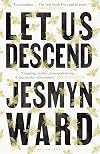
Let Us Descend, Jesmyn Ward, author and narrator
There are few words I can use to describe the brilliance of this book; there is no good way for me to sum it up without revealing too much. Ward has described the horrors of slavery in such dramatic detail that the reader finds his or herself there, in the center of it all, as a witness to the barbarism. Because they were fed a starvation diet, beaten, and abused, subjected to nightmare punishments for whatever whim the owner decided to show more fulfill, because they were forced to suffer the breakup of their families and the loss of their friends, to endure being raped by the owner, sometimes even sold at his pleasure, many might have entertained thoughts of escape, but it always seemed foolhardy since it was so often futile with unimaginable punishment if caught. I asked myself, what kind of person could tolerate the destruction of humans, bit by bit? Who could treat humans so poorly, even worse than they treated their animals? With every new dawn, every next breath, the future was bleaker for a slave. There was no safe haven, yet there existed a desire for freedom that was unabating.
The world of Arese/Annis is a nightmare world once her mother is sold, but it was not much better when they were together. Worked to the bone, practically starved, taken by the owner to pleasure himself, Arese was born to her mother after the owner raped her. Thus, although she was half-sister to the twin girls in the manor home, their lives were totally different. Arese used to stand by their door, listening to their tutor instruct them. It was in that secret pose that she learned of the expression from Dante’s descent into Hell, that she learned the worlds let us descend. Her mother educated her in the only way she could, she trained her in self-defense and told her to rise, not to descend! Her mother taught her that water was a friend, although it was water that carried her away from her home to this place of captivity. Would water one day save her?
As Annis describes her life, one may be brought to tears or driven to anger. This, however, is a novel, and it tells the story of what took place in the past; there is no rectifying the horrifying lives of these captured people, thought of as less than, thought of as animals who felt nothing or animals that existed for the barbaric pleasure of cruel men and women. These captured humans suffered from every human indignity man could imagine.
Rarely have I felt so moved by a novel. It held such a poetic beauty, as most of Ward’s books do, but this book was magical, filled with legends and spiritual visions. This book takes the readers with it, right into the realm of the slave, and they visibly witness and feel the pain and suffering first-hand, as if it was happening to themselves, and sometimes, even the reader wants it to end a bit more quickly. The author simply takes me places that I do not want to venture, but feel I must. She illustrates life and also the loss of life. She forces the reader to come to terms with the terrible choices slaves had to make, with the terrible lives they were forced to live, with the terrible people who tortured them, but she ends by offering a sliver of hope for the future. show less
There are few words I can use to describe the brilliance of this book; there is no good way for me to sum it up without revealing too much. Ward has described the horrors of slavery in such dramatic detail that the reader finds his or herself there, in the center of it all, as a witness to the barbarism. Because they were fed a starvation diet, beaten, and abused, subjected to nightmare punishments for whatever whim the owner decided to show more fulfill, because they were forced to suffer the breakup of their families and the loss of their friends, to endure being raped by the owner, sometimes even sold at his pleasure, many might have entertained thoughts of escape, but it always seemed foolhardy since it was so often futile with unimaginable punishment if caught. I asked myself, what kind of person could tolerate the destruction of humans, bit by bit? Who could treat humans so poorly, even worse than they treated their animals? With every new dawn, every next breath, the future was bleaker for a slave. There was no safe haven, yet there existed a desire for freedom that was unabating.
The world of Arese/Annis is a nightmare world once her mother is sold, but it was not much better when they were together. Worked to the bone, practically starved, taken by the owner to pleasure himself, Arese was born to her mother after the owner raped her. Thus, although she was half-sister to the twin girls in the manor home, their lives were totally different. Arese used to stand by their door, listening to their tutor instruct them. It was in that secret pose that she learned of the expression from Dante’s descent into Hell, that she learned the worlds let us descend. Her mother educated her in the only way she could, she trained her in self-defense and told her to rise, not to descend! Her mother taught her that water was a friend, although it was water that carried her away from her home to this place of captivity. Would water one day save her?
As Annis describes her life, one may be brought to tears or driven to anger. This, however, is a novel, and it tells the story of what took place in the past; there is no rectifying the horrifying lives of these captured people, thought of as less than, thought of as animals who felt nothing or animals that existed for the barbaric pleasure of cruel men and women. These captured humans suffered from every human indignity man could imagine.
Rarely have I felt so moved by a novel. It held such a poetic beauty, as most of Ward’s books do, but this book was magical, filled with legends and spiritual visions. This book takes the readers with it, right into the realm of the slave, and they visibly witness and feel the pain and suffering first-hand, as if it was happening to themselves, and sometimes, even the reader wants it to end a bit more quickly. The author simply takes me places that I do not want to venture, but feel I must. She illustrates life and also the loss of life. She forces the reader to come to terms with the terrible choices slaves had to make, with the terrible lives they were forced to live, with the terrible people who tortured them, but she ends by offering a sliver of hope for the future. show less
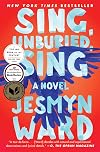
From the opening set piece description of Pop and his grandson, Jojo, slaughtering, butchering, and cooking a goat for Jojo’s 13th birthday dinner, the reader knows she is on heavily storied ground. Jojo’s mother, Leonie, doesn’t have the mothering instinct, much to the dismay of Jojo and his toddler sister, Kayla. Their father, Michael, is in Parchman, the Mississippi state penitentiary, but he is about to be released. And that means a road trip for Leonie and the children and show more Leonie’s work friend, Misty. Pop, meanwhile, will tend to his wife, Mam, who is dying of cancer, bedridden and ready for the end. The end, however, isn’t always the end. Sometimes it just opens up a further state of waiting, as is the case for Leonie’s murdered older brother, Given, whom she can see whenever she is high. And it isn’t true for Richie, a youth who died violently in Parchman back when Pop himself was serving a stretch there. Those with the gift, or curse, can see these lost souls and some may even have the power to help them find their way home.
Ward writes in a lyrical gothic style, alternating the narrative point of view between Leonie and Jojo, and latterly Richie. Between them we see a tapestry that is frayed and weathered by old violence, race hatred, spirituality and the lore that accompanies it, and cross-generational anxiety. Everyone, it seems, is looking for the mother or father they don’t have, or failing to become the mother or father one might hope them to be, or being forced into such roles before or after one’s time. The journey to Parchman and back introduces the cyclical nature of time and life. So it no surprise that the end of this tale sees many stories coming full circle.
Beautiful writing that can be easily recommended. show less
Ward writes in a lyrical gothic style, alternating the narrative point of view between Leonie and Jojo, and latterly Richie. Between them we see a tapestry that is frayed and weathered by old violence, race hatred, spirituality and the lore that accompanies it, and cross-generational anxiety. Everyone, it seems, is looking for the mother or father they don’t have, or failing to become the mother or father one might hope them to be, or being forced into such roles before or after one’s time. The journey to Parchman and back introduces the cyclical nature of time and life. So it no surprise that the end of this tale sees many stories coming full circle.
Beautiful writing that can be easily recommended. show less
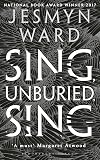
Jesmyn Ward is a great creator of characters. I think what separates her from so many other storytellers is her ability to give us an experience inside the lives of people that most of us are never going to get otherwise. Her fiction is definitely “regional”, but in her case, I think that’s a virtue — it adds to exactly that ability to bring near something very far from most us.
The story is set in the rural south — Ward has said that she draws inspiration from her childhood home of show more DeLisle, Mississippi near Bay St. Louis. Playing to her strength in creating strong, deep characters, Ward tells the story from the alternating perspectives of four central characters:
Jojo — a thirteen year old boy, on the verge of full male responsibility, and the safe haven of his young sister Kayla.
Leonie — Jojo’s unmothering mother, seemingly lost in a world nobody would have planned. She lives with her parents, a mother dying of cancer and a father trying to hold things together, while she waits for her husband to finish out a prison sentence at Parchman. In addition to Jojo, she has another child, an infant girl named Kayla. And she has a friend, who encourages the worst in her.
Given — the ghost of Leonie’s brother, murdered by a group on a hunting trip. Given was the only black member of the trip, apparently invited as a curiosity or an amusement.
Richie — also a ghost, once a young inmate at Parchman’s and a friend to Leonie’s father, Pop. Richie died in an escape attempt.
Other characters are also critical to the story. Pop is the head of the family at the center of the story, Leonie’s and Given’s father, Jojo’s grandfather and father figure, and Kayla’s grandfather. Mama is Pop’s wife and Leonie’s mother. Mama is in the final stages of cancer, a diminished version of herself now, but still a strong presence and a potential, if not real, role model for Leonie.
Kayla, although an infant, often pushes the story forward, just with her presence as someone whose life hasn’t yet taken full form. Michael is Leonie’s husband and Jojo’s and Kayla’s father. Michael finishes his time at Parchman and rejoins the family during the story, bringing with him his own new set of tensions — Michael is a white man, and his own father does not accept his marriage to Leonie or his fathering two children with her.
You toss the characters together, in the situation Ward has set up, and the story happens. She has that ability to draw characters so fully that they carry the story, as if they had their own autonomy — she doesn’t have to push the story forward, it flows naturally from the characters.
The story contains two intersecting threads. One is the story that revolves mostly around Leonie and Jojo. Leonie is going nowhere, except that she is getting back together with her husband Michael. With Pop aging, and Mama dying, she’s called to become a stronger figure in the lives of her children, but she’s not up for the challenge. Jojo still has Pop, and he has Kayla. But he’s increasingly on his own. It’s difficult to see Michael as a strong, positive influence for Jojo, not that he is a bad father so much as he and Leonie seem to isolate themselves from their own family. And of course, as the story begins, Michael has been an absentee father while serving his prison sentence.
The second story is the story of the ghosts. Given and Richie have died before the story begins, but they are in some sense “unburied” — they haven’t been laid to rest. Just the opposite. They died with issues. The world may not be just, and their deaths are not just, but at least they would like to understand, from some point of view, why they died — what sense to make out of it.
Mama says, in assuring Jojo that she will not become a ghost herself when she dies, “The old folks always told me that when someone dies in a bad way, sometimes it’s so awful even God can’t bear to watch, and then half your spirit stays behind and wanders, wanting peace the way a thirsty man seeks water.” That’s the situation for Richie and Given.
Not everyone can see or talk with Given and Richie. The characters who can are special, and part of their being special, I think, is that they can help Given and Richie along to some potential resolution, and their doing so could possibly help them, Jojo and Leonie, to resolutions in their own lives.
I appreciated the shifting points of view in the story — it plays to Ward’s strong empathy for her characters. She lives, and to the extent we can, allows us to live inside the lives of her characters, experience the world of the story as they do.
I won’t spoil the story much by saying it’s not all going to get tied up neatly. It’s all a little bit too real for that. show less
The story is set in the rural south — Ward has said that she draws inspiration from her childhood home of show more DeLisle, Mississippi near Bay St. Louis. Playing to her strength in creating strong, deep characters, Ward tells the story from the alternating perspectives of four central characters:
Jojo — a thirteen year old boy, on the verge of full male responsibility, and the safe haven of his young sister Kayla.
Leonie — Jojo’s unmothering mother, seemingly lost in a world nobody would have planned. She lives with her parents, a mother dying of cancer and a father trying to hold things together, while she waits for her husband to finish out a prison sentence at Parchman. In addition to Jojo, she has another child, an infant girl named Kayla. And she has a friend, who encourages the worst in her.
Given — the ghost of Leonie’s brother, murdered by a group on a hunting trip. Given was the only black member of the trip, apparently invited as a curiosity or an amusement.
Richie — also a ghost, once a young inmate at Parchman’s and a friend to Leonie’s father, Pop. Richie died in an escape attempt.
Other characters are also critical to the story. Pop is the head of the family at the center of the story, Leonie’s and Given’s father, Jojo’s grandfather and father figure, and Kayla’s grandfather. Mama is Pop’s wife and Leonie’s mother. Mama is in the final stages of cancer, a diminished version of herself now, but still a strong presence and a potential, if not real, role model for Leonie.
Kayla, although an infant, often pushes the story forward, just with her presence as someone whose life hasn’t yet taken full form. Michael is Leonie’s husband and Jojo’s and Kayla’s father. Michael finishes his time at Parchman and rejoins the family during the story, bringing with him his own new set of tensions — Michael is a white man, and his own father does not accept his marriage to Leonie or his fathering two children with her.
You toss the characters together, in the situation Ward has set up, and the story happens. She has that ability to draw characters so fully that they carry the story, as if they had their own autonomy — she doesn’t have to push the story forward, it flows naturally from the characters.
The story contains two intersecting threads. One is the story that revolves mostly around Leonie and Jojo. Leonie is going nowhere, except that she is getting back together with her husband Michael. With Pop aging, and Mama dying, she’s called to become a stronger figure in the lives of her children, but she’s not up for the challenge. Jojo still has Pop, and he has Kayla. But he’s increasingly on his own. It’s difficult to see Michael as a strong, positive influence for Jojo, not that he is a bad father so much as he and Leonie seem to isolate themselves from their own family. And of course, as the story begins, Michael has been an absentee father while serving his prison sentence.
The second story is the story of the ghosts. Given and Richie have died before the story begins, but they are in some sense “unburied” — they haven’t been laid to rest. Just the opposite. They died with issues. The world may not be just, and their deaths are not just, but at least they would like to understand, from some point of view, why they died — what sense to make out of it.
Mama says, in assuring Jojo that she will not become a ghost herself when she dies, “The old folks always told me that when someone dies in a bad way, sometimes it’s so awful even God can’t bear to watch, and then half your spirit stays behind and wanders, wanting peace the way a thirsty man seeks water.” That’s the situation for Richie and Given.
Not everyone can see or talk with Given and Richie. The characters who can are special, and part of their being special, I think, is that they can help Given and Richie along to some potential resolution, and their doing so could possibly help them, Jojo and Leonie, to resolutions in their own lives.
I appreciated the shifting points of view in the story — it plays to Ward’s strong empathy for her characters. She lives, and to the extent we can, allows us to live inside the lives of her characters, experience the world of the story as they do.
I won’t spoil the story much by saying it’s not all going to get tied up neatly. It’s all a little bit too real for that. show less
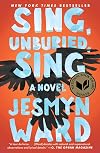
This brilliant novel reads like a thriller yet teases out and lays bare a disturbing family history of violent, unresolved death resulting from a culture of race relations profoundly at odds with national ideals.
Jesmyn Ward is a Southern writer in the gothic tradition, a worthy successor to Faulkner, O’Connor, Welty, and McCullers. To my mind, Ward shows the cruelties not just within families but between families and races. The characters she gives us have so much at stake. What Ward show more writes is what we have inherited. We can change it, but first we have to acknowledge it.
The bulk of this novel takes place over the course of one day, the day Jojo and his sister Kayla accompany his mother Leonie to Parchman’s, a prison, to pick up his father Michael. Everything is revealed in that one day. Resolution takes a little longer.
Ward’s willingness to “go there,” her vision uncut and her language clear and exact, gives her work the aspect of witness. And yet she inhabits the young man Jojo so completely that he became our eyes and our judgment. It feels like a gift, to be able to see how families bend and break under the weight of all they carry…the weight of all those killed violently and not yet laid to rest.
“Last night, Richie crawled under the house and sang.”
Richie is the ghost of a poor murdered boy, and he is not the only ghost in this family’s present. Jojo’s uncle Given is also a spirit, albeit one that gives comfort, advice, and warning. It proves difficult for family members to deal with the spiritual needs of the ghosts as well as the temporal needs of those around them. It is confusing, demanding, intrusive. Add to that, not everyone has “the sight.” Jojo has it.
Ward opens her story with the butchering of a goat, giving us a taste of the education Jojo has on the farm, under the tutelage of his grandfather. The violence of the experience jolts us awake, nerve endings jangling. We need whatever instincts this incident has aroused in us to get through the day trip to Parchman’s, which becomes a descent into the dark heart of delusion and destruction.
Ward manages to instill the work with the impetus of a thriller: a reader becomes completely trapped by the closeness in the old car, the desultory conversation, the turn onto unfamiliar roads, the unexpected stop. The blood scent has put the wind up: we’re not sure who will come out alive at the end of the trip. Ward exquisitely calibrates her descriptions to resonate with us: we recognize these people, these motivations, these zones of danger.
Making an exciting work of fiction is an art, but Ward elevates the stakes by making an exciting work of fiction socially relevant and critical to the conversation going on in our nation. Just last summer a book of essays edited by Jesmyn Ward and written by important American writers and thinkers, The Fire This Time: A New Generation Speaks about Race, was released to great acclaim. The essays address the ongoing race issues our country has never resolved and struggles with yet.
Ward is among the finest and most important writers we have. Make sure you catch everything she puts out. show less
Jesmyn Ward is a Southern writer in the gothic tradition, a worthy successor to Faulkner, O’Connor, Welty, and McCullers. To my mind, Ward shows the cruelties not just within families but between families and races. The characters she gives us have so much at stake. What Ward show more writes is what we have inherited. We can change it, but first we have to acknowledge it.
The bulk of this novel takes place over the course of one day, the day Jojo and his sister Kayla accompany his mother Leonie to Parchman’s, a prison, to pick up his father Michael. Everything is revealed in that one day. Resolution takes a little longer.
Ward’s willingness to “go there,” her vision uncut and her language clear and exact, gives her work the aspect of witness. And yet she inhabits the young man Jojo so completely that he became our eyes and our judgment. It feels like a gift, to be able to see how families bend and break under the weight of all they carry…the weight of all those killed violently and not yet laid to rest.
“Last night, Richie crawled under the house and sang.”
Richie is the ghost of a poor murdered boy, and he is not the only ghost in this family’s present. Jojo’s uncle Given is also a spirit, albeit one that gives comfort, advice, and warning. It proves difficult for family members to deal with the spiritual needs of the ghosts as well as the temporal needs of those around them. It is confusing, demanding, intrusive. Add to that, not everyone has “the sight.” Jojo has it.
Ward opens her story with the butchering of a goat, giving us a taste of the education Jojo has on the farm, under the tutelage of his grandfather. The violence of the experience jolts us awake, nerve endings jangling. We need whatever instincts this incident has aroused in us to get through the day trip to Parchman’s, which becomes a descent into the dark heart of delusion and destruction.
Ward manages to instill the work with the impetus of a thriller: a reader becomes completely trapped by the closeness in the old car, the desultory conversation, the turn onto unfamiliar roads, the unexpected stop. The blood scent has put the wind up: we’re not sure who will come out alive at the end of the trip. Ward exquisitely calibrates her descriptions to resonate with us: we recognize these people, these motivations, these zones of danger.
Making an exciting work of fiction is an art, but Ward elevates the stakes by making an exciting work of fiction socially relevant and critical to the conversation going on in our nation. Just last summer a book of essays edited by Jesmyn Ward and written by important American writers and thinkers, The Fire This Time: A New Generation Speaks about Race, was released to great acclaim. The essays address the ongoing race issues our country has never resolved and struggles with yet.
Ward is among the finest and most important writers we have. Make sure you catch everything she puts out. show less
Lists
Recommendations (3)
Fiction: BLM (1)
AP Lit (1)
To read (1)
Dead narrators (1)
Climate Change (1)
Everand 2023 (1)
READ in 2023 (1)
Book Club 2021 (1)
. (3)
Southern Fiction (2)
Zora Canon (2)
The Zora Canon (2)
Black Authors (2)
Five star books (2)
Overdue Podcast (2)
Favourite Books (1)
Coming of Age (1)
First Novels (1)
Wishlist (1)
Best of 2017 (1)
Career (1)
Awards


You May Also Like


Associated Authors
Statistics
- Works
- 12
- Also by
- 5
- Members
- 13,010
- Popularity
- #1,793
- Rating
- 3.9
- Reviews
- 549
- ISBNs
- 173
- Languages
- 13
- Favorited
- 14


