
Ta-Nehisi Coates
Author of Between the World and Me
About the Author
Ta-Nehisi Coates was born in Baltimore, Maryland on September 30, 1975. He attended Howard University. He is a correspondent at The Atlantic, where he writes about culture, politics, and social issues. He is the author of The Beautiful Struggle and Between the World and Me, which won a National show more Book Award for nonfiction in 2015 and the 2016 PEN/Diamonstein-Spielvogel Award for the Art of the Essay. He was included on Time magazine's annual list of the 100 most influential people in the world. (Bowker Author Biography) show less
Image credit: Wikipedia Commons/David Shankbone
Series
Works by Ta-Nehisi Coates
The Beautiful Struggle: A Father, Two Sons, and an Unlikely Road to Manhood (2008) 1,034 copies, 25 reviews
Black Panther Book 02: A Nation Under Our Feet Part 02 (2017) — Writer; Map — 410 copies, 15 reviews
Captain America by Ta-Nehisi Coates, Vol. 1 (Captain America, #1-2) (2020) — Author — 20 copies, 1 review
Black Panther and the Crew [2017] #3 - We Are the Streets, Part 3: Black Against the Empire (2017) — Author — 13 copies, 1 review
Black Panther and the Crew [2017] #6 - We Are the Streets, Part 6: Everybody Loves the Sunshine (2017) — Author — 12 copies, 1 review
Black Panther and the Crew [2017] #5 - We Are the Streets, Part 5: Down These Mean Streets (2017) — Author — 12 copies, 1 review
Black Panther and the Crew [2017] #1 - We Are the Streets, Part 1: Double Consciousness (2017) — Author — 12 copies, 1 review
Black Panther HC Volume 03: The Intergalactic Empire of Wakanda, Part 01 (2020) — Author — 12 copies
Black Panther and the Crew [2017] #2 - We Are the Streets, Part 2: Afro-Blue (2017) — Author — 11 copies, 1 review
Black Panther and the Crew [2017] #4 - We Are the Streets, Part 4: Nothing But a Man (2017) — Author — 11 copies, 1 review
Rise of the Black Panther #4 1 copy
Rise of the Black Panther #3 1 copy
[Title missing] 1 copy
My President Was Black 1 copy
Black Panther, Issues 1-22 1 copy
Associated Works
The Emergency: A Year of Healing and Heartbreak in a Chicago ER (2022) — Foreword, some editions — 145 copies, 4 reviews
Black Ink: Literary Legends on the Peril, Power, and Pleasure of Reading and Writing (2018) — Contributor — 95 copies
And It Don't Stop: The Best American Hip-Hop Journalism of the Last 25 Years (2004) — Contributor — 55 copies
The Brother You Choose: Paul Coates and Eddie Conway Talk About Life, Politics, and The Revolution (2020) — Afterword — 38 copies
Catch the Fire!!!: A Cross-Generational Anthology of Contemporary African-American Poetry (1998) — Contributor — 35 copies, 1 review
The Atlantic Magazine (January/February 2017) My President Was Black (1970) — Contributor — 2 copies
Tagged
Common Knowledge
- Legal name
- Coates, Ta-Nehisi Paul
- Birthdate
- 1975-09-30
- Gender
- male
- Education
- William H. Lemmel Middle School
Baltimore Polytechnic Institute
Woodlawn High School
Howard University - Occupations
- journalist
- Organizations
- The Atlantic Monthly
- Awards and honors
- Hillman Prize in Opinion & Analysis Journalism (2012)
MacArthur Fellowship (2015) - Short biography
- Ta-Nehisi Coates is a national correspondent for The Atlantic and the author of the #1 New York Times bestseller Between the World and Me, a finalist for the National Book Award. A MacArthur "Genius Grant" fellow, Coates has received the National Magazine Award, the Hillman Prize for Opinion and Analysis Journalism, and the George Polk Award for his Atlantic cover story "The Case for Reparations." He lives in New York with his wife and son.
- Nationality
- USA
- Birthplace
- Baltimore, Maryland, USA
- Places of residence
- New York, New York, USA
- Associated Place (for map)
- USA
Members
Discussions
Black Panther in Folio Society Devotees (November 2022)
Ta-Nehisi Coates in Other People's Libraries (August 2015)
Reviews
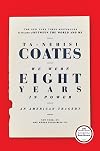
"I don't ever want to forget, even with whatever personal victories I achieve, even in the victories we achieve as a people or a nation, that the larger story of America and the world probably does not end well. Our story is a tragedy. I know it sounds odd, but that belief does not depress me. It focuses me. After all, I am an atheist and thus do not believe anything, even a strongly held belief, is destiny. And if tragedy is to be proven wrong, if there really is hope out there, I think it show more can only be made manifest by remembering the cost of it being proven right. No one -- not our fathers, not our police, and not our gods -- is coming to save us. The worst really is possible. My aim is to never be caught, as the rappers say, acting like it can't happen. And my ambition is to write both in defiance of tragedy and in blindness of its possibility, to keep screaming into the waves -- just as my ancestors did."
Thus ends Coates' "Notes on the Eighth Year," the pre-essay for the eighth essay in this amazing collection of essays written over the course of Barack Obama's time in the White House and all published in The Atlantic. That eighth essay, "My President Was Black," is one of my three favorites in the collection. The other two are "The Case for Reparations" from the sixth year and "The First White President" which is actually the epilogue but was also published in The Atlantic after the election of 2016.
The entire collection is breathtaking and my copy is now littered with little post-it flags. Coates provides a pre-essay for each of the published essays. In these, he provides context from his own life at the time of the writing, articulates some of the intent of the essay, and critiques his relative success in light of that context and intent. This approach to the collection works. It provides a taste of memoir to accompany the more academically oriented pieces and enables us to witness Coates' development as an essayist -- or at least his perception of his own development. In the same pre-essay quoted above, he notes that he struggled with balancing his preference for feature writing with the relative ease of essay writing. Indeed, his greatest talent lies in the feature. This requires access to the subject of the writing and Coates never underestimates the gift provided to him by Barack Obama's willingness to sit down with him, to discuss and argue and share his inner thoughts with him. In feature writing, Coates' narrative voice is crystal clear and compelling. His more academic essays (e.g., "The Black Family in the Age of Mass Incarceration") are simply excellent and persuasive; his features can make the reader cry.
This collection of essays is not an unfiltered approbation of Barack Obama. Even while Obama was still in office, Coates criticized some of his policy decisions as well as his "respectability politics." Coates fully understands the reasons Obama walked some of the lines he walked but refuses to endorse rhetoric that negates the systemic forces underlying the statistics. Coates is also interested in something larger: the historical and political dynamics that both enabled the election of the first Black president and, from Coates' perspective, ensured the subsequent election of the brashest, most overtly hateful, and least qualified White president ever. His analysis is compelling.
Reading essays is presumably always an exercise in learning. Reading this collection was, for me, transformative. Highly recommended. show less
Thus ends Coates' "Notes on the Eighth Year," the pre-essay for the eighth essay in this amazing collection of essays written over the course of Barack Obama's time in the White House and all published in The Atlantic. That eighth essay, "My President Was Black," is one of my three favorites in the collection. The other two are "The Case for Reparations" from the sixth year and "The First White President" which is actually the epilogue but was also published in The Atlantic after the election of 2016.
The entire collection is breathtaking and my copy is now littered with little post-it flags. Coates provides a pre-essay for each of the published essays. In these, he provides context from his own life at the time of the writing, articulates some of the intent of the essay, and critiques his relative success in light of that context and intent. This approach to the collection works. It provides a taste of memoir to accompany the more academically oriented pieces and enables us to witness Coates' development as an essayist -- or at least his perception of his own development. In the same pre-essay quoted above, he notes that he struggled with balancing his preference for feature writing with the relative ease of essay writing. Indeed, his greatest talent lies in the feature. This requires access to the subject of the writing and Coates never underestimates the gift provided to him by Barack Obama's willingness to sit down with him, to discuss and argue and share his inner thoughts with him. In feature writing, Coates' narrative voice is crystal clear and compelling. His more academic essays (e.g., "The Black Family in the Age of Mass Incarceration") are simply excellent and persuasive; his features can make the reader cry.
This collection of essays is not an unfiltered approbation of Barack Obama. Even while Obama was still in office, Coates criticized some of his policy decisions as well as his "respectability politics." Coates fully understands the reasons Obama walked some of the lines he walked but refuses to endorse rhetoric that negates the systemic forces underlying the statistics. Coates is also interested in something larger: the historical and political dynamics that both enabled the election of the first Black president and, from Coates' perspective, ensured the subsequent election of the brashest, most overtly hateful, and least qualified White president ever. His analysis is compelling.
Reading essays is presumably always an exercise in learning. Reading this collection was, for me, transformative. Highly recommended. show less
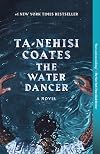
I've had to ponder on this book for a few days before I felt ready to give it a fair review. Overall, it's a ripping good yarn of the antebellum south, with the cruelties and ironies of slavery in full form.
Hiram Walker was born into slavery, and his mother is sold off while he is still very young - and he loses his memories of her, while being very adept at keeping memories of virtually everything else. He also learns that he is the son of the master of the plantation, and goes from show more playing with his brother as children into having to serve him as his slave by the time they both reach young adulthood.
This is among the more insidious aspects of slavery, and it has been well documented that these types of relationships existed. Coates does a fine job exploring these ironies, including the character differences between the white offspring - the one to inherit the lands and house - and the black slave offspring. In this story, the white sibling is a slothful ne'er do well, a boorish, loud young man who embarrasses the family, while young Hiram is intelligent, his keen memory for songs and card tricks showing his intellect before the father decides he is worth getting tutored by the same tutor as his white, privileged son.
As we get deeper into the story, the magical realism aspect becomes more pronounced - and it is here that my issues with the book begin. It's fine for an author to make any character have magical powers - in this book, it's the power to "conduct" by holding onto one's most vivid and powerful memories, which enables them to transport themselves across vast stretches of land in an instant - but in this novel, Coates ascribes this ability of "conduction" toan historical figure, known as Moses, who we come to learn is none other than Harriet Tubman herself, of the famed Underground Railroad. Coates wants us to believe that Tubman uses this magical power to help her free dozens of slaves and transport them to the North, to freedom. In reality, of course, Tubman relied on her wits, her connections, and her unquestionable powers of organization and navigation to guide runaways along the Underground Railroad. Why Coates would choose to assign this fantastical power to her seems diminishing to her actual skill sets.
I found this off-putting enough to reduce the rating of an otherwise well-done novel, one with richly drawn characters and an astute crafting of how plantations were run, and the lengths to which the white slave-owners would go to keep their "property" under their rule. show less
Hiram Walker was born into slavery, and his mother is sold off while he is still very young - and he loses his memories of her, while being very adept at keeping memories of virtually everything else. He also learns that he is the son of the master of the plantation, and goes from show more playing with his brother as children into having to serve him as his slave by the time they both reach young adulthood.
This is among the more insidious aspects of slavery, and it has been well documented that these types of relationships existed. Coates does a fine job exploring these ironies, including the character differences between the white offspring - the one to inherit the lands and house - and the black slave offspring. In this story, the white sibling is a slothful ne'er do well, a boorish, loud young man who embarrasses the family, while young Hiram is intelligent, his keen memory for songs and card tricks showing his intellect before the father decides he is worth getting tutored by the same tutor as his white, privileged son.
As we get deeper into the story, the magical realism aspect becomes more pronounced - and it is here that my issues with the book begin. It's fine for an author to make any character have magical powers - in this book, it's the power to "conduct" by holding onto one's most vivid and powerful memories, which enables them to transport themselves across vast stretches of land in an instant - but in this novel, Coates ascribes this ability of "conduction" to
I found this off-putting enough to reduce the rating of an otherwise well-done novel, one with richly drawn characters and an astute crafting of how plantations were run, and the lengths to which the white slave-owners would go to keep their "property" under their rule. show less
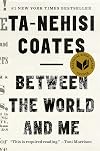
I am sorry that I cannot make it okay. I am sorry that I cannot save you—but not that sorry. Part of me thinks that your very vulnerability brings you closer to the meaning of life...
My wish for you is that you feel no need to constrict yourself to make other people comfortable. None of that can change the math anyway. I never wanted you to be twice as good as them, so much as I have always wanted you to attack every day of your brief bright life in struggle... I would have you be a show more conscious citizen of this terrible and beautiful world. show less
My wish for you is that you feel no need to constrict yourself to make other people comfortable. None of that can change the math anyway. I never wanted you to be twice as good as them, so much as I have always wanted you to attack every day of your brief bright life in struggle... I would have you be a show more conscious citizen of this terrible and beautiful world. show less
Collection of Coates’ essays over the past few years, with some introductory notes. He’s a great writer and everyone should read his article on reparations (and the intro note here is especially interesting, given what he says about the lack of nobility in being a victim, the inapplicability of moral desert in claims for reparations for wrongs done to a group, and his own lack of knowledge about the Israeli/Palestinian situation, to which he made comparisons in the initial essay). His show more basic message: “To be black in America was to be plundered. To be white was to benefit from, and at times directly execute, this plunder.” In some ways, his most powerful insight is that what white people fear most isn’t black criminality, but “black respectability, Good Negro Government,” because it might actually empower black people; this prospect is what triggers backlash, so no amount of individual uprightness will overcome white supremacy. Good Negro Government was what Trump has set out to erase, far too successfully. Obama’s ultimate failure to anticipate just how racist so many whites could be, Coates argues, stemmed from his bone-deep acceptance of a narrative of white benficience and innocence unavailable to most African-Americans. “The first white people he ever knew, the ones who raised him, were decent in a way that very few black people of that era experienced.” As Coates points out, at the time his parents had him, in large parts of the country, the sex that produced Obama wasn’t just illegal, it would have put his father in mortal danger.
Coates also has an essay about Bill Cosby’s conservatism—he says in the intro that ignoring the rape allegations was the biggest failing—discussing how the diagnosis of the failed black family has persisted for over a hundred years, even as today’s conservatives appeal to a fabled glorious past. The essay about the black family in the age of mass incarceration makes clear that the plunder is viciously ongoing—just for example, as the sanctions for having a criminal record increase along with the likelihood of criminal encounters for young African-Americans, the rate of successful completion of parole has fallen by half in recent years. As he points out in that essay, “the world of the black middle class is—because of policy—significantly poorer [than that of the white middle class]. Thus to wonder about the difference in outcomes … is really to wonder about the difference in weight between humans living on the Earth and humans living on the moon.”
Coates is ambivalent about his writing’s appeal to white audiences like me, and he’s not hopeful, but he’s always worth reading. show less
Coates also has an essay about Bill Cosby’s conservatism—he says in the intro that ignoring the rape allegations was the biggest failing—discussing how the diagnosis of the failed black family has persisted for over a hundred years, even as today’s conservatives appeal to a fabled glorious past. The essay about the black family in the age of mass incarceration makes clear that the plunder is viciously ongoing—just for example, as the sanctions for having a criminal record increase along with the likelihood of criminal encounters for young African-Americans, the rate of successful completion of parole has fallen by half in recent years. As he points out in that essay, “the world of the black middle class is—because of policy—significantly poorer [than that of the white middle class]. Thus to wonder about the difference in outcomes … is really to wonder about the difference in weight between humans living on the Earth and humans living on the moon.”
Coates is ambivalent about his writing’s appeal to white audiences like me, and he’s not hopeful, but he’s always worth reading. show less
Lists
Best Audiobooks (1)
United States (1)
Youth: BLM (1)
Five star books (1)
Reiny (1)
Silent Scream (1)
Southern Fiction (1)
Obama Reads (1)
Book Club 2022 (1)
Overdue Podcast (1)
Black Authors (3)
. (1)
wish list (1)
Non-Fiction (1)
Magic Realism (1)
Awards


You May Also Like


Associated Authors
Statistics
- Works
- 139
- Also by
- 19
- Members
- 22,613
- Popularity
- #937
- Rating
- 4.0
- Reviews
- 776
- ISBNs
- 248
- Languages
- 16
- Favorited
- 16