
Colson Whitehead
Author of The Underground Railroad
About the Author
Colson Whitehead was born on November 6, 1969. He graduated from Harvard College and worked at the Village Voice writing reviews of television, books, and music. His first novel, The Intuitionist, won the Quality Paperback Book Club's New Voices Award. His other books include The Colossus of New show more York, Sag Harbor, and Zone One. He won the Young Lions Fiction Award and the Anisfield-Wolf Book Award for John Henry Days, the PEN/Oakland Award for Apex Hides the Hurt, and the National Book Award for fiction and the Pulitzer Prize for fiction for The Underground Railroad. His reviews, essays, and fiction have appeared in numerous publications including the New York Times, The New Yorker, New York Magazine, Harper's and Granta. He has received a MacArthur Fellowship, a Whiting Writers Award, and a fellowship at the Cullman Center for Scholars and Writers. (Bowker Author Biography) show less
Image credit: Larry D. Moore
Series
Works by Colson Whitehead
Associated Works
The Norton Anthology of African American Literature {2nd edition} (2003) — Contributor, some editions — 282 copies, 2 reviews
Eat, Memory: Great Writers at the Table: A Collection of Essays from the New York Times (2008) — Contributor — 180 copies, 6 reviews
Black Ink: Literary Legends on the Peril, Power, and Pleasure of Reading and Writing (2018) — Contributor — 95 copies
Significant Objects: 100 Extraordinary Stories about Ordinary Things (2012) — Contributor — 65 copies, 1 review
Tagged
Common Knowledge
- Birthdate
- 1969-11-06
- Gender
- male
- Education
- Harvard College (1991)
- Occupations
- novelist
- Awards and honors
- Whiting Writers' Award (2000)
MacArthur Foundation "Genius Grant" (2002)
Cullman Center for Scholars and Writers fellowship
Young Lions Fiction Award (2002)
John Dos Passos Prize (2012)
National Humanities Medal (2021) - Agent
- Nicole Aragi
- Short biography
- Arch Colson Chipp Whitehead (born November 6, 1969) is an American novelist. He is the author of seven novels, including his 1999 debut work, The Intuitionist, and The Underground Railroad (2016), for which he won the 2016 National Book Award for Fiction and the 2017 Pulitzer Prize for Fiction; he won the Pulitzer Prize for Fiction again in 2020 for The Nickel Boys. He has also published two books of non-fiction. In 2002, he received a MacArthur Fellowship ("Genius Grant").
- Nationality
- USA
- Birthplace
- New York, New York, USA
- Places of residence
- Brooklyn, New York, New York, USA
- Map Location
- USA
Members
Discussions
October 2023: Colson Whitehead in Monthly Author Reads (November 2023)
April 2020: Colson Whitehead in Monthly Author Reads (August 2020)
Reviews
Contains Spoilers!
Netgalley ARC
"Is that what normal husbands do - buy flowers for no reason? All these years out of that school and he still spent a segment of his days trying to decipher the customs of normal people."
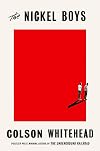
A brilliant fictional account of a real scandal: abuse in juvenile detention in the US. Elwood is a bookish boy who is doing well despite his parents leaving him, second rate schooling and Jim Crow.
Given the promotion for the book it comes as no surprise that he is thrown into show more detention and must try to learn how to survive. He finds that his law abiding, hard working approach which served him so well in school and in a part time job is absolutely no protection within Nickel: being clever is of no interest, the system wants the boys cowed and productive (as their labour is highly profitable). Boys are imprisoned for offences that add up to being children, or being poor. One of the reasons the institution can run is the willful ignorance of those outside, who see the boys as unimportant and are happy to benefit from the way the institution is run.
The twist at the end completely got me, I was reassuring myself with the thought that this lovely boy survived such a terrible experience and made it out the other side, and instead was shocked to find that in fact he was another victim in the graveyard.
I was impressed at how Whitehead showed the long term impact of the abuse on the boys as they became adults: it would have been easy to dwell on the physical abuse but he shows the psychological effects as well as the way there is pressure on survivors to "move on" from their experiences. show less
Netgalley ARC
"Is that what normal husbands do - buy flowers for no reason? All these years out of that school and he still spent a segment of his days trying to decipher the customs of normal people."
A brilliant fictional account of a real scandal: abuse in juvenile detention in the US. Elwood is a bookish boy who is doing well despite his parents leaving him, second rate schooling and Jim Crow.
Given the promotion for the book it comes as no surprise that he is thrown into show more detention and must try to learn how to survive. He finds that his law abiding, hard working approach which served him so well in school and in a part time job is absolutely no protection within Nickel: being clever is of no interest, the system wants the boys cowed and productive (as their labour is highly profitable). Boys are imprisoned for offences that add up to being children, or being poor. One of the reasons the institution can run is the willful ignorance of those outside, who see the boys as unimportant and are happy to benefit from the way the institution is run.
The twist at the end completely got me, I was reassuring myself with the thought that this lovely boy survived such a terrible experience and made it out the other side, and instead was shocked to find that in fact he was another victim in the graveyard.
I was impressed at how Whitehead showed the long term impact of the abuse on the boys as they became adults: it would have been easy to dwell on the physical abuse but he shows the psychological effects as well as the way there is pressure on survivors to "move on" from their experiences. show less
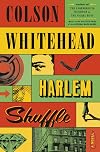
This is Whitehead's take on a heist novel, set in Harlem in the early 1960s. We don't get in on the execution of the event itself, as our protagonist, Ray Carney is an involuntary participant on the periphery of the action. Ray has a retail furniture store, selling some pretty nice stuff, supporting his family well enough, and dreaming of a better apartment in a nicer neighborhood one day. OK, maybe some of his "second-hand" furniture might have fallen off a truck, or come from a source he'd show more rather not know about. Aaand, he's not averse to fencing a few pieces of jewelry and other smallish valuables his god-help-me cousin Freddie brings by from time to time. The extra cash is useful. But by and large, Ray would like to think of himself as a legitimate businessman who has risen out of the criminal circles his father was known to inhabit. Of course, he's learned a lot by association, and he understands how the underworld of Harlem works. So when Freddie gets involved in an overly ambitious heist of safe deposit box contents from the so-called "Waldorf of Harlem", it's no surprise that he volunteers his cousin Ray to move the stuff. The trouble is, Ray had previously told Freddie he wanted no part of this ridiculous scheme, and now he is stuck between the gang and the cops, with no apparent means of escape. The novel is not high on narrative tension, but it is gripping in another way, as Ray and the reader explore the nuances of "doing the right thing", family loyalties, and all kinds of other issues that truly cannot be reduced to "black and white" simplicity. The setting is irresistible, and rendered with the love of NYC in general, Harlem in particular, which was so beautifully displayed in Whitehead's The Colossus of New York. This is how you make us understand what there is to love about a place that is home despite its dangers. show less
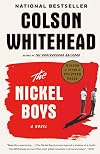
A couple years ago I had never heard of Colson Whitehead; now I've read five of his books. One wasn't great, three were real good, but none of them can hold a candle to The Nickel Boys. We're with the protagonist, Elwood, while living with his grandmother in Tallahassee in the '60s. He's a super smart kid, despite being Black in Florida in the '60s, works full time, is dipping his toes into the civil rights movement, and is preparing to take college courses while still in high school. Then, show more through the racism and shitty luck, he gets sent away to a jail/school for minors. Most of the book flashes between his time in this horrific institution and Elwood in the future in NYC. If you don't fall in love with this dude, you're out of your mind. If your heart is broken by so many of his experiences, and the experiences of those around him, you're made of stone.
Part of my fondness for this book might be because I was locked up in a similar place when I was around his age, and it has stayed with me in the 26 years since I got out. Though the place Elwood gets send to is much more physically violent, a lot of the mental and emotional torture is the same and many of his mates in their suffer the same fate as those I was with.
Anyway, get this book and read it. I promise you won't regret it. show less
Part of my fondness for this book might be because I was locked up in a similar place when I was around his age, and it has stayed with me in the 26 years since I got out. Though the place Elwood gets send to is much more physically violent, a lot of the mental and emotional torture is the same and many of his mates in their suffer the same fate as those I was with.
Anyway, get this book and read it. I promise you won't regret it. show less

Ray Carney owns a furniture store in Harlem, occasionally supplementing his income by dealing in stolen goods. Some of these capers were the subject of Colson Whitehead’s previous novel, Harlem Shuffle. Following those events, Carney retired from the stolen goods trade; when Crook Manifesto opens in the 1970s, Carney has spent four years building the furniture business into a local success story. But when his daughter begs for tickets to see the Jackson 5 in Madison Square Garden, Carney show more sees only one way to make that happen.
As Carney reconnects with some of his old cronies, readers are reunited with colorful characters from Carney’s past, and taken on a wild ride through various illicit and illegal dealings. Like Harlem Shuffle, the story is told in three parts, each set a few years apart. While Carney is the thread tying it all together, in Crook Manifesto other key figures are given center stage. We see more of Carney’s wife Elizabeth, who has a career of her own and is largely unaware of Carney’s side hustle. And then there’s Pepper, who once worked for Carney’s father, and can be counted on when muscle is most needed.
At first glance, Crook Manifesto appears to be a novel about alliances, betrayals, and car chases, But Colson Whitehead uses these stories to demonstrate the challenges Harlem residents face every single day. People are just trying to get by, but are often held back by poor living conditions, low educational attainment, and limited job prospects. The city fails them at nearly every opportunity, as both government and law enforcement are seduced by corruption that lines their pockets. Occasionally these individuals pay a price for their misdeeds, but there’s always someone right behind them to keep the system running. show less
As Carney reconnects with some of his old cronies, readers are reunited with colorful characters from Carney’s past, and taken on a wild ride through various illicit and illegal dealings. Like Harlem Shuffle, the story is told in three parts, each set a few years apart. While Carney is the thread tying it all together, in Crook Manifesto other key figures are given center stage. We see more of Carney’s wife Elizabeth, who has a career of her own and is largely unaware of Carney’s side hustle. And then there’s Pepper, who once worked for Carney’s father, and can be counted on when muscle is most needed.
At first glance, Crook Manifesto appears to be a novel about alliances, betrayals, and car chases, But Colson Whitehead uses these stories to demonstrate the challenges Harlem residents face every single day. People are just trying to get by, but are often held back by poor living conditions, low educational attainment, and limited job prospects. The city fails them at nearly every opportunity, as both government and law enforcement are seduced by corruption that lines their pockets. Occasionally these individuals pay a price for their misdeeds, but there’s always someone right behind them to keep the system running. show less
Lists
Book Club 2017 (1)
Books About Boys (1)
Book Club 2021 (1)
Recommendations (1)
AP Lit (1)
. (1)
Carole's List (1)
Best Dystopias (1)
Obama Reads (1)
Silent Scream (1)
Summer Books (1)
Wishlist (1)
Favourite Books (1)
Diverse Horror (1)
To Read (1)
Sense of place (1)
Morphy Pick! (1)
Read in 2021 (1)
Southern Fiction (2)
Black Authors (4)
Netgalley Reads (4)
Overdue Podcast (2)
DELETE (1)
Books Read 2026 (1)
Indie Next Picks (1)
Read These Too (1)
Booker Prize (1)
Awards


You May Also Like


Associated Authors
Statistics
- Works
- 19
- Also by
- 16
- Members
- 29,828
- Popularity
- #674
- Rating
- 3.9
- Reviews
- 1,266
- ISBNs
- 420
- Languages
- 24
- Favorited
- 42
