

Mohsin Hamid
Author of The Reluctant Fundamentalist
About the Author
Mohsin Hamid grew up in Lahore, attended Princeton University and Harvard Law School and worked for several years as a management consultant in New York. His first novel, Moth Smoke, was published in ten languages, won a Betty Trask Award, and was a finalist for the PEN/Hemingway Award. His essays show more and journalism have appeared in Time, the New York Times and the Guardian, among others. His latest novel is The Reluctant Fundamentalist (2007) published by Penguin. He will be featured at the Ubud Writers and Readers Festival 2015 program. He is the author of Exit West, which in 2018, won the inaugural Aspen Words Literary Prize. (Bowker Author Biography) show less
Image credit: Mohsin Hamid, Lahore, 2004. Photo Credit: Ed Kashi.
Works by Mohsin Hamid
Discontent and Its Civilizations: Dispatches from Lahore, New York, and London (2014) 199 copies, 4 reviews
A Beheading 2 copies
The Third-Born 1 copy
Associated Works
The Penguin Book of Migration Literature: Departures, Arrivals, Generations, Returns (2019) — Contributor — 96 copies
Tagged
Common Knowledge
- Birthdate
- 1971-07-23
- Gender
- male
- Education
- Princeton University (BA|1993)
Harvard Law School (JD|1997)
Lahore American School - Occupations
- novelist
management consultant - Organizations
- McKinsey & Company
Wolff Olins - Awards and honors
- Ambassador Book Award of the English Speaking Union (2008)
Asian American Literary Award (2008)
South Bank Show Annual Award for Literature (2008)
Premio Speciale Dal Testo Allo Schermo (2009)
Foreign Policy magazine's 100 Leading Global Thinkers (2013) - Nationality
- Pakistan (birth)
UK (naturalized 2006) - Birthplace
- Lahore, Pakistan
- Places of residence
- Lahore, Pakistan
New York, New York, USA
London, England, UK - Associated Place (for map)
- Lahore, Pakistan
Members
Reviews
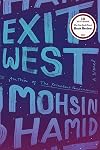
This is a dream-like book that blends realism and fantasy in a magical way that makes it all seem possible. Early in the book the narrator observes that "one moment we are pottering about our errands as usual and the next we are dying." (p 4)
The narrator tells of a young couple who manage to meet and kindle a love that transports them through life and time to a place where they can live as each chooses in spite of the vicissitudes of the world around them.
In an unnamed city on the brink of show more civil war, Saeed and Nadia meet while taking an adult education course. The following day, Saeed can’t stop thinking about her while he whiles away his time at a local advertising firm.
Before continuing the story of Saeed and Nadia the narrative cuts to a vignette of a white woman sleeping in her bedroom in Australia. As she dozes, a dark-skinned man slowly emerges from the darkness of her closet, a darkness that is blacker and more absolute than the rest of the lightless room. After he emerges from this mysterious door, the man walks quietly through the bedroom before slipping out the open window. This seemingly unrelated incident will prove a portent of events later in the lives of Saeed and Nadia.
The narrative shifts back to Saeed and Nadia and as it continues, shifts back and forth between them. Saeed lives at home with his parents in a small apartment that used to be quite elegant but is now somewhat tired, a “crowded and commercial” neighborhood having grown up around it. Nadia grew up in a deeply religious household, but she never felt drawn to this kind of faith. When she decided to move out on her own even though she wasn’t married, her parents and sister were incensed, and because she was unwilling to compromise, their relationship was destroyed.
As Saeed and Nadia’s begin a modern sort of courtship, the city plunges inexorably into turmoil, as militant radicals overtake the neighborhoods, killing bystanders and government officials in order to establish dominance. Nonetheless, Saeed and Nadia manage to live somewhat normal lives. One night, they sit on Nadia’s balcony and eat magic mushrooms before drawing close and becoming physically intimate for the first time. This intimacy continues in subsequent meetings, but Saeed stops Nadia each time before they have sex, telling her—to her disappointment—that he wants to wait until marriage.
Before long, the government shuts off all cellphone service in an attempt to make it harder for the militant radicals to control the city. As a result, Nadia and Saeed are cut off from one another, unable to communicate until Saeed finally shows up at Nadia’s house. Not long thereafter, Saeed’s mother is hit by a stray bullet that kills her. When Nadia sees how distraught Saeed and his father are after the funeral, she decides to move in with them. Tensions escalate quickly in the city, and Saeed, Nadia, and Saeed’s father find themselves unable to lead the lives they once enjoyed.
Also, about this time, rumors start circulating about black doors that can transport people from one place to another, taking them far away. Apparently, these doors simply appear in the place of regular doors, and many of the city’s inhabitants actively seek them out as a way of escaping the violent radicals. In spite of the danger of using these doors to leave Nadia and Saeed eventually do so. Their experiences in Greece, London, and northern California comprise the remainder of the story.
Each of the episodes are presented very realistically with their lives buffeted by competing claims of both the need to maintain a daily life and the emotions of their personal relationship. Their story is told in a way that gradually builds the reader's interest up to the last page of the novel. I found myself agreeing with the narrator that "We are all migrants through time." (p 209) The fantastic element allowed one to meditate on the migration of people throughout the world and what it means to leave your family behind and join a new community of people - both natives and others. show less
The narrator tells of a young couple who manage to meet and kindle a love that transports them through life and time to a place where they can live as each chooses in spite of the vicissitudes of the world around them.
In an unnamed city on the brink of show more civil war, Saeed and Nadia meet while taking an adult education course. The following day, Saeed can’t stop thinking about her while he whiles away his time at a local advertising firm.
Before continuing the story of Saeed and Nadia the narrative cuts to a vignette of a white woman sleeping in her bedroom in Australia. As she dozes, a dark-skinned man slowly emerges from the darkness of her closet, a darkness that is blacker and more absolute than the rest of the lightless room. After he emerges from this mysterious door, the man walks quietly through the bedroom before slipping out the open window. This seemingly unrelated incident will prove a portent of events later in the lives of Saeed and Nadia.
The narrative shifts back to Saeed and Nadia and as it continues, shifts back and forth between them. Saeed lives at home with his parents in a small apartment that used to be quite elegant but is now somewhat tired, a “crowded and commercial” neighborhood having grown up around it. Nadia grew up in a deeply religious household, but she never felt drawn to this kind of faith. When she decided to move out on her own even though she wasn’t married, her parents and sister were incensed, and because she was unwilling to compromise, their relationship was destroyed.
As Saeed and Nadia’s begin a modern sort of courtship, the city plunges inexorably into turmoil, as militant radicals overtake the neighborhoods, killing bystanders and government officials in order to establish dominance. Nonetheless, Saeed and Nadia manage to live somewhat normal lives. One night, they sit on Nadia’s balcony and eat magic mushrooms before drawing close and becoming physically intimate for the first time. This intimacy continues in subsequent meetings, but Saeed stops Nadia each time before they have sex, telling her—to her disappointment—that he wants to wait until marriage.
Before long, the government shuts off all cellphone service in an attempt to make it harder for the militant radicals to control the city. As a result, Nadia and Saeed are cut off from one another, unable to communicate until Saeed finally shows up at Nadia’s house. Not long thereafter, Saeed’s mother is hit by a stray bullet that kills her. When Nadia sees how distraught Saeed and his father are after the funeral, she decides to move in with them. Tensions escalate quickly in the city, and Saeed, Nadia, and Saeed’s father find themselves unable to lead the lives they once enjoyed.
Also, about this time, rumors start circulating about black doors that can transport people from one place to another, taking them far away. Apparently, these doors simply appear in the place of regular doors, and many of the city’s inhabitants actively seek them out as a way of escaping the violent radicals. In spite of the danger of using these doors to leave Nadia and Saeed eventually do so. Their experiences in Greece, London, and northern California comprise the remainder of the story.
Each of the episodes are presented very realistically with their lives buffeted by competing claims of both the need to maintain a daily life and the emotions of their personal relationship. Their story is told in a way that gradually builds the reader's interest up to the last page of the novel. I found myself agreeing with the narrator that "We are all migrants through time." (p 209) The fantastic element allowed one to meditate on the migration of people throughout the world and what it means to leave your family behind and join a new community of people - both natives and others. show less
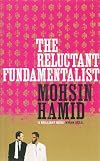
A brave and empathetic novel that puts a spin on the traditional US-tertiary-educated immigrant experience by examining the effects of 9/11 on what would have otherwise been a successful American-dream story.
Despite some clunky metaphors/symbols and informative expositional mini-lectures, the book offers a compassionate view on how what we call extremism can come about, forcing us to confront some values that we perhaps didn't realise we had instilled subconsciously.
Despite some clunky metaphors/symbols and informative expositional mini-lectures, the book offers a compassionate view on how what we call extremism can come about, forcing us to confront some values that we perhaps didn't realise we had instilled subconsciously.
How will the developed nations react to the increasing pressures of immigration as war, climate change or lack of resources force more people to seek new homes? What will happen to the concept of national borders and what adjustments will be required by both immigrants and "nativists"? These issues and much more will linger in your mind after reading Exit West, a novel of aching beauty. Hamid keeps the tone light and thoughtful, rather than focusing on grim details as we move between show more countries with Nadia and Saeed. The magical construct of doors that provide nearly instantaneous passage to a new location allows the author to focus on how the characters evolve in each situation. Coming from vastly different family situations, Nadia and Saeed face the pressures of changing circumstances in different ways, but their relationship remains one of loyalty and respect. This beautifully written book will leave me reflecting on many things and I am look forward to discussing it with others. show less
I'm not usually a fan of magical realism, but I find this romance and examination of the global refugee crisis quite haunting and thought provoking. This could easily have been a Stephen King style epic apocalyptic thriller, but I like the bittersweet optimism Hamid brings to his little fable.
Lists
Booker Prize (2)
To Read (1)
Review 2 (1)
. (1)
Short and Sweet (1)
Best of 2017 (1)
Asia (1)
Fiction: BLM (1)
Magic Realism (1)
Allie's Wishlist (1)
To read (1)
Indie Next Picks (1)
Awards


You May Also Like


Associated Authors
Statistics
- Works
- 13
- Also by
- 6
- Members
- 13,103
- Popularity
- #1,779
- Rating
- 3.8
- Reviews
- 668
- ISBNs
- 223
- Languages
- 17
- Favorited
- 13
