
Jhumpa Lahiri
Author of The Namesake
About the Author
Jhumpa Lahiri was born in London, England on July 11, 1967. She received a B.A. in English literature from Barnard College in 1989, and a M.A. in English, a M.A. in Creative Writing, a M.A. in Comparative Studies in Literature and the Arts, and a Ph.D. in Renaissance Studies from Boston University. show more Lahiri taught creative writing at Boston University and the Rhode Island School of Design. Her debut work, Interpreter of Maladies, won the Pulitzer Prize for fiction in 2000. She has also won the PEN/Hemmingway Award, an O. Henry Award, The New Yorker's best debut of the year award, and an Addison Metcalf award. Her other works include The Namesake, which was made into a movie in 2007, Unaccustomed Earth, and The Lowland, which won 2015 DSC Prize for South Asian Literature. (Bowker Author Biography) show less
Image credit: Jhumpa Lahiri in 2014
Works by Jhumpa Lahiri
Brotherly Love {story} 9 copies
A Temporary Matter {story} 7 copies
Solo bontà — Author — 5 copies
Improvisations: Rice 4 copies
Year's End {story} 4 copies
This Blessed House {story} 2 copies
Namesake The 2 copies
Sexy {short story} 2 copies
Tlumacz chorob (polish) 1 copy
El buen nombre 1 copy
“This Blessed House” 1 copy
Interpretul de maladii 1 copy
“Mrs Sen’s” 1 copy
“A Real Durwan” 1 copy
Unacccustomed Earth 1 copy
ස්වප්න යාත්රා 1 copy
DAUGHTER OR SON 1 copy
Nova zemlja 1 copy
Nobody's Business {story} 1 copy
Sacred Games 1 copy
Lahiri, Jhumpa Archive 1 copy
Sunce u njenoj kosi 1 copy
Olduğum Yer 1 copy
Associated Works
The Ecco Anthology of Contemporary American Short Fiction (2008) — Contributor — 140 copies, 2 reviews
Charlie Chan Is Dead 2: At Home in the World: An Anthology of Contemporary Asian-American Fiction (2004) — Contributor — 98 copies, 1 review
More Stories We Tell: The Best Contemporary Short Stories by North American Women (2004) — Contributor — 66 copies
And We Came Outside and Saw the Stars Again: Writers from Around the World on the COVID-19 Pandemic (2020) — Contributor — 16 copies
A Very Indian Christmas: The Greatest Indian Holiday Stories of All Time (2024) — Contributor — 4 copies
Tagged
Common Knowledge
- Canonical name
- Lahiri, Jhumpa
- Legal name
- Lahiri, Nilanjana Sudeshna
- Birthdate
- 1967-07-11
- Gender
- female
- Education
- Boston University (MA - English | MFA - Creative Writing |MA - Comparative Literature | Ph.D | 1997 - Renaissance Studies)
Barnard College (BA | 1989 - English Literature) - Occupations
- professor (Creative Writing)
novelist
short story writer - Organizations
- PEN American Center (Vice President)
President's Committee on the Arts and Humanities
Princeton University
Boston University
Rhode Island School of Design
Barnard College - Awards and honors
- Pulitzer Prize for Fiction (2000)
National Humanities Medal (2014)
Addison M. Metcalf Award in Literature (2000)
TransAtlantic Award (Henfield Foundation, 1993)
DSC Prize for Literature (2015)
PEN/Malamud Award (2017) (show all 10)
Frank O'Connor International Short Story Award (2008)
M.F.K. Fisher Distinguished Writing Award (2000)
Asian American Literary Award (2009)
Fine Arts Work Center fellowship (Provincetown) - Agent
- Eric Simonoff (Janklow & Nesbit Associates)
- Relationships
- Vourvoulias, Alberto (husband)
- Short biography
- Jhumpa Lahiri was born in London and moved to Kingston, Rhode Island with her family when she was 3. She lived for some time in Brooklyn, New York, and in 2012, she, her husband and two children moved to Rome, Italy.
- Nationality
- UK
USA (naturalised) - Birthplace
- London, England, UK
- Places of residence
- Kingston, Rhode Island, USA
Brooklyn, New York, USA
Rome, Italy
Members
Discussions
March 2022: Jhumpa Lahiri in Monthly Author Reads (April 2022)
Interpreter of Maladies: Introduce yourself! in One LibraryThing, One Book (March 2017)
Welcome! Book club week 1 (Jan82017) in Madam Irma Pince's Library Book Club (January 2017)
2013 Booker longlist: The Lowland by Jhumpa Lahiri in Booker Prize (October 2013)
Reviews
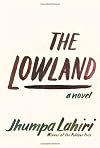
This book reminded me of why Jhumpa Lahiri will always be one of my top favourite writers, the time when she used to write in English, and when her books were so simple yet each character's back-stories had so much depth. This book starts from India right after independence, in Calcutta, and how the common man got into communism, the birth of the CPI-M party (and others) and the infamous Naxalite movements. Dark parts of history, with so much death and bloodshed, and these three main show more characters, Udayan, Subhash and Gauri's whole lives are upended by it when you think about it.
We follow Subhash and Gauri (later their daughter Bela) in their lives in Rhode Island,US, away from everything yet so close. I think I feel the most sympathetic for Gauri, the way trauma literally makes her keep distance from love and bonding with her daughter. It's so well written by Jhumpa, and so simple yet deep. Loved it! show less
We follow Subhash and Gauri (later their daughter Bela) in their lives in Rhode Island,US, away from everything yet so close. I think I feel the most sympathetic for Gauri, the way trauma literally makes her keep distance from love and bonding with her daughter. It's so well written by Jhumpa, and so simple yet deep. Loved it! show less
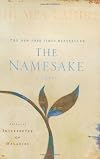
Digital audiobook performed by Sarita Choudhury.
The novel follows the Ganguli family over three decades, beginning when Ashoke and Ashima’s marriage is first arranged in Calcutta. They settle in Cambridge, Massachusetts where Ashoke is studying engineering, have two children, buy a house and live their lives: Indians with American children.
This is the type of literary fiction I adore. Lahiri writes with such eloquence and grace, letting the reader learn about this family much as she show more would do when meeting new acquaintances who become friends over decades. Their story tackles issues of the immigrant experience, the clash of cultures, differences (and conflicts) between generations, and personal identity.
While their parents find a community of other Bengalis with which to associate and celebrate life’s milestones, their children – son Gogol and his younger sister Sonia – are clearly Americans. And yet, Gogol still struggles with identity. First there is his odd name, then there are the lunches his mother packs for him, and the holidays they celebrate (or do not). While his parents cling to the traditions of their upbringing, Gogol wants only to fit in – to have a Christmas tree, and eat peanut butter, hamburgers and French fries. On trips back to India to see family and friends, Gogol feels lost; he does not clearly understand or speak the language, is unfamiliar with the city, cannot fathom why his family stays with relative after relative rather than getting a hotel room or renting an apartment of their own for the duration. In some respects, he is an immigrant in both countries.
Towards the end of the novel Gogol reflects on his and his parents’ lives: He wonders how his parents had done it, leaving their respective families behind, seeing them so seldom, dwelling unconnected, in a perpetual state of expectation, of longing. … He had spent years maintaining distance from his origins; his parents, in bridging that distance as best they could.
And he comes to a sort of conclusion: These events have formed Gogol, shaped him, determined who he is. They were things for which it was impossible to prepare but which one spent a lifetime looking back at, trying to accept, interpret, comprehend. Things that should never have happened, that seemed out of place and wrong, these were what prevailed, what endured, in the end.
Sarita Choudhury does a marvelous job narrating the audiobook. She sets a good pace that still allows the reader to absorb the complexities of the writing. Still, I am glad that I also have a text copy. Lahiri’s writing is the kind that I want to pore over, to read and read again. show less
The novel follows the Ganguli family over three decades, beginning when Ashoke and Ashima’s marriage is first arranged in Calcutta. They settle in Cambridge, Massachusetts where Ashoke is studying engineering, have two children, buy a house and live their lives: Indians with American children.
This is the type of literary fiction I adore. Lahiri writes with such eloquence and grace, letting the reader learn about this family much as she show more would do when meeting new acquaintances who become friends over decades. Their story tackles issues of the immigrant experience, the clash of cultures, differences (and conflicts) between generations, and personal identity.
While their parents find a community of other Bengalis with which to associate and celebrate life’s milestones, their children – son Gogol and his younger sister Sonia – are clearly Americans. And yet, Gogol still struggles with identity. First there is his odd name, then there are the lunches his mother packs for him, and the holidays they celebrate (or do not). While his parents cling to the traditions of their upbringing, Gogol wants only to fit in – to have a Christmas tree, and eat peanut butter, hamburgers and French fries. On trips back to India to see family and friends, Gogol feels lost; he does not clearly understand or speak the language, is unfamiliar with the city, cannot fathom why his family stays with relative after relative rather than getting a hotel room or renting an apartment of their own for the duration. In some respects, he is an immigrant in both countries.
Towards the end of the novel Gogol reflects on his and his parents’ lives: He wonders how his parents had done it, leaving their respective families behind, seeing them so seldom, dwelling unconnected, in a perpetual state of expectation, of longing. … He had spent years maintaining distance from his origins; his parents, in bridging that distance as best they could.
And he comes to a sort of conclusion: These events have formed Gogol, shaped him, determined who he is. They were things for which it was impossible to prepare but which one spent a lifetime looking back at, trying to accept, interpret, comprehend. Things that should never have happened, that seemed out of place and wrong, these were what prevailed, what endured, in the end.
Sarita Choudhury does a marvelous job narrating the audiobook. She sets a good pace that still allows the reader to absorb the complexities of the writing. Still, I am glad that I also have a text copy. Lahiri’s writing is the kind that I want to pore over, to read and read again. show less
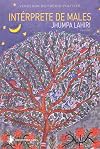
A solidão é a chave para entender esses contos de Jhumpa Lahiri. O tema é recorrente e numa forma muito mais profunda que a simples solidão de estar só, mas aquela solidão inerente da individualidade. A solidão de nos sabermos únicos e estarmos sós em nós mesmos. Também a solidão de estar longe de sua terra natal, a solidão de ser incompreendido, a solidão da carência de afeto, a solidão da velhice, e de se dar conta de sonhos irrealizados, de desejos frustrados, e da show more existência previsível. Estar só é como uma jornada individual, impossível de ser compartilhada, comunicada ou sentida. Surgem aqui e ali as testemunhas desse cair em si, que mesmo sem entender totalmente o que passa fazem a ponte com o leitor. A escritora não precisa recorrer a finais mirabolantes ou surpreendentes, não quer causar espanto ou fúria, apenas nos deixar uma sensação de delicadeza, saudade, leve tristeza, e uma dorzinha no coração que afaga nossa empatia e abraça nossa própria solidão. show less
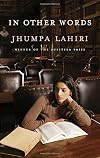
I wanted the reading experience to be as authentic as possible, so I stumbled through the Italian. I read it out loud, slowly, carefully sounding out the syllables, but my mouth kept forming the words with English phonetics, French sounds, wanting to keep to the languages I knew. Every time I came across a familiar-looking word - "leggere", "curiosa" - my jaw muscles relaxed. It also helped that English was just across the binding. I glanced at it after every line. It was like the edge of show more the pool, something safe, like the shore of Lahiri's pond.
This struggle to sound out foreign letters left me astounded at Lahiri's perseverance. It must have been a Herculean effort, to completely cut out something that she knew she knew, to embrace something that she knew she would never know completely. And yet, despite of her imperfection, because of her imperfection, I could feel the lightness of her words, the loveliness of her metaphors.
I have read reviews where readers found this book self-indulgent. Perhaps it is. But one could argue that all books are self-indulgent, to satisfy a whim of the author. I found In Other Words wonderfully relatable. Living on the margins myself, I know what it feels like to feel exiled, to feel suspended, and yet I never knew how to express these feelings in words. Lahiri wrote them out for me. For this, I feel grateful. show less
This struggle to sound out foreign letters left me astounded at Lahiri's perseverance. It must have been a Herculean effort, to completely cut out something that she knew she knew, to embrace something that she knew she would never know completely. And yet, despite of her imperfection, because of her imperfection, I could feel the lightness of her words, the loveliness of her metaphors.
I have read reviews where readers found this book self-indulgent. Perhaps it is. But one could argue that all books are self-indulgent, to satisfy a whim of the author. I found In Other Words wonderfully relatable. Living on the margins myself, I know what it feels like to feel exiled, to feel suspended, and yet I never knew how to express these feelings in words. Lahiri wrote them out for me. For this, I feel grateful. show less
Lists
Asia (4)
On Books (1)
Reading Globally (1)
Overdue Podcast (1)
AP Lit (1)
1990s (1)
Reading LIst (1)
. (1)
To Read (1)
Translingualism (1)
1900s: America (1)
Best of 2022 (1)
Female Author (2)
Unread books (2)
All Things India (2)
Indian Diaspora (3)
Five star books (3)
Fiction: Asia (1)
100 New Classics (1)
Florida (1)
Carole's List (1)
First Novels (1)
Obama Reads (1)
Booker Prize (1)
Awards


You May Also Like


Associated Authors
Statistics
- Works
- 59
- Also by
- 34
- Members
- 39,543
- Popularity
- #448
- Rating
- 4.0
- Reviews
- 1,154
- ISBNs
- 374
- Languages
- 32
- Favorited
- 202


