
Rohinton Mistry
Author of A Fine Balance
About the Author
Rohinton Mistry was born in Bombay in 1952 and immigrated to Canada in 1975. He began writing stories in 1983 while a student at the University of Toronto. His books recount everyday life in India. Titles include Tales From Firozsha Baag, a collection of short stories, and A Fine Balance, a novel. show more Mistry's first novel, Such a Long Journey, received several awards, including the Governor General's Award and the Commonwealth Writers Prize for Best Book. It was also shortlisted for the Booker Prize and for the Trillium Award. (Bowker Author Biography) show less
Works by Rohinton Mistry
Associated Works
A World of Difference: An Anthology of Short Stories from Five Continents (2008) — Contributor — 110 copies, 1 review
Freedom: Stories Celebrating the Universal Declaration of Human Rights (2009) — Contributor — 88 copies, 2 reviews
Tagged
Common Knowledge
- Canonical name
- Mistry, Rohinton
- Birthdate
- 1952-07-03
- Gender
- male
- Education
- University of Mumbai (BA|1975| St. Xavier's College | Mathematics ∙ Economics)
University of Toronto (BA|1982| English | Philosophy) - Occupations
- writer
novelist - Awards and honors
- Order of Canada (Member, 2016)
Neustadt International Prize for Literature (2012)
Royal Society of Literature (Fellow, 2010)
Commonwealth Writers Prize (1991, 1996)
Los Angeles Times Book Prize for Fiction (1996)
Governor General's Award (1991) (show all 9)
Trillium Award (1991)
Timothy Findley Award (2005)
Giller Prize (1995) - Agent
- Lucinda Vardey (Lucinda Vardey Agency)
- Relationships
- Elavia, Freny (spouse)
- Nationality
- India (birth)
Canada - Birthplace
- Mumbai, India
- Places of residence
- Mumbai, India
Brampton, Ontario, Canada - Associated Place (for map)
- Brampton, Ontario, Canada
Members
Discussions
A Fine Balance Group Read: July 2013 in 75 Books Challenge for 2013 (August 2013)
Reviews
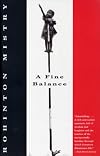
This is an extraordinary second novel (shortlisted for the Booker). Although Mistry has his tics (he loves to throw in a big, unusual word every now and then, among other things), those tics are—I suspect—the bad habit of a young writer searching for his voice. I will be reading his other books soon, I hope, and will be interested to see how his writing evolves. But the book, you ask? In a nutshell, it follows a central core of characters from very different backgrounds thrown together show more by chance. We learn their individual histories and then follow them in Bombay (unnamed, but clear) during the Emergency, a truly dismal period in the mid/late 1970s. Indira Gandhi, desperate to remain in power, chose to break the law and invoke extraordinary and unlawful powers to run the country as she saw fit, regardless of consequences. This book is about those consequences. Contrived situations are few and Mistry has drawn indelible, human characters, complete with flaws as well as virtues. Some of the circumstances Mistry portrays are brutal and even painful. Yet the book contains a great deal of satisfying and even funny episodes. Mistry takes his epigraph from Balzac—a master whose writing this book resembles in many ways; from Le Père Goriot: “But rest assured: This tragedy is not a fiction. All is True.” Very highly recommended. show less
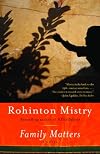
This is a beautifully written story that focuses on a Parsi family living in Bombay (Mumbai) in the 1990s. They live in a small flat. The mother’s step siblings deposit her injured and aging father, who is also battling Parkinson’s disease, on her doorstep when they are unable or unwilling to care for him. It is about ordinary lives that are transformed by bad luck, and how they respond to these challenges. It is filled with moral dilemmas, especially for the family’s patriarch, Yesad. show more The relationship between the youngest child and the grandfather is portrayed with such tenderness. The child wants to help and even finds a way of making money and secretly slipping it into the family’s funds. It poignantly depicts family dynamics, the big changes taking place in the city, Parsi beliefs and concerns, and Hindu-Muslim tensions of the time period. Themes include elder care, family bonds, corruption, sense of belonging, religion, and the generation gap. It is a bittersweet and intimate story told in Mistry’s elegant style. It is slow in developing, but the payoff is well worth it. It is a book to become immersed in. Truly a gem. show less
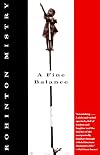
A moving portrayal of the lives of four people who were caught up in the brutal, sweeping policies of 1970s India during the State of Emergency rule of Indira Gandhi.
Dina, a 40-ish widow, is determined to be an independent woman in a society where women cannot and do not have a say; Ishvar and his nephew Om are from the untouchables but, through immense courage and determination on the part of his father/grandfather, have managed to escape the bondage of caste and become tailors in the show more city; Maneck is a sensitive boy from a well-to-do family in a mountain town who needed to train for a career because the family business was declining. They are brought together when Dina decides to hire the tailors, and to let a room in order to support herself financially. They are first suspicious of and then eventually adjust to each other, become friends and even live together convivially. There is a brief respite from the despair each has previously known, life is still a daily struggle but it is less difficult, and happiness seems to be within reach.
The chaos of political events unleashed by the State of Emergency reach them and their lives start moving beyond their control quickly and insanely. Rampant corruption, harassment and violence, fear and terror started to rule, sparing nobody. The government imposes drastic, brutal policies in the name of political stability and economic development, policies such as forced eviction which left thousands homeless, forced labor in big infrastructure projects, and forced sterilization. Our friends go from bad to worse, and from then it was just from one misfortune to another. There were points along the story where I just wished Ishvar and Om to die – that would have been kinder to them. Yet they survive. And I think, indeed, why should I, the reader, be spared the inconvenient truth that in real life, many of the poor and destitute had actually gone through and survived the viciousness of that period in their history? Mistry pushes us, relentlessly, beyond our comfort zones.
I call this novel a story with a heart. The author writes with sympathy, without being sentimental. We recognize the characters -- they dream, they despair, they laugh, they hope, they feel pain, they get angry, they get jealous, they find change difficult but eventually accept their fates, they don't trust politicians. Mistry writes of big, serious themes and of small, ordinary lives. The novel raises sensitive issues of class conflict, ethnic conflict, gender, dispossession, and political repression, and how invariably the first ones to get sucked up in the vortex are the weak, the small, the powerless, the defenseless, the disenfranchised. He describes with vivid and realistic imagery the cruel and hard life of the untouchables in rural India, the squalid poverty of the shantytowns and the homeless in the streets of the city, the pervading cultural myopia, and the brutality of an oppressive regime.
The story is tragic, monumentally tragic even. Adversities came in waves, and while circumstances could have easily crushed or corrupted them, these four friends were never pathetic, were never wretched in their souls. The balance between hope and despair is very fine indeed. A big novel that at another time (and another place) might have been banned for tackling potentially inflammatory issues.
Highly recommended. show less
Dina, a 40-ish widow, is determined to be an independent woman in a society where women cannot and do not have a say; Ishvar and his nephew Om are from the untouchables but, through immense courage and determination on the part of his father/grandfather, have managed to escape the bondage of caste and become tailors in the show more city; Maneck is a sensitive boy from a well-to-do family in a mountain town who needed to train for a career because the family business was declining. They are brought together when Dina decides to hire the tailors, and to let a room in order to support herself financially. They are first suspicious of and then eventually adjust to each other, become friends and even live together convivially. There is a brief respite from the despair each has previously known, life is still a daily struggle but it is less difficult, and happiness seems to be within reach.
The chaos of political events unleashed by the State of Emergency reach them and their lives start moving beyond their control quickly and insanely. Rampant corruption, harassment and violence, fear and terror started to rule, sparing nobody. The government imposes drastic, brutal policies in the name of political stability and economic development, policies such as forced eviction which left thousands homeless, forced labor in big infrastructure projects, and forced sterilization. Our friends go from bad to worse, and from then it was just from one misfortune to another. There were points along the story where I just wished Ishvar and Om to die – that would have been kinder to them. Yet they survive. And I think, indeed, why should I, the reader, be spared the inconvenient truth that in real life, many of the poor and destitute had actually gone through and survived the viciousness of that period in their history? Mistry pushes us, relentlessly, beyond our comfort zones.
I call this novel a story with a heart. The author writes with sympathy, without being sentimental. We recognize the characters -- they dream, they despair, they laugh, they hope, they feel pain, they get angry, they get jealous, they find change difficult but eventually accept their fates, they don't trust politicians. Mistry writes of big, serious themes and of small, ordinary lives. The novel raises sensitive issues of class conflict, ethnic conflict, gender, dispossession, and political repression, and how invariably the first ones to get sucked up in the vortex are the weak, the small, the powerless, the defenseless, the disenfranchised. He describes with vivid and realistic imagery the cruel and hard life of the untouchables in rural India, the squalid poverty of the shantytowns and the homeless in the streets of the city, the pervading cultural myopia, and the brutality of an oppressive regime.
The story is tragic, monumentally tragic even. Adversities came in waves, and while circumstances could have easily crushed or corrupted them, these four friends were never pathetic, were never wretched in their souls. The balance between hope and despair is very fine indeed. A big novel that at another time (and another place) might have been banned for tackling potentially inflammatory issues.
Highly recommended. show less
[A Fine Balance] is a sweeping drama of four people who unexpectedly end up living together during a tumultuous year, 1975, in India. Dina is a middle-aged widow desperately trying to hang on to her independence, despite her brother's efforts to get her to re-marry. Maneck is a young man in the city to attend college, who left his beautiful mountain town at his parents' behest to try to better his life. The student hostel is so disgusting that he ends up renting a room from Dina, who is a show more distant family friend. And then there are Ishvar and Omprakash, who are tailors that end up working for Dina out of her apartment. They were also living in a rural town where their family had been on the rise out of their lower caste. But misfortunes keep arising to keep them down. The four will spend a year together during a State of Emergency declared by the Prime Minister that upends life for the lower classes in some truly horrifying and gruesome ways.
The book is grim and has moments of utter despair, pure bad luck, and unfairness. There are despicable characters, horrible deaths, and plenty of squalor. Usually I can't stomach a book like this. However, Mistry somehow balances this with some good, some lighthearted moments, and impressive writing. I was completely invested from the first chapter and just had to see where it was all going to end up. I don't think, in a book like this, it's a spoiler to say that things do not end well for all the characters. It's clear from the get go that a book this realistic will not have a fairy tale ending - though I did keep hoping for one. And I suppose that's where the title comes in. Life is "a fine balance" of hope and despair. In 1970s India, if Mistry's portrayal is at all accurate, this is all too true. show less
The book is grim and has moments of utter despair, pure bad luck, and unfairness. There are despicable characters, horrible deaths, and plenty of squalor. Usually I can't stomach a book like this. However, Mistry somehow balances this with some good, some lighthearted moments, and impressive writing. I was completely invested from the first chapter and just had to see where it was all going to end up. I don't think, in a book like this, it's a spoiler to say that things do not end well for all the characters. It's clear from the get go that a book this realistic will not have a fairy tale ending - though I did keep hoping for one. And I suppose that's where the title comes in. Life is "a fine balance" of hope and despair. In 1970s India, if Mistry's portrayal is at all accurate, this is all too true. show less
Lists
Favourite Books (1)
Unread books (1)
1990s (1)
A Novel Cure (1)
Big Jubilee List (1)
To Read (1)
Carly's TBR (1)
BBC Big Read (1)
Booker Prize (3)
Urban Fiction (1)
Five star books (2)
All Things India (3)
1970s Narratives (1)
BBC Big Read (1)
AP Lit (1)
Sense of place (1)
Asia (1)
Awards


You May Also Like


Associated Authors
Statistics
- Works
- 10
- Also by
- 14
- Members
- 15,311
- Popularity
- #1,485
- Rating
- 4.2
- Reviews
- 371
- ISBNs
- 185
- Languages
- 16
- Favorited
- 106
