
About the Author
Morgan Jerkins is a senior culture editor at ESPN's The Undefeated and the New York Times bestselling author of This Will Be My Undoing and Caul Baby. Her work has been featured in The New Yorker, New York Times, Atlantic, Rolling Stone, Elle, Esquire, and the Guardian, among many other outlets. show more She is based in Harlem. show less
Works by Morgan Jerkins
This Will Be My Undoing: Living at the Intersection of Black, Female, and Feminist in (White) America (2018) 549 copies, 25 reviews
Wandering in Strange Lands: A Daughter of the Great Migration Reclaims Her Roots (2020) 276 copies, 4 reviews
Associated Works
Well-Read Black Girl: Finding Our Stories, Discovering Ourselves (2018) — Contributor — 470 copies, 33 reviews
Tagged
Common Knowledge
- Birthdate
- 1993
- Gender
- female
- Education
- Princeton University (BA)
Bennington Writing Seminars (MFA) - Occupations
- writer
editor
senior editor, ZORA
senior culture editor, The Undefeated - Agent
- Monica Odom
- Short biography
- Morgan Jerkins is a senior editor at Medium's ZORA magazine. Her work has been featured in the New Yorker, Vogue, the New York Times, the Atlantic, Elle, Rolling Stone, Lenny Letter, and BuzzFeed, among many other outlets. She lives in New York.
- Nationality
- USA
- Birthplace
- Somers Point, New Jersey, USA
- Places of residence
- New Jersey, USA
Harlem, New York, New York, USA - Map Location
- USA
Members
Reviews
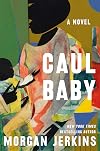
Morgan Jerkins' Caul Baby is one of those wonderful novels where the plot becomes increasingly tightly-knit while simultaneously broadening in scope. New characters have surprising connections to old characters; past events become forces in the present.
Caul Baby explores contemporary issues of Black identity—pregnancy and motherhood; gentrification; education, opportunity, and political compromise—and pairs these with a touch of what may or may not be magical realism, depending on your show more belief system. The pace of the novel feels slow at first because Jerkins takes time to explore her characters and to let readers get to know them; near the end, the pace picks up for a conclusion most readers won't see coming.
I don't want to say a lot about the plot here because a synopsis may make it sound like less than it is. Just trust me—if you enjoy contemporary fiction, this title belongs on your to-read list.
I received a free electronic copy of this book for review purposes. The opinions are my own. show less
Caul Baby explores contemporary issues of Black identity—pregnancy and motherhood; gentrification; education, opportunity, and political compromise—and pairs these with a touch of what may or may not be magical realism, depending on your show more belief system. The pace of the novel feels slow at first because Jerkins takes time to explore her characters and to let readers get to know them; near the end, the pace picks up for a conclusion most readers won't see coming.
I don't want to say a lot about the plot here because a synopsis may make it sound like less than it is. Just trust me—if you enjoy contemporary fiction, this title belongs on your to-read list.
I received a free electronic copy of this book for review purposes. The opinions are my own. show less
This was the perfect book to read during Halloweek, if only because the protagonist is named Hallow and born on All Hallow's Eve. The story is just barely creepy enough for a scaredy-cat like me.
I read this book in order to participate in The Free Black Women's Library monthly book discussion, but unfortunately I'm going to miss it for a birthday party–this is too bad, because the novel really bears discussion. The metaphor of Jerkins' magical, healing caul (the amniotic membrane show more enclosing a fetus) for appropriation, gentrification, intergenerational trauma/abuse, profit from black bodies, and according to the author, "how Black women are supposed to be everything for everyone else" might seem heavy-handed at a glance, but it's so visceral and creative in the way that she executes it that I ended up thinking more about the symbolism than the symbols, if that makes sense, which is to me a sign of any good creative work. Reading her essay "How I Overcame Anger As A Black Writer Online" gives some additional insight into her personal experiences in this vein of being a personal-trauma mercenary (https://www.lennyletter.com/story/how-i-overcame-anger-as-a-black-writer-online).
This book reminded me of Ruth Ozeki's "All Over Creation," because it pitted two such morally ambiguous yet equally sympathetic parties against each other. Although I spent most of the book waiting for a conclusion that would simultaneously solve all of these problems, which of course didn't come, and even though I'm sure that there is a moral solution in there somewhere, which I just need someone to tell me, I did not find the end of the book dissatisfying.
Some reviewers complain about lackluster prose or predictability of the plot, and although there were a couple of re-used, word-for-word phrases (a personal pet peeve), I think she wrote like a nonfiction writer, which can be a breath of fresh air in contemporary literature. And like I said before, I didn't spend any time wondering when the book was finally going to end or knowing exactly what was going to happen next (in large part because of the complex network of protagonists, like I mentioned before). I thought it clipped along at a nice pace, and even if at points I wasn't paying total attention, it's because my mind had wandered off on a rabbit trail of the moral consequences of pitting the diaspora against itself. show less
I read this book in order to participate in The Free Black Women's Library monthly book discussion, but unfortunately I'm going to miss it for a birthday party–this is too bad, because the novel really bears discussion. The metaphor of Jerkins' magical, healing caul (the amniotic membrane show more enclosing a fetus) for appropriation, gentrification, intergenerational trauma/abuse, profit from black bodies, and according to the author, "how Black women are supposed to be everything for everyone else" might seem heavy-handed at a glance, but it's so visceral and creative in the way that she executes it that I ended up thinking more about the symbolism than the symbols, if that makes sense, which is to me a sign of any good creative work. Reading her essay "How I Overcame Anger As A Black Writer Online" gives some additional insight into her personal experiences in this vein of being a personal-trauma mercenary (https://www.lennyletter.com/story/how-i-overcame-anger-as-a-black-writer-online).
This book reminded me of Ruth Ozeki's "All Over Creation," because it pitted two such morally ambiguous yet equally sympathetic parties against each other. Although I spent most of the book waiting for a conclusion that would simultaneously solve all of these problems, which of course didn't come, and even though I'm sure that there is a moral solution in there somewhere, which I just need someone to tell me, I did not find the end of the book dissatisfying.
Some reviewers complain about lackluster prose or predictability of the plot, and although there were a couple of re-used, word-for-word phrases (a personal pet peeve), I think she wrote like a nonfiction writer, which can be a breath of fresh air in contemporary literature. And like I said before, I didn't spend any time wondering when the book was finally going to end or knowing exactly what was going to happen next (in large part because of the complex network of protagonists, like I mentioned before). I thought it clipped along at a nice pace, and even if at points I wasn't paying total attention, it's because my mind had wandered off on a rabbit trail of the moral consequences of pitting the diaspora against itself. show less
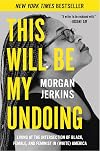
This Will Be My Undoing: Living at the Intersection of Black, Female, and Feminist in (White) America by Morgan Jerkins
I received an ARC of this book free through the LTER program.
This book is a magnificently-written scream of rage and fury. It's honest and sometimes funny and I read it in one sitting. Everyone should read this book; I hope it becomes super-successful. It lays out Jerkins's doubts and inconsistencies along with a sure and unwavering uplift for other Black women.
Jerkins ties together the personal with the systemic, the historical with the extremely current moment. It's so quotable that I show more stopped even trying to keep track of all the sentences I wanted to quote in this review. If you need a gift for a young person of any race or gender (especially a young Black woman) going out into the world this spring or summer, please give this book. show less
This book is a magnificently-written scream of rage and fury. It's honest and sometimes funny and I read it in one sitting. Everyone should read this book; I hope it becomes super-successful. It lays out Jerkins's doubts and inconsistencies along with a sure and unwavering uplift for other Black women.
Jerkins ties together the personal with the systemic, the historical with the extremely current moment. It's so quotable that I show more stopped even trying to keep track of all the sentences I wanted to quote in this review. If you need a gift for a young person of any race or gender (especially a young Black woman) going out into the world this spring or summer, please give this book. show less
 This review was written for LibraryThing Early Reviewers.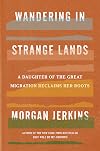
Morgan Jenkins' second book is a riveting exploration of her family roots. Her journey takes her first to the Low Country of S. Carolina and Georgia, the Gullah Geechee islands where the first enslaved people landed, now stolen acres dominated by wealthy white landowners. There, Jenkins learns about the medicinal roots and herbs that saved lives when no medical professionals served Black people. Next, to Louisiana and her Creole ancestors, the gens de couleur libre, free people of color, who show more ended up travelling with exiled Native Americans and becoming freedmen in Oklahoma. The law called the Dawes Rolls determined which of the Native tribespeople received land allotments, and if you were judged as more Black than Native and listed as such on the Rolls, you were denied tribal membership and the benefits of its privileges. Her last stop is LA, as some of her family had moved West for opportunities that again eluded Black people due to the virulent racism that was pervasive through the Rodney King area and has resulted in Blacks recently leaving California in large numbers. Jenkins' writing is scholarly yet folksy as she shares the delight and pain of her family members and the incredible knowledge gained from helpful strangers in each locale. It's a fruitful combination of travelogue and history lesson.
Quotes: "Black jazz artists infused their music with Black church styles from the rural South to make their music something the whites couldn't imitate."
"In 1641, Massachusetts became the first colony to recognize slavery."
"Creoles did not want to carry the weight of being Black in America. Perhaps they defined themselves as just Creole in order to not feel erased, even though the Louisiana French Creole they speak is a mixture of French and several West African languages, including Mande, Ewe, and Yoruba."
"He said, "You're Creole, you're Black. There is no white Creole. We're mixed people."
"We had to move to save our families, move to get better jobs and earn money, or move because we had this unwavering belief, despite endless oppression, that there was a different type of beauty to be found in another zip code."
"White people just could not leave Black people alone, and their constant meddling in our lives is one of the biggest reasons why we continue to be displaced, disrespected, disenfranchised, and murdered." show less
Quotes: "Black jazz artists infused their music with Black church styles from the rural South to make their music something the whites couldn't imitate."
"In 1641, Massachusetts became the first colony to recognize slavery."
"Creoles did not want to carry the weight of being Black in America. Perhaps they defined themselves as just Creole in order to not feel erased, even though the Louisiana French Creole they speak is a mixture of French and several West African languages, including Mande, Ewe, and Yoruba."
"He said, "You're Creole, you're Black. There is no white Creole. We're mixed people."
"We had to move to save our families, move to get better jobs and earn money, or move because we had this unwavering belief, despite endless oppression, that there was a different type of beauty to be found in another zip code."
"White people just could not leave Black people alone, and their constant meddling in our lives is one of the biggest reasons why we continue to be displaced, disrespected, disenfranchised, and murdered." show less
Lists
Awards


You May Also Like


Associated Authors
Statistics
- Works
- 4
- Also by
- 2
- Members
- 1,145
- Popularity
- #22,428
- Rating
- 3.9
- Reviews
- 41
- ISBNs
- 35
