
Ijeoma Oluo
Author of So You Want to Talk about Race
About the Author
Ijeoma Oluo is a writer and speaker whose work on race has been featured in the New York Times. Washington Post. Elle, the Guardian, and more. She has twice been named to The Root 100 and received the 2018 Feminist Humanist Award from the American Humanist Society.
Works by Ijeoma Oluo
Associated Works
Four Hundred Souls: A Community History of African America, 1619-2019 (2021) — Contributor — 1,157 copies, 25 reviews
White Fragility, Why Are All the Black Kids Sitting Together in the Cafeteria, So You Want to Talk about Race (2019) — Contributor — 4 copies
Tagged
Common Knowledge
- Canonical name
- Oluo, Ijeoma
- Birthdate
- 1980
- Gender
- female
- Education
- Western Washington University
- Awards and honors
- winner of the of the 2018 Feminist Humanist Award by the American Humanist Society
- Relationships
- West, Lindy (sister-in-law)
- Nationality
- USA
- Birthplace
- Denton, Texas, USA
- Places of residence
- Seattle, Washington, USA
- Map Location
- USA
Members
Reviews
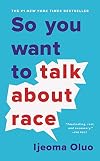
In So You Want to Talk About Race, Ijeoma Oluo addresses both white people and people of color as she introduces various topics you'll want to know as you talk about and desire to learn more about race. Starting with a definition of racism and then delving into topics such as intersectionality, police brutality, affirmative action, the school-to-prison pipeline, microaggressions, the model minority myth and several more, each chapter starts with a personal story illustrating the topic and show more then explores it more, giving you bullet points of ways to think about and respond to such behaviors.
This is an excellent introduction to a challenging topic. And don't get me wrong, the book is challenging as well. If you're a white person (like me), it probably challenges your assumptions at least once, and invites you to live with the discomfort and really think about issues that don't affect you, personally, on a day to day basis. This is a book I would reread several times before I really felt I could entirely grasp it, and even then I know in a sense I never can because as a white woman I do have privileged status in this country. I'm sure a person of color would have a completely different experience reading this book than I ever could. The paperback version of the book (and the e-book I read) has a discussion guide for the book, as well as guidelines to use when discussing. Highly recommended. show less
This is an excellent introduction to a challenging topic. And don't get me wrong, the book is challenging as well. If you're a white person (like me), it probably challenges your assumptions at least once, and invites you to live with the discomfort and really think about issues that don't affect you, personally, on a day to day basis. This is a book I would reread several times before I really felt I could entirely grasp it, and even then I know in a sense I never can because as a white woman I do have privileged status in this country. I'm sure a person of color would have a completely different experience reading this book than I ever could. The paperback version of the book (and the e-book I read) has a discussion guide for the book, as well as guidelines to use when discussing. Highly recommended. show less
For the past 4-5 years I have been on my own journey-- re-thinking the selective history I was taught, exploring the nature of what is called white supremacist culture, and examining my own attitudes toward racism. I have read many excellent books by both white and black authors. But SO YOU WANT TO TALK ABOUT RACE is the first time I feel like I have had a frank and open one-on-one talk with a black person about how SHE experiences racism and how HER life is impacted. She's puts it all right show more in your face and it’s intense. And I so admire her bravery in writing this book.
As a white person it was not always easy to read what Ijeoma Oluo writes, though I did not find myself disagreeing with her keen observations. In fact, I appreciated her directness and honesty. I felt I was getting a chance (for once) to be on the inside. Here is a black woman trying to explain the pain, hurt, rage, and all-consuming impact of being on the receiving end of racist America. And, once again, I realize that the country I live in is not the same country she lives in.
The book is as practical as it is instructional. Oluo offers clear and useful explanations on some basic concepts related to racism -- like micro aggressions, affirmative action, school-to-prison pipeline, cultural appropriation, privilege, and use of language. She shares specific and extremely vulnerable anecdotes from her own life. And she offers a list of suggested actions anti-racists can take to help change the racist culture of the United States.
Oluo is an exceptional writer and because she made the book story-based, this is very readable non-fiction. And quite an accomplishment! In a little over two hundred pages, she provides us with such personal, practical, and powerful overview that, for me, it is impossible to finish the book without feeling changed. I wish I could make this book required reading for every American. show less
As a white person it was not always easy to read what Ijeoma Oluo writes, though I did not find myself disagreeing with her keen observations. In fact, I appreciated her directness and honesty. I felt I was getting a chance (for once) to be on the inside. Here is a black woman trying to explain the pain, hurt, rage, and all-consuming impact of being on the receiving end of racist America. And, once again, I realize that the country I live in is not the same country she lives in.
The book is as practical as it is instructional. Oluo offers clear and useful explanations on some basic concepts related to racism -- like micro aggressions, affirmative action, school-to-prison pipeline, cultural appropriation, privilege, and use of language. She shares specific and extremely vulnerable anecdotes from her own life. And she offers a list of suggested actions anti-racists can take to help change the racist culture of the United States.
Oluo is an exceptional writer and because she made the book story-based, this is very readable non-fiction. And quite an accomplishment! In a little over two hundred pages, she provides us with such personal, practical, and powerful overview that, for me, it is impossible to finish the book without feeling changed. I wish I could make this book required reading for every American. show less
I should have read this sooner. Oluo writes in a way that makes the issue of race accessible and understandable. She doesn't shy away from sharing her own experiences or from challenging white people to make actual changes in their lives. She explains many topics that are often referenced in race conversations: white privilege, intersectionalism, minor aggressions, and the model minority myth.
It's heartbreaking to see where this country is at right now, but as the author says, it might feel show more sudden to some of us, but for black people, it has always been there. For them, it is frustrating to have to continuously explain that race never stopped being an issue. She includes a fascinating comparison to being in an abusive relationship. Black people are often expected to explain a history of racist treatment from someone based solely on the latest small incident.
The author's own mother is white, but she and her brother have an unavoidable separation from her because of their experiences. I can't imagine trying to explain the racism I was facing to my own mother. There's a story about a student "assaulting" staff members in a school and the harsh actions the administrators want to take to punish him. Then you realize the boy is only 5 and they are painting him as a dangerous criminal instead of finding ways to redirect his energy. When a child that young is being judged differently based on his race, it impacts his entire life and his opportunities. The racism in our country is systemic and it's going to take some serious changes before we see a difference.
I hope that I can recognize the ways I can make a difference. That I can begin to "check my privilege" and then do as she recommends, use that privilege to help others without it. I'm listening and praying that I will continue to learn and fight for change. show less
It's heartbreaking to see where this country is at right now, but as the author says, it might feel show more sudden to some of us, but for black people, it has always been there. For them, it is frustrating to have to continuously explain that race never stopped being an issue. She includes a fascinating comparison to being in an abusive relationship. Black people are often expected to explain a history of racist treatment from someone based solely on the latest small incident.
The author's own mother is white, but she and her brother have an unavoidable separation from her because of their experiences. I can't imagine trying to explain the racism I was facing to my own mother. There's a story about a student "assaulting" staff members in a school and the harsh actions the administrators want to take to punish him. Then you realize the boy is only 5 and they are painting him as a dangerous criminal instead of finding ways to redirect his energy. When a child that young is being judged differently based on his race, it impacts his entire life and his opportunities. The racism in our country is systemic and it's going to take some serious changes before we see a difference.
I hope that I can recognize the ways I can make a difference. That I can begin to "check my privilege" and then do as she recommends, use that privilege to help others without it. I'm listening and praying that I will continue to learn and fight for change. show less
The Price We Pay for Prejudice and Exclusion
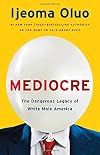
Oh man, just a glance at the cover of Ijeoma Oluo’s Mediocre will probably set off howls of protest from white men who have enjoyed and benefited from privilege their entire lives. That they can feel the subject of unjust assault points up one of the powerful aspects of privilege as a birthright: that it seems like the normal course of things and envelop those within it to such a degree they cannot see beyond it, nor, apparently, want to. Which show more is why books like Oluo’s are so important, because they chip away at the cocoon in which white men, and, yes, many white women, exist. Really, when you live in the nearly perfect world, why would you want to give it up? Unless, of course, you have a social conscious and the ability to see how much better America and the world could be with something like fair treatment and opportunity for all. Much in history and current events demonstrates not only how detrimental favoring one group over all others has been, many, many more than any writer could cram into one book, with the most recent and urgent being the spread and devastation of the coronavirus.
That said, Oluo does a good job of showing just how white privilege has deprived all of us of better lives by actively excluding non-whites and women from making contributions to our collective advancement. She touches on a wide swath of privilege in America. Among these are the obliteration of native peoples and the whitewashing of it in American history, a legal justice system that functions as yet another extension of slavery by continuing to oppress an entire American population, an educational system skewed for the benefit of whites, the active campaign from the beginning to keep women out of the workforce and at home, and more. It doesn’t take a genius to see the truth in what she reveals, and certainly not a genius to realize how much we all have sacrificed by actively promoting an unacceptable degree of mediocrity, giving advantage to the lesser in a group just because they are the right color and sex.
The right like to call acknowledging this problem of white restrictiveness and programs to address and rectify it as “awoke,” and efforts to end it by various epithets and simpleminded phrases designed to rally resistance to change. And so here you have this book, read that will be read mostly by those knowing there is a problem and mocked by the fewer readers who are happy in their cocoons.
The best advice, then, is for you to read Mediocre and ask yourself is anything Oluo highlights untrue. Keep an open mind and you might learn something. show less
Oh man, just a glance at the cover of Ijeoma Oluo’s Mediocre will probably set off howls of protest from white men who have enjoyed and benefited from privilege their entire lives. That they can feel the subject of unjust assault points up one of the powerful aspects of privilege as a birthright: that it seems like the normal course of things and envelop those within it to such a degree they cannot see beyond it, nor, apparently, want to. Which show more is why books like Oluo’s are so important, because they chip away at the cocoon in which white men, and, yes, many white women, exist. Really, when you live in the nearly perfect world, why would you want to give it up? Unless, of course, you have a social conscious and the ability to see how much better America and the world could be with something like fair treatment and opportunity for all. Much in history and current events demonstrates not only how detrimental favoring one group over all others has been, many, many more than any writer could cram into one book, with the most recent and urgent being the spread and devastation of the coronavirus.
That said, Oluo does a good job of showing just how white privilege has deprived all of us of better lives by actively excluding non-whites and women from making contributions to our collective advancement. She touches on a wide swath of privilege in America. Among these are the obliteration of native peoples and the whitewashing of it in American history, a legal justice system that functions as yet another extension of slavery by continuing to oppress an entire American population, an educational system skewed for the benefit of whites, the active campaign from the beginning to keep women out of the workforce and at home, and more. It doesn’t take a genius to see the truth in what she reveals, and certainly not a genius to realize how much we all have sacrificed by actively promoting an unacceptable degree of mediocrity, giving advantage to the lesser in a group just because they are the right color and sex.
The right like to call acknowledging this problem of white restrictiveness and programs to address and rectify it as “awoke,” and efforts to end it by various epithets and simpleminded phrases designed to rally resistance to change. And so here you have this book, read that will be read mostly by those knowing there is a problem and mocked by the fewer readers who are happy in their cocoons.
The best advice, then, is for you to read Mediocre and ask yourself is anything Oluo highlights untrue. Keep an open mind and you might learn something. show less
Lists
Awards


You May Also Like


Associated Authors
Statistics
- Works
- 6
- Also by
- 4
- Members
- 4,503
- Popularity
- #5,565
- Rating
- 4.4
- Reviews
- 139
- ISBNs
- 47
- Languages
- 3
- Favorited
- 6