
Mikki Kendall
Author of Hood Feminism: Notes from the Women That a Movement Forgot
About the Author
Image credit: author page - Penguin Random House Publishing
Works by Mikki Kendall
Amazons, Abolitionists, and Activists: A Graphic History of Women's Fight for Their Rights (2019) — Author — 260 copies, 10 reviews
Fate Space Toolkit 1 copy
Amazons, Abolitionists, and Activists: A Graphic History of Women's Fight for Their Rights (excerpt) 1 copy
COVID-19 Living in Lockdown — Actor — 1 copy
Associated Works
Fireside Magazine Issue 67, May 2019 — Contributor — 1 copy
March 9, 2020 - Mikki Kendall — Associated Name — 1 copy
Tagged
Common Knowledge
- Other names
- Kendall, Mikki
- Birthdate
- 1976-10-23
- Gender
- female
- Occupations
- author
human rights activitist
social critic - Nationality
- USA
- Birthplace
- Chicago, Illinois, USA
- Associated Place (for map)
- Illinois, USA
Members
Reviews
Amazons, abolitionists, and activists : a graphic history of women's fight for their rights by Mikki Kendall

This book failed me on so many levels. The breaking point was the fact that in the section on women's suffrage, there was zero mention that "..the first independent, self-governing nation to give all women citizens the vote was New Zealand in 1893" (https://www.nla.gov.au/digital-classr...). Especially given that so much time was given over to racist white women in the USA unwilling to include black people in their fight for suffrage. Note that I don't know what the Maori status as citizens show more was at the time.
If they missed that detail, how can I have faith that the rest of the book is giving a fair representation?
But before that, in a book that is supposed to be 'a graphic history of women's fights for their rights' why was so much space given to women rulers who had no interest in fighting for women's rights? Ones who saw themselves as exceptions, as men's minds in women's bodies, and a whole heap of other 'I'm not like other women' statements (which are in this book) show less
If they missed that detail, how can I have faith that the rest of the book is giving a fair representation?
But before that, in a book that is supposed to be 'a graphic history of women's fights for their rights' why was so much space given to women rulers who had no interest in fighting for women's rights? Ones who saw themselves as exceptions, as men's minds in women's bodies, and a whole heap of other 'I'm not like other women' statements (which are in this book) show less
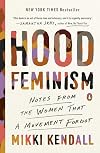
I LOVED this book when I was reading it. Shortly after finishing it I posted on Instagram "amazing! so necessary and authoritative and ferocious!" I then saw a criticism of this book that it was not written for Black women, or even for women well-versed in intersectional feminism, but for Well Meaning White Women, and I immediately began questioning everything about my experience of reading this book.
But picking it up again, reading the cover copy, the blurbs, flipping through and reading show more snippets of the essays, I think that this is exactly what the book sets out to be. It is a reminder of who mainstream feminism does and does not serve. A reminder that looking out for the most marginalized ALWAYS benefits us all. A reminder about intersections — particularly those dealing with skin color. If those aren't reminders you need, there might not be much new in this book for you. But some of us need those reminders periodically, and I found this effective on that front. show less
But picking it up again, reading the cover copy, the blurbs, flipping through and reading show more snippets of the essays, I think that this is exactly what the book sets out to be. It is a reminder of who mainstream feminism does and does not serve. A reminder that looking out for the most marginalized ALWAYS benefits us all. A reminder about intersections — particularly those dealing with skin color. If those aren't reminders you need, there might not be much new in this book for you. But some of us need those reminders periodically, and I found this effective on that front. show less
Amazons, abolitionists, and activists : a graphic history of women's fight for their rights by Mikki Kendall
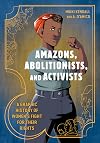
I'm a big fan of Mikki Kendall so when I saw she was involved with this graphic novel, I was all in. Covering women working for women either being in positions of power, activism, or excelling at arts and sports, it's really comprehensive. While a lot of the narrative focuses on the US and UK, it makes a real effort to be international by including sections where we look at women from around the world which is what really made it special to me. The artwork is great too, sometimes with 2-page show more inserts that encompass a lot of women, some of whom are famous and recognizable. I learned about a lot of women I didn't know about and that's a big win for me, as well as its final message asking what mantle each one of us is going to pick up to keep moving forward. show less
I have been very interested in reading this book since the first time I heard about it because I always want to learn more about intersectional feminism, and this turned out to be such an brilliant read that can’t be forgotten easily.
It’s nothing new that when we talk about mainstream feminism and see who are represented as feminist icons in the media, the image we are shown mostly is that of a cis white educated woman, and all the women of marginalized groups who are working tirelessly show more for their communities get sidelined. In this book, the author tries to talk extensively about various issues that disproportionately affect the Black community (mainly women) but never get talked about as important topics in the mainstream feminist circles. These are all issues that we are familiar with but the author does a great job of highlighting why they should be treated as feminist issues and how working to solve them will help women across all communities.
The chapters about hunger, poverty, homelessness, housing crisis and school to prison pipeline are harrowing to read because of the unique ways in which they effect Black women. The author rightly points out that in the wake of dwindling social safety nets and a government that treats poverty as a moral failing and not as a generational policy failure, poor Black women have to fend for themselves to ensure food and survival for their families. But when the methods they use for survival are unconventional, they are harassed and criminalized and shamed, by so called feminists and everyone else, without ever trying to examine the various factors like race, class and centuries of oppression which have to led to these circumstances. Even when Black women develop ways to cope and support themselves and their communities, they are not considered good enough because they don’t fit into the box that mainstream feminism has decided.
There are also many other issues that the author talks about which uniquely affect the Black community, and are largely ignored by white feminists because they don’t want to understand the intersectionality of issues - like how Black women are considered tougher and hence not considered worthy of emotional and mental support, how health issues like eating disorders go unnoticed because the bodies of Black women don’t fit into some mythical white supremacist body image, how Black children are forced to grow up and never given the chance to be innocent or worthy of second chances which wildly changes the kind of parenting decisions Black women have to make, how maternal mortality and general healthcare outcomes are worse for Black women even when they advocate for themselves - these are issues that need solutions and solidarity that are specific to the Black community and mainstream white feminists have to work within the communities, be allies, form alliances, forget about respectability politics and politeness, and have to amplify the work & the voices of the activists and feminists who have been working from within the communities for long periods of time because they understand the intricacies of the issues.
To conclude, I’m sure I have missed talking about many other things that the author compellingly discusses, giving both statistics and personal anecdotes and it was such an important and eye opening read. We don’t talk enough about intersectional feminism when talking about women’s issues and the author rightfully points out that sometimes, feminism has to be about solving the basic needs of women and not just lofty homogeneous ideals of equality which don’t actually work on the ground. I would highly recommend this book to anyone who likes reading about feminism or anyone who wants to know more about the work that is being/needs to be done in marginalized communities to solve systemic issues. What a book and I can’t wait to read more by the author. show less
It’s nothing new that when we talk about mainstream feminism and see who are represented as feminist icons in the media, the image we are shown mostly is that of a cis white educated woman, and all the women of marginalized groups who are working tirelessly show more for their communities get sidelined. In this book, the author tries to talk extensively about various issues that disproportionately affect the Black community (mainly women) but never get talked about as important topics in the mainstream feminist circles. These are all issues that we are familiar with but the author does a great job of highlighting why they should be treated as feminist issues and how working to solve them will help women across all communities.
The chapters about hunger, poverty, homelessness, housing crisis and school to prison pipeline are harrowing to read because of the unique ways in which they effect Black women. The author rightly points out that in the wake of dwindling social safety nets and a government that treats poverty as a moral failing and not as a generational policy failure, poor Black women have to fend for themselves to ensure food and survival for their families. But when the methods they use for survival are unconventional, they are harassed and criminalized and shamed, by so called feminists and everyone else, without ever trying to examine the various factors like race, class and centuries of oppression which have to led to these circumstances. Even when Black women develop ways to cope and support themselves and their communities, they are not considered good enough because they don’t fit into the box that mainstream feminism has decided.
There are also many other issues that the author talks about which uniquely affect the Black community, and are largely ignored by white feminists because they don’t want to understand the intersectionality of issues - like how Black women are considered tougher and hence not considered worthy of emotional and mental support, how health issues like eating disorders go unnoticed because the bodies of Black women don’t fit into some mythical white supremacist body image, how Black children are forced to grow up and never given the chance to be innocent or worthy of second chances which wildly changes the kind of parenting decisions Black women have to make, how maternal mortality and general healthcare outcomes are worse for Black women even when they advocate for themselves - these are issues that need solutions and solidarity that are specific to the Black community and mainstream white feminists have to work within the communities, be allies, form alliances, forget about respectability politics and politeness, and have to amplify the work & the voices of the activists and feminists who have been working from within the communities for long periods of time because they understand the intricacies of the issues.
To conclude, I’m sure I have missed talking about many other things that the author compellingly discusses, giving both statistics and personal anecdotes and it was such an important and eye opening read. We don’t talk enough about intersectional feminism when talking about women’s issues and the author rightfully points out that sometimes, feminism has to be about solving the basic needs of women and not just lofty homogeneous ideals of equality which don’t actually work on the ground. I would highly recommend this book to anyone who likes reading about feminism or anyone who wants to know more about the work that is being/needs to be done in marginalized communities to solve systemic issues. What a book and I can’t wait to read more by the author. show less
Lists
Awards


You May Also Like


Associated Authors
Statistics
- Works
- 7
- Also by
- 8
- Members
- 2,430
- Popularity
- #10,558
- Rating
- 4.2
- Reviews
- 45
- ISBNs
- 17
- Languages
- 2
- Favorited
- 3