
Daina Ramey Berry
Author of A Black Women's History of the United States
About the Author
Daina Ramey Berry is associate professor of history and African and African diaspora studies, and the Oliver H. Radkey Regents Fellow in History, at the University of Texas at Austin. An award-winning historian, she is also a Distinguished Lecturer for the Organization of American Historians. She show more lives in Austin, Texas. show less
Works by Daina Ramey Berry
The Price for Their Pound of Flesh: The Value of the Enslaved, from Womb to Grave, in the Building of a Nation (2017) 255 copies, 15 reviews
Associated Works
Four Hundred Souls: A Community History of African America, 1619-2019 (2021) — Contributor — 1,156 copies, 25 reviews
Tagged
Common Knowledge
Members
Reviews
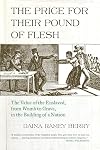
The price for their pound of flesh : the value of the enslaved from womb to grave in the building of a nation by Daina Ramey Berry
Rating: 4.5* of five
The Publisher Says: Groundbreaking look at slaves as commodities through every phase of life, from birth to death and beyond, in early America
In life and in death, slaves were commodities, their monetary value assigned based on their age, gender, health, and the demands of the market. The Price for Their Pound of Flesh is the first book to explore the economic value of enslaved people through every phase of their lives—including preconception, infancy, childhood, show more adolescence, adulthood, the senior years, and death—in the early American domestic slave trade. Covering the full "life cycle," historian Daina Ramey Berry shows the lengths to which enslavers would go to maximize profits and protect their investments. Illuminating "ghost values" or the prices placed on dead enslaved people, Berry explores the little-known domestic cadaver trade and traces the illicit sales of dead bodies to medical schools.
This book is the culmination of more than ten years of Berry's exhaustive research on enslaved values, drawing on data unearthed from sources such as slave-trading records, insurance policies, cemetery records, and life insurance policies. Writing with sensitivity and depth, she resurrects the voices of the enslaved and provides a rare window into enslaved peoples' experiences and thoughts, revealing how enslaved people recalled and responded to being appraised, bartered, and sold throughout the course of their lives. Reaching out from these pages, they compel the reader to bear witness to their stories, to see them as human beings, not merely commodities.
A profoundly humane look at an inhumane institution, The Price for Their Pound of Flesh will have a major impact how we think about slavery, reparations, capitalism, nineteenth-century medical education, and the value of life and death.
I RECEIVED A DRC FROM THE PUBLISHER VIA EDELWEISS+. THANK YOU.
My Review: Almost ten years ago, I read this appalling chronicle of the profit-and-loss mentality as applied to human beings.
It horrified and appalled me.
Cliometrics, the science of statistical analysis applied to databases of historical origin (eg, census data, tax rolls), is a discipline we've only developed in the past half-century or so. The wealth of data regarding enslaved people collected by different governments and organizations has made tracing the stark outlines of how the property impacted the economy; Author Daina Ramey Berry had to come along before someone got up the support and the courage...it definitely took a lot to do this work in a post-Ferguson/George Floyd world...to merge the statistical analysis of the past with the stories of the people who lived it.
No, it's not a breezy little bagatelle to read. It is a work of solid, enduring value to historians, and to historical researchers in economics and medicine and sociology and anthropology. I'm not going to apply the "a-word" to it, you know the one; it sends all y'all's wallets into torpor. Instead I'll note that the style's readable, there's flashes...rare, but there...of humor; and for the non-fiction snobs, there's no getting away from the fact that it's got deep roots in the primary and secondary sources.
There are quite a number of period illustrations to, um, liven things up. I found them somewhat distracting, which could be good when I was in a darker passage, or bad, if the illustration was cheerless. I'm glad on balance to have them included. show less
The Publisher Says: Groundbreaking look at slaves as commodities through every phase of life, from birth to death and beyond, in early America
In life and in death, slaves were commodities, their monetary value assigned based on their age, gender, health, and the demands of the market. The Price for Their Pound of Flesh is the first book to explore the economic value of enslaved people through every phase of their lives—including preconception, infancy, childhood, show more adolescence, adulthood, the senior years, and death—in the early American domestic slave trade. Covering the full "life cycle," historian Daina Ramey Berry shows the lengths to which enslavers would go to maximize profits and protect their investments. Illuminating "ghost values" or the prices placed on dead enslaved people, Berry explores the little-known domestic cadaver trade and traces the illicit sales of dead bodies to medical schools.
This book is the culmination of more than ten years of Berry's exhaustive research on enslaved values, drawing on data unearthed from sources such as slave-trading records, insurance policies, cemetery records, and life insurance policies. Writing with sensitivity and depth, she resurrects the voices of the enslaved and provides a rare window into enslaved peoples' experiences and thoughts, revealing how enslaved people recalled and responded to being appraised, bartered, and sold throughout the course of their lives. Reaching out from these pages, they compel the reader to bear witness to their stories, to see them as human beings, not merely commodities.
A profoundly humane look at an inhumane institution, The Price for Their Pound of Flesh will have a major impact how we think about slavery, reparations, capitalism, nineteenth-century medical education, and the value of life and death.
I RECEIVED A DRC FROM THE PUBLISHER VIA EDELWEISS+. THANK YOU.
My Review: Almost ten years ago, I read this appalling chronicle of the profit-and-loss mentality as applied to human beings.
It horrified and appalled me.
Cliometrics, the science of statistical analysis applied to databases of historical origin (eg, census data, tax rolls), is a discipline we've only developed in the past half-century or so. The wealth of data regarding enslaved people collected by different governments and organizations has made tracing the stark outlines of how the property impacted the economy; Author Daina Ramey Berry had to come along before someone got up the support and the courage...it definitely took a lot to do this work in a post-Ferguson/George Floyd world...to merge the statistical analysis of the past with the stories of the people who lived it.
No, it's not a breezy little bagatelle to read. It is a work of solid, enduring value to historians, and to historical researchers in economics and medicine and sociology and anthropology. I'm not going to apply the "a-word" to it, you know the one; it sends all y'all's wallets into torpor. Instead I'll note that the style's readable, there's flashes...rare, but there...of humor; and for the non-fiction snobs, there's no getting away from the fact that it's got deep roots in the primary and secondary sources.
There are quite a number of period illustrations to, um, liven things up. I found them somewhat distracting, which could be good when I was in a darker passage, or bad, if the illustration was cheerless. I'm glad on balance to have them included. show less
The price for their pound of flesh : the value of the enslaved from womb to grave in the building of a nation by Daina Ramey Berry
It took me some time to make it through this book, a remarkable work of scholarship, because I had to wrestle with many of the things I was learning. You see, it had never occurred to me,a white man with a master's degree in history, that of COURSE the slaves knew their economic worth. Now, I read Fogel & Engerman in grad school, but of course they didn't give two whits about the slaves' experiences. Dr. Berry's work should supplant or even replace theirs. Simply stunning work.
 This review was written for LibraryThing Early Reviewers.
The Price for Their Pound of Flesh: The Value of the Enslaved, from Womb to Grave, in the Building of a Nation by Daina Ramey Berry
A difficult yet necessary read.
(Full disclosure: I received a free electronic ARC for review through Edelweiss. Trigger warning for violence related to slavery, including racism and rape.)
"This book is written in a historical moment that historians have not yet named—a moment when black persons are disproportionately being killed and their deaths recorded. We witness the destruction of their lives via cell phones and dash and body cameras. The current voyeuristic gaze contains a level of show more brutality grounded in slavery. I call this moment the historic spectacle of black death: a chronicling of racial violence, a foreshadowing of medical exploitation, a rehearsing of ritualized lynching that took place in the postslavery era. African Americans and their allies respond by rejecting the devaluation of their bodies with the phrase #BlackLivesMatter. This book, however, argues that the historical record is clear: #BlackBodiesMatter."
Dear wife, they cannot sell the rose
Of love, that in my bosom glows.
Remember, as your tears may start,
They cannot sell th’ immortal part!
(A poem carved by an enslaved black man named Mingo, on the beam of his cell, as he awaited trial and execution.)
Whether it's some rando on a plantation tour, or a nationally syndicated talk show host, it always boggles my mind when people insist that some slaves were treated well: "like members of the family." I guess this means they weren't flogged on the daily, forced to live in unheated shacks, or forcibly bred? Idk, given that women and children were largely considered the property of their husbands and fathers; the first case of child abuse wasn't prosecuted in the United States until 1874; and marital rape wasn't a thing in all 50 states until 1993, forgive me if I don't find this argument terribly compelling. But I digress.
I may have received the same sanitized, whitewashed public high school education as everyone else - but it doesn't take an especially critical thinker to realize that, at the end of the day, slaves were property. In the eyes of the law, they were more somethings than someones: more like a television set or CD player (or, to use more contemporary examples, a banjo or a milk pan) than a human being. Some enslavers may have been less cruel than others, sure, but that doesn't negate the power differential one bit. To borrow an example from this text, kindly patriarch Dr. Carson may have provided medical care for his slaves, and worried about their well-being after his death, but if he had had a bad day, there was nothing preventing him from taking his frustrations out on one of them. As his property, it was well within his right to punch, whip, stab, shoot, starve, dismember, rape, or molest them. And therein lays the problem: when you dehumanize and objectify others, especially but not only by relegating them to the status of property, it excuses any and every abuse imaginable. Slaves exist at their captors' mercy.
This also ignores the economics of slavery: slaves were a costly investment. At their prime - adolescence, young adulthood, and adulthood - healthy slaves were typically valued at $15,000 or more in today's dollars. Only the very wealthy could afford to keep families intact, and more often than not, economic interests trumped basic human compassion. Husbands, wives, children, grandchildren, cousins, friends: bonds were ruthlessly and routinely severed, even by the most (comparatively) benevolent of enslavers, and sometimes even in death. #YesAllMasters.
In The Price for Their Pound of Flesh, Daina Ramey Berry explores the commodification of black bodies from the womb to the grave, with an emphasis on the views of the enslaved themselves (when possible). She examines four values: in addition to the expected appraised and market values (i.e. sale price), she considers the soul value of slaves - that is, their sense of self-worth, or the respect afforded them by their friends, family, and extended community - as well as their ghost value, or what their dead bodies - or pieces of them - might be worth to others. The discussion is structured by life cycle, with separate chapters devoted to "preconception" (i.e., wombs and fetuses), infancy and childhood (0-10 years), adolescence and young adulthood (11-22), adulthood (23-39), the elderly/superannuated (40+), and postmortem (dead bodies and body parts).
An associate professor of history and African and African diaspora studies, and the George W. Littlefield Fellow in American History, at the University of Texas at Austin, Dr. Berry challenges us to consider the economics of slavery - the cold hard numbers - through the eyes of the enslaved, who were all too aware of the value imposed on them. Unsurprisingly, enslaved blacks were worth more than free blacks, men were valued more highly them women (despite the latter's ability to birth new slaves at little/no cost to her enslaver), and those in the prime of their lives - adolescents, young adults, and adults - were valued more than children (in investment yet to come to fruition) and the elderly (an investment whose time had already passed).
Yet the details paint a much more complicated picture than you'd expect. For example, fertile women were valued more highly in the South, where large plantations necessitated a large work force. In contrast, Northern slave owners - who only had need of a few house slaves - saw "breeding wenches" as a liability. Appraised and market values, then, fluctuated over time and were closely tied to geography. A slave's skills, health, and obedience (as judged by the number of scars borne on his or her body) also influenced his or her value.
The exploitation of black bodies continued even in death. In her chapter on "ghost values," Dr. Berry explores the underground cadaver trade. Medical schools needed fresh bodies for dissection, but most states outlawed the practice unless done on the cadavers of criminals executed by the state (some of which were slaves). Despite the dearth of bodies, "between 1760 and 1876, medical students likely participated in anywhere from an estimated 4,200 to 8,000 dissections." Many of them were stolen, exhumed from fresh graves and trafficked up and down the Eastern seaboard, tracing some of the same routes used to traffic live human bodies. While some of the unlucky subjects were poor whites and free blacks, others belonged to slaves buried in public cemeteries, or those sold by their owners. Even in death, enslaved families did not have any say over what happened to the bodies of their loved ones.
While The Price for Their Pound of Flesh has an obvious academic bent, it's still accessible and engaging. I appreciate how Dr. Berry centers the testimony of slaves, allowing them to speak to us from beyond the grave wherever possible. Her case studies - of Nat Turner and the fallout of his rebellion; the John Brown raid at Harpers Ferry; Joice Heth, an enslaved woman displayed by P.T. Barnum as George Washington's former, 161-year-old nurse; and Grandison Harris and Chris Baker, enslaved men who labored as "resurrectionists," digging up the corpses of poor whites, free blacks, and other slaves for use in medical schools - are especially interesting and compelling.
On the downside, there is a fair amount of repetition, which bogs the discussion down at times. For example, the idea of ghost values often bleeds into earlier chapters; the mutilation and commodification of Nat Turner's corpse is covered in depth in Chapter 4, Midlife and Older Adulthood, which is a little distracting. There are also a few threads I wish Dr. Berry had followed up on; for instance, she notes that castration was sometimes employed as a punishment in lieu of execution, so the state could avoid paying reparations to the slave's owner. Yet such an option didn't exist for women: "We know from the Southampton rebellion that women were beaten and raped; one woman named Lucy was hanged. But what does the historical record reveal about gendered rates of compensation?" But we never learn the answer.
Likewise, the section on ghost values primarily focuses on grave robbing, with little mention of how slave owners might have personally capitalized on a slave's corpse. Did enslavers tip off grave robbers to a fresh body and look the other way when the grave was robbed for a price? Or did they sell bodies and parts openly, without any pretense? What did the law have to say about the disposal of enslaved people's corpses?
The Price for Their Pound of Flesh is a difficult read, but one that deftly dispenses with the myth that slavery is anything but an abhorrent institution that dehumanizes and objectifies those trapped within it. In other words, a very necessary read, even today. Especially today.
Table of Contents
Preface ix
Author’s Note xi
List of Images xv
INTRODUCTION - The Value of Life and Death 1
CHAPTER 1 - Preconception: Women and Future Increase 10
CHAPTER 2 - Infancy and Childhood 33
CHAPTER 3 - Adolescence, Young Adulthood, and Soul Values 58
CHAPTER 4 - Midlife and Older Adulthood 91
CHAPTER 5 - Elderly and Superannuated 129
CHAPTER 6 - Postmortem: Death and Ghost Values 148
EPILOGUE - The Afterlives of Slavery 194
Acknowledgments 198
Appendix A: A Timeline of Slavery, Medical History, and Black Bodies 202
Note on Sources: A History of People and Corpses 205
About the Author 213
Notes 215
Index 250
http://www.easyvegan.info/2017/01/25/the-price-for-their-pound-of-flesh-by-daina... show less
(Full disclosure: I received a free electronic ARC for review through Edelweiss. Trigger warning for violence related to slavery, including racism and rape.)
"This book is written in a historical moment that historians have not yet named—a moment when black persons are disproportionately being killed and their deaths recorded. We witness the destruction of their lives via cell phones and dash and body cameras. The current voyeuristic gaze contains a level of show more brutality grounded in slavery. I call this moment the historic spectacle of black death: a chronicling of racial violence, a foreshadowing of medical exploitation, a rehearsing of ritualized lynching that took place in the postslavery era. African Americans and their allies respond by rejecting the devaluation of their bodies with the phrase #BlackLivesMatter. This book, however, argues that the historical record is clear: #BlackBodiesMatter."
Dear wife, they cannot sell the rose
Of love, that in my bosom glows.
Remember, as your tears may start,
They cannot sell th’ immortal part!
(A poem carved by an enslaved black man named Mingo, on the beam of his cell, as he awaited trial and execution.)
Whether it's some rando on a plantation tour, or a nationally syndicated talk show host, it always boggles my mind when people insist that some slaves were treated well: "like members of the family." I guess this means they weren't flogged on the daily, forced to live in unheated shacks, or forcibly bred? Idk, given that women and children were largely considered the property of their husbands and fathers; the first case of child abuse wasn't prosecuted in the United States until 1874; and marital rape wasn't a thing in all 50 states until 1993, forgive me if I don't find this argument terribly compelling. But I digress.
I may have received the same sanitized, whitewashed public high school education as everyone else - but it doesn't take an especially critical thinker to realize that, at the end of the day, slaves were property. In the eyes of the law, they were more somethings than someones: more like a television set or CD player (or, to use more contemporary examples, a banjo or a milk pan) than a human being. Some enslavers may have been less cruel than others, sure, but that doesn't negate the power differential one bit. To borrow an example from this text, kindly patriarch Dr. Carson may have provided medical care for his slaves, and worried about their well-being after his death, but if he had had a bad day, there was nothing preventing him from taking his frustrations out on one of them. As his property, it was well within his right to punch, whip, stab, shoot, starve, dismember, rape, or molest them. And therein lays the problem: when you dehumanize and objectify others, especially but not only by relegating them to the status of property, it excuses any and every abuse imaginable. Slaves exist at their captors' mercy.
This also ignores the economics of slavery: slaves were a costly investment. At their prime - adolescence, young adulthood, and adulthood - healthy slaves were typically valued at $15,000 or more in today's dollars. Only the very wealthy could afford to keep families intact, and more often than not, economic interests trumped basic human compassion. Husbands, wives, children, grandchildren, cousins, friends: bonds were ruthlessly and routinely severed, even by the most (comparatively) benevolent of enslavers, and sometimes even in death. #YesAllMasters.
In The Price for Their Pound of Flesh, Daina Ramey Berry explores the commodification of black bodies from the womb to the grave, with an emphasis on the views of the enslaved themselves (when possible). She examines four values: in addition to the expected appraised and market values (i.e. sale price), she considers the soul value of slaves - that is, their sense of self-worth, or the respect afforded them by their friends, family, and extended community - as well as their ghost value, or what their dead bodies - or pieces of them - might be worth to others. The discussion is structured by life cycle, with separate chapters devoted to "preconception" (i.e., wombs and fetuses), infancy and childhood (0-10 years), adolescence and young adulthood (11-22), adulthood (23-39), the elderly/superannuated (40+), and postmortem (dead bodies and body parts).
An associate professor of history and African and African diaspora studies, and the George W. Littlefield Fellow in American History, at the University of Texas at Austin, Dr. Berry challenges us to consider the economics of slavery - the cold hard numbers - through the eyes of the enslaved, who were all too aware of the value imposed on them. Unsurprisingly, enslaved blacks were worth more than free blacks, men were valued more highly them women (despite the latter's ability to birth new slaves at little/no cost to her enslaver), and those in the prime of their lives - adolescents, young adults, and adults - were valued more than children (in investment yet to come to fruition) and the elderly (an investment whose time had already passed).
Yet the details paint a much more complicated picture than you'd expect. For example, fertile women were valued more highly in the South, where large plantations necessitated a large work force. In contrast, Northern slave owners - who only had need of a few house slaves - saw "breeding wenches" as a liability. Appraised and market values, then, fluctuated over time and were closely tied to geography. A slave's skills, health, and obedience (as judged by the number of scars borne on his or her body) also influenced his or her value.
The exploitation of black bodies continued even in death. In her chapter on "ghost values," Dr. Berry explores the underground cadaver trade. Medical schools needed fresh bodies for dissection, but most states outlawed the practice unless done on the cadavers of criminals executed by the state (some of which were slaves). Despite the dearth of bodies, "between 1760 and 1876, medical students likely participated in anywhere from an estimated 4,200 to 8,000 dissections." Many of them were stolen, exhumed from fresh graves and trafficked up and down the Eastern seaboard, tracing some of the same routes used to traffic live human bodies. While some of the unlucky subjects were poor whites and free blacks, others belonged to slaves buried in public cemeteries, or those sold by their owners. Even in death, enslaved families did not have any say over what happened to the bodies of their loved ones.
While The Price for Their Pound of Flesh has an obvious academic bent, it's still accessible and engaging. I appreciate how Dr. Berry centers the testimony of slaves, allowing them to speak to us from beyond the grave wherever possible. Her case studies - of Nat Turner and the fallout of his rebellion; the John Brown raid at Harpers Ferry; Joice Heth, an enslaved woman displayed by P.T. Barnum as George Washington's former, 161-year-old nurse; and Grandison Harris and Chris Baker, enslaved men who labored as "resurrectionists," digging up the corpses of poor whites, free blacks, and other slaves for use in medical schools - are especially interesting and compelling.
On the downside, there is a fair amount of repetition, which bogs the discussion down at times. For example, the idea of ghost values often bleeds into earlier chapters; the mutilation and commodification of Nat Turner's corpse is covered in depth in Chapter 4, Midlife and Older Adulthood, which is a little distracting. There are also a few threads I wish Dr. Berry had followed up on; for instance, she notes that castration was sometimes employed as a punishment in lieu of execution, so the state could avoid paying reparations to the slave's owner. Yet such an option didn't exist for women: "We know from the Southampton rebellion that women were beaten and raped; one woman named Lucy was hanged. But what does the historical record reveal about gendered rates of compensation?" But we never learn the answer.
Likewise, the section on ghost values primarily focuses on grave robbing, with little mention of how slave owners might have personally capitalized on a slave's corpse. Did enslavers tip off grave robbers to a fresh body and look the other way when the grave was robbed for a price? Or did they sell bodies and parts openly, without any pretense? What did the law have to say about the disposal of enslaved people's corpses?
The Price for Their Pound of Flesh is a difficult read, but one that deftly dispenses with the myth that slavery is anything but an abhorrent institution that dehumanizes and objectifies those trapped within it. In other words, a very necessary read, even today. Especially today.
Table of Contents
Preface ix
Author’s Note xi
List of Images xv
INTRODUCTION - The Value of Life and Death 1
CHAPTER 1 - Preconception: Women and Future Increase 10
CHAPTER 2 - Infancy and Childhood 33
CHAPTER 3 - Adolescence, Young Adulthood, and Soul Values 58
CHAPTER 4 - Midlife and Older Adulthood 91
CHAPTER 5 - Elderly and Superannuated 129
CHAPTER 6 - Postmortem: Death and Ghost Values 148
EPILOGUE - The Afterlives of Slavery 194
Acknowledgments 198
Appendix A: A Timeline of Slavery, Medical History, and Black Bodies 202
Note on Sources: A History of People and Corpses 205
About the Author 213
Notes 215
Index 250
http://www.easyvegan.info/2017/01/25/the-price-for-their-pound-of-flesh-by-daina... show less
The price for their pound of flesh : the value of the enslaved from womb to grave in the building of a nation by Daina Ramey Berry
This is a fascinating and disquieting account of the commodification of human life and human bodies. Although it would be naïve to expect a book about slavery to be anything but disquieting, Dr. Berry’s years of research into and study of the subject and her pairing of the voices of the enslaved juxtaposed with their assessed economic value and their, on average, higher sale price from gestation and into the grave and beyond made this privileged old white male reader quite squeamish—and show more deservedly so.
The economic value of the slave is given as a capital value, as a piece of farm machinery or an item of livestock would be assessed for property insurance. The arrangement of the book follows the life cycle of slaves from before birth, as the value of a “breeding Wench,” might be higher for a plantation owner wanting to expand his “stock,” and less for a slave owner wanting a domestic worker, where the enslaved woman’s child care duties would be an interruption of her household duties. This fluctuating valuation continues even after death when the mortal remain of the slave would be sold by the owner, or stolen by grave robbers for dissection, a growing trade in the 18th century and a well-established extralegal practice in the 19th. Berry coins the term “ghost value” for this postmortem trade for which medical colleges would pay up to $30 for a cadaver, or $881 in 2014 dollars. She uses another neologism for the value, or self-worth that the enslaved person put on him- or herself, their “soul value.” This was an unquantifiable value. show less
The economic value of the slave is given as a capital value, as a piece of farm machinery or an item of livestock would be assessed for property insurance. The arrangement of the book follows the life cycle of slaves from before birth, as the value of a “breeding Wench,” might be higher for a plantation owner wanting to expand his “stock,” and less for a slave owner wanting a domestic worker, where the enslaved woman’s child care duties would be an interruption of her household duties. This fluctuating valuation continues even after death when the mortal remain of the slave would be sold by the owner, or stolen by grave robbers for dissection, a growing trade in the 18th century and a well-established extralegal practice in the 19th. Berry coins the term “ghost value” for this postmortem trade for which medical colleges would pay up to $30 for a cadaver, or $881 in 2014 dollars. She uses another neologism for the value, or self-worth that the enslaved person put on him- or herself, their “soul value.” This was an unquantifiable value. show less
Lists
Awards


You May Also Like


Associated Authors
Statistics
- Works
- 7
- Also by
- 2
- Members
- 996
- Popularity
- #25,870
- Rating
- 4.2
- Reviews
- 20
- ISBNs
- 28
