
Erica Armstrong Dunbar
Author of Never Caught: The Washingtons' Relentless Pursuit of Their Runaway Slave, Ona Judge
About the Author
Erica Armstrong Dunbar is the Charles and Mary Beard Professor of History at Rutgers University. She has been the recipient of Ford, Mellon, and Social Science Research Council fellowships and is an Organization of American Historians Distinguished Lecturer.
Image credit: The author at the 2018 U.S. National Book Festival By Fuzheado - Own work, CC BY-SA 4.0, https://commons.wikimedia.org/w/index.php?curid=72311504
Series
Works by Erica Armstrong Dunbar
Never Caught: The Washingtons' Relentless Pursuit of Their Runaway Slave, Ona Judge (2017) 854 copies, 37 reviews
Never Caught: The Story of Ona Judge, George and Martha Washington's Courageous Slave Who Dared to Run Away {Young Readers Edition} (2019) 380 copies, 11 reviews
A Fragile Freedom: African American Women and Emancipation in the Antebellum City (2008) 13 copies, 1 review
Ida B. Wells (Rise. Risk. Remember. Incredible Stories of Courageous Black Women) (2025) 5 copies, 1 review
Tagged
Common Knowledge
- Birthdate
- 20th Century
- Gender
- female
- Nationality
- USA
- Associated Place (for map)
- USA
Members
Reviews
Never Caught: The Washingtons' Relentless Pursuit of Their Runaway Slave, Ona Judge by Erica Armstrong Dunbar
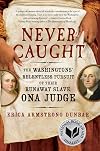
It may come as no surprise that, being wealthy Southern farmers, the Washington's held slaves. Hundreds of them worked the fields, kept the house, and served the owners of Mount Vernon long before our first President was elected. NEVER CAUGHT is the biography of one of those slaves, Ona Judge, and her experience serving Martha Washington until her escape near the end of George Washington's presidency in Philadelphia.
As the title would suggest, Ona was never apprehended and returned to her show more owners. Instead, she spent over 50 years as a fugitive in New Hampshire. This is amazing in and of itself, but the author details a few encounters she had, that lead to her near-capture. It was with the help of the many free black people in the North that Ona was allowed a chance at freedom, and secured her future.
One of the most eye-opening passages of the book was the length that the Washington family went in order to keep the enslaved people whom traveled with them to Philadelphia, the nation's capital at the time. There was a law in place that, if enslaved people were in the state for six consecutive months or more, they were automatically emancipated. The Washingtons were not interested in freeing their slaves, so they would travel back to Mount Vernon at least once every six months, under false pretenses like family visitation, so that the legal timer would be reset when they returned. While Washington was President, he even tried to blackmail other politicians to help in Ona's recovery. It certainly paints a few sinister and immoral brush strokes into my mental portrait of one of our most revered founding fathers.
NEVER CAUGHT is written unlike most non-fiction books, in that it reads more like an adventure story with some facts thrown in. It's the closest to a page-turner as I've found in a history text. It's not until the end of the book, when you get to the 26 pages of notes that you'd have any real indication of how deeply-researched this book is. That is, in my opinion, some serious authorial skill - making a little-known part of American history, which has deep implications to our current political climate, accessible.
This book was a refreshing and honest look at a man who many Americans revere as a faultless, almost mythological, figure. He is presented in a very human light, and not without a modicum of compassion, but certainly not offering justification or mollification. NEVER CAUGHT gives insight into George and Martha Washington as slaveholders, and how the spirit and determination of Ona Judge gave her the chance to experience freedom. It is enlightening and informative, and necessary reading. show less
As the title would suggest, Ona was never apprehended and returned to her show more owners. Instead, she spent over 50 years as a fugitive in New Hampshire. This is amazing in and of itself, but the author details a few encounters she had, that lead to her near-capture. It was with the help of the many free black people in the North that Ona was allowed a chance at freedom, and secured her future.
One of the most eye-opening passages of the book was the length that the Washington family went in order to keep the enslaved people whom traveled with them to Philadelphia, the nation's capital at the time. There was a law in place that, if enslaved people were in the state for six consecutive months or more, they were automatically emancipated. The Washingtons were not interested in freeing their slaves, so they would travel back to Mount Vernon at least once every six months, under false pretenses like family visitation, so that the legal timer would be reset when they returned. While Washington was President, he even tried to blackmail other politicians to help in Ona's recovery. It certainly paints a few sinister and immoral brush strokes into my mental portrait of one of our most revered founding fathers.
NEVER CAUGHT is written unlike most non-fiction books, in that it reads more like an adventure story with some facts thrown in. It's the closest to a page-turner as I've found in a history text. It's not until the end of the book, when you get to the 26 pages of notes that you'd have any real indication of how deeply-researched this book is. That is, in my opinion, some serious authorial skill - making a little-known part of American history, which has deep implications to our current political climate, accessible.
This book was a refreshing and honest look at a man who many Americans revere as a faultless, almost mythological, figure. He is presented in a very human light, and not without a modicum of compassion, but certainly not offering justification or mollification. NEVER CAUGHT gives insight into George and Martha Washington as slaveholders, and how the spirit and determination of Ona Judge gave her the chance to experience freedom. It is enlightening and informative, and necessary reading. show less
Never Caught, the Story of Ona Judge: George and Martha Washington's Courageous Slave Who Dared to Run Away; Young Readers Edition by Erica Armstrong Dunbar
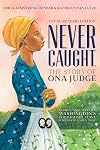
At the same time as the American Revolution was being fought and the Constitution being written and signed, the abolition movement was growing, as was the divide between Northern and Southern states. As George and Martha Washington reluctantly left their Virginia plantation, Mount Vernon, to spend time in New York and Philadelphia, the enslaved "servants" they brought with him got to see a world that looked different from their own, and were exposed to new ideas and new possibilities. Ona show more Judge, who was Martha's personal slave and seamstress, learned that if she stayed in Philadelphia for six months, she could be freed; but the Washingtons made sure all of the slaves they'd brought north with them made regular visits back to Mount Vernon to avoid this. Yet when Ona learned that Martha planned to give her to Martha's "spoiled brat" granddaughter Eliza Custis Law as a wedding present, she decided the risk of running away was worth it - and she succeeded. The cost was high - she never saw her family members again, she lived in poverty for most of her life, and she outlived her husband and children - but she had no regrets.
Front matter includes a timeline; back matter includes the newspaper interview with Ona, and a selected bibliography.
Quotes
The president and his wife had been brought up as children to believe that owning people of color was okay, just as it was acceptable that it was easier for them to achieve prosperity because they had been born into a prosperous family. What a child believes, however, often changes as new experiences and new people are encountered. (59)
To be a slave - even the favored slave of the wife of the president of the United States - was to be seen as inhuman. To be free was to be given your humanity back. (73)
Freedom did not erase racism. In fact, it could make racism worse. (124)
Ona's very escape proved that the idea of the "benevolent slave owner" was a lie. Enslavement was never preferable over freedom... (170) show less
Front matter includes a timeline; back matter includes the newspaper interview with Ona, and a selected bibliography.
Quotes
The president and his wife had been brought up as children to believe that owning people of color was okay, just as it was acceptable that it was easier for them to achieve prosperity because they had been born into a prosperous family. What a child believes, however, often changes as new experiences and new people are encountered. (59)
To be a slave - even the favored slave of the wife of the president of the United States - was to be seen as inhuman. To be free was to be given your humanity back. (73)
Freedom did not erase racism. In fact, it could make racism worse. (124)
Ona's very escape proved that the idea of the "benevolent slave owner" was a lie. Enslavement was never preferable over freedom... (170) show less
Never Caught: The Washingtons' Relentless Pursuit of Their Runaway Slave, Ona Judge by Erica Armstrong Dunbar
I went to a reading last night at the Harvard Bookstore to hear this historian and scholar discuss her book. She stumbled across the protagonist, Ona Judge, while researching "free Blacks" in Philadelphia, her hometown. On Ona hangs such a tale! Why did she run? Why were the First President and his wife so determined that Ona be captured? Where and how did she go? Dunbar has pieced together a story largely based upon two interviews Ona Judge gave in the 1840s, when she was in her 70s. Every show more element of this history was new to me: the persistence of slavery in the North, the fact that Black men took to the dangerous life of a seaman so frequently, once they were free, how the enslaved women were always at the mercy of the sexual urges of each white man in their household, and how being a "house slave" put NO ONE on easy street. If anyone white ever stupidly says to you, "Well, my family never owned any slaves", just give them this riveting chronicle. If it doesn't wake them up, let them go. show less
Never Caught: The Washingtons' Relentless Pursuit of Their Runaway Slave, Ona Judge by Erica Armstrong Dunbar
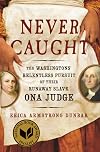
Ona Judge was born into slavery at Mount Vernon in the 1770s as the dower property of Martha Washington, wife of the first President of the United States. In the 1790s, aware that she was to be given as a "wedding gift" to Martha Washington's mercurial granddaughter, Judge made the decision to escape into freedom, drawing on the help and support of a network of free Blacks to escape hundreds of miles north to New Hampshire. While never legally emancipated, the certain embarrassment that any show more news stories about a former president chasing a fleeing slave would cause meant that Martha's descendants eventually left Judge in peace. Legally, however, Judge remained a fugitive for the rest of her life.
Neither George nor Martha Washington come off well in this account. It's long mystified me why so many Americans seem to imbue at least their earliest presidents with a kind of infallible aura. No such virtue is on display here. George Washington deliberately exploited loopholes in the law so that he would not have to manumit the people whom he enslaved, preferring to deny them their freedom rather than live within his means. His wife seems to have had no sense at all of the humanity of those whom she enslaved—even though it is likely that at least some of them were blood relatives of hers, given the long-standing pattern of white men raping Black women.
Ona Judge, however, was clearly a woman of immense bravery, determination, and will-power, and I wish that we knew more about her than can be gleaned from a handful of archival references and the two newspaper interviews which she gave towards the end of her life. Erica Armstrong Dunbar does an excellent job in presenting Judge as a full person amid a meticulous recreation of life for enslaved people in the late 18th-century United States. But there are points where Dunbar goes out too far on the evidentiary limb, telling us that Judge must have felt X or definitely thought Y when we've got absolutely no way of knowing. I found myself wishing either that Dunbar had edited this down into a tight, engaging magazine article or taken the extra step of fictionalisation and turned this into a novel. show less
Neither George nor Martha Washington come off well in this account. It's long mystified me why so many Americans seem to imbue at least their earliest presidents with a kind of infallible aura. No such virtue is on display here. George Washington deliberately exploited loopholes in the law so that he would not have to manumit the people whom he enslaved, preferring to deny them their freedom rather than live within his means. His wife seems to have had no sense at all of the humanity of those whom she enslaved—even though it is likely that at least some of them were blood relatives of hers, given the long-standing pattern of white men raping Black women.
Ona Judge, however, was clearly a woman of immense bravery, determination, and will-power, and I wish that we knew more about her than can be gleaned from a handful of archival references and the two newspaper interviews which she gave towards the end of her life. Erica Armstrong Dunbar does an excellent job in presenting Judge as a full person amid a meticulous recreation of life for enslaved people in the late 18th-century United States. But there are points where Dunbar goes out too far on the evidentiary limb, telling us that Judge must have felt X or definitely thought Y when we've got absolutely no way of knowing. I found myself wishing either that Dunbar had edited this down into a tight, engaging magazine article or taken the extra step of fictionalisation and turned this into a novel. show less
Lists
Awards


You May Also Like


Associated Authors
Statistics
- Works
- 7
- Members
- 1,487
- Popularity
- #17,271
- Rating
- 3.9
- Reviews
- 65
- ISBNs
- 37
