
Frederick Douglass (1818–1895)
Author of Narrative of the Life of Frederick Douglass, an American Slave
About the Author
Born a slave in Maryland in about 1817, Frederick Douglass never became accommodated to being held in bondage. He secretly learned to read, although slaves were prohibited from doing so. He fought back against a cruel slave-breaker and finally escaped to New Bedford, Massachusetts, in 1838 at about show more the age of 21. Despite the danger of being sent back to his owner if discovered, Douglass became an agent and eloquent orator for the Massachusetts Antislavery Society. He lectured extensively in both England and the United States. As an ex-slave, his words had tremendous impact on his listeners. In 1845 Douglass wrote his autobiography, Narrative of the Life of Frederick Douglass, which increased his fame. Concerned that he might be sent back to slavery, he went to Europe. He spent two years in England and Ireland speaking to antislavery groups. Douglass returned to the United States a free man and settled in Rochester, New York, where he founded a weekly newspaper, The North Star, in 1847. In the newspaper he wrote articles supporting the antislavery cause and the cause of human rights. He once wrote, "The lesson which [the American people] must learn, or neglect to do so at their own peril, is that Equal Manhood means Equal Rights, and further, that the American people must stand for each and all for each without respect to color or race." During the Civil War, Douglass worked for the Underground Railroad, the secret route of escape for slaves. He also helped recruit African-Americans soldiers for the Union army. After the war, he continued to write and to speak out against injustice. In addition to advocating education for freed slaves, he served in several government posts, including United States representative to Haiti. In 1855, a longer version of his autobiography appeared, and in 1895, the year of Douglass's death, a completed version was published. A best-seller in its own time, it has since become available in numerous editions and languages. (Bowker Author Biography) show less
Image credit: Photo circa 1865-1880
(Brady-Handy Photograph Collection,
Loc Prints and Photographs Division,
LC-DIG-cwpbh-05089)
(Brady-Handy Photograph Collection,
Loc Prints and Photographs Division,
LC-DIG-cwpbh-05089)
Series
Works by Frederick Douglass
Frederick Douglass : Autobiographies : Narrative of the Life of Frederick Douglass, an American Slave / My Bondage and My Freedom / Life and Times of Frederick Douglass (Library… (1994) 645 copies, 3 reviews
Narrative of the Life of Frederick Douglass, an American Slave {and} Incidents in the Life of a Slave Girl (1845) 372 copies, 5 reviews
Escape from Slavery: The Boyhood of Frederick Douglass in His Own Words (1993) 125 copies, 2 reviews
Frederick Douglass on Slavery and the Civil War: Selections from His Writings (Dover Thrift Editions) (2003) 90 copies
Up from Slavery / The Souls of Black Folk / Narrative of the Life of Frederick Douglass (2007) — Contributor — 85 copies
Narrative of the life of Frederick Douglass : authoritative text, contexts, criticism (1997) 51 copies, 1 review
Narrative of the Life of Frederick Douglass and Other Works (Word Cloud Classics) (2014) 43 copies, 1 review
Narrative of the Life of Frederick Douglass, an American Slave, Written by Himself (Annotated): Bicentennial Edition with Douglass Family Histories and Images (2017) 35 copies, 1 review
Narrative of the life of Frederick Douglass, an American slave, and other writings (2008) 35 copies, 2 reviews
The Life and Writings of Frederick Douglass, Volume 5: Supplementary Volume: 1844-1860 (1975) 14 copies
The Life and Writings of Frederick Douglass, Vol 2: The pre-civil war decade (The Life an Writing of Frederick Douglass) (1975) 13 copies
John Brown, an Address by Frederick Douglass at the fourteenth anniversary of Storer College (2013) 12 copies
The Life and Writings of Frederick Douglass, Four Volumes (Early Years, Pre-Civil War Decade, The Civil War, Reconstruction and After) (1950) 11 copies
Delphi Complete Works of Frederick Douglass (Illustrated) (Delphi Series Ten Book 21) (2019) 10 copies
Abolition Fanaticism in New York Speech of a Runaway Slave from Baltimore, at an Abolition Meeting in New York, Held May 11, 1847 (1847) 10 copies
Narrative of the Life of FREDERICK DOUGLASS (Annotated): An American Slave. Written by Himself. (A Narrative of Frederick Douglass, Autobiography. A Book About Slavery - from… (2021) 9 copies, 1 review
Narrative of the Life of Frederick Douglass and The Fourth of July Speech: Illustrated Black History Collection (2020) 7 copies
The Frederick Douglass Papers. Series One: Speeches, Debates, and Interviews. Volume 1: 1841-1846 (1979) 7 copies
THE MOST COMPLETE COLLECTION OF WRITTEN WORKS & SPEECHES BY FREDERICK DOUGLASS [Newly Illustrated] (2011) 6 copies
Thoughts for all time : selections from speeches and writings as shown on the wall of the Visitor Center (1996) 6 copies
The Mind and Heart of Frederick Douglass: Escerpts from Speeches of the Great Negro Orator (1968) 5 copies
Relato da vida de Frederick Douglass - Um escravo americano (Em Portugues do Brasil) (2019) 5 copies
Life and Times of Frederick Douglass (Annotated): This Edition Includes John Brown Address at Harper's Ferry (2019) 5 copies
The Frederick Douglass Papers. Series Two: Autobiographical Writings. Volume 1: Narrative (1999) 4 copies
En amerikansk slaves beretning samt Tale holdt ved afsløringen af Emancipation Monument rejst til ære for Abraham Lincoln i Lincoln Park, Washington, D.C. 14. april… (2011) 4 copies, 1 review
Lighter moments 4 copies
Frederick Douglass: Autobiographies (LOA #68): Narrative of the Life / My Bondage and My Freedom / Life and Times (2023) 3 copies
The Frederick Douglass Papers. Series One: Speeches, Debates, and Interviews. Volume 2: 1847-1854 (1982) 3 copies
Avenida Brasil : curso básico de Português para estrangeiros [1] Glossar Portugiesisch - Deutsch (1992) 3 copies
The Autobiography of Frederick Douglass: Narrative of the Life of Frederick Douglass an American Slave (2017) 3 copies
Frederick Douglass Selected Works Collection: Narrative of the Life of Frederick Douglass, My Bondage and My Freedom (2024) 3 copies
Oration, delivered in Corinthian hall, Rochester — Author — 3 copies
One of the Noblest, Wisest, and Best Men: Frederick Douglass on Abraham Lincoln, 1880, a Manuscript from the Gilder Lehrman Collection (2008) 2 copies
Frederick Douglass Collection: Narrative of the Life of Frederick Douglass and My Bondage and My Freedom (2018) 2 copies
The Frederick Douglass Papers. Series One: Speeches, Debates, and Interviews. Volume 5: 1881-1895 (1992) 1 copy
Fredrick Douglass 1 copy
ENFIN LIBRE 1 copy
Eleven Minutes 1 copy
Breeding for Profit: American Slave Breeding (True Stories of American Slave Breeding by those that Witnessed) (2015) 1 copy
The Most Complete Collection of the Writings and Speeches of Frederick Douglass [Illustrated] 1 copy
Civil War 1 copy
Från träldom till frihet : Negerslafven Fredrik Douglass lefnadsöden skildrade af honom själf 1 copy
مذكرات عبد أمريكي 1 copy
Pioneers of Black Liberation: Writings from the Early African-American Champions of Civil Rights and Racial Equality (2013) 1 copy
Narrative of the Life of Frederick Douglass, An American Slave Narrative: (Large Print) (RGV Classic) (2018) 1 copy
Classics Illustrated (Acclaim), No. SG61: Narrative of the Life of Frederick Douglass & Notes (1845) 1 copy
A Narrativa da Vida de Frederick Douglass, um Escravo Americano: Escrita por ele mesmo (Portuguese Edition) (2016) 1 copy
Frederick Douglas - Ultimate Collection: Complete Autobiographies, Speeches & Letters: My Escape from Slavery, Narrative of the Life of Frederick Douglass, My Bondage and My… (2018) 1 copy, 1 review
Thirty Years a Slave - From Bondage to Freedom: With an Introductory Chapter by Frederick Douglass (2009) 1 copy
Associated Works
The Norton Anthology of African American Literature {2nd edition} (2003) — Contributor, some editions — 283 copies, 2 reviews
The Civil War: The First Year Told By Those Who Lived It (2011) — Contributor — 269 copies, 2 reviews
The Heath Anthology of American Literature, Volume 1 (1990) — Contributor, some editions — 252 copies, 1 review
The Graphic Canon, Vol. 2: From "Kubla Khan" to the Brontë Sisters to The Picture of Dorian Gray (2012) — Contributor — 213 copies, 2 reviews
The American Intellectual Tradition, A Sourcebook: Volume I, 1630-1865 (1989) — Contributor, some editions — 204 copies
The Civil War: The Second Year Told By Those Who Lived It (2012) — Contributor — 194 copies, 1 review
The Lincoln Anthology: Great Writers on His Life and Legacy from 1860 to Now (2008) — Contributor — 172 copies, 1 review
The Civil War: The Third Year Told by Those Who Lived It (2013) — Contributor — 169 copies, 1 review
American Antislavery Writings: Colonial Beginnings to Emancipation (2012) — Contributor — 147 copies
Black on White: Black Writers on What It Means to Be White (1998) — Contributor — 129 copies, 2 reviews
Reconstruction: Voices from America's First Great Struggle for Racial Equality (2018) — Contributor — 125 copies, 1 review
The Glorious American Essay: One Hundred Essays from Colonial Times to the Present (2020) — Contributor — 119 copies
Growing Up in Slavery: Stories of Young Slaves as Told by Themselves (2005) — Contributor — 104 copies, 1 review
Black Ink: Literary Legends on the Peril, Power, and Pleasure of Reading and Writing (2018) — Contributor — 95 copies
Three Classic African-American Novels: The Heroic Slave; Clotel; Our Nig (1990) — Contributor — 93 copies
The Heath Anthology of American Literature, Concise Edition (2003) — Contributor — 73 copies, 1 review
Twelve Years a Slave / Life of Frederick Douglass / Uncle Tom's Cabin / Life of Josiah Henson / Incidents in the Life of a Slave Girl / Up From Slavery (2014) — Contributor — 70 copies
Recognize!: An Anthology Honoring and Amplifying Black Life (2021) — Contributor — 55 copies, 3 reviews
I Was Born a Slave: An Anthology of Classic Slave Narratives: Volume One, 1770-1849 (1999) — Contributor — 50 copies
Before Harlem: An Anthology of African American Literature from the Long Nineteenth Century (2016) — Contributor — 12 copies
Slave Narrative (Six Pack 3) - Incidents in the Life of a Slave Girl, 22 Years a Slave, Escaping in a Chest, Up from Slavery, My Escape from Slavery and Reconstruction (2015) — Contributor — 5 copies
African American Literature: A Concise Anthology from Frederick Douglass to Toni Morrison (2009) — Contributor — 1 copy
Tagged
Common Knowledge
- Canonical name
- Douglass, Frederick
- Legal name
- Bailey, Frederick Augustus Washington (born)
- Birthdate
- 1818-02-14
- Date of death
- 1895-02-20
- Gender
- male
- Education
- self-educated
- Occupations
- field hand
house servant
politician
laborer
autobiographer
consul (show all 7)
newspaper publisher - Relationships
- Dunbar, Paul Laurence (friend)
- Nationality
- USA
- Birthplace
- Tuckahoe, Maryland, USA
- Places of residence
- Talbot County, Maryland, USA
Baltimore, Maryland, USA
New Bedford, Massachusetts, USA
Washington, D.C., USA
Tuckahoe, Maryland, USA - Place of death
- Washington, D.C., USA
- Burial location
- Mount Hope Cemetery, Rochester, New York, USA
- Map Location
- USA
Members
Discussions
What Are You Reading the Week of 14 February 2015? in What Are You Reading Now? (February 2015)
Reviews
Narrative of the Life of Frederick Douglass: An American Slave, Written by Himself (Bedford Series in History and Culture) by Frederick Douglass

I decided to read “The Narrative of Frederick Douglass after visiting Drayton Plantation in Charleston, S.C. I was most amazed by the resilience of the slaves, the strategies many used to survive such horror. Douglass must have been a genius, writing his narrative in 1845, 20 years before The Emancipation. His writing is eloquent. At times, I was moved to tears and had to put the book down. His words painted a real picture of what enslavement was like. Overall, the most important and show more valuable features of this book to me are: what I learned about the nature of slavery’s emotional abuse and psychological control of humans, treated as animals and, ultimately, the emotional strength and determination of slaves which allowed many to survive and make us into the people we are today. So inspirational in helping me understand where I came from and who I am. show less
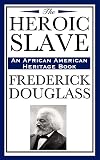
Douglass writes scenes that feel like they're from a stage play. The characters speak in lengthy soliloquies. There is nothing real about the encounters between characters. Coincidence plays a high part in plot movement. In spite of all these qualities The Heroic Slave is a moving read. Douglass's dignity and outrage both combine to elevate the language to an eloquence that marks all his writing. But I could almost feel Douglass's growing frustration with the constraints of fiction as he show more wrote. Because by writing "fiction" he is by definition writing something "not true," his writing about the horrors of slavery sometimes grows more insistent and melodramatic. I believe he discovered even as he wrote this book that fiction a less useful means for him to expose to readers the truth about slavery, and The Heroic Slave remained his only fictional work. show less
Narrative of the Life of Frederick Douglass, an American Slave (Barnes & Noble Classics) by Frederick Douglass
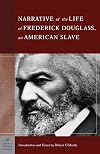
This is a gloriously well-written memoir, but certainly not an easy one. Douglass’s narrative of his life as a slave includes accounts of humans being viciously flayed, sometimes for over 12hrs at a time; women being repeatedly raped to satiate lust and/or create new slaves; children starved, families deliberately separated, men murdered, and religion used as a justification for the worst imaginable atrocities. A world in which overseers viewed their reputation for cruelty as a competitive show more advantage, and in which even the most high-minded, virtuous masters were eventually corrupted into immorality by the collective operation of peer pressure, greed, and specious moral justifications. Hardest of all to stomach: accepting that every word of this horror show is actual, lived history.
As certain cultural forces seem intent on “whitewashing” our country’s racial history, feel like eyewitness accounts of our nation’s history serve a more critical purpose than ever before. In fact, I’d speculate that if we were to assign this short, accessible text to high school students (as we should), these are just a few of the positive outcomes we might anticipate:
• Student complaints about the high quality of prose being demanded of them by their English teachers would be forcibly moderated, as students were exposed to the astonishing level of literacy and rhetoric achieved by this self-taught, disenfranchised, enslaved son of immigrants.
• Students might cast a more skeptical eye on the motives of politicians and their fundraisers (“masters of business”) intent upon degrading the public education system - for, as Douglass notes: “If you teach [someone] how to read, there would be no keeping him. It would forever unfit him to be a slave. He would at once become unmanageable, and of no value to his master.” In other words, uneducated workers make more docile and manageable workers – and who stands to profit from that?
• Douglass’s horrific tales of atrocities that he personally experienced would profoundly discredit attempts by modern politicians to cast slavery as some sort of inconvenient memory rather than a moral atrocity; also ongoing attempts to cast slaveholders as “good men who were merely abiding by the norms of their times” – because, I’m sorry, but you simply don’t get to be called a good man if condone the rape, starvation, and torture of ANY living thing – certainly not a fellow human.
• Students might notice that while our country has certainly made enormous headways since the days of slavery, some of the iniquities that Douglass highlights this account – black workers being blackballed by white workers afraid of competition, the willingness of supposedly devout people and institutions to condone irreligious deeds – continue today. show less
As certain cultural forces seem intent on “whitewashing” our country’s racial history, feel like eyewitness accounts of our nation’s history serve a more critical purpose than ever before. In fact, I’d speculate that if we were to assign this short, accessible text to high school students (as we should), these are just a few of the positive outcomes we might anticipate:
• Student complaints about the high quality of prose being demanded of them by their English teachers would be forcibly moderated, as students were exposed to the astonishing level of literacy and rhetoric achieved by this self-taught, disenfranchised, enslaved son of immigrants.
• Students might cast a more skeptical eye on the motives of politicians and their fundraisers (“masters of business”) intent upon degrading the public education system - for, as Douglass notes: “If you teach [someone] how to read, there would be no keeping him. It would forever unfit him to be a slave. He would at once become unmanageable, and of no value to his master.” In other words, uneducated workers make more docile and manageable workers – and who stands to profit from that?
• Douglass’s horrific tales of atrocities that he personally experienced would profoundly discredit attempts by modern politicians to cast slavery as some sort of inconvenient memory rather than a moral atrocity; also ongoing attempts to cast slaveholders as “good men who were merely abiding by the norms of their times” – because, I’m sorry, but you simply don’t get to be called a good man if condone the rape, starvation, and torture of ANY living thing – certainly not a fellow human.
• Students might notice that while our country has certainly made enormous headways since the days of slavery, some of the iniquities that Douglass highlights this account – black workers being blackballed by white workers afraid of competition, the willingness of supposedly devout people and institutions to condone irreligious deeds – continue today. show less

Hakim Adi's selection of writings about Britain (mainly England) by Black people of the late 18th to the early 20th century is carefully chosen to establish their presence in all strata of society at a date earlier than certain commentators would wish it known. There's a thread showing the development of abolitionism into emancipation into supremacism to justify the continued exploitation of Black Labour, and Adi's selections often strongly resonate with current issues, such as the Windrush show more scandal and the illegal Tory Rwanda deportation policy.
There's also many fascinating glimpses into Georgian and Victorian society and, while varying degrees of racism are noted, many of the impressions of visitors to the island are positive about their reception and of the culture in which they find themselves.
A nuanced and balanced selection of historical testimonies which I thoroughly enjoyed reading, not least the short section on John Ocansey's day trip from Liverpool to my home town of Southport 🏖️ show less
There's also many fascinating glimpses into Georgian and Victorian society and, while varying degrees of racism are noted, many of the impressions of visitors to the island are positive about their reception and of the culture in which they find themselves.
A nuanced and balanced selection of historical testimonies which I thoroughly enjoyed reading, not least the short section on John Ocansey's day trip from Liverpool to my home town of Southport 🏖️ show less
Lists
Read These Too (1)
A Reading List (1)
Autodidacts (1)
Out of Copyright (1)
Five star books (1)
Awards


You May Also Like


Associated Authors
Statistics
- Works
- 201
- Also by
- 40
- Members
- 18,496
- Popularity
- #1,186
- Rating
- 4.1
- Reviews
- 195
- ISBNs
- 893
- Languages
- 16
- Favorited
- 24


