
Olaudah Equiano (1745–1797)
Author of The Life of Olaudah Equiano
About the Author
One of the most remarkable figures in the history of African literature is Olaudah Equiano, who is also known as Gustavus Vassa. He was born into an Igbo community that he called Essaka, or most probably Isieke, in what is now the Ihiala local government area of the Anambra State of Nigeria. show more Captured and sold into slavery at the age of 12, he was taken to the West Indies. There he was resold to a British naval officer who helped him acquire an education and some nautical experience. When Equiano was beginning to consider himself a free man, he was unexpectedly sold again to a Philadelphia trader, for whom he undertook business trips to the West Indies. These trips enabled Equiano to make enough money to buy his freedom. As a free man, Equiano continued his vocation as a sailor and traveled extensively in Europe, Africa, and the Americas. He eventually joined the abolitionist movement in Great Britain, where he settled down as a respectable African European, married an English woman, and had two children. Equiano moved in high social circles, wrote and spoke frequently in various public media on abolition issues, and petitioned the British Parliament on the evils of slavery. But by far his most important contribution to the abolition movement was his autobiography, The Interesting Narrative of the Life of Olaudah Equiano or Gustavus Vassa, the African, Written by Himself, which was first published in London in 1789. Not only was The Interesting Narrative an eloquent diatribe against the evils of slavery; its early chapters presented a thoroughly idyllic picture of the culture, social life, and geographical environment of his Igbo home, which he describes as "a charming, fruitful vale." In the autobiography, Equiano refutes the detractions of African peoples in European and oriental literatures, religious dogmas, and philosophical and ethnographic writings. He emerges as the first spokesperson of pan-African nationalism, black consciousness, negritude, and a whole range of other contemporary African and African American intellectual movements. The Narrative is a mixture of factual ethnographic and historical details, debatable assertions, and outright fallacies; it is as mystifying as it is revealing. So powerful is its eighteenth-century rhetorical style that, despite the assertion in its title that it was "written by himself," few of his white contemporaries were convinced that such elegant prose and humane sentiments could be written by an African. (Bowker Author Biography) show less
Image credit: This image is in the public domain because its copyright has expired in the United States and those countries with a copyright term of life of the author plus 100 years or less.
Works by Olaudah Equiano
The Interesting Narrative and Other Writings: Revised Edition (Penguin Classics) (1789) 736 copies, 6 reviews
The Interesting Narrative of the Life of Olaudah Equiano: Written by Himself (1789) 401 copies, 7 reviews
The Interesting Narrative in the Life of Olaudah Equiano [Norton Critical Edition] (1789) 149 copies, 1 review
Rare Antique Americanization of Edward Bok Memoir Lakeside Press Sealed [Hardcover] Olaudah Equiano 2 copies
Gustavus vasas liv: berättat av honom själv — Author — 1 copy
The African 1 copy
Associated Works
The Norton Anthology of African American Literature {2nd edition} (2003) — Contributor, some editions — 283 copies, 2 reviews
The Heath Anthology of American Literature, Volume 1 (1990) — Contributor, some editions — 252 copies, 1 review
American Antislavery Writings: Colonial Beginnings to Emancipation (2012) — Contributor — 147 copies
Growing Up in Slavery: Stories of Young Slaves as Told by Themselves (2005) — Contributor — 104 copies, 1 review
The Penguin Book of Migration Literature: Departures, Arrivals, Generations, Returns (2019) — Contributor — 96 copies
The Heath Anthology of American Literature, Concise Edition (2003) — Contributor — 73 copies, 1 review
Black Writers of the Founding Era: A Library of America Anthology (2023) — Contributor — 63 copies, 1 review
I Was Born a Slave: An Anthology of Classic Slave Narratives: Volume One, 1770-1849 (1999) — Contributor — 50 copies
Unchained Voices: An Anthology of Black Authors in the English-Speaking World of the Eighteenth Century (1996) — Contributor — 46 copies
Lapham's Quarterly - Lines of Work: Volume IV, Number 2, Spring 2011 (2011) — Contributor — 32 copies, 2 reviews
Early Black British Writing: Olaudah Equiano, Mary Prince, and Others (2003) — Contributor — 10 copies
Slave Narrative (Six Pack 1)- Uncle Tom's Cabin, Twelve Years A Slave, Journal of a Residence on a Georgian Plantation, The Life of Olaudah Equiano, William H. Furness and Captain… (2015) — Contributor — 8 copies
Voices From Slavery: The Life and Beliefs of African Slaves in Britain (2007) — Contributor — 2 copies, 1 review
Tagged
Common Knowledge
- Other names
- Vassa, Gustavus
Weston, Gustavus - Birthdate
- 1745
- Date of death
- 1797-03-31
- Gender
- male
- Occupations
- writer
merchant
explorer
sailor
plantation manager - Organizations
- Sons of Africa
London Corresponding Society - Short biography
- Olaudah Equiano was born to a noble family in the African kingdom of Benin in approximately 1745. While still a boy, he was kidnapped, enslaved, and taken to the West Indies. For the next eleven years he traveled from the Americas to Europe and through the Caribbean. After being freed in 1767, he moved to London, became an active abolitionist, and helped freed slaves settle in the African colony of Sierra Leone. In 1789 he published his best-selling autobiography, The Interesting Narrative of the Life of Olaudah Equiano, or Gustavus Vassa, the African which served as the model for many later writers, including Frederick Douglass. He died in England in 1797, survived by his wife, Susanna Cullen, and their two daughters. [from The Kidnapped Prince , an adaptation of his autobiography by Ann Cameron. (2005)]
- Nationality
- Kingdom of Dahomey
- Birthplace
- Essaka, Kingdom of Dahomey (now Nigeria)
- Places of residence
- Essaka, Kingdom of Dahomey (now Nigeria)
Barbados
Virginia, British America
London, England
Montserrat
Mosquito Coast (show all 8)
Soham, Cambridgeshire, England, UK
Sierra Leone - Place of death
- London, England, UK
- Burial location
- Whitefield's Tabernacle, Tottenham Court Road, London, England, UK
- Map Location
- Nigeria
Members
Reviews

Hakim Adi's selection of writings about Britain (mainly England) by Black people of the late 18th to the early 20th century is carefully chosen to establish their presence in all strata of society at a date earlier than certain commentators would wish it known. There's a thread showing the development of abolitionism into emancipation into supremacism to justify the continued exploitation of Black Labour, and Adi's selections often strongly resonate with current issues, such as the Windrush show more scandal and the illegal Tory Rwanda deportation policy.
There's also many fascinating glimpses into Georgian and Victorian society and, while varying degrees of racism are noted, many of the impressions of visitors to the island are positive about their reception and of the culture in which they find themselves.
A nuanced and balanced selection of historical testimonies which I thoroughly enjoyed reading, not least the short section on John Ocansey's day trip from Liverpool to my home town of Southport 🏖️ show less
There's also many fascinating glimpses into Georgian and Victorian society and, while varying degrees of racism are noted, many of the impressions of visitors to the island are positive about their reception and of the culture in which they find themselves.
A nuanced and balanced selection of historical testimonies which I thoroughly enjoyed reading, not least the short section on John Ocansey's day trip from Liverpool to my home town of Southport 🏖️ show less
The Interesting Narrative of the Life of Olaudah Equiano: Written by Himself (The Bedford Series in History and Culture) by Olaudah Equiano
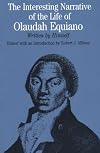
Okay... This was brilliant. Equiano (Vassa?) is an utterly fascinating historical figure and man, and his story is thrilling. Sold into slavery as a child, Equiano, by the providence of God, was spared the brutality of North American farm labor and consequential obscurity. Bought by a smattering of high-ranking British captains, Equiano was taught to read, allowed to practice Christianity, and generally live a very free life (not counting some particularly bad owners), eventually buying his show more freedom and continuing his journey around the world. He charts his adventures traveling the world, the many injustices he must encounter, and the Christianity that was his bedrock. You just feel with him.
There is a lot of heartbreak in this account. How could there not? One thing I will recognize informs my high esteem of this story is the religious tone it uses. Equiano was what we'd call a true believer, and it's one more layer of interesting given the broader imperialism of Christianity. I implore the less religiously inclined to not fault him; I think it is incredibly dehumanizing to question this too much. His Christianity gave him strength, gave him a strong moral compass to battle for the abolition of the slave trade, and allowed him many great connections in a world where being black could be so tenuous. His Christianity was truly beautiful and made me yearn for church once more—Crazy how good, upstanding people can convert, no?
On a side note, the more I read 18th-century writing, the more I really think the period of the 1770s-1790s was the pinnacle of the written English word. The command of language Equiano employs is exquisite and commanding, and really quite arresting when relaying his life. It's a bit similar to how Du Bois' utilizes language a century later—both men show the "mental faculties" so many suppose they can't have on account of their skin.
Anyway, I can't recommend this enough. It's just... amazing. Equiano is a fascinating man caught between two worlds, and while his 18th-century Britishness can raise an eyebrow sometimes, it illustrates the breadth of thought of the period. I just spent an hour on York University's webpage about him, and I can't get enough. Ah! show less
There is a lot of heartbreak in this account. How could there not? One thing I will recognize informs my high esteem of this story is the religious tone it uses. Equiano was what we'd call a true believer, and it's one more layer of interesting given the broader imperialism of Christianity. I implore the less religiously inclined to not fault him; I think it is incredibly dehumanizing to question this too much. His Christianity gave him strength, gave him a strong moral compass to battle for the abolition of the slave trade, and allowed him many great connections in a world where being black could be so tenuous. His Christianity was truly beautiful and made me yearn for church once more—Crazy how good, upstanding people can convert, no?
On a side note, the more I read 18th-century writing, the more I really think the period of the 1770s-1790s was the pinnacle of the written English word. The command of language Equiano employs is exquisite and commanding, and really quite arresting when relaying his life. It's a bit similar to how Du Bois' utilizes language a century later—both men show the "mental faculties" so many suppose they can't have on account of their skin.
Anyway, I can't recommend this enough. It's just... amazing. Equiano is a fascinating man caught between two worlds, and while his 18th-century Britishness can raise an eyebrow sometimes, it illustrates the breadth of thought of the period. I just spent an hour on York University's webpage about him, and I can't get enough. Ah! show less
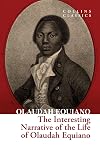
A remarkable book, both because of the vivid and startling story Olaudah Equiano relates, and because for an 18th century text by a writer steeped in the King James' version of the Bible it is an unusually easy read. About half the book covers Equiano's experience of slavery, from capture as a child, movement across Africa to the coast where he was put on a slave ship, the Atlantic crossing, then his experiences in North America and the Caribbean as an enslaved man. Equiano seems not opposed show more to slavery, but felt that as practised in his homeland it was more humane than by white men in the plantations, and he campaigned for the Altantic trade to stop (which would be achieved a decade after his death). When he is finally able to free himself from chattel slavery, by paying his owner £40 (perhaps £6,000 in 2024), he is clearly safer in the West, yet kept returning by ship to the Americas, each time to be abused as if still a slave. I ended up asking myself why on earth he kept returning, once he'd worked out that the typical white man involved in a the plantation economy was likely to be a scoundrel. I am probably less interested in ships and marine engagements than the author was, although he opens a window on the maritime and trading world of the period, and the expedition to Spitzbergen in search of the North East Passage is fascinating. show less
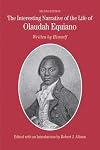
By his own account, former slave Olaudah Equiano (known in life by the slave name Gustavus Vassa; born c. 1745) was an exemplary success. Kidnapped from his native West Africa at the age of an eleven, he endured the horrific Middle Passage. He made himself indispensable to several different owners and was finally able to purchase his freedom in 1766. Blessed with an entrepreneurial spirit and an unshakable belief that he was especially favored by God, Olaudah navigated several layers of show more society in the West Indies and England, and even sailed to Greenland as part of an Arctic expedition. During one period of his life, he was even involved in the slave trade, but eventually he became known as an early abolitionist. He married a British woman and had two children with her before passing away in 1797.
The Interesting Narrative is, well, interesting as a historical document, but I have to admit I found Olaudah rather insufferable. I found this passage, from Chapter 9, remarkable (it also gives an idea of Olaudah's writing style): "With a light heart I bade Montserrat farewell, and never had my feet on it since; and with it I bade adieu to the sound of the cruel whip, and all other dreadful instruments of torture; adieu to the offensive sight of the violated chastity of the sable females, which has too often accosted my eyes; adieu to oppressions (although to me less severe than most of my countrymen); and adieu to the angry howling, dashing surfs. I wished for a grateful and thankful heart to praise the Lord God on high for all his mercies!" As long as he doesn't have to see bad things happening, he's ok about it.
I don't recommend this book to the casual reader. show less
The Interesting Narrative is, well, interesting as a historical document, but I have to admit I found Olaudah rather insufferable. I found this passage, from Chapter 9, remarkable (it also gives an idea of Olaudah's writing style): "With a light heart I bade Montserrat farewell, and never had my feet on it since; and with it I bade adieu to the sound of the cruel whip, and all other dreadful instruments of torture; adieu to the offensive sight of the violated chastity of the sable females, which has too often accosted my eyes; adieu to oppressions (although to me less severe than most of my countrymen); and adieu to the angry howling, dashing surfs. I wished for a grateful and thankful heart to praise the Lord God on high for all his mercies!" As long as he doesn't have to see bad things happening, he's ok about it.
I don't recommend this book to the casual reader. show less
Lists
Awards


You May Also Like


Associated Authors
Statistics
- Works
- 29
- Also by
- 22
- Members
- 4,524
- Popularity
- #5,545
- Rating
- 3.7
- Reviews
- 44
- ISBNs
- 163
- Languages
- 5
- Favorited
- 2