
Henry Louis Gates, Jr.
Author of The Classic Slave Narratives
About the Author
Henry Louis Gates, Jr. was born on September 16, 1950, in Keyser, West Virginia. He received a degree in history from Yale University in 1973 and a Ph.D. from Clare College, which is part of the University of Cambridge in 1979. He is a leading scholar of African-American literature, history, and show more culture. He began working on the Black Periodical Literature Project, which uncovered lost literary works published in 1800s. He rediscovered what is believed to be the first novel published by an African-American in the United States. He republished the 1859 work by Harriet E. Wilson, entitled Our Nig, in 1983. He has written numerous books including Colored People: A Memoir, A Chronology of African-American History, The Future of the Race, Black Literature and Literary Theory, and The Signifying Monkey: Towards a Theory of Afro-American Literary Criticism. In 1991, he became the head of the African-American studies department at Harvard University. He is now the director of the W.E.B. Du Bois Institute for African and African-American Research at the university. He wrote and produced several documentaries including Wonders of the African World, America Beyond the Color Line, and African American Lives. He has also hosted PBS programs such as Wonders of the African World, Black in Latin America, and Finding Your Roots. (Bowker Author Biography) show less
Image credit: Henry Louis Gates Jr. speaks on a panel about race in America on the Understanding Our World Stage at the National Book Festival, August 31, 2019. Photo by Shawn Miller/Library of Congress.
Series
Works by Henry Louis Gates, Jr.
Stony the Road: Reconstruction, White Supremacy, and the Rise of Jim Crow (2019) 709 copies, 8 reviews
The Norton Anthology of African American Literature {1st edition, complete} (1996) 344 copies, 1 review
The Norton Anthology of African American Literature {2nd edition} (2003) — Editor — 283 copies, 2 reviews
The African-American Century : How Black Americans Have Shaped Our Country (2000) 239 copies, 1 review
Dark Sky Rising: Reconstruction and the Dawn of Jim Crow (Scholastic Focus) (2018) 221 copies, 10 reviews
The Trials of Phillis Wheatley: America's First Black Poet and Her Encounters with the Founding Fathers (2010) 168 copies, 1 review
Africana, the Encyclopedia of the African and African American Experience (1999) — Editor — 168 copies, 1 review
Africana, the Encyclopedia of the African and African American Experience. The Concise Desk Reference (2003) — Editor — 105 copies, 1 review
The Portable Nineteenth-Century African American Women Writers (2017) — Editor — 77 copies, 1 review
In Search of Our Roots: How 19 Extraordinary African Americans Reclaimed Their Past (2009) 76 copies, 2 reviews
Bearing Witness: Selections from African-American Autobiography in the Twentieth Century (1991) — Editor — 74 copies
In Search of Hannah Crafts: Critical Essays on the Bondwoman's Narrative (2003) — Editor; Introduction — 59 copies
The Image of the Black in Western Art IV: From the American Revolution to World War 1, Part 2 (Black Models and White Myths) (1989) — Editor — 53 copies
Who’s Black and Why?: A Hidden Chapter from the Eighteenth-Century Invention of Race (2022) 51 copies
Africana: The Encyclopedia of the African and African-American Experience (5 Volume Set) (2005) 27 copies
The New Negro: Readings on Race, Representation, and African American Culture, 1892-1938 (2007) — Editor — 24 copies, 1 review
Africa: Its Geography, People, and Products [and] Africa: Its Place in Modern History (1977) — Editor — 10 copies
Black is the color of the cosmos : essays on Afro-American literature and culture, 1942-1981 (1982) 9 copies
The Schomburg Library of Nineteenth-Century Black Women Writers : 10-Volume Supplement Set (1992) — Editor — 2 copies
Joséphine Baker et la revue nègre: lithographie du tumulte noir par Paul Colin, Paris, 1927 (1998) 2 copies
Finding your roots. Season 8 1 copy
Associated Works
The Autobiography of an Ex-Colored Man (1912) — Introduction, some editions — 1,691 copies, 29 reviews
Dust Tracks on a Road (1942) — Series editor, afterword, bibliogrpaphy, & chronology, some editions — 1,593 copies, 19 reviews
Tell My Horse: Voodoo and Life in Haiti and Jamaica (1938) — Series editor, afterword, bibliography, & chronology, some editions — 915 copies, 14 reviews
Our Nig; or, Sketches from the Life of a Free Black (1859) — Editor, some editions; Introduction, some editions — 757 copies, 7 reviews
My Bookstore: Writers Celebrate Their Favorite Places to Browse, Read, and Shop (2012) — Contributor — 622 copies, 16 reviews
Zora Neale Hurston: The Complete Stories (1995) — Afterword, some editions; Introduction, some editions — 570 copies, 2 reviews
Moses, Man of the Mountain (1939) — Series editor, afterword, bibliography, & chronology, some editions — 550 copies, 3 reviews
Jonah's Gourd Vine (1934) — Series editor, afterword, bibliography, & chronology, some editions — 523 copies, 6 reviews
God's Trombones: Seven Negro Sermons in Verse (1927) — Editor, some editions — 473 copies, 7 reviews
Booknotes: America's Finest Authors on Reading, Writing, and the Power of Ideas (1997) — Contributor — 458 copies, 5 reviews
The Kidnapped Prince: The Life of Olaudah Equiano (2005) — Introduction, some editions — 412 copies, 4 reviews
Seraph on the Suwanee (1948) — Series editor, afterword, bibliography, & chronology, some editions — 369 copies, 4 reviews
You Don't Know Us Negroes and Other Essays (2022) — Editor, some editions; Introduction, some editions — 269 copies, 4 reviews
Mule Bone: A Comedy of Negro Life in Three Acts (1991) — Editor, introduction, some editions — 206 copies, 1 review
Strange Fruit, Volume I: Uncelebrated Narratives from Black History (2014) — Foreword — 190 copies, 12 reviews
The Autobiography of W. E. B. Du Bois: A Soliloquy on Viewing My Life from the Last Decade of Its First Century (1968) — Editor, some editions — 162 copies, 1 review
Dusk of Dawn: An Essay Toward an Autobiography of a Race Concept (1975) — Editor, some editions — 159 copies
The Light of Truth: Writings of an Anti-Lynching Crusader (2014) — Editor, some editions — 149 copies
Common Culture: Reading and Writing About American Popular Culture (1995) — Contributor, some editions — 99 copies
The Portable Frederick Douglass (Penguin Classics) (2016) — Editor, some editions — 95 copies, 2 reviews
Black Ink: Literary Legends on the Peril, Power, and Pleasure of Reading and Writing (2018) — Contributor — 95 copies
Understanding Jim Crow: Using Racist Memorabilia to Teach Tolerance and Promote Social Justice (2015) — Foreword — 93 copies, 1 review
The Columbia Reader on Lesbians & Gay Men in Media, Society, and Politics (1999) — Contributor — 86 copies
Black Male: Representations of Masculinity in Contemporary American Art (1994) — Contributor — 71 copies, 1 review
The Black Flame Trilogy Book One: The Ordeal of Mansart (2007) — Editor, some editions — 19 copies, 1 review
The Black Flame Trilogy Book Two: Mansart Builds a School (1976) — Editor, some editions — 19 copies
Black Folk Then and Now: An Essay in the History and Sociology of the Negro Race (1939) — Editor, some editions — 18 copies
In His Own Voice: Dramatic & Other Uncollected Works of Paul Lawrence Dunbar (2002) — Foreword — 17 copies
The Works of William Sanders Scarborough: Black Classicist and Race Leader (2006) — Foreword — 9 copies
Reconstruction: America After the Civil War [2019 TV series] — Narrator — 4 copies
Li'L Dan the Drummer Boy: A Civil War Story — Foreword — 1 copy
Tagged
Common Knowledge
- Canonical name
- Gates, Henry Louis, Jr.
- Legal name
- Gates, Henry Louis, Jr.
- Other names
- Gates, Skip
- Birthdate
- 1950-09-16
- Gender
- male
- Education
- Clare College, University of Cambridge (MA|1974|Ph.D|1979)
Yale University (BA|1973)
Potomac State College
Piedmont High School - Occupations
- professor
literary critic
writer
editor - Organizations
- Harvard University
Duke University
Cornell
Yale University
Council of Foreign Relations
Sons of the American Revolution (2006) - Awards and honors
- MacArthur Fellowship (1981)
National Humanities Medal (1998)
American Academy of Arts and Letters (Literature ∙ 1999)
American Philosophical Society (1995)
American Academy of Arts & Sciences (1993)
American Antiquarian Society (1989) (show all 33)
British Academy (Corresponding Fellow, 2021)
Jefferson Lecture (2002)
Vilcek Prize for Excellence in Literary Scholarship (2025)
Barry Prize (2024)
Spingarn Medal (2024)
PEN America Audible Literary Service Award (2021)
PBS Beacon Award (2021)
Historical Society of Pennsylvania Founders Award (2021)
Don M. Randel Award (2021)
National Institute of Social Sciences Gold Medal (2021)
Boston Public Library Literary Light Award (2022)
Webby Award (2020, 2021, 2022)
Peabody Award (2013)
NAACP Image Award (2013)
Carl Sandburg Literary Award (2004)
National World War Two Museum American Spirit Award (2021)
Muhammad Ali Voice of Humanity Award (2020)
Louis Stokes Community Visionary Award (2020)
Chicago Tribune Literary Award (2019)
Anne Izard Storytellers' Choice Award (2019)
Association for the Study of African American Life and History Inaugural Luminary Award (2021)
Alfred I. duPont–Columbia University Award (2015, 2020)
Anisfield-Wolf Book Award (1989)
Golden Plate Award, Academy of Achievement (1995)
American Book Award (1989)
Andrew W. Mellon Foundation Fellowship (1973)
Phi Beta Kappa (1972) - Relationships
- Iglesias Utset, Marial (spouse)
- Nationality
- USA
- Birthplace
- Keyser, West Virginia, USA
- Places of residence
- Piedmont, West Virginia, USA
Kilimatinde, Tanzania
Ithaca, New York, USA
Durham, North Carolina, USA
Cambridge, Massachusetts, USA - Associated Place (for map)
- USA
Members
Reviews
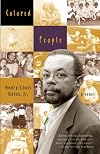
This memoir of childhood and very early adulthood is just excellent. Dr. Gates grew up in a small mill town in West Virginia, where he experienced the beginnings of desegregation without the trauma it generated in so many places. His childhood was a happy one, his colored community a strong support system for its members, and most of his interactions with white people unremarkable. When he left home for college in 1968, his horizons broadened and he became more worldly, more political, yet show more realized that the struggle for a full recognition of black identity ironically brought about a certain loss of the feeling of safety and security he had known growing up. This is a thought-provoking read from the perspective of a very thoughtful man. Highly recommended. show less
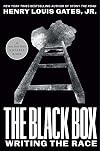
Gates writes in a scholarly, but never dry; informative, but never preachy style that gives his subject matter an excellent showing. This book is assembled from lectures Dr. Gates has given (revised many times over the years, in accordance with the kind of questions and responses he has received from his students) in his Harvard African American Studies courses. The basic topic here is how the Black community has worked toward acceptance, respect and identity through literacy and the arts show more since before the Civil War. He discusses in some detail the many sides of the question "What does it mean to BE African American?", including the evolution of both Black and white stances over time, and the moral, ethical and political complexities of even trying to define what it means to be Black in America. Exceptional, and difficult to process with a single reading, through no fault of the author. Highly recommended. show less
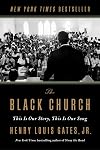
Summary: A companion to the PBS series on the Black church, surveying the history of the Black church in America focusing on why the church has been central to the life of the Black community.
It is practically a truism that the church is a central reality in the Black experience, and in many local Black communities. But why is this? That is the question Henry Louis Gates, Jr. explores in this companion book to the PBS series, “The Black Church.”
Gates contends that the church provided a show more place, first of all, for refuge that they could control and find hope in, when they were brutally subjugated, whether under slavery or Jim Crow. It was fascinating to learn that Spanish Catholics were responsible for the conversions of African-Americans in the early year. Gates also traces the elements of Muslim and traditional religion back to the earliest periods of slavery. White slave owners often were resistant to the conversion of slaves, recognizing the liberating messages to be found in the Bible, Anglican missionaries persuaded slave owners that it could be taught in ways that supported their control. What they couldn’t control was the introduction of music and dance that reflected African heritage, including the “ring shout.” and the unofficial gatherings in “praise houses.”
Many more were converted during the Methodist revivals, but when they were segregated, Richard Allen led the formation of the African Methodist Episcopal Church. Gates traces how the church increasingly becomes a force for abolition (and in the case of Nat Turner, for uprising) as well as renewal. Then with Emancipation, Gates traces the further growth of the churches of the south, the Bible women who helped spread the gospel message, and the “frenzy” that presaged Pentecostalism, which can trace its roots to William Joseph Seymour, who led the Azusa Street Revival, leading to the formation of the Church of God in Christ, the largest Pentecostal body in the country.
With the Great Migration, Gates traces the growth of Black megachurches in northern cities like Chicago and New York, and with this the growth of Gospel music from the Fisk Jubilee Singers to Shirley Caesar, and from this, the development of blues and jazz. This led to a growing tension between the music of the clubs on Saturday night and the music of the service on Sunday. The music and the preaching connected, nowhere more so than at the March on Washington when Mahalia Jackson urged King to “Tell them about the dream.” The gospel songs morphed into the freedom songs and sustained the movement.
Gates describes the period after King as a “crisis of faith.” He describes the development of Black theology, including the thought of James Cone and Jeremiah Wright, the pastor who married the Obamas. He observes the tensions around sexuality, the patriarchy of churches, and the conservatism around LGBT sexuality as well as the ascent of Blacks into the middle class, the ministries of pastors like T.D. Jakes, and how Obama revealed different sides of the church to white America. The chapter concludes with the resurgent white nationalism and Black Lives Matter.
An epilogue traces Gates own religious journey, his decision to join the church, his fear of “the Frenzy” and speaking in tongues and the irony that DuBois “Talented Tenth” were less the missionaries of culture than the Pentecostals, whose experience did more to uplift the marginalized. Gates observes that the experiential connected back to the African religious roots of the Black church.
Gates gives us an account of the Black church that both traces history, and enriches it with interviews with contemporary Black leaders and celebrities, drawing out the experienced significance of the Black church. The church that emerges is one of refuge and uplift, of resistance and abolition, of music and ecstasy. It is also an account of Black pulpiteers and the development of Black preaching from Richard Allen to Raphael Warnock. The appendix includes an alphabetical list of the great preachers of the Black church. Here as throughout this history, Gates does not confine his account to Christians, including figures like Malcolm X.
As history, this is more popular survey than an in-depth, scholarly account. Gates use of contemporary interviews interlaced with his history creates a much richer sense of the ethos of the Black church than one might get from a historical narrative alone. He captures the various ways the church epitomizes and sustains the identity of Black people. He concludes:
“It’s that cultural space in which we can bathe freely in the comfort of our cultural heritage, and where everyone knows their part, and where everyone can judge everyone else’s performance of their part, often out loud with amens, with laughter, with clapping, or with silence. It’s the space that we created to find rest in the gathering storm. It’s the place where we made a way out of no way. It’s the place to which, after a long and wearisome journey, we can return and find rest before we cross the river. It’s the place we call, simply, the Black Church” (p. 219). show less
It is practically a truism that the church is a central reality in the Black experience, and in many local Black communities. But why is this? That is the question Henry Louis Gates, Jr. explores in this companion book to the PBS series, “The Black Church.”
Gates contends that the church provided a show more place, first of all, for refuge that they could control and find hope in, when they were brutally subjugated, whether under slavery or Jim Crow. It was fascinating to learn that Spanish Catholics were responsible for the conversions of African-Americans in the early year. Gates also traces the elements of Muslim and traditional religion back to the earliest periods of slavery. White slave owners often were resistant to the conversion of slaves, recognizing the liberating messages to be found in the Bible, Anglican missionaries persuaded slave owners that it could be taught in ways that supported their control. What they couldn’t control was the introduction of music and dance that reflected African heritage, including the “ring shout.” and the unofficial gatherings in “praise houses.”
Many more were converted during the Methodist revivals, but when they were segregated, Richard Allen led the formation of the African Methodist Episcopal Church. Gates traces how the church increasingly becomes a force for abolition (and in the case of Nat Turner, for uprising) as well as renewal. Then with Emancipation, Gates traces the further growth of the churches of the south, the Bible women who helped spread the gospel message, and the “frenzy” that presaged Pentecostalism, which can trace its roots to William Joseph Seymour, who led the Azusa Street Revival, leading to the formation of the Church of God in Christ, the largest Pentecostal body in the country.
With the Great Migration, Gates traces the growth of Black megachurches in northern cities like Chicago and New York, and with this the growth of Gospel music from the Fisk Jubilee Singers to Shirley Caesar, and from this, the development of blues and jazz. This led to a growing tension between the music of the clubs on Saturday night and the music of the service on Sunday. The music and the preaching connected, nowhere more so than at the March on Washington when Mahalia Jackson urged King to “Tell them about the dream.” The gospel songs morphed into the freedom songs and sustained the movement.
Gates describes the period after King as a “crisis of faith.” He describes the development of Black theology, including the thought of James Cone and Jeremiah Wright, the pastor who married the Obamas. He observes the tensions around sexuality, the patriarchy of churches, and the conservatism around LGBT sexuality as well as the ascent of Blacks into the middle class, the ministries of pastors like T.D. Jakes, and how Obama revealed different sides of the church to white America. The chapter concludes with the resurgent white nationalism and Black Lives Matter.
An epilogue traces Gates own religious journey, his decision to join the church, his fear of “the Frenzy” and speaking in tongues and the irony that DuBois “Talented Tenth” were less the missionaries of culture than the Pentecostals, whose experience did more to uplift the marginalized. Gates observes that the experiential connected back to the African religious roots of the Black church.
Gates gives us an account of the Black church that both traces history, and enriches it with interviews with contemporary Black leaders and celebrities, drawing out the experienced significance of the Black church. The church that emerges is one of refuge and uplift, of resistance and abolition, of music and ecstasy. It is also an account of Black pulpiteers and the development of Black preaching from Richard Allen to Raphael Warnock. The appendix includes an alphabetical list of the great preachers of the Black church. Here as throughout this history, Gates does not confine his account to Christians, including figures like Malcolm X.
As history, this is more popular survey than an in-depth, scholarly account. Gates use of contemporary interviews interlaced with his history creates a much richer sense of the ethos of the Black church than one might get from a historical narrative alone. He captures the various ways the church epitomizes and sustains the identity of Black people. He concludes:
“It’s that cultural space in which we can bathe freely in the comfort of our cultural heritage, and where everyone knows their part, and where everyone can judge everyone else’s performance of their part, often out loud with amens, with laughter, with clapping, or with silence. It’s the space that we created to find rest in the gathering storm. It’s the place where we made a way out of no way. It’s the place to which, after a long and wearisome journey, we can return and find rest before we cross the river. It’s the place we call, simply, the Black Church” (p. 219). show less
To the casual observer, it has become obvious that America needs more and deeper racial education and reconciliation. Many of the efforts focus their literature on social topics like being anti-racist. In this book, Gates offers a different take – a history of African-American religion. Religion and social justice understandably intermix in this tale. He provides us with a beautiful, cogent expression of how America got to its present situation. He also offers us hope for how we can show more continue to grow out of these roots.
Gates is a celebrated, elite academic scholar of African-American culture. His writing is accessible to the general reader yet filled with a careful selection of facts. He weaves this tapestry into a coherent, compelling story. He begins his conversation with the arrival of enslaved Africans into St. Augustine, Florida, in the 1500s (yes, before 1619). Focusing on the intersection of religious practice and culture, he continues this story through the remaining colonies. He includes slave rebellions, emancipation, failed Reconstruction, Jim Crow, and subsequent civil-rights efforts.
In talking about the church, he rightly includes Islam in the discussion. He talks about how black culture has never completely separated from the religious sphere, largely because of oppressing social factors. Important figures – including many females other accounts overlook – each have pericopes delving into their individual biographies and impacts. Gates is inclusive, but not to a fault. He grasps the main story of the black church and does not forget its impact.
To be frank, this book brought me to tears and also enlivened my soul. This book offers a deep account of how America came to where it is today. History offers a way of understanding ourselves so that we can reposition ourselves for the future without repeating past mistakes. It can also provide deep fonts of inspiration for that future. Gates offers us the full sweep of history with all its problems and its beauties. Readers of any and every color can use this work to educate themselves about current cultural trends through this poignant book. show less
Gates is a celebrated, elite academic scholar of African-American culture. His writing is accessible to the general reader yet filled with a careful selection of facts. He weaves this tapestry into a coherent, compelling story. He begins his conversation with the arrival of enslaved Africans into St. Augustine, Florida, in the 1500s (yes, before 1619). Focusing on the intersection of religious practice and culture, he continues this story through the remaining colonies. He includes slave rebellions, emancipation, failed Reconstruction, Jim Crow, and subsequent civil-rights efforts.
In talking about the church, he rightly includes Islam in the discussion. He talks about how black culture has never completely separated from the religious sphere, largely because of oppressing social factors. Important figures – including many females other accounts overlook – each have pericopes delving into their individual biographies and impacts. Gates is inclusive, but not to a fault. He grasps the main story of the black church and does not forget its impact.
To be frank, this book brought me to tears and also enlivened my soul. This book offers a deep account of how America came to where it is today. History offers a way of understanding ourselves so that we can reposition ourselves for the future without repeating past mistakes. It can also provide deep fonts of inspiration for that future. Gates offers us the full sweep of history with all its problems and its beauties. Readers of any and every color can use this work to educate themselves about current cultural trends through this poignant book. show less
Lists
Awards


Stony the Road: Reconstruction, White Supremacy, and the Rise of Jim Crow (Nominee – Nonfiction – 2020)
Who’s Black and Why?: A Hidden Chapter from the Eighteenth-Century Invention of Race (Nominee – Nonfiction – 2023)

You May Also Like


Associated Authors
Statistics
- Works
- 122
- Also by
- 85
- Members
- 10,804
- Popularity
- #2,199
- Rating
- 4.0
- Reviews
- 103
- ISBNs
- 323
- Languages
- 5
- Favorited
- 8


