
Cornel West
Author of Race Matters
About the Author
Professor, writer, and civil rights activist Cornel West was born on June 2, 1953 in Tulsa, Oklahoma and raised in Sacramento. He graduated from Harvard University in 1973 with an M.A. and later taught African-American studies there. He has also taught at Union Theological Seminary, Haverford show more College, and Princeton University, the latter as professor of religion and director of African-American studies. West earned his Ph.D. from Princeton in 1980. He has written more than twenty books, including Race Matters and Restoring Hope: Conversations on the Future of Black America. (Bowker Author Biography) show less
Image credit: Cornel West, 17 January 2008. Photo taken by Esther.
Series
Works by Cornel West
The African-American Century : How Black Americans Have Shaped Our Country (2000) 238 copies, 1 review
Associated Works
The New Jim Crow: Mass Incarceration in the Age of Colorblindness (2010) — Foreword, some editions — 6,870 copies, 151 reviews
Freedom Is a Constant Struggle: Ferguson, Palestine, and the Foundations of a Movement (2015) — Foreword, some editions — 1,739 copies, 21 reviews
Critical Race Theory: The Key Writings That Formed the Movement (1995) — Foreword — 473 copies, 1 review
I Never Had It Made: An Autobiography of Jackie Robinson (1972) — Introduction, some editions — 426 copies, 7 reviews
Race-ing Justice, En-Gendering Power: Essays on Anita Hill, Clarence Thomas, and the Construction of Social Reality (1992) — Contributor — 355 copies, 1 review
The House That Race Built: Original Essays by Toni Morrison, Angela Y. Davis, Cornel West, and Others on Black Americans and Politics in America Today (1997) — Contributor — 145 copies
Black Power: Three Books from Exile: Black Power; The Color Curtain; and White Man, Listen! (2008) — Introduction, some editions — 108 copies
Spirits of the Passage: The Transatlantic Slave Trade in the Seventeenth Century (1997) — Introduction, some editions — 78 copies, 1 review
We Have Not Been Moved: Resisting Racism and Militarism in 21st Century America (2012) — Foreword — 45 copies
And the Spirit Moved Them: The Lost Radical History of America's First Feminists (2017) — Foreword, some editions — 43 copies
Audacious Democracy: Labor, Intellectuals, and the Social Reconstruction of America (1997) — Contributor — 33 copies
Jay-Z: Essays on Hip Hop's Philosopher King (2011) — Foreword, some editions — 20 copies, 10 reviews
One Nation Under God?: Religion and American Culture (CultureWork: A Book Series from the Center for Literacy and Cultural Studies at Harvard) (1999) — Foreword, some editions — 19 copies
The paradox of loyalty : an African American response to the war on terrorism (2002) — Foreword — 12 copies
Spectatorship and Capture in King Kong: The Guilty Look. [article] — Editor — 1 copy
Tagged
Common Knowledge
- Canonical name
- West, Cornel
- Legal name
- West, Cornel Ronald
- Birthdate
- 1953-06-02
- Gender
- male
- Education
- Harvard University (BA|1973)
Princeton University (MA|1975|Ph.D|1980 -- Philosophy) - Occupations
- professor
theologian
philosopher
political activist
social critic - Organizations
- Union Theological Seminary
Princeton University
Harvard University
Democratic Socialists of America
Tikkun Community - Awards and honors
- Lannan Cultural Freedom Prize (2005)
American Book Award (1993)
American Philosophical Society (1997)
American Academy of Arts & Sciences (1999) - Nationality
- USA
- Birthplace
- Tulsa, Oklahoma, USA
- Places of residence
- New York, New York, USA
Boston, Massachusetts, USA
Princeton, New Jersey, USA
New Haven, Connecticut, USA
Sacramento, California, USA
Tulsa, Oklahoma, USA - Associated Place (for map)
- USA
Members
Reviews
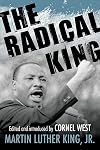
The Radical King is a thorough and thoughtful collection of speeches, essays, and other writings of Martin Luther King, Jr, selected and arranged by Cornel West to highlight King's dramatically radical ideas. West seeks to present a different view of King from the common view that he was too mainstream, or at least compromised too much with the middle of the political spectrum. The book succeeds very well, showing a democratic socialist set of objectives, a thoroughly pacifist method that show more never settled for mere passiveness, a critical reader of a wide range of philosophers and theologists. This is a very fine book, and Cornel West is to be congratulated. show less
 This review was written for LibraryThing Early Reviewers.
I had a lot of trouble deciding exactly how I was going to review this book -- Frankly, there's so much material to cover that I won't get to most of it. First of all, I'm impressed by the density and complexity of the writing -- For that reason alone, I believe the author inherently knows what he's talking about. I appreciate Dr. West's objective assessments of various past and present states of affairs in the USA -- As well as his overall worldview. While I did read the entire book and show more also reread the first chapter ("Nihilism in Black America") -- My comments here mainly concern what I was able to glean from the prefaces, introductions and epilogue of this work.
Here are some highlights with regard to noteworthy content: (1) Imperial meltdown -- And how imperial meltdown = spiritual blackout); (1) (a) How we're living in a soulless time, in which everything has been commodified and monetized -- Particularly due to the inescapable influence of social media); (2) Bernie Sanders as a missed opportunity -- I'm in agreement with the policies promoted by Sanders, but I never voted for him, as I didn't believe he could win in a general election; (3) The grey area of commonality between Obama and Trump -- In terms of actions both presidents have taken in regard to furthering America's endless wars; (4) The obscene pentagon budget -- That could ideally be allocated to fund infrastructure, healthcare, house, education etc.
Dr. West also seems to be very open, fair and compassionate in his understanding and acceptance of the LGBTQ community (I'm saying this as a white LGBTQ person who's always felt like an outsider in the LGBTQ community) & in recognizing how problematic sexism, homophobia and patriarchal attitudes can be -- Within more conservative sectors of the African-American community.
In Closing: Here's a quote from p. ix of this work [which relates to (1) (a) above]: "The major culprit of democratic possibilities here and abroad is the ever-expanding market culture that puts everything and everyone up for sale. The expansion of corporate power is driven by this pervasive commercialization and commodification ... Market activities of buying and selling, advertising and promoting weaken nonmarket actives of caring and sharing, nurturing and connection. Short-term stimulation and instant titillation edge out quality relations and substantive community." show less
Here are some highlights with regard to noteworthy content: (1) Imperial meltdown -- And how imperial meltdown = spiritual blackout); (1) (a) How we're living in a soulless time, in which everything has been commodified and monetized -- Particularly due to the inescapable influence of social media); (2) Bernie Sanders as a missed opportunity -- I'm in agreement with the policies promoted by Sanders, but I never voted for him, as I didn't believe he could win in a general election; (3) The grey area of commonality between Obama and Trump -- In terms of actions both presidents have taken in regard to furthering America's endless wars; (4) The obscene pentagon budget -- That could ideally be allocated to fund infrastructure, healthcare, house, education etc.
Dr. West also seems to be very open, fair and compassionate in his understanding and acceptance of the LGBTQ community (I'm saying this as a white LGBTQ person who's always felt like an outsider in the LGBTQ community) & in recognizing how problematic sexism, homophobia and patriarchal attitudes can be -- Within more conservative sectors of the African-American community.
In Closing: Here's a quote from p. ix of this work [which relates to (1) (a) above]: "The major culprit of democratic possibilities here and abroad is the ever-expanding market culture that puts everything and everyone up for sale. The expansion of corporate power is driven by this pervasive commercialization and commodification ... Market activities of buying and selling, advertising and promoting weaken nonmarket actives of caring and sharing, nurturing and connection. Short-term stimulation and instant titillation edge out quality relations and substantive community." show less
The Radical King
Martin Luther King Jr, Cornel West (Ed)
Beacon Press
January 2015
978-0807012826
For many, their first encounter with Doctor Reverend Martin Luther King Jr is the denuded and sanitized—“official”—elementary school vision of a slain civil rights leader whose grand vision of a racially integrated society has long since been achieved. His saintly mythos ensured, few ever delve beyond King the historical figures into the realm of King the Man, King the Thinker, King the show more Radical. Like those secular saints before him, Lincoln, Gandhi, Mandela, King has been transformed from an enemy of the state into a legend of republican virtue inherent in liberal democracy, despite the long and sordid history of those in power resisting to the very fiber of their being and with temerarious violence the very programs King and others sought to employ for our moral betterment. The sufferings of these men and others were the true source of radical love, practiced outside the bounds of the state and its apparatus that transformed our souls and today allow for our transformation of them from radical leaders into neutral legends.
As cultural artifacts, legends offer us a static learning opportunity, a socially cohesive narrative, and an enjoinder to adopt certain ideals. They mystify the past, creating a contemporary interpretation palatable to modern ideologies. The Radical King is, for those interested in King the Man, a good introduction to the radical love of King’s unfinished programme. Even for those knowledgeable with King’s ideas, this edition of his writings, with minimal but evocative introductions, is a thought-provoking and insight-laden collection of King’s writings. Organized into four sections, The Radical King introduces the reader to radical love, thinking globally and acting locally, employing nonviolence, and the necessity of challenging economic inequality. From arguing for Gandhi as the greatest Christian to detailing his work with unions and labor leaders, The Radical King demonstrates Reverend King’s emphasis on what we would now call interesectionality. Like bell hooks later commentary on feminism in Feminist Theory, wherein making women equal to men in Western society is a pointless endeavor as Western society doesn’t grant equality to all men, Martin Luther King recognized the necessity of challenging economic exploitation and inequality in order to overcome prejudice and hatred.
That we still, today, struggle with inequality, racism, and prejudice of many kinds, that our nations still practice imperialism and drain the state coffers to fight wars, that we will continue to pass on these issues to our children remind us that the Reverend King is still pertinent today and it is to our peril to let him be transformed into a secular saint. We must remember him as a man whose words, collected in The Radical King are as important to his own lifetime as they are to us today. show less
Martin Luther King Jr, Cornel West (Ed)
Beacon Press
January 2015
978-0807012826
For many, their first encounter with Doctor Reverend Martin Luther King Jr is the denuded and sanitized—“official”—elementary school vision of a slain civil rights leader whose grand vision of a racially integrated society has long since been achieved. His saintly mythos ensured, few ever delve beyond King the historical figures into the realm of King the Man, King the Thinker, King the show more Radical. Like those secular saints before him, Lincoln, Gandhi, Mandela, King has been transformed from an enemy of the state into a legend of republican virtue inherent in liberal democracy, despite the long and sordid history of those in power resisting to the very fiber of their being and with temerarious violence the very programs King and others sought to employ for our moral betterment. The sufferings of these men and others were the true source of radical love, practiced outside the bounds of the state and its apparatus that transformed our souls and today allow for our transformation of them from radical leaders into neutral legends.
As cultural artifacts, legends offer us a static learning opportunity, a socially cohesive narrative, and an enjoinder to adopt certain ideals. They mystify the past, creating a contemporary interpretation palatable to modern ideologies. The Radical King is, for those interested in King the Man, a good introduction to the radical love of King’s unfinished programme. Even for those knowledgeable with King’s ideas, this edition of his writings, with minimal but evocative introductions, is a thought-provoking and insight-laden collection of King’s writings. Organized into four sections, The Radical King introduces the reader to radical love, thinking globally and acting locally, employing nonviolence, and the necessity of challenging economic inequality. From arguing for Gandhi as the greatest Christian to detailing his work with unions and labor leaders, The Radical King demonstrates Reverend King’s emphasis on what we would now call interesectionality. Like bell hooks later commentary on feminism in Feminist Theory, wherein making women equal to men in Western society is a pointless endeavor as Western society doesn’t grant equality to all men, Martin Luther King recognized the necessity of challenging economic exploitation and inequality in order to overcome prejudice and hatred.
That we still, today, struggle with inequality, racism, and prejudice of many kinds, that our nations still practice imperialism and drain the state coffers to fight wars, that we will continue to pass on these issues to our children remind us that the Reverend King is still pertinent today and it is to our peril to let him be transformed into a secular saint. We must remember him as a man whose words, collected in The Radical King are as important to his own lifetime as they are to us today. show less
This review was written for LibraryThing Early Reviewers.
Cornel West is interesting. He doesn't do a lot of actual research, and he's not a firey or inspirational speaker in the way MLK or Malcolm X were, but he does present a few arguments clearly. One which is pretty reasonable (the state of black americans, both within their community and how broader America interacts with them) -- most of which I tend to agree with, that some combination of improved opportunity and seizing on those opportunities is needed to create a self-reinforcing cycle for show more better lives. But he's also a pretty doctrinaire socialist, in all sorts of crazy ways, which makes it hard for me to accept anything else he's arguing for on faith -- if he'd provide more data backing up his other viewpoints, it would be easier to judge them in isolation, but that's not his method.
What's particularly depressing about this book is that in the 25th anniversary of initial publication, nothing has particularly changed (except for some decrease in violent crime, likely due to lead poisoning levels from the phaseout of leaded gasoline...). show less
What's particularly depressing about this book is that in the 25th anniversary of initial publication, nothing has particularly changed (except for some decrease in violent crime, likely due to lead poisoning levels from the phaseout of leaded gasoline...). show less
Lists
Awards


You May Also Like


Associated Authors
Statistics
- Works
- 43
- Also by
- 30
- Members
- 6,503
- Popularity
- #3,773
- Rating
- 4.2
- Reviews
- 87
- ISBNs
- 127
- Languages
- 6
- Favorited
- 15
